
Semantic SEO: Write Content That Matches Search Intent
What Is Semantic SEO
Semantic SEO is the practice of creating content that satisfies the full meaning behind a search query, not just the literal keywords. It involves understanding the topics, entities, relationships and subtopics that Google associates with a query, then producing content that comprehensively addresses these semantic dimensions.
The term “semantic” refers to meaning. In the context of search, semantic understanding means that Google does not simply match keywords in your content to keywords in a query. It understands what both the query and your content are about at a conceptual level. It identifies the entities referenced, the relationships between them, the topics covered, and the depth of coverage — then determines whether your content meaningfully satisfies the query’s intent.
For SEO practitioners who have spent years optimising around keyword density, exact-match terms, and keyword variations, semantic SEO represents a fundamental shift. The goal is no longer to mention a keyword a certain number of times. The goal is to create the most comprehensive, authoritative resource on a topic that Google can find.
This shift matters enormously for Singapore businesses competing in digital marketing, professional services, finance, technology, and other knowledge-intensive verticals. In these spaces, the difference between ranking on page one and page two often comes down to topical depth and semantic coverage, not keyword repetition.
How Google Processes Meaning
Understanding how Google’s language models process meaning is not academic — it directly informs how you should structure and write content.
From Keyword Matching to Language Understanding
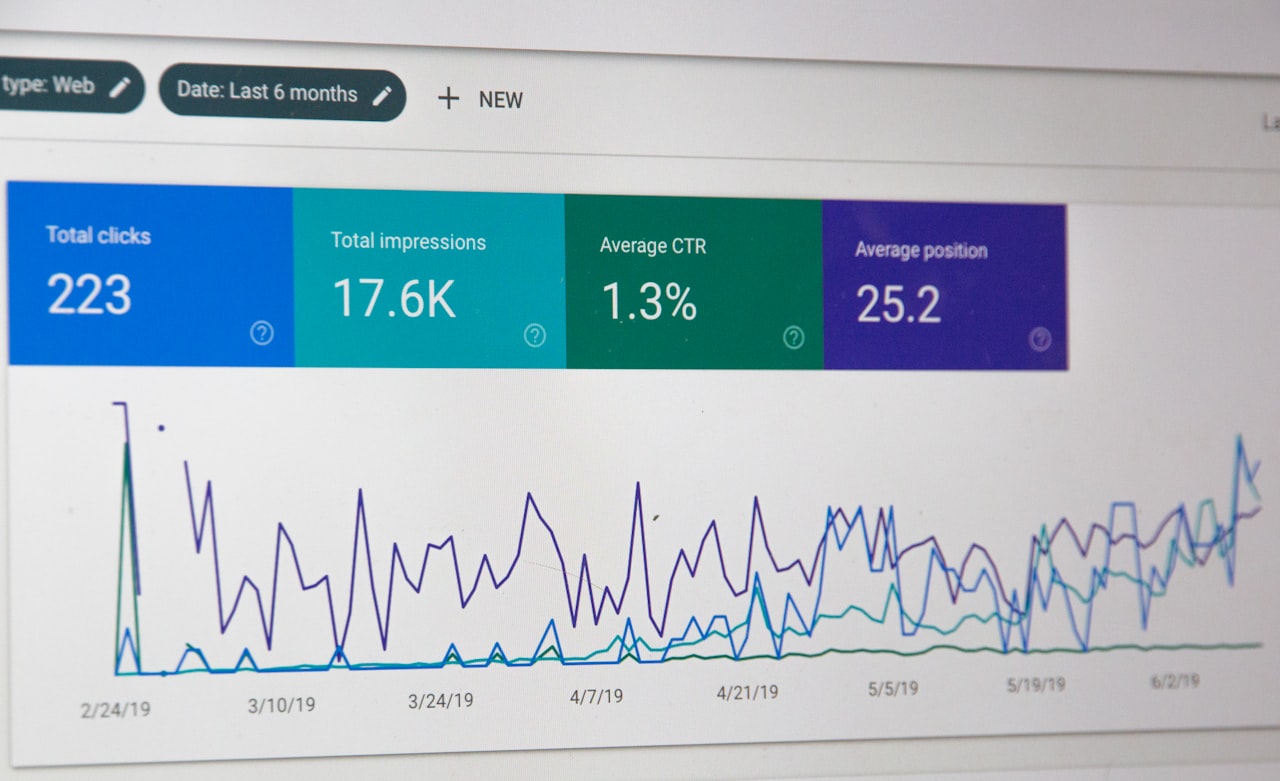
Google’s evolution from keyword matching to semantic understanding has been gradual but profound. Key milestones include the 2013 Hummingbird update (which introduced semantic query processing), the 2015 RankBrain system (which applied machine learning to query understanding), the 2019 BERT integration (which brought transformer-based NLP to search), and the 2021 MUM model (which added multilingual, multimodal understanding).
Each of these systems improved Google’s ability to understand what content is about rather than what keywords it contains. Together, they mean that Google now processes your content with something approaching genuine language comprehension.
Query Expansion and Intent Graphs
When a user enters a query, Google does not just match that string against an index. It expands the query into a semantic space: related terms, synonyms, subtopics, entities, and intent variations. A query for “content marketing strategy” might be expanded to encompass content planning, editorial calendars, content distribution, content measurement, and related service concepts.
Google then evaluates candidate pages against this expanded semantic space. Content that covers multiple dimensions of the query’s semantic space scores higher than content that narrowly addresses only the literal query terms. This is why comprehensive, well-structured content consistently outperforms thin content targeting the same keyword.
Passage-Level Understanding
Since Google’s passage ranking update, the search engine evaluates content at the passage level, not just the page level. This means specific sections of your content can rank for queries that the overall page might not target directly. A comprehensive guide on digital marketing might have individual passages that rank for specific subtopic queries.
This passage-level evaluation rewards content depth. Each well-written section of your content is a potential ranking asset for related queries, multiplying the semantic reach of a single page.
Topic Modelling and Topical Authority
Topic modelling — the process of identifying the themes, subtopics and entity clusters that define a topic — is the foundation of semantic content strategy.
What Google Expects a Topic to Cover
For any given topic, Google has learned from indexing millions of pages what a comprehensive treatment looks like. It knows which subtopics are consistently covered, which entities are consistently referenced, and which questions are consistently addressed. Your content is evaluated against this learned model.
If you are writing about “SEO for e-commerce,” Google expects coverage of: technical SEO for e-commerce platforms, product page optimisation, category page strategy, internal linking for e-commerce, Schema.org Product markup, site speed for e-commerce, faceted navigation, and more. Missing expected subtopics signals incomplete coverage.
Building Topic Maps
Before writing any content, build a topic map. Analyse the top 10-20 ranking pages for your target query. Extract the H2 and H3 headings, identify referenced entities, note recurring subtopics, and catalogue the questions addressed. This gives you a data-driven view of what Google considers comprehensive coverage for that topic.
Tools like Clearscope, Surfer SEO, MarketMuse, and Frase can automate parts of this analysis, identifying semantically related terms and entity coverage gaps. However, manual SERP analysis remains essential for understanding the structural and qualitative patterns that automated tools miss.
Topical Authority Through Content Depth and Breadth
Topical authority is built through both depth (comprehensive individual pieces) and breadth (multiple related pieces covering a topic cluster). A site that publishes one surface-level article about SEO will not build topical authority. A site that publishes comprehensive guides on technical SEO, on-page SEO, local SEO, link building, content SEO, and related subtopics — all interlinked — establishes itself as a topical authority in Google’s understanding.
This is directly relevant to your content marketing strategy. Content production should be planned around topic clusters, not isolated keywords. Each piece strengthens the semantic authority of related pieces through topical relevance and internal linking.
Entity Coverage: The Core of Semantic Content
Entities are the building blocks of semantic SEO. Comprehensive entity coverage in your content signals topical depth and expertise to Google’s language models.
Identifying Expected Entities
For any topic, there is a set of entities that comprehensive content should reference. For “digital marketing in Singapore,” expected entities might include: Google Ads, SEO, social media platforms (Facebook, Instagram, LinkedIn, TikTok), content marketing, email marketing, marketing automation tools, PDPA (Personal Data Protection Act), IMDA, local consumer behaviour data, and Singapore-specific marketing channels.
Use Google’s NLP API (via the Cloud Natural Language tool) to analyse top-ranking content and extract the entities Google identifies. Compare entity coverage across top results to identify which entities are consistently present. These are your expected entities.
Entity Density vs Entity Breadth
Semantic SEO is not about mentioning a single entity repeatedly. It is about covering the breadth of entities associated with a topic. A page that mentions “SEO” 50 times but fails to reference related entities like “search engine results page,” “organic traffic,” “keyword research,” “backlinks,” and “technical audit” has poor entity breadth despite high entity density.
Google’s language models assess entity breadth as a signal of comprehensive topic coverage. Content that references the full entity landscape of a topic demonstrates genuine understanding and expertise.
Entity Relationships in Content
Beyond merely mentioning entities, strong semantic content demonstrates the relationships between entities. Explaining how Google Ads and SEO work together, how PDPA affects email marketing practices in Singapore, or how content marketing feeds organic search performance — these relationship explanations add semantic richness that keyword-focused content lacks.
Google’s NLP models identify entity relationships in text. Content that explicitly and accurately describes relationships between entities scores higher on semantic relevance than content that merely lists entities without connecting them.
Co-occurrence, Context and Semantic Signals
Co-occurrence — the pattern of terms and entities appearing together across the web — is a fundamental semantic signal that Google uses to understand meaning and relevance.
How Co-occurrence Builds Semantic Associations
When certain terms and entities consistently appear together across millions of web pages, Google infers semantic relationships between them. “Singapore” and “HDB” co-occur frequently, building a strong semantic association. “Content marketing” and “editorial calendar” co-occur frequently in marketing content, creating an expected semantic connection.
For your content, this means that using terms and entities that naturally co-occur with your topic reinforces your topical relevance. If you are writing about web design, terms like “responsive design,” “user experience,” “page speed,” “CSS,” “wireframe,” and “conversion rate” are expected co-occurring terms. Their presence strengthens your content’s semantic alignment with the topic.
Latent Semantic Indexing and Modern Equivalents
The concept of latent semantic indexing (LSI) — finding statistical patterns of term co-occurrence — was an early approach to semantic analysis. While Google has moved far beyond basic LSI, the underlying principle remains relevant: terms that appear in similar contexts carry similar semantic weight.
Modern transformer models like BERT go much further, understanding not just co-occurrence but contextual meaning. The word “bank” means different things in “river bank” and “bank account.” Google resolves this through surrounding context, not just co-occurrence statistics. This means your content’s semantic signals come from context, not just keyword placement.
Semantic Distance and Content Structure
The proximity of semantically related terms in your content matters. Terms and entities that appear close together signal stronger relationships than those separated by many paragraphs. This does not mean cramming related terms into single sentences. It means structuring your content so that semantically related concepts are discussed in logical proximity.
Well-structured content with clear sections, each covering a coherent subtopic, naturally achieves good semantic proximity. This is another reason why content structure — headings, sections, logical flow — is a core component of semantic SEO, not just a readability concern.
Search Intent Alignment at the Semantic Level
Search intent has always been important in SEO. Semantic SEO deepens intent alignment from matching broad categories (informational, navigational, transactional) to matching the specific information needs embedded in a query.
Beyond the Four Intent Categories
Traditional intent classification into informational, navigational, transactional, and commercial investigation is a useful starting framework but an oversimplification of how semantic search works. Within “informational intent,” for example, there are vast differences between a “what is” query (definitional intent), a “how to” query (procedural intent), a “why does” query (explanatory intent), and a “best practices” query (advisory intent).
Each sub-intent implies different content structures, different entity coverage, and different depth expectations. Semantic SEO means matching not just the broad intent category but the specific information structure that the query implies.
SERP Analysis for Semantic Intent
The search results page itself is the best indicator of Google’s semantic understanding of a query. Analyse the types of content that rank: are they long-form guides, short answers, comparison tables, step-by-step tutorials, or opinion pieces? Do they include videos, tools, or interactive elements? What topics and subtopics do the top results consistently cover?
This SERP-level analysis reveals Google’s semantic model for the query. Your content should match or exceed the semantic expectations set by current top results.
Answering Adjacent Questions
Google’s “People Also Ask” feature reveals the semantic neighbourhood of a query — the related questions that users commonly explore. Addressing these adjacent questions in your content (through FAQ sections, dedicated subsections, or natural integration) expands your semantic coverage and positions your content to rank for a broader set of related queries.
This is not about stuffing every PAA question into your content. It is about identifying which adjacent questions are genuinely relevant to your topic and addressing them with the depth they deserve. A comprehensive SEO strategy incorporates PAA analysis as a standard component of content planning.
Practical Semantic SEO Strategy for Singapore Businesses
Translating semantic SEO theory into practice requires a structured approach. Here is the framework for Singapore businesses.
Step 1: Semantic Keyword Research
Traditional keyword research identifies search terms and volumes. Semantic keyword research goes further: for each target query, map the topic’s entity landscape, identify expected subtopics, catalogue semantically related terms, and analyse the intent structure of top-ranking content.
For Singapore-focused content, include Singapore-specific semantic signals: local regulations (PDPA, MAS guidelines), local platforms and channels, Singapore market data, local business examples, and references to local institutions and industry bodies.
Step 2: Content Architecture Planning
Before writing, plan your content architecture based on semantic analysis. Define: the primary topic entity, supporting entities to be covered, subtopics that warrant their own sections, questions to address, and the logical flow that connects these elements. This architecture should mirror the semantic model you have identified through SERP and competitor analysis.
Step 3: Writing for Semantic Depth
Write with entity coverage and semantic breadth as primary objectives. Cover every expected subtopic with genuine depth. Reference the full entity landscape. Explain relationships between entities and concepts. Use precise, descriptive language rather than vague generalities.
Semantic depth does not mean padding content with filler. It means ensuring that every section provides genuine information value and covers its subtopic comprehensively. A 2,500-word article with genuine depth across eight well-defined sections is semantically stronger than a 5,000-word article that repeats the same ideas with different wording.
Step 4: Internal Linking for Semantic Reinforcement
Internal links are semantic signals. When you link from one article to another, you signal a topical relationship. A link from your semantic SEO article to your web design services page with contextual anchor text tells Google about the semantic connection between content strategy and technical implementation.
Build internal linking structures that mirror your topic cluster architecture. Hub pages link to supporting articles. Supporting articles link to each other and back to the hub. The result is a semantic network that reinforces topical authority across the cluster.
Step 5: Content Updating for Semantic Currency
Semantic relevance is not static. Topics evolve, new entities emerge, and Google’s semantic expectations change. Regularly audit your content against current SERP semantic models. Identify entity gaps, outdated subtopics, and new questions that your content should address. Update comprehensively rather than making superficial edits.
Measuring Semantic SEO Performance
Measuring the impact of semantic SEO requires looking beyond simple keyword rankings to broader indicators of topical authority and semantic reach.

Keyword Cluster Rankings
Rather than tracking individual keyword rankings, track rankings across keyword clusters. A semantically strong page should rank for dozens or hundreds of related queries, not just one target keyword. Use tools like Ahrefs or SEMrush to monitor the total number of keywords a page ranks for and how that number changes over time.
Topical Traffic Share
Measure the percentage of organic traffic in your target topic that flows to your site versus competitors. If your semantic SEO efforts are working, your share of topical traffic should increase over time. Google Search Console’s performance data, filtered by query patterns related to your topic, provides this insight.
Content Comprehensiveness Scores
Tools like Clearscope and MarketMuse provide content scores that measure semantic coverage against top-ranking competitors. While these scores are not Google metrics, they correlate with semantic depth. Track these scores across your content library and prioritise updates for pages that score below competitive benchmarks.
Featured Snippet and PAA Appearances
Content with strong semantic coverage is more likely to win featured snippets and appear in People Also Ask results. Track these SERP features for your target queries. An increase in featured snippet wins indicates that Google considers your content a comprehensive, authoritative source for those queries.
For Singapore businesses looking to build sustainable search visibility, semantic SEO is the most reliable path forward. It aligns with every trend in Google’s development — from NLP advances to AI-driven search features — and creates a competitive advantage that grows stronger with every piece of content you publish. Our Google Ads services can complement your semantic SEO strategy by driving immediate visibility while organic authority builds.
Frequently Asked Questions
What is the difference between semantic SEO and traditional SEO?
Traditional SEO focuses on optimising content for specific keywords — matching search terms in titles, headings, and body text. Semantic SEO focuses on optimising for meaning — ensuring content comprehensively covers the topics, entities, relationships and subtopics that Google associates with a query. While keywords remain relevant signals, semantic SEO treats them as entry points to broader topical coverage rather than the primary optimisation target.
Do I still need to use specific keywords with semantic SEO?
Yes, but the approach changes. Your primary keyword should appear in the title, H1, and early in the content to signal topic relevance. Beyond that, focus on naturally incorporating the full semantic landscape of related terms, entities, and concepts rather than repeating the primary keyword. Google’s language models are sophisticated enough to understand topical relevance without keyword repetition.
How do I identify the entities I should cover in my content?
Analyse the top 10-20 ranking pages for your target query. Use Google’s NLP API to extract entities from these pages. Identify entities that appear consistently across top results — these are the expected entities for that topic. Tools like Clearscope, Surfer SEO, and MarketMuse also identify semantically relevant terms and entities. Manual SERP analysis, including People Also Ask questions and related searches, provides additional entity insights.
How long should semantic SEO content be?
Length should be determined by the topic’s complexity and the depth required for comprehensive coverage, not by arbitrary word counts. Some topics require 1,500 words for thorough treatment; others require 4,000 or more. Analyse top-ranking content length as a benchmark, but focus on covering all expected subtopics and entities with genuine depth. Padding content to hit a word count target undermines semantic quality.
Does semantic SEO work for local businesses in Singapore?
Absolutely. Local semantic SEO involves incorporating Singapore-specific entities, regulations, market data, and context into your content. A Singapore law firm writing about employment law should reference the Employment Act, MOM guidelines, CPF considerations, and Singapore-specific case examples. This local semantic richness signals geographic relevance and expertise to Google’s language models.
How does semantic SEO relate to E-E-A-T?
Semantic SEO and E-E-A-T are deeply complementary. Comprehensive entity coverage and topical depth are signals of expertise. Content that demonstrates understanding of a topic’s full semantic landscape inherently demonstrates author knowledge. Semantic SEO provides the content strategy framework; E-E-A-T provides the quality and credibility standards. Together, they produce content that ranks well and serves users effectively.
Can I retrofit existing content for semantic SEO?
Yes, and this is often the most efficient approach. Audit existing content against the semantic model for each target topic. Identify entity gaps, missing subtopics, and underdeveloped sections. Expand and restructure the content to achieve comprehensive semantic coverage. Updated content with strong existing backlink profiles and page authority often outperforms new content, making semantic retrofitting highly cost-effective.
How does semantic SEO affect voice search?
Voice queries tend to be longer and more conversational than typed queries, making semantic understanding even more important. Content optimised for semantic depth is more likely to match the natural language patterns of voice queries. Additionally, Google’s voice search responses often draw from featured snippets, which favour semantically comprehensive content. Optimising for semantic SEO inherently improves voice search visibility.
What role does content structure play in semantic SEO?
Content structure is critical. Clear heading hierarchies (H2 for main topics, H3 for subtopics) help Google’s passage-level indexing identify and rank individual sections. Logical content flow groups semantically related concepts together, strengthening proximity signals. Well-structured FAQ sections address specific questions that may trigger featured snippets. Structure is not just a formatting choice — it is a semantic signal.
How quickly does semantic SEO produce results?
Individual pages optimised for semantic depth typically begin showing improved rankings within 4 to 8 weeks as Google re-crawls and re-evaluates the content. Topical authority, which requires multiple pieces of semantically rich content across a topic cluster, builds over 3 to 12 months depending on content volume and competitive intensity. Semantic SEO is a medium to long-term strategy that produces increasingly strong results as your topical footprint grows.