
Part of our Marketing Grants guide →
Using PSG Grant for E-Commerce: Build Your Online Store with Subsidies
Table of Contents
How PSG Supports E-Commerce Adoption
Selling online is no longer optional for Singapore businesses — it is a competitive necessity. Whether you are a retail shop expanding beyond your physical location, an F&B business adding delivery ordering or a B2B supplier enabling online procurement, an e-commerce platform opens new revenue channels and improves customer convenience. The PSG grant e-commerce funding makes this transition significantly more affordable by subsidising up to 50 per cent of the cost of pre-approved solutions.
Under the PSG, e-commerce solutions are categorised within the digital commerce or web development categories on the GoBusiness grants portal. Pre-approved vendors offer packaged solutions that include everything needed to launch an online store — from website design and development to payment gateway integration, product catalogue setup and staff training. The current subsidy level is up to 50 per cent of qualifying costs, meaning an e-commerce solution costing $15,000 could be subsidised by up to $7,500.
Importantly, the PSG funds the platform setup and initial configuration — not ongoing subscription fees, transaction fees or advertising spend. Your ongoing operational costs remain your responsibility after the initial PSG-funded project is completed. Plan your budget to account for both the subsidised setup and the ongoing costs of running an online business in Singapore.
Eligible E-Commerce Platforms Under PSG
Pre-approved PSG grant e-commerce solutions are built on established platforms with proven track records for reliability, scalability and ease of use.

WooCommerce (WordPress): An open-source e-commerce plugin for WordPress, making it the most flexible and customisable option. Ideal for businesses wanting full control over design, functionality and hosting. WooCommerce supports unlimited products, extensive plugin ecosystems and deep customisation, though it requires more ongoing technical maintenance.
Shopify: A hosted e-commerce platform known for ease of use and reliability. It handles hosting, security and software updates automatically, making it suitable for businesses preferring a low-maintenance solution. Shopify offers a large app ecosystem, built-in payment processing and seamless marketplace integration.
Other platforms: Some pre-approved solutions use Magento (Adobe Commerce), BigCommerce or custom-built solutions. These are less common in the PSG ecosystem but may be available for specific requirements. When selecting a platform, consider long-term needs — product count, B2B capabilities, marketplace integration and technical control.
Shopify vs WooCommerce: Comparing PSG Solutions
Ease of use: Shopify wins for simplicity. Its drag-and-drop interface is accessible for non-technical business owners. WooCommerce has a steeper learning curve but offers greater flexibility once mastered.
Customisation: WooCommerce offers more extensive customisation. Being open-source, developers can modify virtually any aspect. Shopify provides customisation through its theme editor and app ecosystem but deep structural changes require its proprietary Liquid language.
Ongoing costs: Shopify charges a monthly subscription ($29 to $399+ per month) plus transaction fees. WooCommerce itself is free, but you pay for hosting ($20 to $100+ per month), premium plugins and SSL certificates.
SEO capabilities: Both platforms support SEO, but WooCommerce on WordPress offers more granular control over URL structures, meta data, schema markup and site architecture. Shopify has improved its SEO features significantly but still has some limitations.
Payment integration: Both support Singapore payment gateways. Shopify offers its own Shopify Payments alongside third-party gateways. WooCommerce integrates with PayNow, Stripe, PayPal and numerous other gateways through plugins. Your PSG vendor should help you assess which platform best fits your specific requirements.
E-Commerce Features Covered by PSG
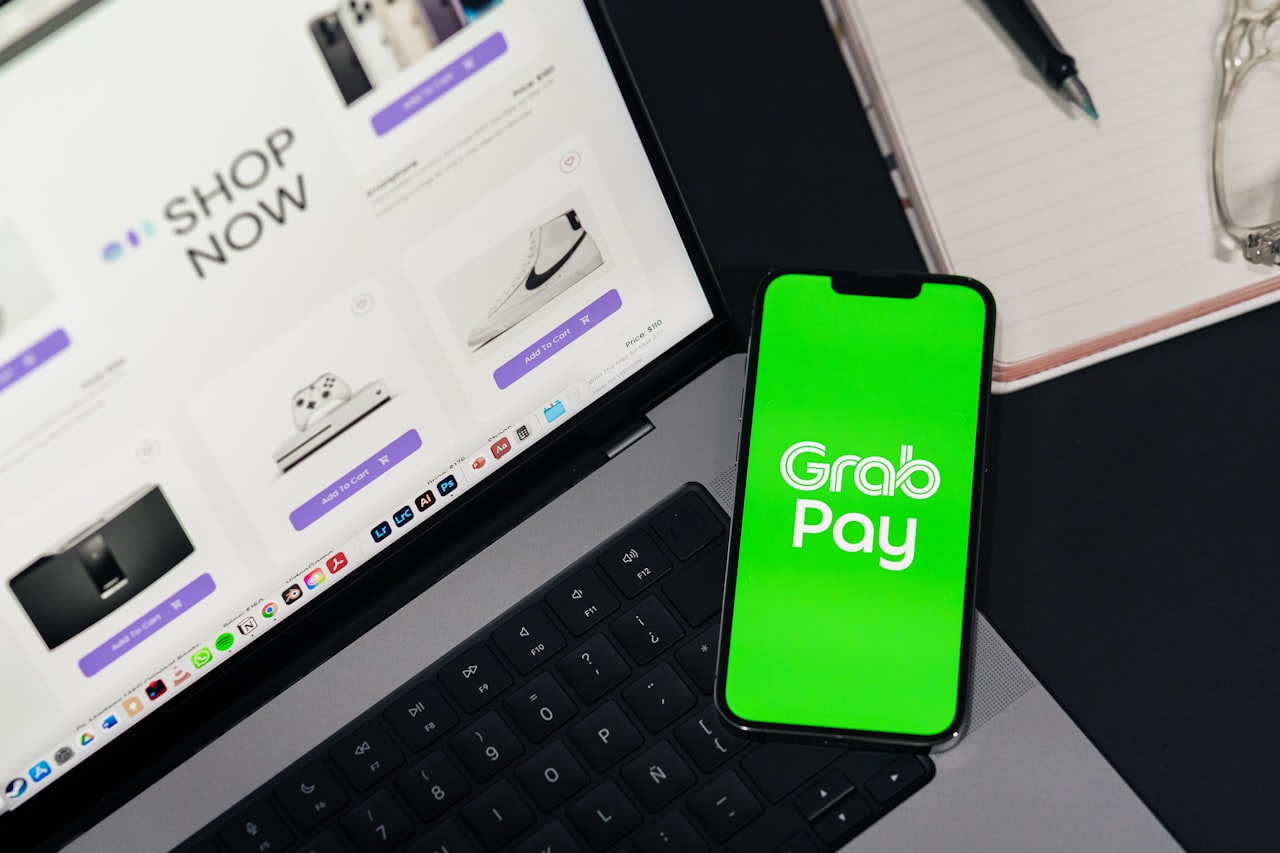
Pre-approved PSG e-commerce solutions typically include product catalogue with categories, descriptions, images and variants; shopping cart and checkout; payment gateway integration (credit cards, PayNow, GrabPay); order management and notifications; customer accounts; inventory tracking; shipping configuration; and GST compliance.

Design features usually include professional responsive layout, product search and filtering, image galleries with zoom and related product recommendations. Marketing and SEO features include on-page SEO optimisation, Google Analytics 4 integration, Google Search Console setup, email marketing integration, discount code management and social media sharing buttons.
Training and handover components include staff training on product management, order processing and store administration, plus documentation on updating products, managing inventory and processing orders. Features not typically covered include ongoing subscription fees, premium themes beyond initial setup, custom app development, marketplace integration and professional product photography.
Eligibility Criteria
Standard PSG eligibility requirements apply: Singapore registration with valid UEN, group annual sales not exceeding $100 million or group employment not exceeding 200 employees, at least 30 per cent shareholding by Singapore citizens or permanent residents, no prior purchase before PSG approval and Singapore deployment of the solution.
Businesses across all industries are eligible. Whether you sell fashion, electronics, food products, health supplements, home goods or professional services, you can apply as long as you meet the SME criteria. If you have previously claimed PSG for a basic corporate website, you may still be eligible for an e-commerce solution if it falls under a different category.
Application Process Step by Step
Step 1: Define your e-commerce requirements — product count, payment methods, delivery integration, customisation level and local vs international sales.
Step 2: Research pre-approved solutions on the GoBusiness grants portal. Compare vendors based on platform, package inclusions, pricing and portfolio.
Step 3: Evaluate vendors, request demonstrations and get detailed quotations. Ensure quotations clearly state the PSG-eligible amount.
Step 4: Select your vendor based on requirements, budget, quality and long-term growth suitability.
Step 5: Submit your PSG application via BGP through CorpPass. Do not sign any contract or make payment at this stage.
Step 6: Await approval (four to six weeks). Respond promptly to information requests.
Step 7: Build your online store. Provide product information, images and descriptions promptly. Most projects take six to sixteen weeks.
Step 8: After launch and full payment, submit your grant claim on BGP. The subsidy is disbursed to your business bank account. Once your store is live, drive traffic from day one with Google Ads for immediate visibility and invest in a comprehensive digital marketing strategy for sustained growth.
Cost Examples and Subsidy Calculations
Scenario 1 — Basic online store ($8,000): WooCommerce with up to 50 products, standard design, PayNow and credit card integration, basic shipping, Google Analytics, staff training. PSG subsidy (50%): $4,000. Nett cost: $4,000. Ongoing: hosting $30 to $60 per month.
Scenario 2 — Professional e-commerce store ($14,000): Shopify or WooCommerce with custom design, up to 200 products, advanced filtering, multiple payment gateways, local courier integration, SEO optimisation, email marketing setup, comprehensive training. PSG subsidy (50%): $7,000. Nett cost: $7,000.
Scenario 3 — Advanced e-commerce platform ($22,000): Custom-designed store with up to 500 products, B2B and B2C functionality, multi-currency, advanced inventory, CRM integration, marketing automation, abandoned cart recovery, loyalty programme, multilingual support. PSG subsidy (50%): $11,000 (subject to grant cap). Nett cost: $11,000.
Remember that PSG grants have maximum claimable amounts per category. Budget planning should account for both the subsidised setup cost and ongoing operational expenses.
Frequently Asked Questions
Can I use PSG to build a Shopify store?
Yes, provided you select a pre-approved PSG vendor offering Shopify-based solutions. Several vendors offer Shopify packages including store design, product setup, payment integration and training. Check the GoBusiness portal for current Shopify options.
Does the PSG cover ongoing Shopify subscription fees?
The PSG may cover an initial subscription period (typically six to twelve months) as part of the package. After this period, the monthly fee becomes your responsibility. Factor ongoing costs into your budget when choosing between Shopify and WooCommerce.
How many products can I list with a PSG e-commerce package?
This depends on the specific package. Basic packages typically support 50 to 100 products, while comprehensive solutions support 200 to 500 or more. Both Shopify and WooCommerce support unlimited products technically, but the PSG package may specify a setup limit for vendor-configured products.
Can I use PSG for e-commerce if I already have a website?
Yes. You can use PSG to add e-commerce functionality to an existing website or build a completely new platform. Some vendors offer migration packages that move existing content to a new platform with added shopping features.
What payment gateways are supported in PSG e-commerce packages?
Most packages support credit and debit cards (Visa, Mastercard, AMEX), PayNow, GrabPay and PayPal. Some also support buy-now-pay-later options like Atome and Pace. Confirm which gateways are included in your chosen package.
Can I combine the PSG e-commerce grant with other grants?
You cannot use multiple grants to fund the same cost item. However, you can use PSG for e-commerce setup and apply for other grants like EDG for separate aspects of digital transformation. Ensure no overlap in costs claimed under each grant.
How long does a PSG e-commerce project take from start to finish?
The entire process from vendor selection to store launch typically takes three to six months. This includes the application process (four to six weeks), development (six to sixteen weeks depending on complexity) and claims submission. Singapore SMEs should plan timelines carefully around peak sales periods.
What happens after the PSG-funded period ends?
After the initial PSG-funded setup, you are responsible for all ongoing costs including hosting, platform subscriptions, maintenance, updates and any additional features. Budget for these ongoing expenses from the start to ensure your e-commerce operation remains sustainable.
Can I sell internationally with a PSG-funded e-commerce store?
Yes. While the PSG-funded solution must be deployed for Singapore business operations, there is no restriction on selling to international customers. Both Shopify and WooCommerce support multi-currency, international shipping and multiple languages, though some of these features may require additional investment beyond the PSG package.
Is GST configuration included in PSG e-commerce packages?
Most pre-approved packages include basic GST configuration to ensure your online store complies with Singapore’s goods and services tax requirements. Verify this with your chosen vendor, particularly if your business has complex GST scenarios such as exempt supplies or international transactions.