Overview
Merchynt is a US-market B2B SaaS company specialising in Google Business Profile management and local SEO tooling, with two flagship products: Paige (automated GBP management) and RoboReply (AI review response at scale), both positioned at agencies and multi-location brands with white-label options. The products were strong; the organic visibility was nowhere close to matching them. Our engagement rebuilt the on-page layer around the commercial queries their buyers actually use.
Project Snapshot
- Sector: B2B SaaS — local SEO tooling, US market
- Engagement: Full on-page rebuild around commercial query clusters
- Timeline: Project delivered, growth measured across the following 27 months
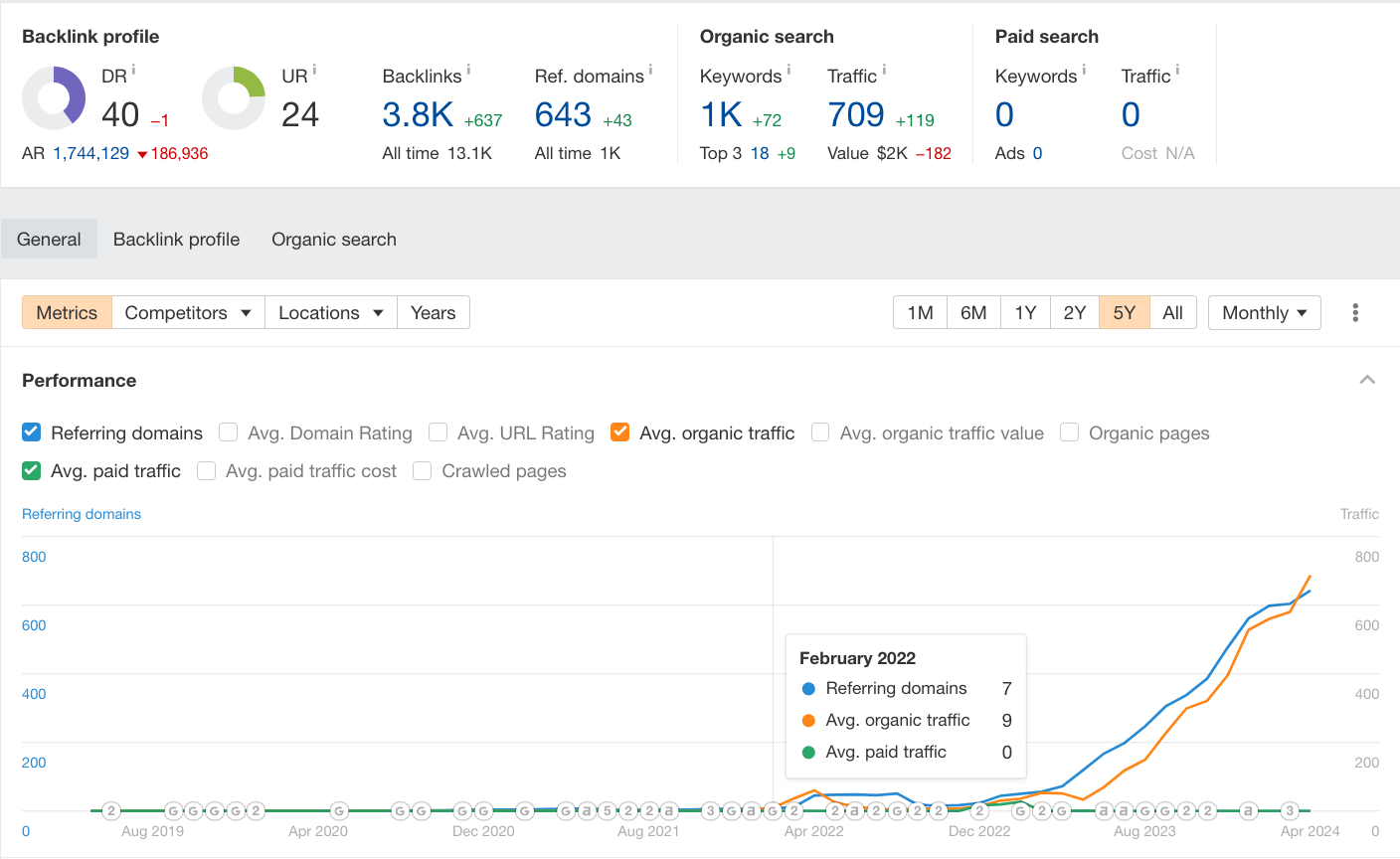
- Approximately 6,800% organic traffic growth over the 27 months following project completion — a figure that deserves context: it is large because the starting baseline was small. What it represents is sustained compounding growth across a category cluster.
- Page-1 rankings for the priority commercial queries: GBP management service, white label reputation management, local SEO outsourcing, white label review management, and adjacent terms
The Challenge
Merchynt’s buyers are sophisticated — agencies running local SEO portfolios, franchise operators needing review management at scale — and they search in category-specific language: “GBP management service”, “white label reputation management”, “local SEO outsourcing”. The site’s technical foundation was healthy, but its pages weren’t built around those clusters, the white-label angle was under-surfaced, and the two products blurred together in search, landing buyers on the wrong pages.
Our Approach
- Keyword and intent mapping — every plausible commercial query mapped to a target page; missing pages briefed and built, mis-targeted pages rebuilt, long-tail informational queries seeded into the blog roadmap.
- On-page rebuilds — service and product pages restructured with query-anchored copy, comparison sections, use-case framing, and FAQ blocks answering the pre-purchase questions buyers actually ask; metadata written for both ranking and click-through.
- Content layer — blog topics built around what GBP managers and agencies search for, plus tutorial content capturing branded support traffic and industry pieces building topical authority.
- Internal linking architecture — authority routed from high-traffic blog pages to the commercial pages, with disciplined anchor text aligned to target queries.
The Results
- Approximately 6,800% organic traffic growth over the 27 months following project completion — a figure that deserves context: it is large because the starting baseline was small. What it represents is sustained compounding growth across a category cluster.
- Page-1 rankings for the priority commercial queries: GBP management service, white label reputation management, local SEO outsourcing, white label review management, and adjacent terms
- Category-level visibility became a business-development asset in its own right — agencies seeking white-label partners start with a search, and Merchynt became the page-one answer
Why This Worked
Merchynt’s buyers — agencies and multi-location operators — search in category jargon: “GBP management service”, “white label reputation management”, “local SEO outsourcing”. Before the engagement, the site’s pages weren’t built around those clusters, so a technically healthy site was invisible at exactly the moments its sophisticated buyers went looking. The rebuild mapped every commercial query to a specific page, built the missing pages, and re-targeted the mis-aimed ones.
Two structural decisions did disproportionate work. First, separating the two products cleanly in search — Paige for profile management, RoboReply for review response — so buyers landed on the right product page rather than bouncing off the wrong one. Second, routing internal links from the blog’s high-traffic informational pages into the commercial pages with disciplined anchor text, so the content layer fed authority to the pages that convert rather than hoarding it.
The 6,800% figure needs its honest frame: it’s large partly because the baseline was small. What it represents is 27 months of compounding across a category cluster — the kind of growth curve that only happens when the on-page foundation matches how the market actually searches.
Key Takeaways
- Sophisticated B2B buyers search in category language — pages must be built around their vocabulary, not your product names.
- Multi-product SaaS needs deliberate search separation, or buyers land on the wrong product and bounce.
- Blog traffic is fuel, not the destination: internal links and anchor discipline turn informational rankings into commercial ones.
- Percentages flatter small baselines — read growth claims against the absolute rankings they produced.
Frequently Asked Questions
What does “on-page SEO” cover in an engagement like this?
Everything on the site itself: page architecture, H1/H2 structure, query-anchored copy, comparison and FAQ sections, metadata written for click-through, and the internal linking that routes authority between pages. It excludes link building and technical infrastructure — Merchynt’s were already sound, which is why on-page alone moved the needle this far.
How long did results take to appear?
Meaningful ranking movement began within months of completion, but the headline growth is a 27-month compounding story. On-page rebuilds keep paying long after delivery because every new piece of authority the site earns flows through improved architecture.
Why do FAQ blocks matter on SaaS product pages?
They capture the secondary questions buyers ask immediately before purchase — pricing structures, white-label terms, integration details — each a long-tail query in its own right, and each an objection handled without a sales call.
Would this approach work for a SaaS with weak technical SEO?
Not by itself — on-page work presumes the site can be crawled, indexed and rendered properly. Technical health comes first; this case simply started from that fortunate position.
What were Merchynt’s two products?
Paige, an automated Google Business Profile management tool, and RoboReply, AI software for responding to Google reviews at scale — both aimed at agencies and multi-location brands, with white-label options that needed prominent search surfacing for the agency audience.
What does query-intent mismatch look like in practice?
A page targeting a general query when buyers use a specific one — for instance, generic ‘reputation software’ copy on a page whose real buyers search ‘white label review management’. Every such page was either re-anchored to its true query or rebuilt.
What role did branded tutorial content play?
It captured support-intent searches from existing users and prospects evaluating the tools, kept them on Merchynt’s own domain, and built the topical depth that helped the commercial pages rank — three jobs from one content layer.