Overview
Harley Street Heart & Vascular Centre is a Singapore cardiology clinic offering cardiac consultations, ECG screening and full diagnostic workups. When they engaged us, the site looked healthy on paper — domain rating 34, ~8,300 organic keywords, ~7,400 monthly organic visits — but almost none of that traffic was walking into the clinic. The engagement: put five agreed commercial keywords on page one and prove it in booked-consultation behaviour, not traffic charts.
Project Snapshot
- Sector: Healthcare — cardiology, Singapore
- Engagement: Commercial medical SEO with conversion tracking
- Timeline: 8-month engagement to page-1 on all five targets
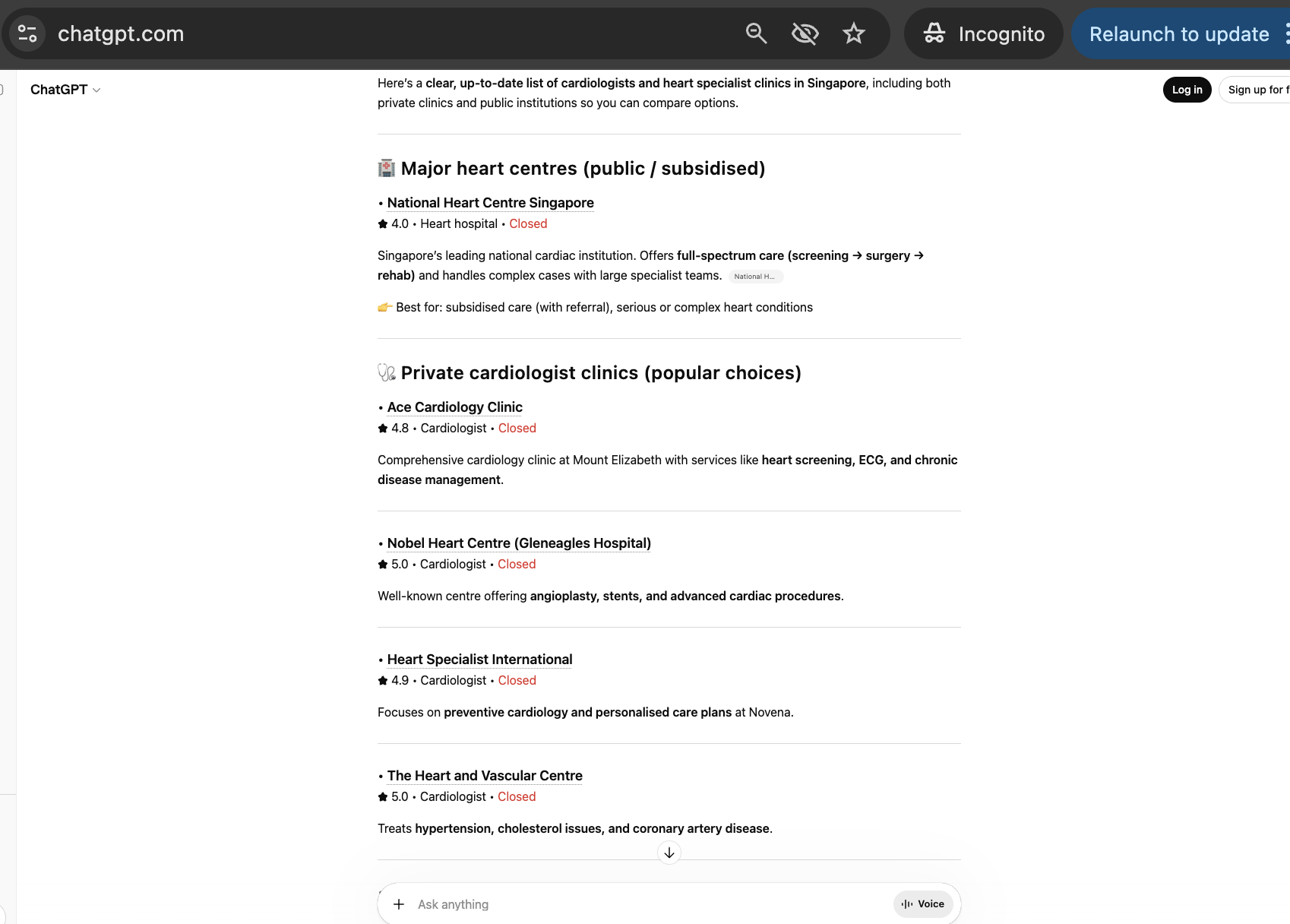
- All five target keywords on page 1 within 8 months, including Cardiologist Singapore at rank 5 (from unranked — the target page had been blocked from indexing before the engagement), Heart Specialist Singapore at rank 4 (from 20+), and ECG Singapore at rank 4 (from 13)
- 647+ commercial-intent actions per month (bookings, teleconsults, WhatsApp and calls) by the final measurement month
The Challenge
The ranking profile was inverted. The site performed well for informational queries like “heart palpitations after eating” (13K/mo) — useful for awareness, useless for filling consultation slots — while being near-invisible for “Cardiologist Singapore” and “Heart Specialist Singapore”. Competitors at a fraction of the clinic’s domain rating were outranking it on those terms because their on-page architecture and links were aligned to the specific commercial queries. Higher authority was losing to better-targeted signals.
Our Approach
Budget was weighted 80–90% to off-page work, with the remainder on on-page corrections and cornerstone content — reflecting the diagnosis that on-page was a quick fix while the authority gap needed sustained investment.
- On-page realignment — rewrote metadata and H1s on the five priority service pages to lead with the agreed commercial keywords, and fixed internal linking that was starving the service pages of equity.
- Medical-grade link building — guest posts on Singapore health publications, local medical directories, and partner placements with adjacent practitioners; four media features earned through direct outreach. Medical is YMYL territory, so every placement was vetted for editorial standards and topical relevance.
- Cornerstone content — six long-form cardiology articles written to the EEAT bar the vertical requires, clinically reviewed, funnelling internal links to the five priority pages.
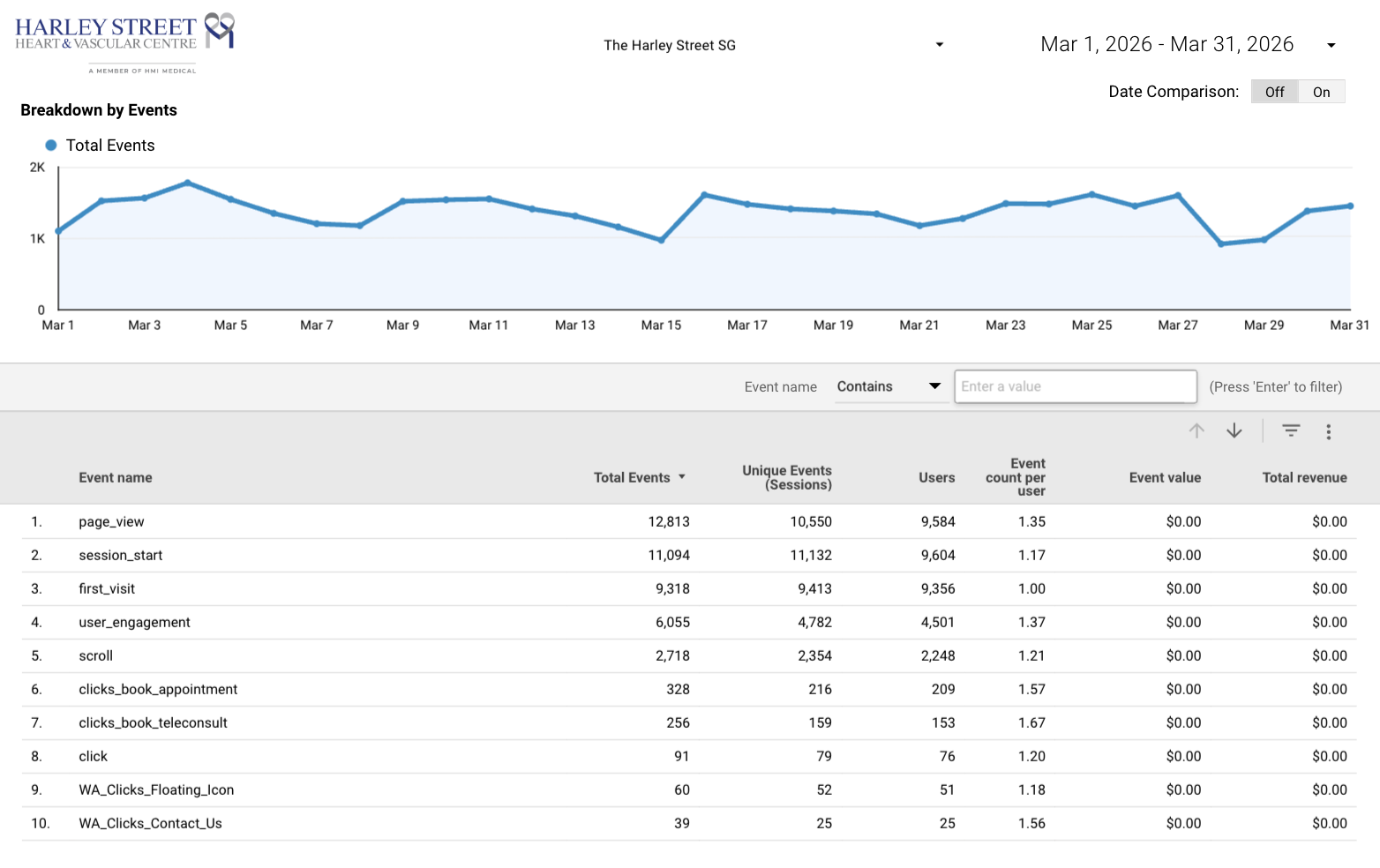
- Conversion measurement — GA4 events on every meaningful action: Book Appointment, Book Teleconsult, WhatsApp and phone clicks.
The Results
- All five target keywords on page 1 within 8 months, including Cardiologist Singapore at rank 5 (from unranked — the target page had been blocked from indexing before the engagement), Heart Specialist Singapore at rank 4 (from 20+), and ECG Singapore at rank 4 (from 13)
- 647+ commercial-intent actions per month (bookings, teleconsults, WhatsApp and calls) by the final measurement month
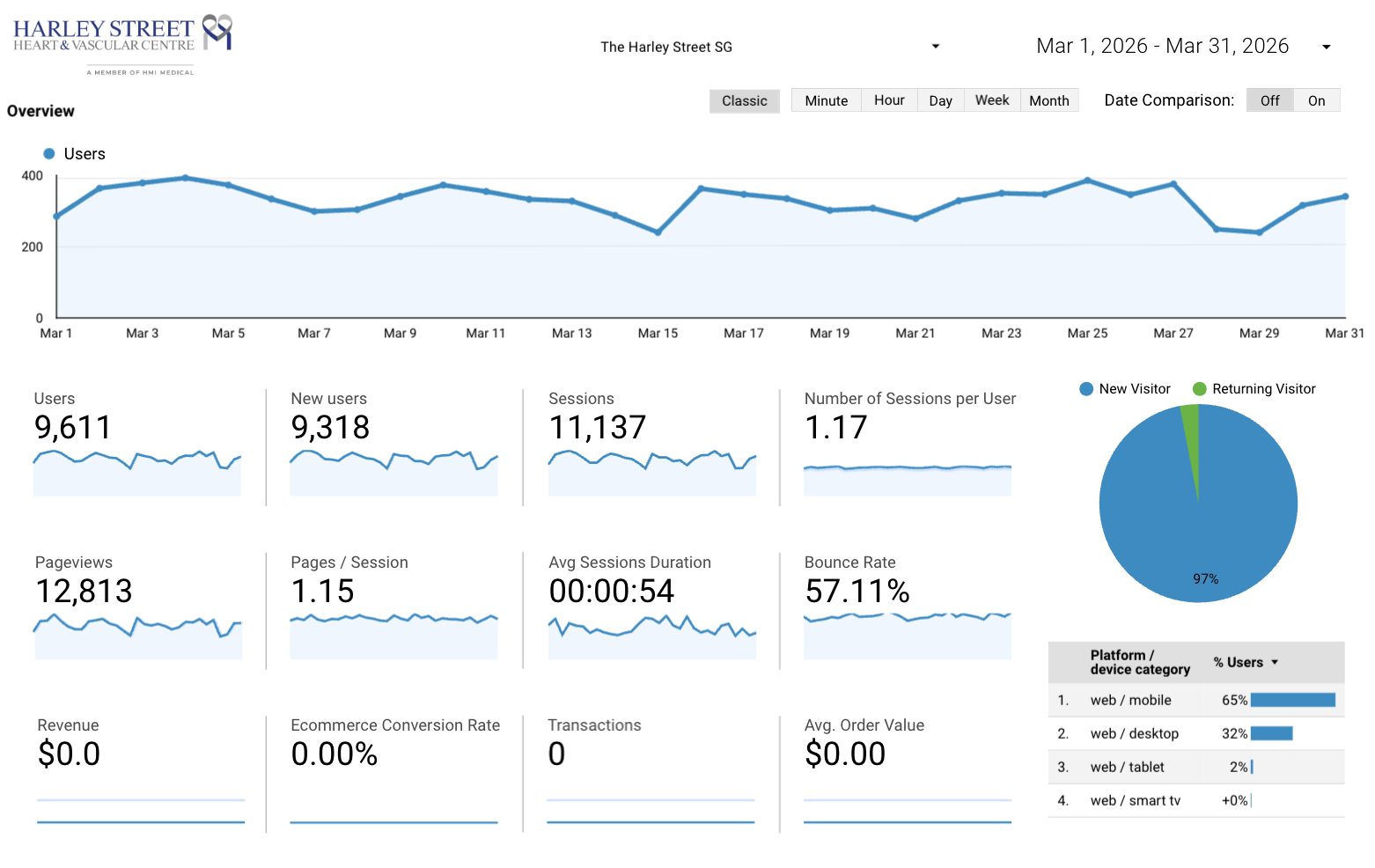
- Traffic volume was explicitly deprioritised by agreement — fewer, commercially-intended visitors were worth more than the informational base
Why This Worked
The diagnosis was the engagement. On paper the clinic’s SEO looked healthy — DR 34, thousands of keywords, steady traffic — and a generic agency would have sold more of the same. The problem only appeared when rankings were read against intent: the site was winning searches by anxious readers (“heart palpitations after eating”) and losing searches by prospective patients (“Cardiologist Singapore”). Traffic was up; consultation slots weren’t.
The counter-intuitive evidence sealed it: competitors with domain ratings under 4 were outranking a DR 34 clinic on the money terms, because their pages and links were precisely aligned to those queries. Authority wasn’t the constraint — alignment was. That justified the unusual budget split (80–90% off-page, aimed narrowly at the five target terms) and the explicit agreement to deprioritise traffic volume entirely.
Medical SEO also imposes its own discipline: Google treats health content as YMYL (Your Money or Your Life), punishing thin content and untrusted links. Every placement was editorially vetted, every cornerstone article clinically reviewed. Slower per link, but in this vertical the slow way is the only way that compounds.
Key Takeaways
- Traffic and revenue can point in opposite directions — rank profiles must be read against commercial intent, not volume.
- Domain authority loses to query alignment: a precisely-targeted DR 4 page beats a generic DR 34 one.
- Narrow scope wins: five agreed keywords with conversion tracking beats “improve our SEO” every time.
- In YMYL verticals, link quality and clinical review aren’t compliance theatre — they’re what makes rankings stick.
- Measure what the business manages: booked consultations, not sessions.
Frequently Asked Questions
Why was one target page unranked entirely at the start?
It had been blocked from indexing — a leftover technical setting nobody had caught. That single fix took “Cardiologist Singapore” from invisible to rank 5 over the engagement, a reminder that technical audits belong at the start of every campaign regardless of how healthy the site looks.
What counts as a commercial-intent action for a clinic?
The GA4 events that precede an appointment: Book Appointment and Book Teleconsult clicks, WhatsApp taps, and phone-number clicks. By the final measurement month these totalled 647+ per month — the number the engagement was accountable to.
Is it safe for medical practices in Singapore to do SEO?
Yes, within the advertising guidelines that govern healthcare — which constrain claims and testimonials, not visibility itself. Factual service pages, properly reviewed educational content and legitimate directory presence all sit comfortably inside the rules.
Why spend 80–90% of budget off-page?
Because the on-page fixes were quick and the gap to competitors was authority-alignment on specific queries — which only sustained, topically-relevant link acquisition closes. The split reflects the diagnosis, not a standard formula; other cases warrant the reverse.
What were the five target keywords?
Cardiologist Singapore, Heart Specialist Singapore, ECG Singapore, Heart Doctor Singapore and Heart Clinic Singapore — five high-intent commercial terms agreed upfront, with starting positions ranging from rank 4 to entirely unranked.
What link building works in medical SEO?
Editorially vetted, topically relevant placements: Singapore health publications, local medical directories, and partner placements with adjacent practitioners like physiotherapists and heart-health non-profits. Four media features came through direct outreach. Off-topic or low-trust links are actively dangerous in YMYL verticals.
Why deprioritise the existing informational traffic?
Because 13,000 monthly searches about palpitations after eating fill zero consultation slots. The agreement was explicit: a smaller number of commercially-intended visitors was worth more than the informational base — and 647+ monthly booking-intent actions vindicated it.