Overview
Ccmonstersart is a Singapore art studio founded by Celine Chia, offering original artwork, commissions and art classes across digital, traditional and craft disciplines. Celine had built genuine craft credibility in person — what she didn’t have was the digital surface area to match, leaving the studio invisible to the considerable audience of Singaporeans actively searching for art classes and commissions. The brief: fix that without making a creative brand feel transactional.
Project Snapshot
- Sector: Creative — art studio, Singapore
- Engagement: SEO, content and local visibility programme
- Timeline: Rankings and press compounding over the programme
- Page-1 rankings across the educational cluster: Observational Drawing, Henna Designs, Impressionism vs Post Impressionism, Glitch Art Effects, Digital Art vs Traditional Art, and others
- Press coverage followed the findability — Celine was featured by The Straits Times, Channel 8’s YouTube channel, and Mothership; coverage that is far harder to earn when journalists can’t find, contextualise and verify your work online
The Challenge
Three audiences with different search behaviour: collectors arriving via long-tail aesthetic queries; class bookers searching “art classes Singapore” with location-bound intent; and commission buyers on high-intent, low-volume queries. Overoptimise and the site loses the atmosphere that makes a viewer trust the work; underoptimise and the studio stays invisible. The studio’s teaching breadth also opened an educational long-tail — “how to make Glitch Art”, “Digital Art vs Traditional Art” — that competitors weren’t seriously pursuing.
Our Approach
- Keyword and intent mapping — commercial queries (art studio Singapore, art classes Singapore, Leather Painting Singapore) anchored the service pages; educational queries seeded the blog roadmap; brand SERP kept clean so press and socials complemented rather than competed.
- On-page foundation — homepage USPs in the first viewport, the About page rebuilt as a credibility piece, and the gallery restructured with descriptive keyword-anchored alt text — image search is a non-trivial discovery channel for art.
- Content cadence — technique deep-dives and Singapore art-scene pieces, with each educational long-tail query handled as a standalone instructional piece.
- Local SEO and partnerships — Google Business Profile optimisation, art-specific directories, and backlink relationships with adjacent creative businesses.
The Results
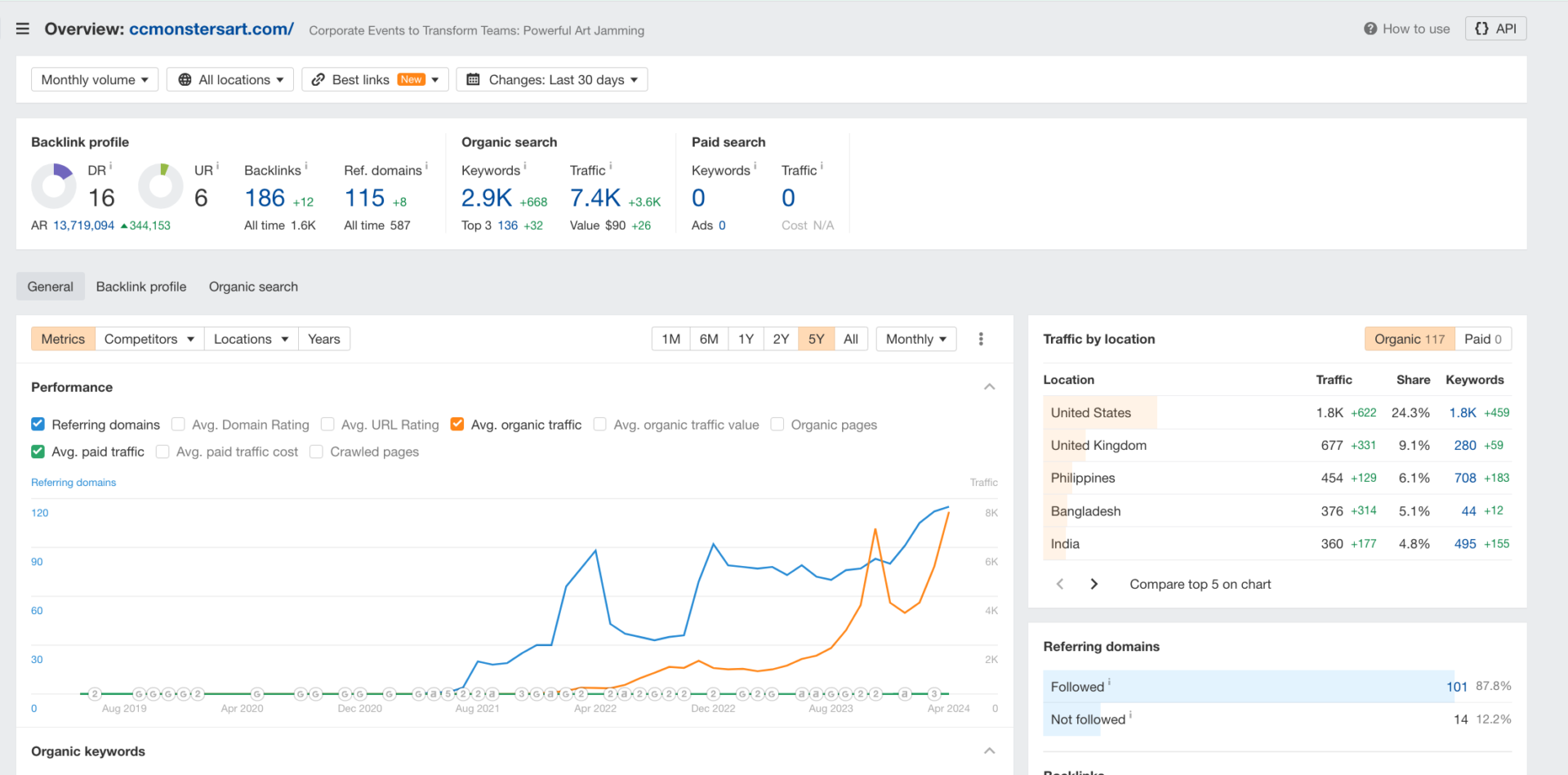
- Page-1 rankings across the educational cluster: Observational Drawing, Henna Designs, Impressionism vs Post Impressionism, Glitch Art Effects, Digital Art vs Traditional Art, and others
- Press coverage followed the findability — Celine was featured by The Straits Times, Channel 8’s YouTube channel, and Mothership; coverage that is far harder to earn when journalists can’t find, contextualise and verify your work online
- The visibility reframed her from local art instructor to recognised artrepreneur — materially affecting class enrolment, commission rates and partnership opportunities
Why This Worked
Creative businesses habitually under-invest in SEO because the work feels mismatched with the craft — and the instinct is expensive, because the audience for classes, commissions and original work is large, intent-led and searching on Google. This engagement worked by treating a creative brand with commercial SEO discipline while refusing to let the site read as transactional.
Three audiences, three treatments: collectors arrive through long-tail aesthetic queries, so the gallery was restructured with descriptive, keyword-anchored alt text and metadata — image search being a genuine discovery channel for art that most studios ignore entirely. Class bookers search location-bound commercial terms, so service pages anchored “art classes Singapore” and its variants. And the educational long tail — “Observational Drawing”, “Glitch Art Effects”, “Impressionism vs Post Impressionism” — was handled as standalone instructional pieces that competitors weren’t seriously pursuing, each one showcasing Celine’s teaching depth while ranking in its own right.
The compounding effect went beyond traffic: The Straits Times, Channel 8 and Mothership coverage followed the findability, because journalists verify before pitching editors — and a searchable, contextualised body of work makes that verification effortless. Press reframed Celine from local instructor to recognised artrepreneur, which moves class rates, commission pricing and partnership opportunities together.
Key Takeaways
- Creative credibility offline means nothing to the search demand you’re invisible for — the audience is on Google whether you are or not.
- Image search is an under-used discovery channel for visual businesses; alt text and metadata are its price of entry.
- Educational long-tail content lets a practitioner’s expertise rank where competitors don’t bother competing.
- Press follows findability: journalists cover people they can verify in one search.
- SEO discipline and creative atmosphere coexist when the optimisation stays structural, not tonal.
Frequently Asked Questions
Why does brand-SERP control matter for an artist?
Searches for “Ccmonstersart” or “Celine Chia” should show the studio site, press mentions and social profiles working together — not competing or missing. A clean brand SERP converts the curiosity that classes, press and word of mouth generate.
How do instructional pieces avoid giving away the classes’ value?
They demonstrate teaching quality rather than replace it — a guide to observational drawing shows how Celine teaches, which is precisely what a prospective student is evaluating. Free depth converts better than gated shallowness for skills businesses.
What did local SEO involve for a studio?
Google Business Profile setup and optimisation, listings on local and art-specific directories, and partnerships with adjacent creative businesses for genuinely relevant links and referrals — the local trust layer under the content work.
Can commissions really be won through search?
Yes — commission queries are low-volume but exceptionally high-intent: someone searching “personalised artwork Singapore” for an event or corporate gift has budget and a deadline. One ranked page catches a steady trickle of exactly those briefs.
What disciplines does the studio teach?
Digital, traditional and craft disciplines — from observational drawing and impressionist technique to glitch art and leather painting — a breadth that powered the educational long-tail content competitors weren’t pursuing.
Which educational queries ranked?
Observational Drawing, Henna Designs, Impressionism vs Post Impressionism, Glitch Art Effects and Digital Art vs Traditional Art among others — each a standalone instructional piece demonstrating the studio’s teaching depth.
What did press coverage change commercially?
The reframe from instructor to artrepreneur moves everything priced on reputation: class enrolment, commission rates and partnership opportunities. Straits Times, Channel 8 and Mothership features became permanent credibility assets.
What should other creative practitioners copy from this engagement?
The structure, not the specifics: separate your audiences (buyers, learners, commissioners), give each its own pages and queries, put your teaching depth into content only you could write, and keep your brand SERP clean for the moment press or clients come looking. Craft credibility plus search discipline is a category-beating combination because so few creative businesses attempt both.