
Programmatic SEO Tools: Automate Content Creation and Publishing
The Programmatic SEO Toolchain
Programmatic SEO operates at the intersection of data engineering, content strategy and technical SEO. Unlike traditional content creation — where a writer produces one article at a time — programmatic SEO generates hundreds or thousands of pages from structured data, templates and automated workflows. The tools required to execute this effectively span multiple categories, and selecting the right combination determines whether your output is a high-performing content asset or a thin-content liability. For hands-on help, it is worth talking to Singapore SEO consultancy.
The programmatic SEO tools landscape has matured significantly. What once required custom development from scratch can now be accomplished with combinations of commercial platforms, open-source tools and low-code integrations. However, the tooling decisions you make at the architecture stage cascade through every subsequent phase — from data collection to content generation to quality assurance. A poor foundation compounds problems at scale in ways that are expensive to remediate.
For Singapore businesses implementing programmatic SEO, tool selection also involves practical considerations around data residency, API availability in the APAC region and compatibility with locally prevalent CMS platforms. An SEO strategy built on programmatic foundations needs tools that work reliably in your operating environment, not just tools that perform well in US-centric demonstrations.
Categories of Programmatic SEO Tools
A complete programmatic SEO stack typically includes tools across six functional categories:
- Data management: Tools for sourcing, cleaning, structuring and storing the underlying data that powers page generation
- Content generation: Template engines, AI writing tools and content assembly systems that transform data into page content
- CMS and publishing: Platforms that render templates into live web pages and manage the publishing workflow
- Quality assurance: Automated checks for content quality, technical SEO compliance and duplicate content detection
- Indexing management: Tools for controlling how search engines discover and process your programmatic pages
- Performance analytics: Monitoring systems that track rankings, traffic and engagement across your programmatic page portfolio
Data Management and Database Tools
Data is the raw material of programmatic SEO. The quality, structure and completeness of your data directly determine the quality of every page you generate. Investing in robust data infrastructure pays dividends across the entire programme.

Spreadsheet-Based Data Management
For programmatic SEO projects generating up to a few thousand pages, Google Sheets or Airtable often serve as adequate data management tools. Google Sheets offers the advantage of familiarity and easy collaboration, while Airtable provides relational database capabilities — linking records between tables, creating views and building simple automations — without requiring SQL knowledge. Both integrate well with common publishing platforms through APIs or tools like Zapier.
The limitations become apparent at scale. Spreadsheets with more than 10,000 rows become unwieldy, formula-heavy sheets slow to unusable speeds, and version control is rudimentary. If your programmatic SEO project will exceed a few thousand pages, plan for migration to a proper database from the outset rather than retrofitting later.
Database Solutions
For larger programmatic SEO operations, a proper database is essential. PostgreSQL is the default recommendation for most use cases — it is free, handles complex queries efficiently, supports JSON data types for semi-structured content and has excellent tooling. For teams without database administration experience, managed services like Supabase or PlanetScale provide PostgreSQL or MySQL databases with web-based interfaces, built-in APIs and automatic backups.
The database schema design matters enormously. Structure your data with separate tables for entities, attributes, relationships and content components. A programmatic SEO project targeting Singapore restaurant reviews, for example, might have tables for restaurants, cuisines, locations, price ranges, reviews and generated content snippets — each linked by relationships that enable flexible page assembly.
Data Sourcing and Enrichment Tools
Populating your database requires data from somewhere. Common sourcing tools include:
- API integrations: Government open data portals (data.gov.sg is excellent for Singapore-specific datasets), industry APIs and commercial data providers
- Web scraping tools: Apify, ScrapingBee and Octoparse for extracting structured data from web sources (within legal and ethical boundaries)
- Manual collection frameworks: Google Forms or Typeform for structured data entry, useful when enriching datasets with information that requires human research
- AI-assisted enrichment: Language model APIs for generating descriptive content, categorisation and entity extraction from raw data
Data Cleaning and Transformation
Raw data is messy. Before it powers page generation, it needs standardisation, deduplication and validation. OpenRefine is a powerful free tool for cleaning large datasets — handling inconsistent formatting, merging duplicate records and transforming data structures. For ongoing data pipelines, Python scripts using pandas provide maximum flexibility, while no-code tools like Parabola or Make (formerly Integromat) offer visual data transformation workflows for non-technical teams.
Content Generation and Templating Tools
Content generation is where data becomes web pages. The tools in this category determine how your structured data translates into the HTML content that users see and search engines evaluate.
Template Engines
Template engines are the workhorses of programmatic SEO. They define page structures with variable placeholders that are populated from your data at build time or runtime. Common options include:
- Jinja2 (Python): The most popular template engine for programmatic SEO. Its syntax is clean, it supports conditional logic, loops and filters, and it integrates naturally with Python data processing pipelines. If your team has any Python capability, Jinja2 is the default choice.
- Handlebars/Mustache (JavaScript): Logic-less template engines that enforce clean separation between data and presentation. Better suited for teams working in Node.js environments or using JavaScript-based static site generators.
- Liquid (Ruby): Used natively by Shopify and Jekyll. If your programmatic SEO targets an e-commerce platform or a Jekyll-based site, Liquid is the natural fit.
- WordPress + Advanced Custom Fields: For teams operating on WordPress, ACF combined with custom post types and PHP template files provides a familiar environment for programmatic page generation without leaving the WordPress ecosystem.
AI Content Generation Tools
Large language models have transformed the content generation layer of programmatic SEO. Tools like OpenAI’s API, Anthropic’s Claude API and open-source models can generate unique descriptive content for each page, reducing the template-driven repetitiveness that plagues programmatic content.
The critical consideration is quality control. AI-generated content at scale requires robust validation to prevent hallucinations, factual errors and stylistic inconsistencies. The most effective approach uses AI to generate content components — descriptions, summaries, comparisons — which are then validated against your source data before assembly into final pages. Fully autonomous AI content generation without human oversight or data validation is a recipe for quality disasters at scale.
Content Assembly and Variation
Sophisticated programmatic SEO tools go beyond simple variable substitution. They assemble pages from modular content components, varying structure and language to create pages that feel unique rather than templated. Techniques include:
- Sentence-level variation: Multiple phrasings for each content component, randomly or contextually selected
- Conditional content blocks: Sections that appear only when relevant data exists, creating naturally varying page structures
- Data-driven narrative: Content that adapts based on data values — a property listing page might emphasise location advantages for central properties and space advantages for suburban ones
- Cross-entity comparisons: Dynamically generated comparison sections that relate the current page entity to similar entities, adding unique relational content
CMS and Publishing Automation
The publishing layer connects your content generation pipeline to the live web. The choice of CMS and deployment strategy affects page speed, crawlability, update frequency and operational complexity.
Static Site Generators
For programmatic SEO at scale, static site generators (SSGs) offer significant advantages. Tools like Next.js (with static export), Astro, Hugo and Eleventy pre-render pages at build time, producing pure HTML files that load instantly and require minimal server resources. A programmatic SEO site with 50,000 pages served as static HTML can run on basic hosting with excellent Core Web Vitals scores.
The trade-off is build time. Regenerating 50,000 pages after a data update can take minutes to hours depending on the generator and page complexity. Incremental builds — where only changed pages are regenerated — mitigate this issue. Next.js’s Incremental Static Regeneration is particularly well-suited to programmatic SEO, allowing individual pages to be rebuilt on demand without a full site rebuild.
Headless CMS Platforms
Headless CMS platforms like Strapi, Contentful and Sanity provide structured content management with API-first delivery. They excel at managing the data layer for programmatic SEO — storing structured entities, managing relationships and exposing content through APIs that your front-end consumes. For teams that need editorial oversight of programmatic content, headless CMS platforms offer admin interfaces where editors can review and modify generated content before publication.
WordPress at Scale
WordPress remains the most widely used CMS in Singapore and globally. For programmatic SEO on WordPress, the typical approach uses WP All Import or custom scripts to bulk-create posts from CSV or API data, with Advanced Custom Fields defining the data structure and custom PHP templates rendering the pages. WordPress handles programmatic SEO reasonably well up to roughly 50,000 pages, beyond which performance optimisation (object caching, database optimisation, CDN integration) becomes critical.
Publishing Automation Workflows
The pipeline from data update to published page should be automated. Common orchestration tools include:
- GitHub Actions: Trigger site rebuilds on data changes, run quality checks before deployment and deploy to hosting automatically
- Zapier/Make: Connect data sources to CMS platforms without coding, triggering content creation when new data arrives
- Custom cron jobs: For teams running their own infrastructure, scheduled scripts that pull fresh data, regenerate content and deploy updates on a defined cadence
- Webhook integrations: Real-time publishing triggers when source data changes, ideal for directories or listings where freshness matters
Quality Monitoring and Validation Tools
At scale, manual quality review is impossible. Automated quality monitoring is not optional — it is the mechanism that prevents programmatic SEO from degrading into thin content at scale. A robust content marketing operation requires systematic quality controls.
Content Quality Checks
Build automated validation into your publishing pipeline. Essential checks include:
- Minimum content length: Flag pages below your defined word count threshold
- Duplicate content detection: Compare generated pages against each other to identify pages with excessive similarity (tools like Siteliner or custom scripts using simhash algorithms)
- Data completeness: Verify that all required data fields are populated before a page is published — empty template variables produce broken, thin pages
- Factual consistency: Cross-reference AI-generated content against source data to catch hallucinations or contradictions
- Grammar and readability: Automated checks using tools like LanguageTool API or custom rule sets to catch systematic errors in generated content
Technical SEO Validation
Every programmatic page must meet technical SEO standards. Automate checks for:
- Valid HTML structure (H1 presence, heading hierarchy, meta tags)
- Canonical tag correctness
- Internal link integrity (no broken links to other programmatic pages)
- Schema markup validation
- Page speed within acceptable thresholds
- Mobile rendering correctness
Screaming Frog, Sitebulb and custom scripts using Lighthouse CI can automate these checks as part of your deployment pipeline. Fail the deployment if critical checks do not pass — it is far better to delay publication than to push thousands of technically broken pages live.
Sampling and Manual Review
Automated checks catch systematic issues but miss subtle quality problems. Implement a statistical sampling process: randomly select 2 to 5 per cent of newly generated pages for manual editorial review. This sampling catches template logic errors, awkward phrasing and contextual issues that automated tools overlook. Track the defect rate over time — it should decrease as you refine your templates and data quality.
Indexing and Crawl Management Tools
Publishing thousands of pages means nothing if Google does not discover, crawl and index them. Indexing management is a critical discipline for programmatic SEO at scale.
XML Sitemap Generation
Generate XML sitemaps dynamically from your data. For large sites, split sitemaps by category or page type — Google accepts sitemap index files that reference multiple individual sitemaps, each containing up to 50,000 URLs. Ensure sitemaps update automatically when pages are added, removed or modified. Tools like Yoast (WordPress), next-sitemap (Next.js) or custom scripts can handle dynamic sitemap generation.
Google Search Console and Indexing API
Google Search Console is essential for monitoring indexation health. Track the ratio of submitted URLs to indexed URLs — a significant gap indicates quality or technical issues preventing indexation. For high-priority pages, the Google Indexing API can request immediate crawling, though it is officially limited to job posting and livestream pages. The URL Inspection API provides per-page indexation status that can be queried programmatically to identify indexation failures across your portfolio.
IndexNow Protocol
IndexNow, supported by Bing and Yandex (and increasingly adopted by other engines), allows you to notify search engines of new or updated pages instantly. For programmatic SEO sites with frequent data updates, implementing IndexNow reduces the delay between publication and indexation. Integration is straightforward — submit URLs via API call when pages are created or updated. While Google has not officially adopted IndexNow, testing it alongside Google’s mechanisms covers multiple discovery channels.
Crawl Budget Optimisation
Large programmatic sites must manage crawl budget deliberately. Use robots.txt to block low-value URL patterns (filtered views, sort orders, utility pages) that consume crawl resources without SEO benefit. Monitor crawl stats in Google Search Console to identify which sections Google prioritises and adjust your internal linking to direct crawl attention toward your highest-value programmatic pages.
Analytics and Performance Tracking
Measuring programmatic SEO performance requires analytics approaches adapted to scale. Traditional page-by-page analysis is impractical when you have thousands of pages; instead, you need aggregate monitoring with drill-down capability for investigation.
Portfolio-Level Performance Dashboards
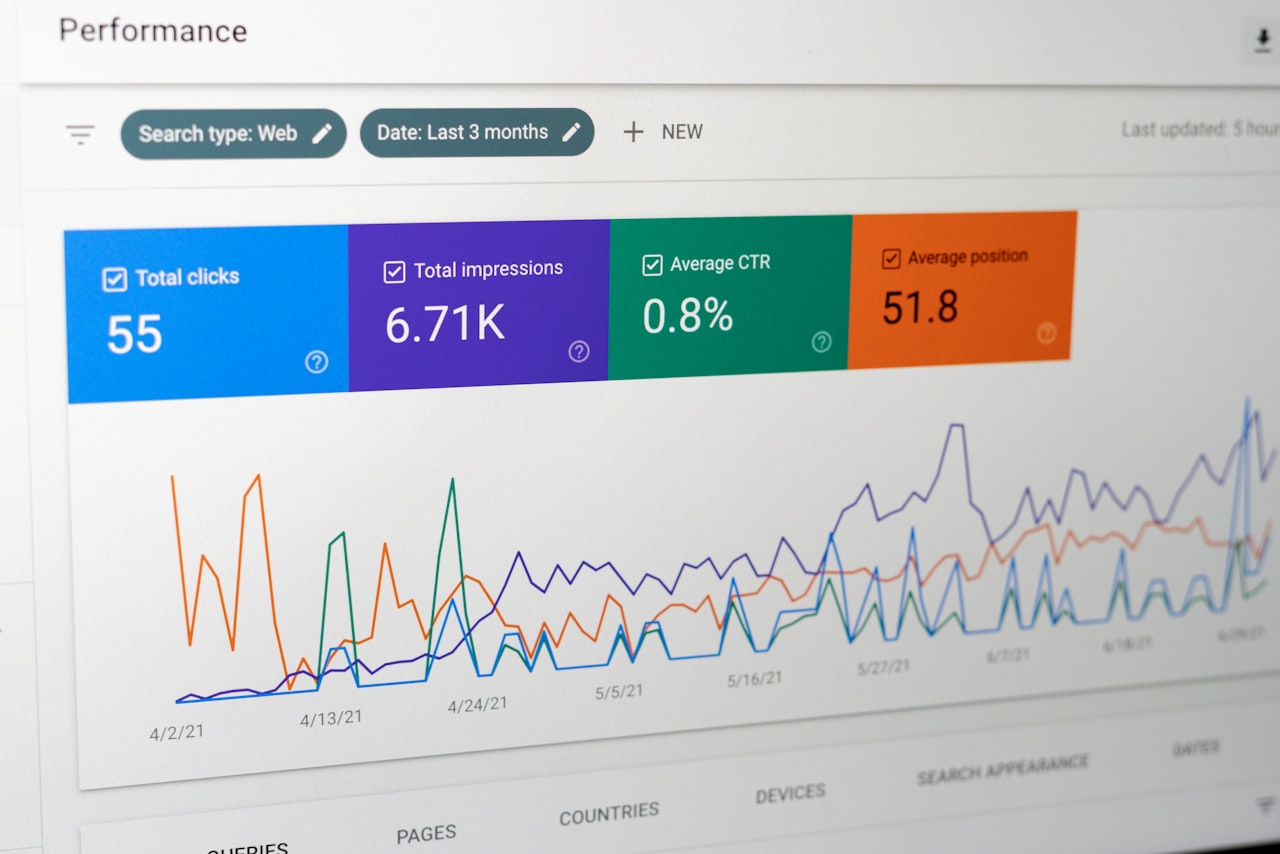
Build dashboards that track programmatic page performance at the category and template level rather than individual pages. Tools like Looker Studio (connected to Google Analytics and Search Console) or custom dashboards in platforms like Metabase or Grafana can visualise trends across page groups. Key metrics include aggregate organic traffic, average position distribution, click-through rates by template type and indexation ratios.
Anomaly Detection
At scale, you need automated alerting for performance anomalies. A 10 per cent traffic decline across a category of 5,000 pages could indicate an algorithm update, a technical issue or a content quality problem. Tools like Google Analytics anomaly detection, custom scripts monitoring Search Console data or third-party platforms like Semrush Sensor can flag unusual patterns that warrant investigation. Without automated monitoring, performance issues can persist undetected for weeks across less-visible page categories.
A/B Testing at Scale
Programmatic SEO enables testing at a scale that traditional content creation cannot match. Test template variations across page subsets: different title tag formats, content structures, internal linking patterns and schema markup approaches. Google’s own documentation suggests that testing SEO changes across page groups is a valid and recommended practice. Use statistical significance testing to evaluate results — with thousands of pages, even small per-page improvements compound into significant aggregate gains.
Revenue and Conversion Attribution
Connect programmatic page performance to business outcomes. Track which page categories drive the highest conversion rates, longest engagement and most valuable assisted conversions. This data feeds back into your content strategy — invest more in template types and data categories that generate commercial value, and either improve or deprioritise those that drive only informational traffic without downstream conversion. For businesses investing in digital marketing, this attribution data justifies continued programmatic SEO investment.
Building Custom Programmatic SEO Pipelines
No single tool covers every aspect of programmatic SEO. The most effective implementations combine multiple tools into custom pipelines tailored to specific data sources, content requirements and publishing targets.

The Minimal Viable Pipeline
The simplest effective pipeline comprises: Google Sheets (data) → Jinja2 or Python script (content generation) → static HTML files (publishing) → GitHub Pages or Netlify (hosting). This stack costs nothing beyond time, handles up to a few thousand pages and teaches the fundamental concepts before investing in more sophisticated tooling. Many successful programmatic SEO projects in Singapore run on exactly this minimal stack.
The Enterprise Pipeline
Larger operations typically use: PostgreSQL database (data) → Python/Node.js processing scripts (transformation and content generation) → Next.js or headless CMS (publishing) → cloud hosting with CDN (delivery) → Looker Studio and custom monitoring (analytics). This stack handles hundreds of thousands of pages, supports multiple team members and provides the reliability needed for business-critical SEO operations.
Integration and Orchestration
The connections between tools matter as much as the tools themselves. Use orchestration platforms like Airflow (for Python-native teams), GitHub Actions (for git-based workflows) or Make/Zapier (for no-code teams) to coordinate data flows between pipeline stages. Every pipeline should include error handling, logging and notification systems so that failures are caught and addressed before they affect live pages.
Documentation and Maintenance
Programmatic SEO pipelines are technical systems that require maintenance. Document your pipeline architecture, data schemas, template logic and deployment procedures. Without documentation, a pipeline becomes fragile — dependent on the knowledge of whoever built it. When that person leaves or forgets the details, the pipeline becomes difficult to modify or debug. Treat your programmatic SEO infrastructure with the same rigour you would apply to any production software system.
The right programmatic SEO tools accelerate your ability to create valuable content at scale. But tools are enablers, not strategies. The strategy — choosing the right data, building genuinely useful page experiences and maintaining quality at scale — determines whether your programmatic SEO generates sustainable organic traffic or produces a mass of thin pages that harms your domain. Invest in tools that support quality as much as tools that support speed, and build pipelines that make quality the path of least resistance for every page you publish.
Frequently Asked Questions
What is the best tool for programmatic SEO beginners?
Start with Google Sheets for data management and a simple Python script with Jinja2 templates for content generation. This combination is free, well-documented and teaches the fundamental concepts. Deploy generated HTML to a static hosting platform like Netlify or GitHub Pages. Once you understand the workflow, you can upgrade individual components as your needs grow.
Can I do programmatic SEO without coding?
Yes, with limitations. Airtable for data, Webflow or WordPress with tools like WP All Import for publishing, and Zapier for connecting them creates a no-code programmatic SEO pipeline. However, you will hit capability ceilings with complex content logic, advanced quality checks and high-volume publishing. Learning basic Python or JavaScript significantly expands what is possible.
How do I prevent AI-generated content from being flagged as spam?
Ensure that AI-generated content adds genuine value beyond what the raw data provides. Validate AI output against source data to catch hallucinations. Add unique elements that AI alone cannot produce — proprietary data, expert analysis, user-generated content. Google’s guidance is clear: the production method matters less than the quality and usefulness of the output. Focus on value, not on disguising the production method.
Which CMS is best for programmatic SEO at scale?
For sites under 50,000 pages, WordPress with proper optimisation works well and offers the broadest plugin ecosystem. For larger sites, static site generators (Next.js, Hugo, Astro) provide better performance and lower hosting costs. Headless CMS platforms like Strapi or Contentful suit teams that need editorial workflows alongside programmatic generation. The best CMS is the one your team can maintain effectively.
How much does a programmatic SEO toolstack cost?
A minimal stack (Google Sheets, Python scripts, free hosting) costs nothing beyond time. A mid-range stack (Airtable Pro, managed database, cloud hosting, monitoring tools) runs approximately SGD 200 to 500 per month. Enterprise stacks with commercial data sources, dedicated infrastructure and premium analytics tools can cost SGD 2,000 to 10,000 per month. The investment should be proportional to the traffic and revenue potential of your programmatic pages.
How do I handle data updates across thousands of programmatic pages?
Implement an automated pipeline that detects data changes, regenerates affected pages and deploys updates without manual intervention. For static sites, incremental builds regenerate only changed pages. For database-driven sites, runtime rendering automatically reflects data updates. Schedule regular data refresh cycles and set up monitoring to verify that updates propagate correctly across all affected pages.
What quality checks should I automate?
At minimum, automate checks for content length, duplicate content across pages, data completeness, broken internal links, valid HTML structure and schema markup. Add checks specific to your content type — for example, a price comparison site should verify that all prices are current and within plausible ranges. Run checks before deployment and block publication of pages that fail critical checks.
How do I get thousands of programmatic pages indexed by Google?
Submit comprehensive XML sitemaps, ensure strong internal linking between programmatic pages and hub pages, use the IndexNow protocol for rapid discovery and monitor indexation rates in Google Search Console. If indexation rates are low, the most common causes are thin content (Google chooses not to index pages it considers low-value) or crawl accessibility issues (Google cannot efficiently discover the pages).
Should I use a subdomain or subdirectory for programmatic SEO pages?
Subdirectory, almost always. Pages on a subdirectory inherit the domain authority of your main site, whereas subdomain pages are treated more independently by search engines. The exception is if your programmatic content is so different from your main site that it might confuse topical signals — a corporate consultancy launching a consumer comparison tool, for example, might benefit from separation. For most cases, subdirectory is the correct choice.
How do I measure the ROI of programmatic SEO tools?
Calculate the cost per page (tool costs plus labour divided by pages produced), then compare against the traffic value of those pages (organic traffic multiplied by equivalent CPC from Google Ads). A programmatic SEO page costing SGD 2 to produce that generates 50 monthly visits with an equivalent CPC of SGD 3 produces SGD 150 in monthly traffic value — a 75x return on production cost. Track this ratio across page categories to identify your highest-ROI investments.