
Part of our SEO Guides guide →
Why Internal Linking Is Critical for Programmatic SEO
Internal linking is the circulatory system of any website, but for programmatic SEO it is existential. When you generate thousands of pages from templates and data, those pages do not automatically inherit the authority and trust signals of your existing domain. Without deliberate internal linking, programmatic pages exist as isolated nodes — discoverable only through sitemaps, disconnected from the authority flowing through your site’s established content.
Google’s crawlers follow links to discover content. A programmatic page that is linked from your homepage, category pages and related content pages is discovered faster, crawled more frequently and ranked more favourably than an identical page accessible only via sitemap. The difference is not theoretical — studies of large programmatic sites consistently show that pages with strong internal linking profiles achieve indexation rates 30 to 50 per cent higher than poorly linked pages within the same domain.
Programmatic SEO internal linking also distributes PageRank — the authority signal that flows between pages via links. Your established content pages, service pages and homepage have accumulated authority through external backlinks, user engagement and age. Internal links channel a portion of that authority to your programmatic pages, accelerating their ability to rank. Without this authority distribution, programmatic pages must earn rankings from zero, competing against established pages with years of accumulated signals.
The Scale Challenge
Manual internal linking does not work at programmatic scale. An editor can thoughtfully link a blog post to five or ten relevant pages. That same editor cannot manually determine and insert appropriate links across 10,000 programmatic pages. The linking strategy must be systematic, automated and driven by data — which is both the challenge and the opportunity. Automated linking, when designed well, can create link structures of a sophistication and consistency that manual linking could never achieve.
The Indexation Dependency
For many programmatic SEO projects, internal linking is the single largest determinant of indexation success. Google’s crawl budget is finite, and programmatic sites compete internally for crawl attention. Pages that are well-linked from already-crawled pages earn more crawl visits, which leads to faster indexation, which leads to impression data, which feeds back into Google’s quality assessment. Internal linking creates a virtuous cycle that underpins the entire programmatic SEO strategy. Businesses investing in SEO services must ensure internal linking is engineered with the same rigour as the content itself.
Designing Link Architecture for Scale
Link architecture for programmatic SEO must be designed before any pages are generated. Retrofitting link structures onto an existing set of thousands of pages is significantly more complex and error-prone than building linking logic into the generation pipeline from day one.
Hierarchical Category Structures
The foundational architecture pattern for programmatic sites is a clear hierarchy: homepage links to category pages, category pages link to subcategory pages, subcategory pages link to individual entity pages. This creates a pyramid structure where authority flows downward from your most authoritative pages to your most numerous programmatic pages. The depth of the hierarchy should be minimal — three levels (category → subcategory → entity) is ideal, four levels is acceptable, and five or more creates authority dilution and crawl efficiency problems.
For a programmatic site targeting Singapore business listings, the hierarchy might be: Homepage → Industry categories (e.g., “Marketing Agencies Singapore”) → Subcategories (e.g., “SEO Agencies Singapore”) → Individual agency pages. Each level links comprehensively to the level below and selectively back to the level above.
Flat Architecture for Smaller Programmatic Sites
Sites with fewer than 1,000 programmatic pages can consider a flatter architecture where category pages link directly to all entity pages without subcategories. This maximises the authority reaching each entity page (fewer intermediary levels diluting PageRank) and simplifies the linking logic. The trade-off is that category pages with hundreds of outbound links dilute the per-link equity. For smaller sites, this trade-off favours flatness; for larger sites, hierarchy is necessary.
Cross-Category Linking
Pure hierarchical linking creates silos — entity pages within one category are linked to their category hub but not to related entities in other categories. Cross-category links break these silos and create the web-like link topology that search engines prefer. Implement cross-category links through “related entities” sections, “also in this area” blocks and “frequently compared” modules. These links should be driven by genuine relationships in your data, not random cross-linking.
Link Density Planning
Determine the target number of internal links per page type. Category pages should link to every subcategory and featured entities — potentially 50 to 100 links. Entity pages should link to their parent category, 5 to 10 related entities, 2 to 3 cross-category links and any relevant editorial content — typically 15 to 25 internal links total. These numbers should be tested and adjusted based on your site’s specific architecture and performance data.
Automated Link Insertion Strategies
Automated link insertion transforms your linking architecture from a design into a live system. The implementation approach depends on your CMS, templating system and technical capabilities.
Template-Level Linking
The most reliable automated linking method embeds link logic directly into your page templates. Category pages automatically link to their child pages through database queries. Entity pages automatically link to their parent categories, sibling entities and related content. These links are generated at render time from your data relationships, ensuring they stay current as pages are added or removed.
Template-level linking handles structural links — the hierarchy, related entities and category navigation. Implementation varies by platform: WordPress uses WP_Query or custom database queries in PHP templates; static site generators use data files and template logic; headless CMS platforms expose relationships through their APIs. The principle is consistent: links are derived from data relationships, not manually inserted.
Content-Body Link Injection
Beyond structural links in navigation and sidebar modules, links within the main content body carry additional weight for SEO. Automating content-body links requires more sophisticated logic — identifying opportunities within generated text where a link to another page is contextually appropriate.
The most effective approach maintains a dictionary of link targets mapped to trigger phrases. When content generation produces text containing “SEO audit,” the system automatically links that phrase to your SEO audit page. When a location name appears, it links to the corresponding location page. This dictionary-based approach scales well and produces contextually appropriate links, provided the dictionary is carefully curated to avoid over-linking or irrelevant connections.
Dynamic Related Content Modules
Related content modules — “Similar businesses,” “You might also like,” “In the same area” — are programmatic linking workhorses. These modules query your database for entities sharing attributes with the current page entity and display them as linked recommendations. The algorithm can consider multiple relationship dimensions:
- Category similarity: Entities in the same or related categories
- Geographic proximity: Entities in the same area or neighbourhood
- Attribute matching: Entities sharing price range, size, specialisation or other relevant attributes
- Popularity weighting: Prioritising links to higher-traffic pages to encourage engagement
- Recency: Prioritising recently updated entities to distribute crawl attention to fresh content
Breadcrumb Link Automation
Automated breadcrumb navigation provides hierarchical internal links on every page while improving user experience and earning rich results in search. Breadcrumbs should be generated from your site’s taxonomy — every entity page displays its position in the hierarchy (Home → Category → Subcategory → Entity). Implement breadcrumbs with BreadcrumbList schema markup for maximum search visibility. On well-designed websites, breadcrumbs serve both as navigational aids and as SEO-reinforcing link elements.
Anchor Text Strategy at Scale
Anchor text — the visible, clickable text of a hyperlink — carries significant weight in Google’s understanding of what the linked page is about. At programmatic scale, anchor text patterns are amplified, making strategic anchor text management both an opportunity and a risk.
Natural Anchor Text Variation
When thousands of pages link to a category page, the anchor text distribution matters. If every entity page links to “SEO Services Singapore” with identical anchor text, the pattern appears manipulative. Natural anchor text varies: “SEO services,” “search engine optimisation providers,” “SEO agencies in Singapore,” “professional SEO help.” Build variation into your templates by using multiple anchor text options that are selected contextually or randomly from a curated list.
Keyword-Aligned Anchor Text
While variation is important, anchor text should still be relevant to the linked page’s target keywords. Links to your category page for web designers should use anchor text related to web design, not generic phrases like “click here” or “learn more.” The balance is keyword relevance with natural variation — multiple relevant phrases rather than one exact-match phrase repeated thousands of times.
Entity Name Anchoring
For links between entity pages (e.g., “related businesses” modules), using the entity’s name as anchor text is natural and appropriate. “View Singapore Airlines” or “Compare with DBS Bank” are naturally keyword-rich anchors that Google expects to see in entity-focused content. This pattern requires no artificial variation — each entity has a unique name, so the anchor text is inherently varied across your link portfolio.
Avoiding Over-Optimisation at Scale
Programmatic sites face a unique over-optimisation risk. A template that generates exact-match anchor text on 10,000 pages creates an unnatural pattern that would never occur on a manually linked site. Audit your aggregate anchor text distribution regularly. For any target page, the distribution of internal anchor text should include a mix of exact-match keywords (15 to 25 per cent), partial-match variations (30 to 40 per cent), branded or entity name anchors (20 to 30 per cent) and generic or contextual phrases (10 to 20 per cent). These ratios should emerge naturally from well-designed templates rather than requiring manual intervention.
Hub-and-Spoke Linking Models
The hub-and-spoke model is the dominant linking architecture for programmatic SEO, and understanding its nuances is essential for maximising the strategy’s effectiveness.

Category Hubs as Authority Distributors
Category hub pages serve as authority collection and distribution nodes. They accumulate authority from the homepage, from internal links across your editorial content and potentially from external backlinks targeting category-level queries (“best restaurants Singapore,” “top web designers Singapore”). This accumulated authority is then distributed to individual entity pages through the hub’s outbound links.
The effectiveness of this distribution depends on the hub page itself being substantive. A category page that is merely a list of links — a thin index page — provides minimal authority distribution and may not even earn strong authority itself. Effective hub pages include editorial content about the category, curated highlights, filtering functionality and substantive category-level information that merits its own rankings. A hub page for digital marketing services in Singapore should be a resource in its own right, not just a link directory.
Spoke-to-Hub Reinforcement
Entity pages should link back to their category hubs, creating bidirectional linking that reinforces the topical relationship. These return links tell Google that the entity belongs to the category, strengthening the hub’s topical authority. Implement return links through breadcrumbs, “back to category” navigation and contextual mentions of the category within entity page content.
Spoke-to-Spoke Cross-Linking
Direct links between entity pages (spoke-to-spoke) create a denser link topology that distributes authority more evenly and creates additional crawl paths. Without spoke-to-spoke links, Google must crawl through the hub to reach each entity — a bottleneck that limits crawl efficiency for large sites. “Related entities” modules that link directly between entity pages bypass this bottleneck and create a more resilient link architecture.
Multi-Hub Architectures
Complex programmatic sites may have multiple hub hierarchies — category hubs, location hubs, attribute hubs — with entity pages appearing under multiple hub types. A Singapore restaurant might appear under the “Japanese Cuisine” category hub, the “Orchard Road” location hub and the “Fine Dining” attribute hub. Each hub provides a different contextual link, enriching the entity page’s topical signals and providing multiple discovery paths for both users and crawlers.
Editorial Content as Hub Amplifiers
Your editorial blog content — guides, reviews, analysis articles — can serve as secondary hubs that link to relevant programmatic pages. An article about “Best hawker centres in Singapore” naturally links to individual hawker centre entity pages, distributing the article’s authority while providing contextual relevance that pure structural links lack. Building editorial content that references and links to programmatic pages is one of the most effective ways to accelerate programmatic page authority. This is where content marketing and programmatic SEO strategies converge.
Crawl Optimisation Through Internal Linking
Google allocates a finite crawl budget to each domain. For programmatic sites with thousands or tens of thousands of pages, crawl budget management is a practical concern that directly affects indexation speed and freshness.
Crawl Budget Distribution
Internal links influence how Google distributes its crawl budget across your site. Pages with more internal links pointing to them receive more crawl attention. By strategically linking to your highest-priority programmatic pages from well-crawled parts of your site, you direct Google’s crawlers toward the content that matters most. Conversely, pages with few or no internal links may be crawled infrequently or not at all, regardless of their presence in your sitemap.
Reducing Crawl Depth
Crawl depth — the number of clicks from the homepage to a given page — affects crawl priority. Pages reachable in two clicks receive more crawl attention than pages requiring five clicks. For programmatic sites, minimise crawl depth by linking directly from category pages to entity pages (avoiding unnecessary intermediary levels) and including featured entity links on your homepage. A programmatic page should ideally be reachable within three clicks from your homepage.
Pagination and Crawl Efficiency
Category pages that paginate through hundreds of entity listings create crawl depth issues. Page 50 of a category listing is far from the homepage, and entities listed only on deep pagination pages receive minimal crawl attention. Strategies to mitigate this include:
- Load more patterns with HTML fallbacks: Use JavaScript “load more” functionality for users with crawlable paginated HTML as a fallback for search engines
- Alphabetical or segmented subpages: Break long listings into meaningful segments (A-D, E-H, etc.) that each serve as secondary hubs
- Featured and recent sections: Highlight selected entities on the primary category page, ensuring they receive direct links from the highest-authority hub page
- Cross-linking from pagination pages: Each pagination page should link to other pagination pages, not just “next” and “previous,” creating a mesh that reduces maximum crawl depth
Managing Crawl Waste
Prevent crawlers from wasting budget on low-value URL patterns. Faceted navigation, sort parameters, session IDs and internal search results all generate crawlable URLs that consume budget without SEO value. Use robots.txt, canonical tags and nofollow attributes strategically to focus crawl attention on your valuable programmatic pages rather than utility pages and parameter variations.
Common Internal Linking Mistakes in Programmatic SEO
Programmatic internal linking amplifies both good and bad practices. Mistakes that would be minor on a 50-page site become severe on a 50,000-page site. Understanding common pitfalls helps you avoid them.
Orphan Pages
Pages that exist in your sitemap and CMS but receive zero internal links are orphan pages. In programmatic SEO, orphan pages typically result from template logic errors — a new category of entities is added to the database but the category hub template does not include them, or a filter condition excludes certain entities from related content modules. Orphan pages are effectively invisible to Google’s crawlers and rarely achieve indexation. Audit regularly for orphan pages using crawl tools like Screaming Frog or Sitebulb.
Excessive Links per Page
While there is no hard limit on internal links per page, excessive outbound links dilute the per-link equity passed to each target. A category page with 1,000 outbound links to entity pages distributes a tiny fraction of its authority to each. More practically, pages with hundreds of links create poor user experiences and can be perceived as “link lists” rather than genuine content. Cap outbound links per page at a reasonable number (generally under 200 for hub pages) and use pagination to handle larger sets.
Broken Internal Links
In dynamic programmatic sites, entities are added, removed and modified regularly. Internal links to deleted entities produce 404 errors that waste crawl budget, damage user experience and leak authority. Implement automated broken link detection that runs with every data update. When entities are removed, redirect their URLs to appropriate alternative pages or the parent category rather than allowing 404 responses.
Uniform Link Patterns
If every programmatic page has exactly the same linking structure — five related entities in the sidebar, three cross-category links in the footer, one parent category link in the breadcrumb — the uniformity itself can appear unnatural at scale. Introduce controlled variation: some pages show four related entities, others show six; the selection algorithm varies the specific related entities shown; some pages include editorial content links while others do not. This variation makes the linking pattern appear organic rather than mechanically generated.
Ignoring Link Context
Links in main content carry more weight than links in sidebars, footers or navigation menus. Programmatic sites that rely entirely on template-based sidebar and footer links miss the opportunity to place contextually relevant links within the main content body. Invest in content-body linking — links embedded within descriptive text, editorial summaries and analytical content — to maximise the SEO value of each internal link.
Measuring Internal Linking Effectiveness
Internal linking strategies should be measured, tested and refined based on performance data. The metrics that matter for programmatic internal linking differ from general SEO measurement.
Crawl Distribution Analysis
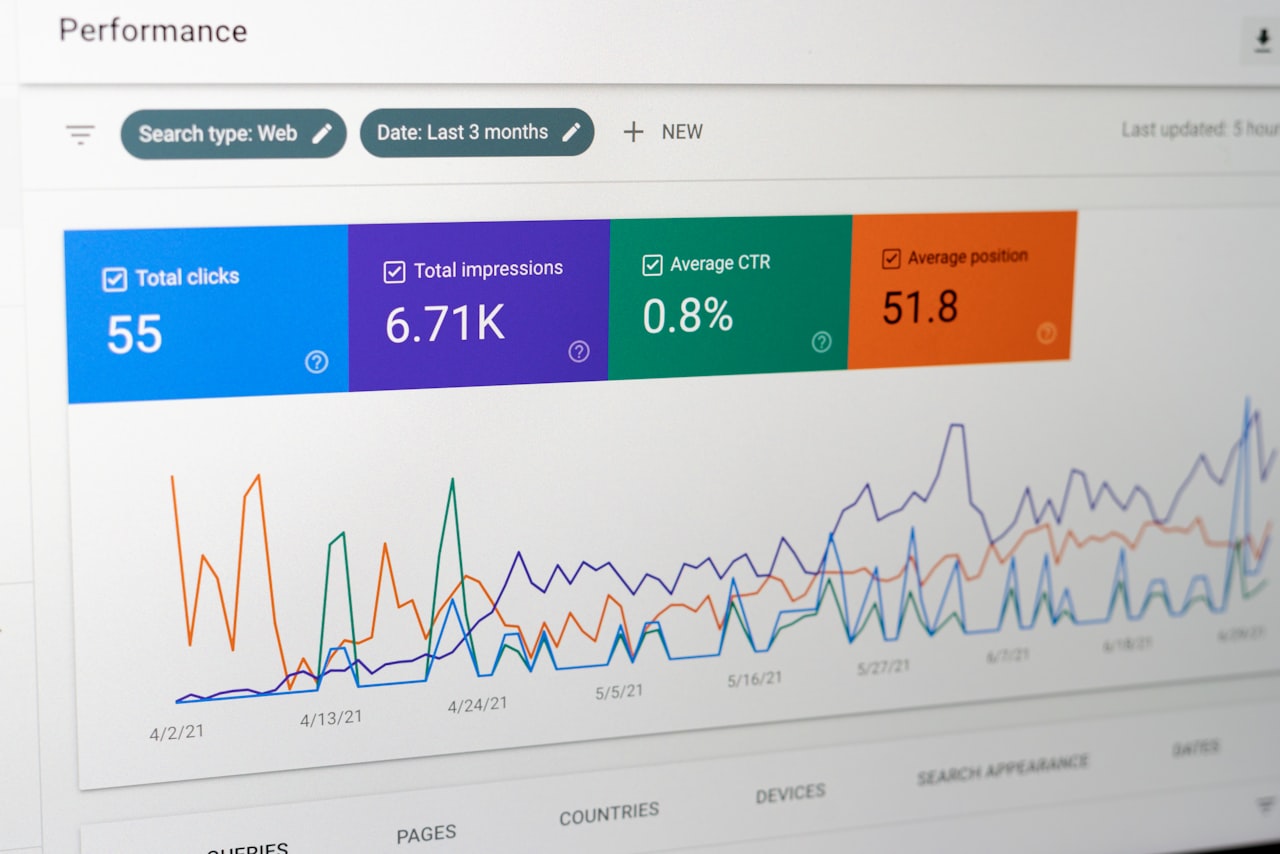
Analyse your server logs or Google Search Console crawl stats to understand how Google’s crawlers navigate your programmatic pages. Identify which pages receive the most crawl attention (these should be your most important pages) and which are under-crawled. If high-priority programmatic pages receive few crawl visits, the internal linking to those pages needs strengthening. If low-priority utility pages receive disproportionate crawl attention, your link architecture is misdirecting crawl budget.
Indexation Rate by Link Depth
Correlate indexation rates with the number of internal links pointing to each page. Pages with more internal links should show higher indexation rates. If this correlation is weak, your links may not be effectively passing crawl signals — potentially due to JavaScript rendering issues, nofollow attributes or link placement in elements that Google discounts.
Internal Link Equity Flow Modelling
Tools like Screaming Frog, Ahrefs Site Audit and Sitebulb can model how link equity flows through your internal link structure. These models identify authority bottlenecks (pages that accumulate authority but do not distribute it), authority sinks (pages that receive links but pass none onward) and underserved pages (high-value pages receiving insufficient internal links). Use these models to refine your linking architecture iteratively.
A/B Testing Link Patterns
Test different linking strategies across programmatic page subsets. Compare performance between pages with five related entity links versus ten, between pages with and without editorial cross-links, and between different link placement patterns (sidebar versus content body). With thousands of pages available for testing, you can achieve statistical significance relatively quickly. Track indexation rates, ranking positions and organic traffic as outcome metrics.
Conversion Path Analysis
For commercial programmatic sites, analyse the internal link paths that lead to conversions. Do users who navigate from entity pages to category hubs convert at different rates than users who move directly between entity pages? Does linking to Google Ads services or other commercial pages from programmatic content generate qualified leads? Understanding which link paths produce commercial outcomes allows you to optimise linking for business value, not just SEO metrics.
Effective programmatic SEO internal linking is engineering work — it requires systematic design, automated implementation, continuous monitoring and data-driven optimisation. The investment in link architecture pays dividends across every metric that matters: crawl efficiency, indexation rates, ranking performance and ultimately organic traffic and conversions. For any programmatic SEO project, internal linking should receive the same strategic attention and technical resources as the content generation pipeline itself.
Frequently Asked Questions
How many internal links should a programmatic page have?
Entity pages typically perform well with 15 to 25 internal links: parent category breadcrumbs, 5 to 10 related entity links, 2 to 3 cross-category links and 3 to 5 contextual links to editorial or service content. Category hub pages can have more — 50 to 100 links to child pages is common and appropriate. The key is that every link serves a genuine navigational or contextual purpose rather than existing solely for SEO link distribution.
Should I use nofollow on any internal links?
Generally, no. Internal nofollow does not “conserve” PageRank — it simply prevents the link from passing equity while the equity that would have flowed through it is lost. The exception is links to utility pages (login pages, cart pages, privacy policies) that you do not want Google to prioritise crawling. For all content-bearing internal links, follow links are appropriate and beneficial.
How do I prevent orphan pages in programmatic SEO?
Build link generation into your page generation pipeline so that every new page automatically receives links from its category hub, related entities and breadcrumb navigation. Run automated orphan page detection after every data update — compare the set of live URLs against the set of internally linked URLs. Any page that exists but is not linked from at least one other page is an orphan that needs attention.
Does internal link placement matter — sidebar versus content body?
Yes. Links within the main content body carry more SEO weight than links in sidebars, headers and footers. Google’s systems can identify the main content area of a page and give greater weight to links placed within contextually relevant content. Invest in content-body link injection — links embedded within descriptive text — in addition to structural navigation links. Both serve a purpose, but content-body links are more valuable per link.
How do I handle internal linking when entities are removed?
When an entity page is removed, redirect its URL to the most relevant alternative — typically the parent category page or a closely related entity. Update your database to remove the deleted entity from related content modules, ensuring that remaining pages do not link to a redirected URL. Monitor for chains of redirects (entity A redirects to entity B, which later redirects to entity C) and flatten these chains periodically.
Can internal linking alone get programmatic pages indexed?
Strong internal linking significantly improves indexation rates but is not sufficient alone. Pages must also meet Google’s quality thresholds — substantive content, unique value and technical SEO compliance. A well-linked thin page may be crawled efficiently but still not indexed because Google judges it as not worth indexing. Internal linking enables discovery; content quality determines indexation.
How do I link programmatic pages to my blog content?
Create contextual links from programmatic pages to relevant blog posts where the blog content provides deeper exploration of a topic mentioned on the programmatic page. Conversely, link from blog posts to relevant programmatic pages — an article about “choosing an SEO agency” naturally links to your directory of SEO agencies. Maintain a mapping of blog content to programmatic page categories, and update links when new blog content is published.
What tools can I use to audit internal linking at scale?
Screaming Frog, Sitebulb and Ahrefs Site Audit all provide internal link analysis for large sites. Screaming Frog handles up to hundreds of thousands of URLs and provides link metrics including internal link count, link depth, anchor text distribution and orphan page detection. For ongoing monitoring, build custom dashboards using Google Search Console data and crawl log analysis. Server log analysis tools like Logflare or custom ELK stack setups provide real-time crawl pattern insights.
How often should I review and update my internal linking strategy?
Review internal linking quarterly at minimum. After any significant changes — new page categories, template updates, site restructuring — conduct an immediate audit. Monitor crawl patterns and indexation rates continuously through automated dashboards. When metrics indicate crawl or indexation issues, investigate internal linking as a primary suspect. The link architecture should evolve as your programmatic content grows — a structure designed for 1,000 pages may not be optimal for 10,000.
Is there a risk of over-linking in programmatic SEO?
Yes. Excessive internal links dilute per-link equity, create cluttered user experiences and can appear manipulative at scale. If every page links to every other page, the link structure provides no meaningful signals about page relationships or importance. Focus internal links on genuinely related and useful connections. Quality of link relevance matters more than quantity of links. A programmatic page with 15 highly relevant internal links outperforms one with 50 tangentially related links in both user experience and SEO effectiveness.