
Pillar Page Guide: Create Comprehensive Pages That Rank
What Is a Pillar Page?
A pillar page is a comprehensive, long-form piece of content that serves as the central authoritative resource on a broad topic. It covers every major aspect of its subject at a meaningful depth while linking out to more detailed cluster articles that explore specific subtopics. The pillar page functions as the hub of a content cluster — the single page you would point someone to if they asked, “Where can I learn everything about this topic?”
In the context of modern SEO strategy, pillar pages serve a dual purpose. For users, they provide a structured, navigable overview of a complex topic. For search engines, they establish topical authority by demonstrating comprehensive knowledge and creating a clear content hierarchy through internal linking.
The concept emerged from HubSpot’s topic cluster model around 2017, but the underlying principle is older: search engines reward sites that demonstrate comprehensive expertise. What the pillar page framework adds is a deliberate architectural approach to organising that expertise for maximum SEO impact.
How Pillar Pages Differ from Standard Blog Posts
A standard blog post typically addresses a specific question or narrow topic in 800-2,000 words. A pillar page operates at a fundamentally different scale and with a different strategic purpose:
- Scope: Pillar pages cover an entire topic domain, not a single question. They address the what, why, how, when, and who of a subject.
- Length: Typically 3,000-6,000+ words, though length should serve comprehensiveness, not vanity metrics.
- Linking role: Pillar pages actively link to 10-30+ cluster articles, functioning as a navigation hub for the entire topic.
- Keyword targeting: Pillar pages target competitive head terms (e.g., “content marketing”), while blog posts target long-tail variants (e.g., “content marketing calendar template for small businesses”).
- Longevity: Pillar pages are designed as evergreen assets that are continuously updated, not as one-time publications.
Why Pillar Pages Rank for Competitive Terms
Competitive head terms — the broad, high-volume keywords that every business in a sector wants to rank for — present a specific challenge. The sites ranking for these terms typically have strong domain authority, extensive content, and robust backlink profiles. A single blog post, no matter how well written, rarely breaks through.
Pillar pages succeed where individual posts fail because they accumulate ranking signals from across the entire content cluster. Internal links from every cluster article pass link equity to the pillar page. The comprehensive content demonstrates topical authority. And the engagement patterns — users spending extended time on the page, navigating to related content — signal quality to search algorithms.
Types of Pillar Pages
Not all pillar pages follow the same format. The right approach depends on your topic, audience, and business objectives.
The Comprehensive Guide
The most common pillar page format. It provides an exhaustive overview of a topic, organised into logical sections that progress from foundational concepts to advanced applications. Each section covers enough to be useful on its own while clearly indicating that deeper content is available on the linked cluster pages. Examples include “The Complete Guide to SEO” or “Digital Marketing: Everything You Need to Know.”
The “What Is” Page
This format answers a fundamental definitional question and then expands into every dimension of the concept. It works well for topics where the audience includes both beginners seeking definitions and advanced practitioners seeking depth. The structure typically moves from definition to importance to components to implementation to measurement, with each section linking to relevant cluster content.
The How-To Resource
A procedural pillar page that walks through a complex process from start to finish. Each major step becomes a section that links to a detailed cluster article. This format works well for topics where the primary search intent is instructional — for example, “How to Build a Content Marketing Strategy” or “How to Launch a Singapore E-Commerce Business.”
The Resource Hub
A curated collection of resources organised thematically, with original editorial content providing context and guidance. This format works well when your topic has many distinct subtopics that do not follow a natural sequential flow. The pillar page provides navigation and overview, while cluster articles deliver the deep content.
Choosing the Right Format
Analyse the search intent behind your target head term to determine the best format. Examine the current top-ranking results: are they comprehensive guides, how-to articles, or resource collections? Align your format with what Google is already rewarding while finding opportunities to differentiate through depth, originality, or structure.
Planning Your Pillar Page
A pillar page’s effectiveness is determined during the planning phase. Investing time in research and structure before writing prevents costly rewrites and ensures strategic alignment.
Keyword and Topic Research
Begin with your target head term and expand outward:
- Head term analysis: Evaluate the search volume, difficulty, and SERP landscape for your target keyword. Understand what kind of content Google rewards for this term.
- Subtopic identification: Use keyword tools, SERP features (People Also Ask, Related Searches), and competitor analysis to map every subtopic that falls within your pillar’s scope.
- Search intent mapping: For each subtopic, identify the dominant search intent. This informs both the pillar page’s coverage and the cluster articles’ focus.
- Competitor content audit: Analyse the top 10 ranking pages for your head term. Document their structure, length, subtopics covered, and unique angles. Your pillar page must match or exceed the best existing content.
Content Scope Definition
Define explicit boundaries for your pillar page. What does it cover? What does it not cover? Without clear scope boundaries, pillar pages tend to either balloon into unwieldy manuscripts or drift into territory better served by cluster articles. The pillar should cover every major dimension of the topic at a useful depth — enough for a reader to understand the concept and its implications — while explicitly deferring deep dives to linked cluster content.
Outline Development
Create a detailed outline before writing. Map each section to specific subtopics, keywords, and cluster article links. A strong outline includes:
- Section headings (H2) and subsection headings (H3)
- Key points to cover in each section
- Cluster articles to link from each section
- Target keywords for each section
- Estimated word count per section
- Unique angles or data points to include
Cluster Article Coordination
Plan your pillar page in conjunction with your cluster articles, not in isolation. Each cluster article should cover a subtopic that the pillar page introduces but does not exhaust. The handoff should be seamless — the pillar page provides enough context for the subtopic to be meaningful, then links to the cluster article for readers who want deeper exploration.
Structuring a Pillar Page for SEO
The structure of a pillar page directly impacts both its search performance and its utility as a user resource.
Heading Hierarchy
Use a clear, logical heading hierarchy that reflects the topic’s structure:
- H1: The page title, containing your primary keyword in a compelling, descriptive form.
- H2: Major topic sections (6-10 for most pillar pages). Each H2 should address a distinct dimension of the topic.
- H3: Subsections within each H2 section. Use H3s to break down complex sections into digestible parts.
- H4: Use sparingly for sub-subsections where additional granularity is needed.
Your heading hierarchy serves as a machine-readable outline of your content. Google uses headings to understand content structure and to generate featured snippets. Make every heading descriptive and keyword-relevant.
Table of Contents
Include a clickable table of contents near the top of the page, linked to anchor points on each H2 section. This serves dual purposes: users can navigate directly to relevant sections, and search engines may use the table of contents to generate sitelinks in search results. For pillar pages exceeding 3,000 words, a table of contents is essential for usability.
Introduction and Hook
The introduction must accomplish three things within the first 150-200 words: establish what the page covers, communicate why it matters, and confirm the reader is in the right place. Include your primary keyword naturally within the first 100 words. Avoid generic introductions — lead with a specific insight, statistic, or question that signals expertise.
Section Design
Each major section should follow a consistent internal structure:
- Opening statement that establishes the section’s relevance to the broader topic
- Core content that delivers substantive information
- Practical application or actionable guidance
- Natural transition or link to related cluster content
Featured Snippet Optimisation
Structure key sections to capture Featured Snippets. Use definition-style paragraphs (40-60 words) after heading questions, create ordered and unordered lists for process and criteria content, and include comparison tables where relevant. Pillar pages, due to their comprehensive nature, are particularly well-positioned to capture multiple Featured Snippets across different subtopics.
Writing Pillar Page Content
The writing quality of a pillar page must match its ambitious scope. Comprehensive does not mean verbose — every sentence should earn its place.

Depth Without Bloat
The most common pillar page mistake is confusing length with depth. A 5,000-word page that repeats the same points with different phrasing is worse than a 3,000-word page that covers more ground efficiently. For each section, ask: “Does this paragraph add new information or insight that the reader cannot get from the surrounding content?” If not, cut it.
Writing for Multiple Expertise Levels
Pillar pages attract a diverse audience — from beginners seeking foundational understanding to advanced practitioners looking for specific insights. Structure your content to serve both: begin each section with accessible explanations that establish context, then layer in advanced insights, technical details, and nuanced analysis. This progression keeps beginners engaged while giving experts reason to continue reading.
Singapore-Specific Content
For businesses targeting the Singapore market, weave in local context throughout the pillar page. This includes Singapore-specific statistics and market data, references to local business environments, regulatory considerations relevant to Singapore, and examples from Singapore companies and industries. Local specificity differentiates your content from generic international guides and signals relevance to Singapore-based searchers.
Original Insights and Data
The most effective pillar pages contain insights that readers genuinely cannot find elsewhere. This might include proprietary data from your business operations, original frameworks developed through consulting experience, expert opinions supported by first-hand examples, or contrarian perspectives backed by evidence. Information gain — the degree to which your content provides unique value — is increasingly important for ranking in competitive spaces.
Tone and Voice
Write with the authority of a knowledgeable advisor, not the formality of a textbook or the casualness of a blog post. The tone should convey expertise and confidence without arrogance. Use “we” and “you” naturally, explain technical concepts without condescension, and support assertions with evidence. For digital marketing topics, balance technical precision with practical accessibility.
Internal Linking Strategy for Pillar Pages
Internal linking transforms a pillar page from a standalone article into the hub of a topical authority cluster. This is where pillar page SEO delivers its compounding returns.
Outbound Links from Pillar to Cluster
Link from the pillar page to every cluster article within the topic. These links should be:
- Contextual: Embedded within relevant body content, not listed in a sidebar or footer.
- Natural: Introduced with language that genuinely directs the reader to deeper content — “For a detailed walkthrough of content gap analysis, see our complete guide” rather than forced keyword links.
- Comprehensive: Every cluster article should receive at least one link from the pillar page. If a cluster article cannot be naturally linked from the pillar, it may not belong in this cluster.
Inbound Links from Cluster to Pillar
Every cluster article should link back to the pillar page at least once. This creates a bidirectional linking pattern that reinforces the hierarchical relationship between the pillar and its supporting content. The pillar link should appear where the cluster article references the broader topic — a natural point where a reader might want to step back and see the bigger picture.
Cross-Cluster Linking
Where your topic overlaps with other topic clusters on your site, include cross-cluster links. For example, a pillar page about content marketing might link to your SEO pillar page where content optimisation is discussed. These cross-cluster links create a web of topical associations that strengthen your site’s overall authority.
Anchor Text Best Practices
Internal link anchor text should be descriptive and keyword-relevant, with natural variation across links. For links to cluster articles, use anchor text that accurately describes the target page’s content and includes its primary keyword. Avoid repetitive exact-match anchors — vary the phrasing while maintaining topical relevance. Google uses internal link anchor text as a ranking signal for the target page, so thoughtful anchor text directly supports cluster article performance.
Link Placement and Density
Distribute internal links naturally throughout the pillar page rather than clustering them in one section. Aim for a link every 200-400 words, though this should feel natural rather than metronomic. Early links (within the first 500 words) are particularly valuable as they tend to receive more clicks and pass more equity. Include links to your most important cluster articles higher on the page.
Technical Optimisation
Pillar pages present specific technical challenges due to their length and complexity. Address these to ensure your page can compete technically as well as editorially.
Page Speed Optimisation
Long-form pillar pages can suffer from slow load times due to content volume. Mitigate this through:
- Lazy loading for any below-the-fold media elements
- Efficient CSS and JavaScript that does not block rendering
- Server-side caching optimised for long-form content
- Content delivery network (CDN) usage for Singapore and regional audiences
- Minimal third-party script loading
Core Web Vitals — Largest Contentful Paint, First Input Delay, and Cumulative Layout Shift — must pass thresholds on your pillar page. Test with both Google PageSpeed Insights and real-user monitoring data. Partnering with an experienced web design team ensures these technical foundations are solid from the start.
Mobile Optimisation
Long-form content demands careful mobile design. Ensure headings, lists, and text are easily readable on small screens. Tables should be horizontally scrollable. The table of contents should function as effective navigation on mobile. In Singapore, where mobile search accounts for the majority of all search queries, poor mobile experience directly undermines ranking potential.
URL Structure
Use a clean, descriptive URL that includes your primary keyword: /topic-name/ or /guide/topic-name/. Avoid long URLs with unnecessary parameters or directory nesting. The pillar page’s URL should sit at a logical position in your site hierarchy — typically one level below your domain or a primary directory.
Schema Markup
Implement relevant structured data on your pillar page:
- Article schema: Mark up the page as an Article with headline, author, datePublished, and dateModified.
- FAQPage schema: If your pillar page includes an FAQ section, implement FAQPage markup for potential rich results.
- BreadcrumbList schema: Reinforce the page’s position in your site hierarchy.
- Table of Contents: While there is no official schema for tables of contents, the HTML structure (nav element with anchor links) provides semantic signals to search engines.
Canonicalisation and Indexing
Ensure your pillar page has a self-referencing canonical tag. Do not paginate pillar pages — serve the full content on a single URL. If your CMS creates paginated versions, canonicalise them to the main page. Verify the page is indexable (no noindex tag, not blocked by robots.txt) and that it appears in your XML sitemap with appropriate priority.
Measuring Pillar Page Success
Pillar page performance should be evaluated through multiple lenses, recognising that the page’s value extends beyond its own metrics to its impact on the entire content cluster.

Direct Performance Metrics
Track these metrics for the pillar page itself:
- Organic traffic: Monthly organic sessions, tracked over time to identify growth trends.
- Keyword rankings: Position tracking for the primary head term and secondary keywords. Pillar pages often rank for dozens or hundreds of keyword variations.
- SERP feature presence: Track appearances in Featured Snippets, People Also Ask, and other SERP features.
- Engagement metrics: Time on page, scroll depth, and internal click-through to cluster articles.
- Backlink acquisition: The number and quality of external links the pillar page earns over time.
Cluster Impact Metrics
Measure the pillar page’s impact on the broader content cluster:
- Cluster-wide organic traffic: Total traffic to all pages within the content cluster.
- Cluster keyword coverage: The total number of ranking keywords across all cluster pages.
- Internal navigation patterns: How users move between the pillar page and cluster articles — this reveals whether the hub-spoke structure is functioning as intended.
- New cluster article performance: Do new articles added to the cluster rank faster than content published outside the cluster? This indicates the pillar’s authority is lifting new content.
Business Impact Metrics
Ultimately, pillar pages must contribute to business outcomes:
- Lead generation: Conversions (form submissions, enquiries, downloads) attributed to pillar page visits.
- Assisted conversions: How often the pillar page appears in conversion paths, even if it is not the final touchpoint.
- Brand authority indicators: Increased branded search, media mentions, or speaking invitations linked to your pillar page’s visibility.
Performance Benchmarks and Timelines
Set realistic expectations for pillar page performance. A well-executed pillar page targeting a moderately competitive term should begin ranking within 2-4 weeks of publication, reach page one within 2-4 months, and achieve a stable top-5 position within 6-12 months. These timelines vary significantly based on domain authority, topic competitiveness, and content quality. Monitor progress against these benchmarks and investigate if the page underperforms expectations — potential issues include insufficient cluster content, weak internal linking, or technical problems.
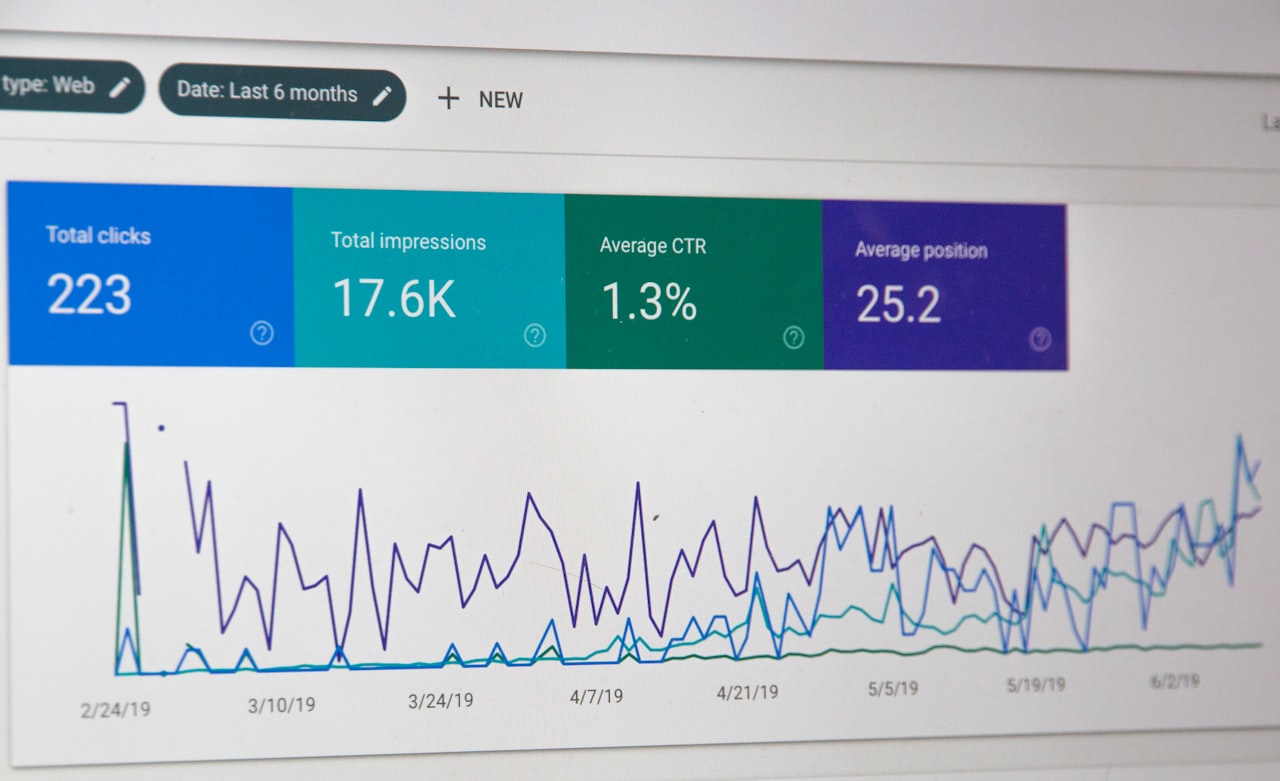
Using Google Ads data to Validate Pillar Page Strategy
If you run paid campaigns on your pillar page’s target keywords, use the search term data to validate and refine your organic strategy. Paid search data reveals actual search queries, click-through rates for different messaging angles, and conversion patterns — all of which inform pillar page optimisation decisions.
Frequently Asked Questions
What is the ideal length for a pillar page?
Most effective pillar pages range from 3,000 to 6,000 words. However, length should be determined by the scope of your topic and the depth required for comprehensive coverage, not by an arbitrary target. Analyse the top-ranking pages for your target keyword to benchmark expected length, then focus on being more comprehensive and useful rather than simply longer.
How often should I update my pillar page?
Review your pillar page at least quarterly. Update statistics, refresh examples, add new sections when relevant subtopics emerge, and revise any content that has become outdated. Major updates should trigger a dateModified update in your schema markup. Google rewards content freshness, particularly for topics where information evolves quickly.
Should my pillar page target one keyword or multiple keywords?
Target one primary head term as your main keyword, but optimise for multiple related keywords throughout the page. A well-structured pillar page naturally incorporates semantic variations and related terms across its sections. Track 5-10 secondary keywords alongside your primary target to assess the page’s overall topical reach.
Can I have multiple pillar pages on my site?
Absolutely — most sites should have multiple pillar pages, each serving as the hub for a distinct content cluster. A digital marketing agency might have pillar pages for SEO, content marketing, paid advertising, social media, and web analytics. Ensure each pillar page targets a distinctly different topic to avoid cannibalisation.
What if my pillar page is not ranking after three months?
Investigate systematically. Check technical issues first — indexing, crawlability, page speed, and mobile experience. Then evaluate content quality against top-ranking competitors. Assess whether your cluster content is sufficient and properly linked. Review backlink profiles of ranking competitors. Often, the issue is insufficient cluster content or weak internal linking rather than a problem with the pillar page itself.
Should pillar pages include images and multimedia?
Visual elements like diagrams, charts, infographics, and embedded videos can enhance comprehension and engagement. However, they must be genuinely useful — not decorative. Every visual should communicate information more effectively than text alone. Ensure all media is optimised for performance and includes descriptive alt text for accessibility and SEO.
How do pillar pages relate to the topic cluster model?
Pillar pages are the central component of the topic cluster model. The model consists of three elements: the pillar page (comprehensive hub), cluster articles (detailed subtopic content), and internal links connecting them. The pillar page provides breadth, cluster articles provide depth, and internal links communicate the topical relationship to search engines.
Is it better to create one long pillar page or split content across multiple pages?
Serve all pillar content on a single URL. Splitting content across paginated pages dilutes link equity, complicates internal linking, and provides a worse user experience. If your pillar page becomes extremely long (8,000+ words), consider whether some sections should be spun off as cluster articles rather than being split into paginated pages.
Do pillar pages work for local SEO in Singapore?
Yes. Pillar pages that incorporate Singapore-specific content — local statistics, regulations, case studies, and market context — can rank effectively for locally-modified search terms. They also attract backlinks from Singapore-based publications and industry sites, strengthening your local authority signals. Combine pillar page strategy with local SEO fundamentals for maximum Singapore market impact.
How many internal links should a pillar page contain?
A typical pillar page contains 15-30+ internal links to cluster articles and related content. The exact number depends on your cluster size and content length. Every cluster article should receive at least one link from the pillar page. Beyond cluster links, include links to relevant service pages and other pillar pages where cross-topic connections exist naturally. Prioritise relevance and user value over link count.