How to Optimise for Voice Search in 2026
Voice search has moved from novelty to necessity. With smart speakers in homes, voice assistants on every smartphone, and in-car voice systems becoming standard, a growing percentage of search queries are spoken rather than typed. In Singapore, where smartphone penetration exceeds 97% and smart home adoption is accelerating, voice search optimisation is no longer a future consideration — it is a present-day requirement.
Voice queries are fundamentally different from typed searches. They are longer, more conversational, and more likely to be phrased as complete questions. They heavily favour featured snippets, local results, and fast-loading pages. If your SEO strategy is built exclusively around short, typed keywords, you are missing a significant and growing segment of search traffic.
This guide provides a complete, step-by-step process for optimising your website for voice search in 2026. You will learn how to research conversational keywords, win featured snippets, implement FAQ schema, optimise for local voice queries, and measure your voice search performance. Each step includes actionable instructions you can implement immediately.
Step 1 — Research Conversational Keywords
Voice search queries differ from typed queries in length, structure, and intent. When someone types, they might enter “best cafe Tiong Bahru”. When they speak, they are more likely to say “What is the best cafe in Tiong Bahru?” Understanding this difference is the foundation of voice search optimisation.
Conversational keywords share these characteristics:
- Question format: Voice queries frequently begin with who, what, where, when, why, and how. These question words signal informational intent and conversational phrasing.
- Longer length: The average voice query is five to seven words, compared to two to three words for typed queries. Voice searchers use natural phrases like “Where can I find a good digital marketing agency in Singapore?” rather than “digital marketing agency Singapore”.
- Conversational tone: Voice queries use natural speech patterns, including filler words and complete sentences that typed queries typically omit.
- Local intent: A disproportionate number of voice searches have local intent — “near me” queries, opening hours, directions, and local business information.
To research conversational keywords, follow these steps:
Mine Google’s “People Also Ask” boxes: Search for your primary keywords and expand every “People Also Ask” question. These questions are directly sourced from real user queries and reveal the conversational phrases people use. Copy these questions into a spreadsheet — they are ready-made voice search keyword targets.
Use AnswerThePublic: This tool visualises the questions people ask around a keyword. Enter your core topic and it generates hundreds of question-based queries organised by question word (who, what, where, when, why, how). Filter for questions most relevant to your business and audience.
Check Google Search Console: Filter your Search Console queries for those beginning with question words. These are likely voice-originated queries (or at least conversational queries that voice search also captures). Note which questions you already appear for and which have room for improvement.
Listen to your customers: The exact words your customers use when calling your business, emailing enquiries, or chatting with support are the same words they use in voice searches. Document these natural phrases and incorporate them into your content. For our keyword research guide, we explore this process in greater depth.
Step 2 — Optimise for Featured Snippets
Featured snippets — the answer boxes that appear at the top of Google search results — are the primary source for voice search answers. When a voice assistant answers a spoken query, it typically reads from the featured snippet (also known as “position zero”). Winning featured snippets is therefore the single most impactful voice search optimisation tactic.

There are three main types of featured snippets, and each requires a different content approach:
Paragraph snippets: These provide a direct answer in text form, typically 40–60 words. They answer “what is”, “why is”, and “how does” queries. To win paragraph snippets, provide a clear, concise answer to the question immediately after the H2 heading, then expand with detailed explanation. The first paragraph should be snippet-ready — a complete, self-contained answer.
List snippets: These display numbered or bulleted lists. They answer “how to”, “steps to”, and “best [things]” queries. To win list snippets, use proper HTML list markup (<ol> or <ul>) with clear, concise list items. Number your steps in how-to content. Google commonly pulls lists of five to eight items for featured snippets.
Table snippets: These display data in a table format. They answer comparison queries and data-related questions. To win table snippets, present comparative data, pricing, or specifications in proper HTML table markup with clear header rows.
To optimise for featured snippets:
Target questions you already rank for on page one: Google almost exclusively pulls featured snippets from page-one results. Focus your snippet optimisation efforts on queries where you already rank in positions 1–10 — these are the realistic opportunities.
Use the question as an H2 heading: Structure your content so each section addresses a specific question. Use the exact question as your H2 heading, then provide the answer immediately in the first paragraph below that heading.
Match the snippet format: Search for your target query and note what type of snippet currently appears. If it is a list snippet, format your content as a list. If it is a paragraph snippet, write a concise paragraph answer. Matching the existing snippet format increases your chances of displacement.
Keep answers concise: Snippet answers are typically 40–60 words for paragraphs and five to eight items for lists. Write your initial answer within these constraints, then elaborate below for depth.
Step 3 — Implement FAQ Schema
FAQ schema (FAQPage structured data) marks up question-and-answer content on your page so Google can understand, display, and read it in voice search results. Implementing FAQ schema is one of the highest-impact technical voice search optimisations available.
Here is how to implement FAQ schema step by step:
Step 1 — Identify FAQ content: Review your pages for existing question-and-answer content. FAQ sections at the bottom of articles, Q&A pages, and knowledge base articles are all candidates for FAQ schema markup.
Step 2 — Write the structured data: Create JSON-LD markup for your FAQ content. Here is the structure:
Each FAQ item requires a “Question” property (the exact question text) and an “acceptedAnswer” property containing the answer text. You can include multiple FAQ items within a single FAQPage schema block.
Step 3 — Add the markup to your page: Insert the JSON-LD script in the <head> section of your page or before the closing <body> tag. If you use WordPress, plugins like Yoast SEO or Rank Math can generate FAQ schema without manual coding — simply use their FAQ content blocks.
Step 4 — Test the implementation: Use Google’s Rich Results Test to validate your markup. Enter your page URL and verify that the FAQ schema is detected and valid. Fix any errors before relying on the markup.
Best practices for FAQ schema content:
- Write questions in the exact conversational format users would speak them
- Keep answers comprehensive but concise — 50–200 words per answer
- Include your target keywords naturally within questions and answers
- Ensure the FAQ content on the page matches the schema markup exactly
- Add four to eight FAQ items per page — enough to be comprehensive without overwhelming
FAQ schema can result in expanded search results that dominate more of the search results page, increasing your visibility and click-through rate. For voice search specifically, Google may read your FAQ answers directly when users ask matching questions.
Step 4 — Optimise Local SEO for Voice
Local intent dominates voice search. Queries like “Where is the nearest coffee shop?”, “What time does [business] close?”, and “Best [service] near me” are among the most common voice searches. For Singapore businesses, local voice search optimisation is essential.
Google Business Profile optimisation: Your Google Business Profile (GBP) is the primary data source for local voice search answers. Ensure every field is complete and accurate:
- Business name (exactly as it appears on your signage and legal documents)
- Address (full Singapore address with postal code)
- Phone number (Singapore format: +65 XXXX XXXX)
- Website URL
- Business hours (including public holiday hours)
- Business category (choose the most specific category available)
- Business description (250–750 words incorporating key services and location)
- Photos (interior, exterior, team, products — 10+ high-quality images)
- Services and products list
NAP consistency: Your Name, Address, and Phone number must be identical across every online listing — your website, GBP, social media profiles, business directories, and review sites. Inconsistencies confuse search engines and reduce your chances of appearing in local voice results.
“Near me” optimisation: You cannot literally optimise for “near me” — Google determines proximity based on the user’s location. However, you can ensure your content includes neighbourhood and area names relevant to your Singapore location. Mention your MRT station, planning area, and nearby landmarks in your website content. A business in Clarke Quay should reference “Clarke Quay”, “Robertson Quay”, “Singapore River”, and “Clarke Quay MRT” on their location page.
Reviews and ratings: Voice assistants often mention star ratings and review counts when recommending local businesses. Actively encourage satisfied customers to leave Google reviews. Respond to all reviews — positive and negative — to demonstrate engagement. Businesses with higher ratings and more reviews are more likely to be recommended in voice search results.
Local content: Create content that addresses local queries relevant to your business. A law firm might publish “Guide to Employment Law in Singapore”. A restaurant might create “Best Dining Experiences in the CBD”. This local content strengthens your relevance for geographically-specific voice queries and complements your broader digital marketing strategy.
Step 5 — Maximise Mobile Page Speed
The vast majority of voice searches happen on mobile devices. Voice search users expect instant answers — they are not going to wait for a slow page to load. Google’s research shows that the average voice search result page loads in 4.6 seconds, which is 52% faster than the average web page. Speed is a direct ranking factor, and for voice search, it is even more critical.
Here is how to maximise your mobile page speed:
Measure your current speed: Use Google PageSpeed Insights to test your key pages on mobile. Note your Largest Contentful Paint (LCP), First Input Delay (FID) or Interaction to Next Paint (INP), and Cumulative Layout Shift (CLS) scores. These Core Web Vitals are direct ranking factors.
Optimise images: Images are typically the largest files on a page. Compress all images using WebP format, implement lazy loading so images below the fold do not load until the user scrolls, and serve appropriately sized images for mobile devices (do not serve desktop-sized images to mobile users).
Minimise JavaScript and CSS: Remove unused code, minify remaining files, and defer non-critical JavaScript. Use code splitting to load only the JavaScript needed for the current page. Consider a critical CSS approach that inlines above-the-fold styles and defers the rest.
Enable browser caching: Set appropriate cache headers so returning visitors do not re-download static assets. A good caching policy can reduce load times by 50% or more for repeat visitors.
Use a CDN: A Content Delivery Network serves your content from servers geographically close to the user. For Singapore-based businesses, choose a CDN with strong APAC presence. Cloudflare, AWS CloudFront, and Fastly all have Singapore edge locations.
Consider AMP: While Accelerated Mobile Pages are no longer strictly necessary for mobile performance, they guarantee extremely fast load times. For content-heavy pages like blog posts and articles, AMP versions can provide a speed advantage that benefits voice search visibility.
Target these performance benchmarks: LCP under 2.5 seconds, INP under 200 milliseconds, and CLS under 0.1. Pages meeting these thresholds receive a “Good” Core Web Vitals assessment, which provides a ranking advantage. Your website design should prioritise performance from the ground up.
Step 6 — Write Natural Language Content
Voice search favours content written in a natural, conversational tone — the way people actually speak. Formal, jargon-heavy, or overly technical writing is less likely to match voice queries and less likely to be selected as a voice search answer.
Here is how to write content that aligns with voice search patterns:
Use a conversational tone: Write as if you are explaining the topic to a knowledgeable friend. Contractions (you will versus you’ll), direct address (you, your), and simple sentence structures make content more conversational. This does not mean dumbing down your content — it means making complex topics accessible through clear language.
Answer questions directly: When addressing a question in your content, provide a clear, direct answer before elaborating. Voice assistants need a concise answer to read aloud. If you bury the answer in a lengthy preamble, Google is less likely to select your content.
Use the inverted pyramid structure: Start with the most important information and work down to the details. This journalistic structure ensures that the answer to the query appears early in each section, making it snippet-ready.
Match reading level: Voice search results tend to be written at a Year 9 reading level (approximately 14–15 years old). Use readability tools like Hemingway App to check your content’s reading level. Aim for clear, accessible language without being simplistic.
Include question-based subheadings: Structure your content with H2 and H3 headings that are phrased as questions. “How much does SEO cost in Singapore?” as an H2 heading directly mirrors how someone would phrase a voice query. Follow each question heading with a direct answer paragraph.
Write for featured snippets: Within your natural language content, include snippet-optimised elements — concise definitions, numbered step lists, and comparison tables. These elements serve dual purpose: they improve readability for human visitors and increase your chances of winning voice search answers.
Step 7 — Understand Google Assistant, Siri, and Alexa
Different voice assistants use different data sources to answer queries, which means your optimisation strategy may vary depending on which assistants your audience uses most.
Google Assistant: Powered by Google Search, Google Assistant pulls answers from featured snippets, Google Business Profile, and the Knowledge Graph. Optimising for Google Search (featured snippets, local SEO, structured data) directly benefits Google Assistant results. Google Assistant is the dominant voice assistant on Android devices and Google Home/Nest speakers.
Apple Siri: Siri uses a combination of Apple Maps (for local queries), Safari web search (powered by Google by default), and integrated data sources like Yelp and Wikipedia. For Siri optimisation, ensure your Apple Maps listing is accurate and complete, your website is indexed properly, and your content is structured for featured snippets. Siri is the default assistant on iPhones, which have significant market share in Singapore.
Amazon Alexa: Alexa primarily pulls answers from Bing, Amazon’s own product listings, and various third-party “Skills”. For Alexa optimisation, ensure your Bing Places listing is accurate and your content is optimised for Bing’s search algorithm. Alexa’s market share in Singapore is smaller than Google Assistant and Siri, but it is growing with smart speaker adoption.
Samsung Bixby: Bixby uses a combination of Samsung’s own services and web search. Its market share is primarily limited to Samsung device users.
For Singapore businesses, prioritise Google Assistant and Siri optimisation, as these cover the vast majority of voice searches in the market. The good news is that most voice search optimisation tactics (conversational content, featured snippets, local SEO, structured data) benefit performance across all assistants.
Test your voice search visibility by asking each assistant questions relevant to your business. Note which results appear and whether your business is mentioned. This hands-on testing reveals gaps in your optimisation that data alone cannot show.
Step 8 — Singlish and Multilingual Considerations
Singapore’s unique linguistic landscape creates both challenges and opportunities for voice search optimisation. Singlish, Mandarin, Malay, and Tamil are all spoken alongside standard English, and voice search behaviour reflects this multilingual reality.
Singlish in voice search: While voice assistants are improving their understanding of Singlish, they still primarily process standard English. However, Singaporeans increasingly use colloquial phrases in voice searches — “Where got good char kway teow?” or “How much is COE now?”. Consider incorporating commonly used Singlish terms and local food names naturally into your content where appropriate. A food blog optimised for “best char kway teow in Singapore” captures both typed and voice queries from local users.
Mandarin voice search: A significant segment of Singapore’s population conducts voice searches in Mandarin, especially older demographics and Chinese-educated users. If your target audience includes Mandarin speakers, consider creating Mandarin-language content optimised for voice search. Google Assistant and Siri both support Mandarin voice queries. Optimise your Mandarin content with conversational Mandarin keywords, not formal written Chinese.
Malay and Tamil voice search: While smaller in volume, Malay and Tamil voice searches represent real audience segments. Businesses targeting these communities — particularly in food, cultural services, religious services, and community organisations — should consider multilingual content strategies.
Code-switching: Singaporeans frequently switch between languages within a single conversation or query. A voice search might combine English and Mandarin or English and Malay. While optimising for code-switching is technically challenging, including common bilingual terms and local vocabulary in your content improves your chances of matching these mixed-language queries.
Local terminology: Singapore has unique terms for many concepts — HDB, COE, CPF, ERP, hawker centre, void deck, MRT, and many others. Ensure your content uses these local terms where relevant, as voice searchers will use them naturally. A property article should reference “HDB flat” rather than “public housing apartment” because that is how Singaporeans speak and search.
Step 9 — Implement Structured Data
Structured data helps search engines understand your content’s context and meaning, making it more likely to be selected as a voice search answer. Beyond FAQ schema (covered in Step 3), several other structured data types enhance voice search visibility.
HowTo schema: Mark up step-by-step instructions with HowTo structured data. This is ideal for tutorial and guide content. Include the total time, tools required, and individual steps with descriptions. Voice assistants can read through HowTo steps sequentially, making your content ideal for hands-free use.
LocalBusiness schema: Implement LocalBusiness structured data on your website with your business name, address, phone number, opening hours, and geo-coordinates. This reinforces the data from your Google Business Profile and improves your visibility for local voice queries. Include sub-types where appropriate — Restaurant, LegalService, FinancialService, etc.
SpeakableSpecification: This schema type specifically identifies sections of your content that are best suited for text-to-speech playback. While Google’s support for SpeakableSpecification is still evolving, implementing it signals to search engines which parts of your page are ideal for voice answers. Use it to mark your most concise, direct answer paragraphs.
Organisation schema: Include Organisation structured data with your business details, social profiles, and logo. This feeds the Knowledge Graph and increases the likelihood of your business being mentioned in branded voice queries.
Breadcrumb schema: While not directly related to voice answers, breadcrumb structured data helps search engines understand your site’s hierarchy, which improves overall indexing and can indirectly benefit voice search visibility.
Implement structured data using JSON-LD format (recommended by Google) in the <head> section of each page. Validate all structured data using Google’s Rich Results Test and monitor its performance in Google Search Console’s Enhancements section. Fix any errors promptly to maintain your eligibility for rich results and voice search selection.
Step 10 — Measure Voice Search Traffic
Measuring voice search traffic is challenging because Google does not explicitly label queries as voice-originated in Search Console or Analytics. However, you can use proxy metrics and analytical techniques to estimate your voice search performance.
Question-based query analysis: In Google Search Console, filter your queries for those beginning with question words (who, what, where, when, why, how). While not all question queries come from voice, they represent the conversational search behaviour that voice search amplifies. Track the volume, click-through rate, and average position of these queries over time.
Long-tail query trends: Voice queries tend to be longer than typed queries. Monitor the average word count of queries driving traffic to your site. An increasing proportion of long-tail, conversational queries suggests growing voice search visibility.
Featured snippet tracking: Track your featured snippet positions for target queries. Since voice assistants read from featured snippets, winning a snippet is a strong proxy for voice search visibility. Tools like Ahrefs and SEMrush can track your snippet positions over time.
Local search metrics: Monitor your Google Business Profile insights for the volume and type of queries that trigger your listing. Increases in “discovery” queries (where users find you through category searches rather than brand searches) often correlate with voice search growth.
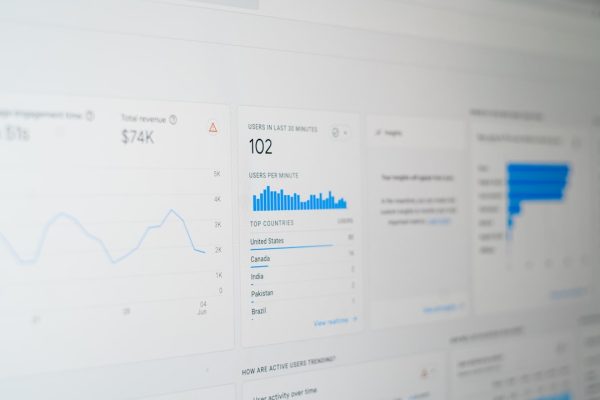
Mobile traffic patterns: Analyse your GA4 data for mobile traffic patterns. Spikes in mobile traffic to pages optimised for conversational queries may indicate voice search-driven visits. Look for sessions with short duration and low pages-per-session on FAQ and answer pages — this pattern is consistent with voice search users who found their answer quickly.
Direct testing: Regularly test voice queries relevant to your business across Google Assistant, Siri, and Alexa. Document which queries return your content and which do not. This qualitative testing provides direct insight into your voice search visibility that analytics data cannot fully capture.
Set up a monthly voice search report that tracks these proxy metrics. Over time, you will build a picture of your voice search performance and identify which optimisation efforts deliver the greatest impact. Combine this reporting with your broader SEO performance monitoring for a complete view of search visibility.
Frequently Asked Questions
What percentage of searches are voice searches in 2026?
Voice search accounts for approximately 30–35% of all search queries globally in 2026, with higher percentages for local and mobile searches. In Singapore, the adoption rate is slightly above the global average due to high smartphone penetration and smart speaker adoption. The trend continues to grow year over year, making voice search optimisation increasingly important for businesses of all sizes.
Does voice search affect my traditional SEO efforts?
Voice search optimisation complements rather than conflicts with traditional SEO. The tactics that improve voice search visibility — conversational content, featured snippet optimisation, fast page speeds, structured data, and strong local SEO — also improve your traditional search rankings. Think of voice search optimisation as an extension of your existing SEO strategy, not a separate discipline. The content you create for voice search also serves typed search users.
Should I create separate pages for voice search?
No. Creating separate pages for voice search is unnecessary and can cause duplicate content issues. Instead, optimise your existing pages to serve both typed and voice queries. Add FAQ sections to your key pages, use conversational subheadings, and ensure direct answers are present within your content. This integrated approach improves performance across all search types without fragmenting your content.
How important is page speed for voice search?
Extremely important. Voice search result pages load an average of 52% faster than typical web pages. Google prioritises fast-loading pages for voice results because voice users expect instant answers. If your mobile page speed is poor, you are significantly less likely to appear in voice search results regardless of how well-optimised your content is. Aim for a Largest Contentful Paint under 2.5 seconds on mobile devices.
Can voice search optimisation help my business get more phone calls?
Yes. Local voice searches frequently lead to phone calls — “Call [business name]” or “What is the phone number for [business]?” are common voice commands. By optimising your Google Business Profile, ensuring your phone number is consistent across all listings, and implementing LocalBusiness structured data, you increase the likelihood that voice assistants can connect searchers to your business directly. This is particularly valuable for service businesses in Singapore where phone enquiries are a primary conversion channel.