
Content Gap Analysis: Find Topics Your Competitors Cover That You Do Not
What Is Content Gap Analysis?
Content gap analysis is the systematic process of identifying topics, keywords, and content types that your competitors cover — and rank for — that your website does not. It reveals the spaces in your content library where potential customers are searching for information, finding your competitors, and never encountering your brand.
The analysis operates on a straightforward principle: if your competitors rank for keywords relevant to your business and you do not, you are missing traffic, leads, and revenue. Content gap analysis quantifies those missed opportunities and provides a data-driven roadmap for content creation that is far more strategic than guesswork or editorial intuition alone.
For Singapore businesses competing in tight digital markets, content gap analysis is particularly valuable. The Singapore search landscape is characterised by high competition within relatively narrow verticals. Understanding precisely where your competitors outpace you in content coverage — and where they have left gaps of their own — allows you to allocate content resources with surgical precision.
Content Gap Analysis vs Keyword Gap Analysis
These terms are often used interchangeably, but they represent different scopes of analysis:
- Keyword gap analysis: Focuses specifically on keywords for which competitors rank and you do not. This is a quantitative, data-driven process using SEO tools.
- Content gap analysis: A broader assessment that includes keyword gaps but also evaluates content types, content depth, topic coverage, and user intent satisfaction. It asks not just “What keywords am I missing?” but “What content experiences are my competitors providing that I am not?”
A thorough content gap analysis encompasses keyword gap analysis but extends well beyond it, incorporating qualitative assessments that tools alone cannot provide.
When to Conduct Content Gap Analysis
Content gap analysis should not be a one-time exercise. Conduct a comprehensive analysis in these situations:
- When developing a new content marketing strategy or editorial calendar
- When entering a new market or targeting a new audience segment
- When a competitor’s organic traffic significantly increases (signalling they have covered new ground)
- Quarterly, as part of regular content strategy reviews
- After major Google algorithm updates that shift ranking landscapes
Why Content Gaps Matter for SEO
Content gaps are not merely missed opportunities — they actively undermine your SEO performance and topical authority in measurable ways.

Lost Topical Authority
Search engines evaluate topical authority based on the comprehensiveness of your content coverage. Every significant subtopic you fail to cover is a gap in your authority profile. If your site covers 60% of the subtopics within your domain while a competitor covers 90%, Google has a clear signal about which site possesses greater expertise — regardless of your respective domain authorities or backlink profiles.
Missed Traffic and Revenue
Every keyword your competitors rank for that you do not represents traffic flowing to their site instead of yours. At scale, content gaps can represent thousands of monthly visitors and significant revenue. For Singapore businesses where customer acquisition costs through paid channels are substantial, organic traffic captured through gap-filling content represents high-ROI growth.
Broken Topic Clusters
Content gaps within your topic clusters create structural weaknesses. A cluster about “digital marketing” that covers strategy, channels, and tools but not measurement is incomplete. This gap weakens the cluster’s topical authority signal and reduces the ranking potential of every page within the cluster — including your pillar page targeting the most competitive head term.
Competitor Advantage Compounding
Content gaps tend to compound over time. Competitors who cover a topic more comprehensively attract more traffic, earn more backlinks, and build stronger topical authority — which in turn makes it easier for them to rank for new content in that topic domain. The longer a gap exists, the harder it becomes to close. Early identification and systematic gap-filling prevents this competitive divergence.
User Journey Interruptions
Content gaps force potential customers out of your ecosystem. A user researching “content marketing strategy” on your site who then needs to search for “content marketing metrics” — a topic you have not covered — will find that information on a competitor’s site. Once there, they may continue their research journey on the competitor’s site, discover their services, and convert. Your content gap directly contributed to a lost customer.
Types of Content Gaps
Content gaps manifest in several distinct forms, each requiring different identification methods and remediation strategies.
Keyword Gaps
The most straightforward type: keywords for which your competitors rank in the top 20 and you do not rank at all. These are discoverable through keyword gap tools and represent clear content creation opportunities. Keyword gaps are further categorised by:
- Universal gaps: Keywords where multiple competitors rank and you do not — the highest-priority opportunities.
- Single-competitor gaps: Keywords where only one competitor ranks — may indicate niche opportunities or less validated demand.
- Emerging gaps: Keywords where competitors have recently started ranking — may signal new content or shifting market trends.
Topic Coverage Gaps
Entire subtopics within your domain that your competitors address but you do not. These are broader than individual keyword gaps and typically require multiple pieces of content to fill. Identifying topic coverage gaps requires manual analysis of competitor content libraries, not just keyword data.
Content Depth Gaps
Situations where you cover a topic but with less depth than competitors. You may have a 500-word overview of a subtopic while competitors offer 2,500-word comprehensive guides with examples, data, and practical frameworks. Depth gaps do not show up in keyword gap tools — they require qualitative content comparison.
Content Format Gaps
Your competitors may serve specific search intents with content formats you have not utilised. If competing pages rank with comparison tables, interactive tools, video content, or downloadable templates, and your content on the same topic is a standard text article, you have a format gap. Format gaps are particularly relevant for keywords where the top results share a common format that differs from yours.
Intent Alignment Gaps
You may have content on a topic but targeting the wrong search intent. If your page approaches “email marketing software” from an informational angle (explaining what it is) but the SERP rewards commercial intent (comparing options and featuring pricing), you have an intent alignment gap. These gaps require content restructuring rather than new content creation.
Freshness Gaps
Your content on a topic may be significantly outdated compared to competitors. If competitors have 2026-dated content with current statistics and examples while your content references 2022 data, the freshness gap undermines your competitiveness for that topic. Freshness gaps are especially critical for topics in rapidly evolving fields like digital marketing and technology.
Step-by-Step Content Gap Analysis Process
A systematic process ensures comprehensive gap identification and actionable outputs.
Step 1: Define Your Competitive Set
Identify 3-5 competitors for gap analysis. Include:
- Direct business competitors: Companies offering similar services or products to similar audiences in the Singapore market.
- SEO competitors: Sites that rank for your target keywords, even if they are not direct business competitors. A media publication or industry blog that ranks for your keywords is an SEO competitor.
- Aspirational competitors: Sites with significantly stronger content coverage in your domain — these reveal the ceiling of what comprehensive coverage looks like.
The right competitive set varies by topic. Your SEO competitors for “digital marketing Singapore” may differ from your SEO competitors for “e-commerce website development.” Conduct competitor identification at the topic level, not just the business level.
Step 2: Extract Competitor Keyword Portfolios
Using keyword gap tools (Ahrefs’ Content Gap, SEMrush’s Keyword Gap, or similar), extract the full keyword portfolios of your competitors within your topic domain. Filter for:
- Keywords where at least 2 of your competitors rank in the top 20
- Keywords with meaningful search volume (thresholds depend on your market — for Singapore-specific terms, even 50-100 monthly searches can be valuable)
- Keywords relevant to your business and audience (not all competitor keywords will be relevant to you)
Step 3: Identify Keyword Gaps
From the extracted data, identify keywords where competitors rank and you do not. Categorise these gaps by:
- Topic cluster: Which of your existing or planned topic clusters does this keyword belong to?
- Search intent: Is the intent informational, commercial, navigational, or transactional?
- Opportunity size: Combined search volume and estimated traffic potential.
- Competitive difficulty: How strong are the current ranking pages? Can you realistically compete?
Step 4: Conduct Qualitative Content Comparison
Beyond keyword data, manually review competitor content for qualitative gaps. For each major topic in your domain:
- Compare content depth — do competitors cover subtopics you only mention in passing?
- Assess content format — do competitors use formats (comparison tables, templates, interactive elements) that you do not?
- Evaluate content freshness — is competitor content significantly more current than yours?
- Examine unique value — do competitors offer original research, proprietary data, or expert insights you have not matched?
Step 5: Analyse SERP Features
Review the SERP features present for your target keywords. For each keyword gap, note:
- Featured Snippet format and content (paragraph, list, table)
- People Also Ask questions and who answers them
- Video results and their sources
- Local pack presence (for Singapore-specific queries)
SERP features reveal both the type of content Google prefers for each query and additional opportunities to capture visibility beyond standard organic results.
Step 6: Document and Categorise All Gaps
Consolidate all identified gaps into a single, structured document. For each gap, record:
- Gap type (keyword, topic, depth, format, intent, freshness)
- Associated keywords and search volumes
- Competitors who cover this gap
- Recommended content action (new article, content update, format change, intent realignment)
- Priority score (to be calculated in the next step)
Tools and Methods for Gap Discovery
Effective content gap analysis combines automated tool data with manual research methods. No single tool captures all gap types.

Ahrefs Content Gap Tool
Ahrefs’ Content Gap feature allows you to enter your domain alongside up to 10 competitors and identify keywords where competitors rank and you do not. Its strengths include:
- Filtering by keyword position ranges (e.g., competitors in top 10, you not in top 100)
- Intersection filters (keywords where 2+ competitors rank vs all competitors)
- Direct export for further analysis
- Integration with Ahrefs’ keyword difficulty and traffic estimates
SEMrush Keyword Gap
SEMrush’s Keyword Gap tool offers similar functionality with additional visualisation features. Its competitive positioning map is particularly useful for understanding the overall competitive landscape. SEMrush also offers a Topic Research tool that identifies subtopics and questions — useful for discovering topic coverage gaps that keyword-only tools miss.
Google Search Console
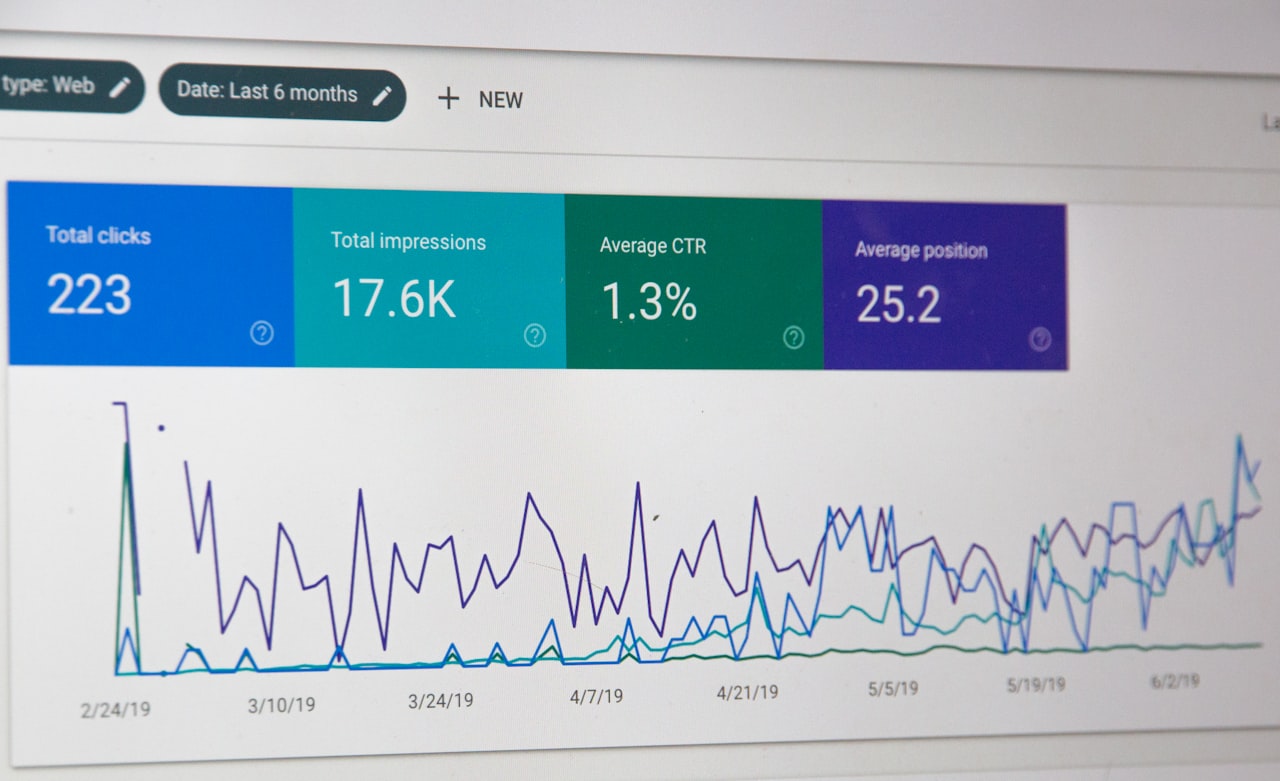
Search Console reveals a unique type of gap: queries where Google considers your site relevant enough to generate impressions but your content is not strong enough to earn clicks. Filter for queries with high impressions but low click-through rates or positions beyond page one. These represent topics where Google recognises your relevance but your content is insufficient to rank competitively.
Manual SERP Analysis
For qualitative gap assessment, nothing replaces manual SERP analysis. For each priority keyword in your domain:
- Search the keyword and examine the top 10 results
- Note the content type, format, length, and unique features of each result
- Identify common elements shared by top results that your content lacks
- Look for underserved intents or angles that no current result addresses well
People Also Ask Mining
Systematically expand People Also Ask results for your core keywords. Each PAA question represents a user query that Google considers relevant to your topic. Compare these questions against your existing content — every unanswered question is a potential content gap. PAA questions also reveal related topics that your gap analysis might otherwise miss.
Competitor Content Auditing
Crawl competitor sites using tools like Screaming Frog to extract a complete page inventory. Categorise their content by topic and compare against your own content inventory. This reveals topic coverage gaps at the structural level — entire content categories that competitors maintain and you do not.
Customer Research
Your sales team, customer service team, and direct customer interactions are invaluable gap discovery sources. Common customer questions, objections, and information needs that your content does not address represent gaps that are directly tied to business outcomes. In Singapore’s relationship-driven business culture, understanding what clients ask before engaging is particularly valuable for digital marketing content strategy.
Prioritising Content Opportunities
Content gap analysis typically produces more opportunities than any team can address simultaneously. Rigorous prioritisation ensures you fill the most impactful gaps first.
The Prioritisation Framework
Score each identified gap on four dimensions:
- Business impact (1-5): How directly does this gap relate to your products, services, and target customer journey? Gaps aligned with high-value conversion paths score highest.
- Search opportunity (1-5): What is the combined search volume and traffic potential? Consider both current volume and growth trends.
- Competitive difficulty (1-5, inverted): How difficult will it be to rank? Gaps where competitors have weak content and few backlinks score higher than those dominated by strong, well-linked pages.
- Effort required (1-5, inverted): How much content creation effort is needed? Gaps addressable by updating existing content score higher than those requiring entirely new, comprehensive guides.
Calculate a composite priority score (business impact x 2 + search opportunity + competitive difficulty + effort) to rank all opportunities. The business impact multiplier reflects the principle that content aligned with business objectives should always take precedence over pure traffic plays.
Quick Wins vs Strategic Investments
Categorise prioritised opportunities into two tracks:
- Quick wins: Gaps addressable by updating existing content, creating relatively short supplementary articles, or reformatting existing content. These can be executed within 1-2 weeks and provide immediate incremental gains.
- Strategic investments: Gaps requiring significant new content — comprehensive guides, pillar pages, or multi-article topic expansions. These require more resources but deliver larger, longer-lasting returns.
Run both tracks simultaneously: quick wins provide short-term momentum and demonstrate the value of gap analysis, while strategic investments build lasting competitive advantages.
Cluster-Level Prioritisation
When gaps exist across multiple topic clusters, prioritise filling gaps in your most strategically important clusters first. A cluster with 10 spoke articles and one critical gap will benefit more from filling that gap (completing the cluster) than a cluster with 3 articles and 15 gaps (which remains fundamentally incomplete even after addressing one gap).
Deprioritising Low-Value Gaps
Not every gap should be filled. Explicitly deprioritise:
- Keywords with negligible search volume and no clear business relevance
- Topics dominated by authoritative sources you cannot realistically compete with
- Gaps that would require content outside your genuine expertise
- Keywords where the search intent does not align with any stage of your customer journey
Filling Gaps Strategically
How you fill content gaps matters as much as identifying them. Strategic gap-filling produces content that not only ranks but also strengthens your overall content ecosystem.
New Content Creation
For keyword and topic coverage gaps where no relevant content exists on your site, create new content that:
- Meets or exceeds the quality and depth of top-ranking competitors for the target keywords
- Integrates naturally into your existing topic cluster through internal links
- Provides genuine information gain — unique insights, data, or perspectives not found in competing content
- Aligns with the demonstrated search intent for target keywords
Content Updates and Expansion
For depth gaps and freshness gaps where existing content underperforms, update rather than replace:
- Add new sections covering subtopics that competitors address but your current content does not
- Update statistics, examples, and references to current data
- Improve content structure with better headings, lists, and formatting
- Add internal links to newly created cluster content
- Enhance unique value with original insights or Singapore-specific data
Content Reformatting
For format gaps, adapt your content to match what search engines reward:
- Add comparison tables if top-ranking results use tabular formats
- Create step-by-step structures for how-to queries
- Develop templates or downloadable resources if competitors offer practical tools
- Structure content for Featured Snippet capture if competitors hold snippets
Intent Realignment
For intent alignment gaps, restructure content to match the search intent Google rewards:
- If your informational content targets a keyword where Google rewards commercial content, rewrite the page with a commercial angle
- If top results are comparison-focused and yours is a general overview, restructure around comparisons
- Consider creating separate pages for different intents if a single keyword has mixed intent signals
Integration Into Existing Clusters
Every gap-filling content piece should be immediately integrated into your topic cluster architecture. When publishing a new article to fill a gap:
- Add internal links from the new article to the relevant pillar page and related cluster articles
- Update the pillar page to include a link to the new article
- Update 2-3 related cluster articles to link to the new article where contextually relevant
- Verify the new article appears in your XML sitemap
- Submit the URL for indexing in Google Search Console
Ongoing Gap Monitoring
Content gap analysis is not a one-time project — it is an ongoing practice that should be embedded in your content strategy operations.
Monthly Monitoring Activities
Establish monthly routines to catch new gaps as they emerge:
- Competitor content tracking: Monitor competitor blogs and content updates for new topics they are covering. Tools like Visualping or manual RSS monitoring can automate this.
- Keyword position monitoring: Track keyword rankings for your topic domain. New competitor entries and your own ranking declines may indicate emerging gaps.
- Search Console review: Review new queries generating impressions for your site. Emerging queries you are not specifically targeting represent new gap opportunities.
- SERP feature monitoring: Track changes in SERP features for your key terms. New PAA questions, Featured Snippet changes, and new content types appearing in results all signal evolving gaps.
Quarterly Deep Analysis
Conduct a thorough gap analysis quarterly, revisiting the full step-by-step process with updated data. Quarterly analyses capture:
- New competitors entering your topic domain
- Shifts in search demand and user intent
- Content published by competitors in the preceding quarter
- Gaps created by industry developments or market changes
- Performance trends that indicate growing or shrinking gaps
Triggering Unscheduled Analyses
Beyond scheduled monitoring, trigger ad-hoc gap analyses when:
- A major Google algorithm update causes significant ranking changes in your topic domain
- A competitor launches a comprehensive new content hub in your topic area
- Your business expands into new service areas or markets
- Industry developments create new subtopics or shift existing ones
Building a Gap-Filling Pipeline
Maintain a living document — a content gap backlog — that is continuously updated with new opportunities and regularly reviewed for prioritisation. Integrate this backlog into your editorial calendar, allocating a consistent percentage of content production capacity to gap-filling alongside other content initiatives. A balanced approach might allocate 40% of content capacity to gap-filling, 30% to new strategic content, and 30% to content updates and maintenance.
Measuring Gap-Filling Impact
Track the performance of gap-filling content specifically to validate your process and refine your approach. Monitor:
- Time to ranking for gap-filling content vs general content
- Traffic captured from filled gaps vs projected opportunity
- Impact of gap-filling on cluster-level metrics (does filling a gap improve the entire cluster’s performance?)
- Conversion rates from gap-filling content vs other content types
This performance data sharpens your prioritisation framework over time, helping you identify which types of gaps consistently deliver the highest returns for your business. Combine gap analysis with broader website optimisation to ensure that the traffic you capture converts effectively.
Frequently Asked Questions
How often should I conduct a content gap analysis?
Conduct a comprehensive gap analysis quarterly, with lighter monthly monitoring between deep analyses. The quarterly cadence captures competitive changes and market shifts while remaining practical for most content teams. For highly competitive or fast-moving industries, monthly comprehensive analyses may be warranted.
What is the best tool for content gap analysis?
No single tool captures all types of content gaps. Ahrefs’ Content Gap tool and SEMrush’s Keyword Gap are strongest for keyword-level gap identification. Google Search Console reveals impression-based opportunities unique to your site. Manual SERP analysis and competitor content audits are essential for qualitative gaps (depth, format, intent). Use multiple tools in combination for comprehensive analysis.
How many competitors should I analyse?
Analyse 3-5 competitors for a balanced view. Include a mix of direct business competitors, SEO competitors (sites ranking for your target keywords), and one aspirational competitor with best-in-class content coverage. Analysing too few competitors risks missing important gaps. Analysing too many creates data overload without proportional insight gains.
Should I prioritise keywords with high search volume or high business relevance?
Business relevance should always take priority. A keyword with 100 monthly searches that directly targets your ideal customer in a purchasing mindset is more valuable than a keyword with 10,000 monthly searches that attracts casual informational browsers. Use the weighted prioritisation framework described above, with business impact carrying the highest weight.
Can content gap analysis help with paid search strategy?
Yes. Content gaps identified through organic analysis often represent valuable paid search opportunities. Keywords where you lack organic content but competitors rank well are candidates for paid coverage while you build organic content. Conversely, keywords where your gap-filling organic content begins to rank may allow you to reduce paid spend, improving overall marketing efficiency.
What if my competitors have much larger content libraries?
Focus on depth over breadth. You do not need to match a competitor’s entire content library — you need to cover your specific topic domain more comprehensively than they do. A smaller site with 30 deeply expert articles on a focused topic can outperform a larger site with 300 articles spread thinly across many topics. Prioritise filling gaps within your core clusters before expanding into new territory.
How do I identify content gaps in a new market or niche?
When entering a new market with no existing content, conduct the gap analysis in reverse. Your competitors become your benchmark for minimum viable content coverage. Map their content completely, identify which topics have the highest search demand and business relevance, and build your content roadmap to achieve competitive coverage within 6-12 months. In the Singapore market, also examine regional competitors from Malaysia, Hong Kong, and Australia for additional perspectives.
Does filling content gaps guarantee ranking improvements?
Filling gaps with high-quality content dramatically improves your probability of ranking, but does not guarantee it. Rankings depend on multiple factors including content quality, backlink profiles, technical SEO, and domain authority. However, you cannot rank for topics you do not cover — gap-filling is a necessary condition for ranking, even if it is not always sufficient on its own.
How do content gaps relate to topical authority?
Content gaps are the inverse of topical authority. Every significant gap in your topic coverage is a hole in your authority profile. Filling gaps systematically is the most direct path to building topical authority. The relationship is not linear — a site covering 90% of a topic’s subtopics demonstrates dramatically more authority than one covering 60%, because comprehensiveness signals genuine expertise.
Should I create content for gaps where the search volume is very low?
Sometimes yes. Low-volume keywords that are highly relevant to your topic domain contribute to topical authority even if they generate minimal direct traffic. If a subtopic is essential for comprehensive topic coverage, create content for it regardless of individual search volume. The value lies in the authority signal — demonstrating that your site covers every aspect of the topic, not just the high-volume terms. However, allocate proportional effort: low-volume gap-filling content can be shorter and less resource-intensive than content targeting high-demand keywords.