
Fashion E-Commerce in Singapore: Platforms, Setup and Growth Strategies
Table of Contents
- The Fashion E-Commerce Market in Singapore in 2026
- Choosing the Right Platform: Shopify, Shopee, Lazada, Zalora, Carousell
- Store Setup Essentials for Singapore Fashion Sellers
- Product, Pricing and Margin Architecture
- Fulfilment, Returns and Last-Mile Logistics
- Customer Acquisition Channels and Costs
- Retention, Lifecycle Marketing and Loyalty
- Scaling Regionally from Singapore
- Frequently Asked Questions
The Fashion E-Commerce Market in Singapore in 2026
Fashion ecommerce in Singapore has matured well past the “launch a Shopify store and run Meta ads” playbook that carried brands through 2020-2022. Singapore’s fashion online penetration now sits above 35% of total category spend, one of the highest in ASEAN. The market is fragmented across direct-to-consumer stores, regional marketplaces, TikTok Shop, resale apps and social-commerce channels, with most serious sellers operating on at least three of these simultaneously.
Two shifts define the landscape in 2026. First, the cost of acquiring a new customer through paid social has climbed enough that pure DTC economics only work for brands with strong repeat purchase or premium margins. Second, marketplace search on Shopee, Lazada and Zalora has become a meaningful discovery channel for fashion, not just a fulfilment pipe — shoppers increasingly start their research on marketplaces the same way they used to start on Google.
For a Singapore fashion seller launching in 2026, the strategic question is no longer “which platform” but “which combination, in which sequence, at what investment level.” Picking wrong wastes six to twelve months of working capital. Picking well compounds into defensible market share across Singapore, Malaysia and Indonesia within 24 months.
Choosing the Right Platform: Shopify, Shopee, Lazada, Zalora, Carousell
Shopify remains the default direct store for most Singapore fashion brands. It offers clean customer data, margin control, flexible design and strong app integrations for the local market — Hitpay or Stripe for payments, Ninja Van or Qxpress for shipping, Klaviyo for email, Loop or Returnly for returns. Expect SGD 45-400 per month in base fees plus 1-3% in transaction-layer costs.
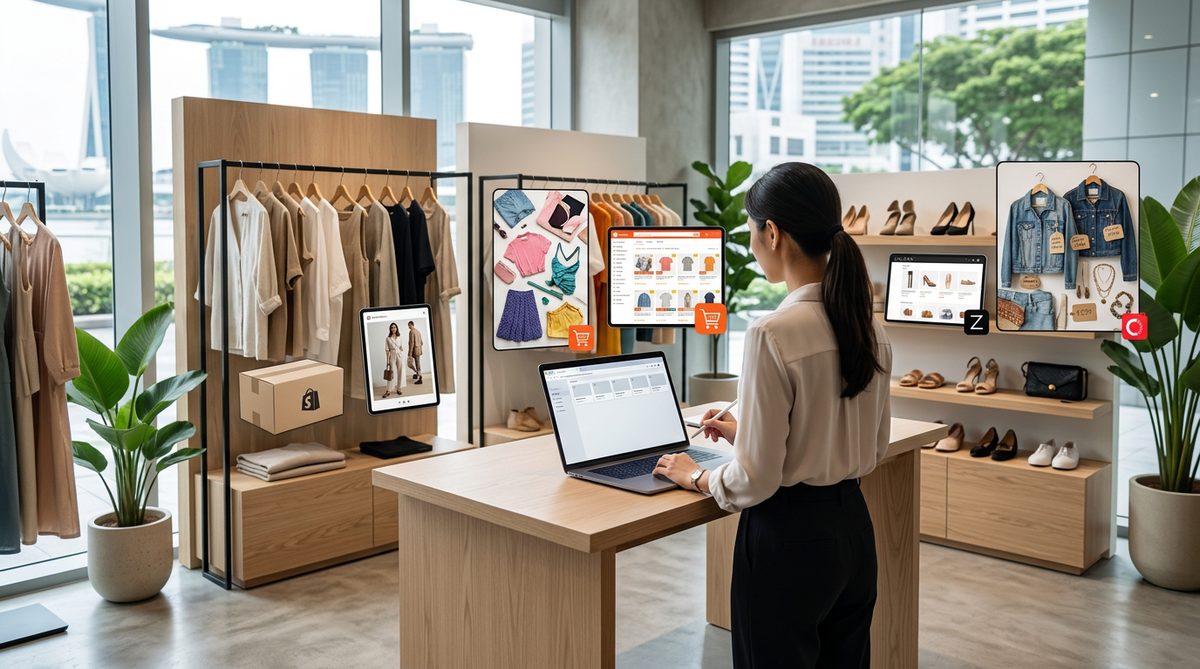
Shopee and Lazada are essential for mid-priced volume and regional reach. Commission plus payment fees typically run 6-10% combined. Shopee’s in-platform marketing tools (keyword bidding, Shopee Affiliate, Shopee Live) are now mature enough to rival paid Meta for certain SKU types. Lazada performs slightly better for slightly older demographics and higher basket sizes.
Zalora sits between a marketplace and a department store, with editorial curation and a lower merchant fee negotiation ceiling — useful for brands that want premium positioning without building their own traffic. Carousell remains underrated: it is the most effective channel for clearance, pre-loved capsules and community-led brand building among Singapore Gen Z fashion shoppers. TikTok Shop, a native commerce surface rather than a traditional marketplace, is the fastest-growing channel for sub-SGD 80 fashion in 2026.
Store Setup Essentials for Singapore Fashion Sellers
A Shopify store for a Singapore fashion brand needs eight core elements before a single dollar of paid media goes live: a mobile-first theme (over 75% of Singapore fashion traffic is mobile), a product page template with at least six images per SKU, a clear size guide calibrated for Asian fit, a shipping and returns policy tuned for Singapore and Malaysia, working local payment methods, abandoned cart email and SMS flows, a pre-purchase review widget, and GA4 plus Meta and TikTok pixels configured correctly.
Local payment methods matter more than most founders assume. PayNow, GrabPay, ShopeePay, Atome and Hoolah account for a meaningful share of Singapore fashion checkouts alongside credit cards. Missing any of the buy-now-pay-later options typically reduces conversion on baskets above SGD 180 by 10-20%. Stripe and Hitpay both support most of these natively.
Photography and copywriting are the two areas where Singapore fashion sellers most often underspend at launch. Plan for SGD 4,000-12,000 per collection on production covering PDP hero images, model-worn shots, flat-lays, short-form video clips and lifestyle imagery. Reuse the same shoot across PDPs, Instagram, TikTok, Shopee and email for 90 days before reshooting. Our web design team specifies this asset architecture as part of every fashion store build.
Product, Pricing and Margin Architecture
Healthy fashion ecommerce economics in Singapore require a gross margin of at least 65-72% on direct sales for the unit economics to absorb paid media, returns and discounting. Brands that launch at 50-55% gross margin nearly always run out of runway regardless of traffic. Price your collection backwards from a clear contribution margin target, not forwards from cost plus a fixed mark-up.
A well-architected Singapore fashion range typically includes four price tiers: entry SKUs at SGD 39-69 to win first-time customers, core SKUs at SGD 79-139 that drive the majority of revenue, hero SKUs at SGD 159-249 for editorial storytelling and higher AOV, and limited or collaboration drops at SGD 249+ for brand equity. Aim for average order values in the SGD 120-180 band for mid-market brands.
Markdown discipline is a margin protector. The “always 30% off” pattern that spread through Shopee trains shoppers to wait, permanently compressing full-price demand. Schedule a calendar with full-price weeks, member-only previews, a single end-of-season sale and platform-aligned dates (9.9, 11.11, 12.12) rather than discounting reactively. Pair this with the margin modelling approach our ecommerce marketing team uses for fashion clients.
Fulfilment, Returns and Last-Mile Logistics
Singapore is a forgiving logistics market by regional standards, with reliable last-mile delivery from Ninja Van, Qxpress, SingPost and J&T Express for domestic orders. Standard delivery typically costs SGD 3-5 per order and runs 1-3 working days. Free shipping above SGD 60-80 remains a meaningful conversion lever for entry-level and core-tier SKUs.
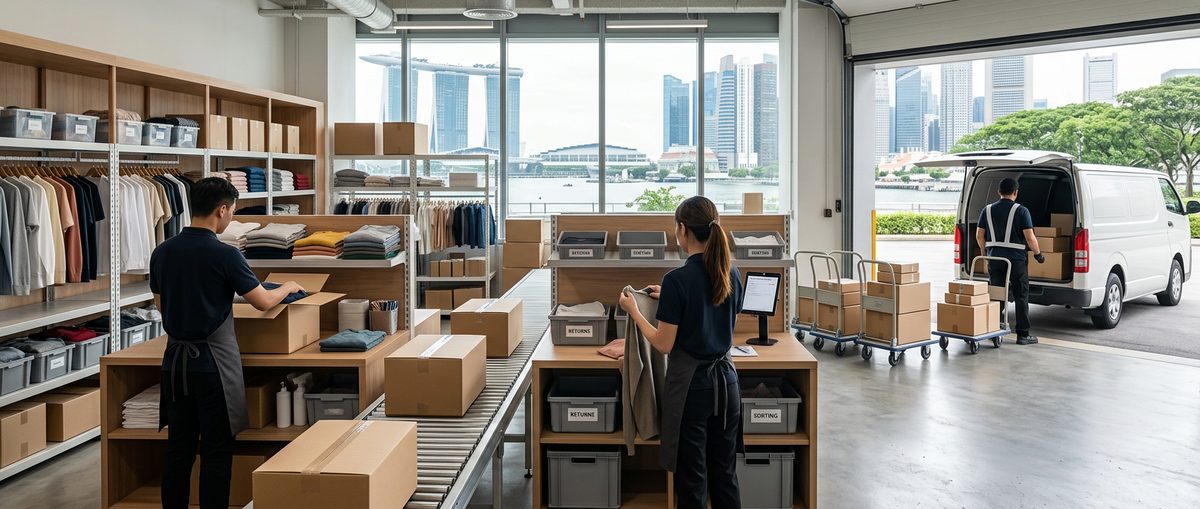
Returns are the line item most Singapore fashion sellers underestimate. Apparel return rates in Singapore typically sit at 8-16% for owned stores and 12-22% for Shopee and Lazada. A clear returns flow with a printable label, 14-30 day window, and store-credit incentive for keeping the product reduces cash outflow materially. Consider offering free returns only above an AOV threshold that protects your contribution margin.
3PLs in Singapore such as SF Express, Ninja Fulfillment and Lazada’s LGS offer pick-pack-ship services at SGD 1.50-3.50 per order depending on volume. Most DTC fashion brands should move to a 3PL once they exceed 400-600 orders a month; before that, in-house fulfilment retains the flexibility to tweak packaging, thank-you cards and unboxing content that support social media performance.
Customer Acquisition Channels and Costs
Paid Meta and TikTok remain the primary acquisition engines for most Singapore fashion brands, but neither scales cleanly without strong creative and a tuned funnel. In 2026, a reasonable target for blended cost-per-acquisition on direct Shopify sales is SGD 22-45 for mid-market fashion, depending on price point and gross margin. Marketplace acquisition via Shopee and Lazada typically sits lower on paper (SGD 10-25) but pays for that in marketplace fees and shallower customer data.
Creator-led acquisition is the highest-leverage tactic that most Singapore sellers still under-use. A seeding programme that gifts product to 30-60 micro-creators per quarter, backed by Spark Ads or Partnership Ads on the best-performing clips, routinely outperforms pure in-house creative on both cost and authenticity. Budget SGD 4,000-12,000 per quarter for product, logistics and creator management.
Branded search on Google and strong organic SEO for category pages like “workwear dresses Singapore” or “modest swimwear Singapore” close the loop for shoppers who discovered the brand on social. A coordinated approach across paid social, creator, marketplace and search is what the fashion marketing team at our agency builds into every retainer.
Retention, Lifecycle Marketing and Loyalty
Singapore fashion ecommerce profitability lives in the second and third purchase, not the first. Repeat purchase rate at 90 days should sit at 18-28% for healthy brands, climbing to 35-50% at twelve months. Below that, unit economics hinge entirely on acquisition efficiency and the business becomes fragile.
Email and SMS are the workhorses of retention. A minimum lifecycle stack for a Singapore fashion brand includes a welcome series of three to five emails, an abandoned browse and cart flow, post-purchase thank-you plus review request, win-back at 60 and 120 days, a VIP segment for top 10% spenders, and a quarterly re-engagement campaign. Klaviyo or Omnisend cover this well; SMS via Postscript or native Klaviyo SMS adds incremental revenue of 5-12% for most fashion brands.
Loyalty programmes work when they are simple. Points-per-dollar structures with clear rewards at SGD 10, SGD 25 and SGD 50 value tiers beat complex multi-level schemes. Tie loyalty to early access for drops and member-only sale windows rather than pure discounts; Singapore fashion customers respond strongly to exclusivity signals. Our email marketing team integrates this into both Shopify and marketplace funnels.
Scaling Regionally from Singapore
Singapore is the right launchpad for ASEAN fashion ecommerce because of infrastructure, English fluency, payment maturity and proximity to supply chains, but it is not a large enough home market to support category-leader ambitions alone. Regional expansion usually begins 12-18 months after Singapore product-market fit, sequencing Malaysia first (shared language and logistics), then Indonesia (largest absolute market), then Philippines, Thailand and Vietnam.
Each country needs its own sub-playbook. Malaysia benefits from Shopee Malaysia plus a lightweight local Shopify with PayNow-equivalent payments and Ninja Van logistics. Indonesia demands Bahasa Indonesia content, local payment methods (GoPay, OVO, DANA, bank transfer) and price-ladder adjustments. Thailand rewards LINE-led customer service and Lazada Thailand, while Vietnam pairs strongly with TikTok Shop.
Managing the complexity of multi-country fashion ecommerce usually requires a structured operating cadence — a weekly country review, a shared creative bank, and localised content leads per market. Brands that try to run all five countries from one Singapore Meta account and one English Instagram feed rarely scale past SGD 150,000 monthly regional revenue. For blog-level reading on the platform-specific layer, see our related article on TikTok Shop marketing in Singapore.
Frequently Asked Questions
Should I start my Singapore fashion brand on Shopify or Shopee?
Start on Shopify if you have strong brand positioning, proprietary design and 65%+ gross margin. Start on Shopee if you are testing supply, selling at mass-market prices, or need immediate traffic without content investment. Most serious brands run both within six months of launch.
How much does it cost to launch a fashion ecommerce store in Singapore?
A lean launch with a custom Shopify theme, first collection photography, initial inventory and a three-month paid media budget typically runs SGD 25,000-60,000. Bootstrapped launches at SGD 10,000-20,000 are possible on Shopee or Carousell first, using cash flow from those channels to fund Shopify later.
What are the best-converting pages on a fashion ecommerce site?
Collection pages for specific use cases like “workwear” or “wedding guest” convert well from paid social traffic. Product pages with six or more images, a size guide, reviews and clear delivery timelines convert best from branded search. Homepages rarely convert first-time buyers and should be treated as navigation, not a sales asset.
Which marketplace has the best margins for Singapore fashion?
Zalora typically offers the highest retained margin on premium fashion but with tighter curation and lower volume. Shopee has the largest volume and aggressive marketing tools but higher discount expectations. Lazada sits in the middle. Carousell has the lowest platform fees and is strongest for resale and clearance.
How do I reduce fashion return rates in Singapore?
Invest in a detailed size guide with real measurements, include garment dimensions on the PDP, use at least one model-worn image at eye-level, add a customer-submitted photo section, and incentivise store credit over cash refunds. Good sizing content typically reduces returns by 2-5 percentage points.
Is TikTok Shop worth it for Singapore fashion sellers?
Yes for SKUs priced under SGD 80 with strong visual hooks, demo-worthy details, or trend relevance. It is less strong for high-consideration premium fashion above SGD 200 where the browse-and-decide cycle is longer. Most brands should test with 20-30 SKUs before committing to a full catalogue integration.
What is a healthy conversion rate for Singapore fashion ecommerce?
Shopify fashion stores in Singapore typically convert at 1.4-2.8% for mid-market brands and 2.2-4.0% for established brands with strong repeat customers. Marketplace conversion rates run higher (3-7%) due to higher-intent traffic but come with platform fees and weaker customer data.
Do I need a warehouse in Singapore to run fashion ecommerce?
Not at launch. Many brands start from a studio or home in Singapore and move to a 3PL around 400-600 orders per month. A dedicated warehouse usually only makes sense above 3,000 orders monthly or when multi-country fulfilment creates operational complexity.
How important is email marketing for fashion ecommerce in Singapore?
Very — email typically drives 20-35% of revenue for mature fashion ecommerce brands in Singapore. The highest ROI flows are abandoned cart, welcome, win-back and post-purchase review requests. SMS adds another 5-12% on top when executed well.
When should I expand my Singapore fashion brand regionally?
When you have stable monthly Singapore revenue of at least SGD 80,000-120,000, a repeat purchase rate above 20% at 90 days, and operational capacity to manage a second country without diluting the first. Premature expansion is one of the most common causes of failure in Singapore fashion ecommerce.