
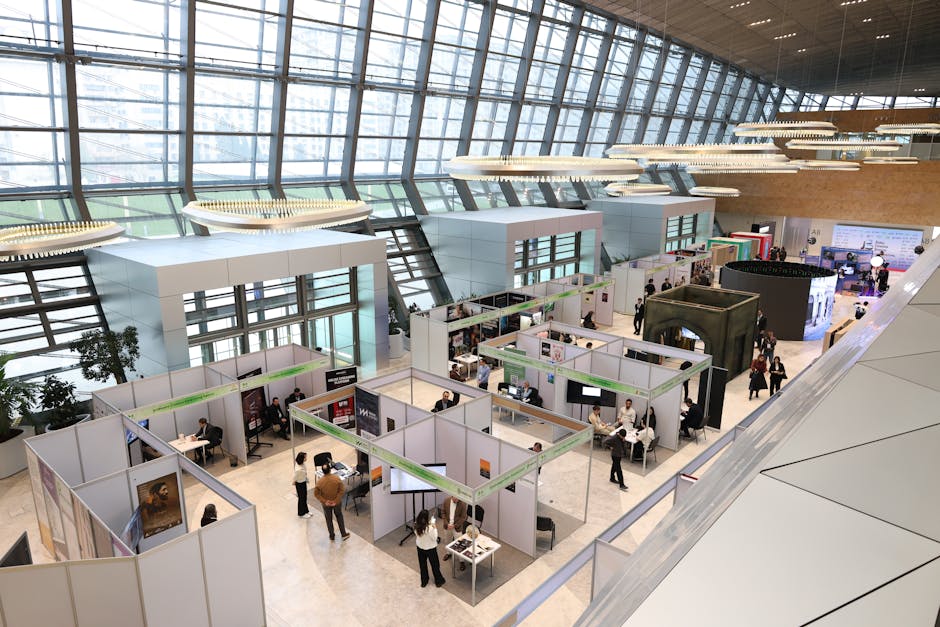
Exhibition Booth Design: Stand Out at Singapore Trade Shows and Expos
Table of Contents
Why Exhibition Booth Design Matters
Exhibition booth design Singapore is a critical factor in trade show success. Your booth is your brand’s physical presence at the event, and attendees form first impressions within three to five seconds of seeing it. A well-designed booth attracts visitors, communicates your value proposition and creates an environment conducive to meaningful business conversations. A poorly designed booth is ignored, regardless of how strong your product or service offering may be.
In Singapore’s competitive exhibition landscape, where events at Singapore Expo, Suntec Convention Centre and Marina Bay Sands attract hundreds of exhibitors, standing out requires deliberate design thinking. Attendees have limited time and energy, typically visiting only a fraction of the booths at any given event. Your booth design must earn attention from the aisle, invite entry and engage visitors long enough to qualify them as leads.
The investment in booth design directly impacts your trade show marketing ROI. Studies show that professionally designed booths generate 50 to 70 percent more visitor traffic than generic or poorly designed alternatives. When you factor in the total cost of exhibition participation, including space rental, staff time, travel and marketing, the incremental cost of professional design delivers outsized returns.
Booth design also reflects your brand’s market positioning. A premium brand exhibiting from a basic shell scheme booth creates cognitive dissonance that undermines credibility. Your booth should be a three-dimensional expression of your brand identity, delivering the same quality and personality that customers experience across your other touchpoints.
Core Design Principles for Trade Show Booths
Effective booth design follows established principles that balance aesthetic appeal with functional requirements and visitor psychology.
Openness and accessibility encourage visitors to enter your space. Avoid designs that create barriers between the aisle and your booth interior. An open front with no tables or counters blocking entry invites natural foot traffic. Closed or fortress-like booth designs intimidate visitors and reduce engagement. The threshold between the aisle and your booth should feel like a seamless transition.
Visual hierarchy guides the visitor’s eye from distant awareness to close engagement. Your primary message and brand identity should be visible from 10 to 15 metres away using large-scale graphics and elevated signage. Secondary messaging becomes readable at five to eight metres as visitors approach. Detailed product information and interactive elements engage visitors who have entered the booth space.
Flow and circulation design how visitors move through your booth. Create a natural pathway that guides visitors past key displays, demonstrations and conversation areas in a logical sequence. Avoid dead ends and bottlenecks that create awkward interactions. For larger booths, design multiple entry and exit points to accommodate natural traffic flow.
Zones within the booth serve different functions. Designate areas for product demonstration, private meetings, informal conversation, storage and staff staging. Clearly defined zones ensure activities do not interfere with each other and visitors can find the experience they are looking for. A demonstration area near the front attracts attention while a semi-private meeting space at the rear enables deeper conversations.
Lighting elevates the perceived quality of your booth and draws attention from the exhibition hall. Use a combination of ambient, accent and task lighting to create depth and highlight key elements. Well-lit booths feel more inviting and professional than those relying on the venue’s overhead lighting, which is typically flat and unflattering.
Comfort elements extend the time visitors spend in your booth. Provide seating for meeting areas, ensure adequate air circulation and consider offering charging stations or refreshments. Comfortable visitors stay longer, engage more deeply and are more likely to convert into qualified leads.
Booth Types and Configurations
Exhibition booth configurations range from simple shell schemes to elaborate custom builds. Understanding the options helps you choose the right type for your objectives and budget.
Shell scheme booths are the entry-level option provided by event organisers. They consist of modular wall panels, fascia signage, basic lighting and sometimes a table and chairs. Shell schemes are cost-effective and require minimal planning but offer limited differentiation. You can enhance a shell scheme with custom graphics, portable displays and branded furniture to improve its impact.
Modular exhibition systems use reusable components that can be configured into different layouts for different events. Systems from manufacturers like Octanorm, Maxima and Aluvision provide professional-looking structures at lower cost than custom builds because components are reused across multiple events. Modular systems offer a good balance of quality and economy for companies that exhibit regularly.
Custom-built booths are designed and constructed specifically for your brand and event requirements. These offer the highest level of design freedom, allowing unique architectural forms, materials and finishes that create a one-of-a-kind brand experience. Custom builds are the premium option, providing maximum impact but at higher cost and with no reuse potential.
Double-decker booths utilise vertical space by adding a second level to your exhibition footprint. The upper deck can serve as a meeting room, lounge or viewing platform, effectively doubling your usable space without increasing floor space rental. Double-deckers make a strong visual statement and are particularly effective in halls with high ceilings. Note that some Singapore venues have height restrictions that limit double-decker options.
Island booths are open on all four sides, offering maximum visibility and access from every direction. These premium configurations require larger floor spaces, typically 36 square metres or more, and higher design investment to create a cohesive experience from all approaches. Island booths are ideal for major exhibitors seeking maximum presence.
Peninsula booths are open on three sides with one wall, offering nearly the visibility of an island booth at lower cost. The back wall provides space for large-scale graphics and storage while three open sides ensure broad accessibility.
Branding and Graphics That Attract
Graphics and branding are the most visible elements of your booth design, responsible for communicating your identity and message to attendees from a distance.
Large-format graphics create visual impact and brand presence. Use high-resolution imagery, bold typography and vibrant colours that are consistent with your brand guidelines. Your company logo should be prominently displayed at the highest point of your booth, ensuring visibility above the crowd. Avoid cluttering graphics with excessive text, as attendees will not read detailed copy from the aisle.
Message hierarchy in your graphics should follow the three-second rule. An attendee glancing at your booth for three seconds should understand who you are and what you offer. Lead with a clear, benefit-oriented headline that speaks to visitor needs rather than your company capabilities. Save detailed product information for closer engagement through brochures, screens and conversation.
Consistent brand application across all booth elements creates a cohesive professional impression. Apply your brand colours, typography, imagery style and tone consistently across structural graphics, display screens, promotional materials, staff uniforms and even furniture selections. This consistency reinforces brand recognition and trust.
Backlit and illuminated graphics command attention in the often dim exhibition hall environment. Lightbox displays, LED-illuminated panels and projection-mapped surfaces create visual drama that draws the eye. These luminous elements are particularly effective for photography and social media content from the event.
Dynamic content through video walls and digital displays adds movement and variety to your booth graphics. Rotating content keeps your booth visually fresh throughout a multi-day event and allows you to showcase multiple messages, products or case studies without consuming physical graphic space. Digital displays can also be updated in real time to reflect event-specific messaging or daily themes.
Integrate your booth graphics with your website design and overall visual identity for a seamless brand experience. Visitors who encounter your brand at the trade show and later visit your website should experience visual continuity that reinforces recognition and trust.
Technology Integration for Modern Booths
Technology enhances visitor engagement, captures leads efficiently and creates memorable experiences that differentiate your booth from competitors relying on static displays.
Interactive touchscreen displays allow visitors to explore your products, services and case studies at their own pace. Self-guided digital presentations accommodate different interest levels and information needs without requiring continuous staff attention. Touchscreens can also serve as lead capture tools, collecting visitor information in exchange for personalised content or recommendations.
Virtual reality and augmented reality experiences create immersive demonstrations that are impossible with physical displays alone. VR can transport visitors to project sites, factory floors or future environments. AR can overlay digital information onto physical products, allowing visitors to visualise customisation options or see inside complex products. These technologies generate buzz and attract curious visitors to your booth.
Lead capture technology has evolved beyond simple badge scanners. Modern systems use apps on staff devices to scan badges, capture notes, photograph business cards, record audio notes and categorise leads by qualification level in real time. Integration with your CRM ensures captured leads flow directly into your sales pipeline for immediate follow-up.
Digital demonstration tools enable remote product access, live software demonstrations and real-time data visualisation. For technology, software and services companies, the ability to demonstrate capabilities live at the booth is often more compelling than static brochures or video presentations.
Social media walls and hashtag displays encourage visitors to share their booth experience online, extending your reach beyond the physical event. Live feeds of event-related social media posts create a dynamic, community-driven element in your booth. These displays also provide social proof as visitors see others engaging with your brand.
Consider how technology in your booth can create content for your ongoing content marketing and social media campaigns. Capture video testimonials, demonstration footage and event highlights that provide months of marketing content from a single event.
Practical Planning and Logistics
Successful booth execution requires meticulous logistical planning to ensure everything comes together on time and within budget.
Timeline management is critical. Begin booth planning four to six months before the event. Finalise design concepts three to four months ahead. Begin construction or fabrication two to three months before the show. Ship or transport booth elements one to two weeks before setup. Allow adequate setup time at the venue, typically one to three days for custom builds.
Venue regulations and restrictions vary between Singapore’s exhibition venues. Check maximum build heights, electrical capacity, rigging points, floor loading limits, fire safety requirements and hanging sign regulations before finalising your design. Non-compliant elements will need to be modified on-site at significant additional cost.
Electrical and connectivity planning ensures your technology elements function correctly. Calculate total power requirements for lighting, screens, computers and interactive elements. Order electrical connections from the venue well in advance, specifying amperage, socket types and locations. Arrange internet connectivity for any cloud-based demonstrations or lead capture systems.
Setup and teardown logistics require coordination between your design team, construction crew, technology installers and venue management. Create a detailed setup schedule that sequences tasks logically, with structural elements first, then electrical, then graphics, then technology, then finishing touches. Designate a project manager to oversee the entire setup process.
Storage and back-of-house planning ensures staff have access to supplies, personal belongings and refreshments without cluttering the visitor-facing booth space. Design dedicated storage areas into your booth layout, hidden behind walls or under counters. Brief staff on where supplies are stored and how to access them without disrupting visitor engagement.
Post-event dismantle and storage requires planning for what happens after the show. Modular systems need careful disassembly, cleaning and storage for reuse. Custom builds may be partially salvageable or may need to be disposed of. Arrange transport and storage before the event to avoid rushed decisions during teardown.
Budgeting and Cost Management
Exhibition booth costs in Singapore range significantly based on booth type, size, complexity and event requirements. Accurate budgeting prevents surprises and ensures your investment delivers appropriate return.
Shell scheme enhancement costs between SGD 3,000 and SGD 10,000, covering custom graphics, portable displays, branded furniture and accessories to improve a basic shell scheme booth. This is the most economical approach and suits first-time exhibitors or those testing new events.
Modular booth systems cost SGD 10,000 to SGD 30,000 for initial purchase, with reconfiguration costs of SGD 3,000 to SGD 8,000 for subsequent events. The per-event cost decreases with each reuse, making modular systems economical for companies that exhibit three or more times per year.
Custom-built booths for standard single-storey configurations range from SGD 20,000 to SGD 80,000 for a 9 to 36-square-metre space. Larger or more complex builds can exceed SGD 100,000. These costs include design, fabrication, installation and dismantling. Custom builds offer maximum impact but no reuse value.
Technology additions increase costs depending on complexity. Interactive touchscreens cost SGD 2,000 to SGD 5,000 each to rent. Video walls range from SGD 5,000 to SGD 15,000. VR or AR experiences cost SGD 10,000 to SGD 30,000 to develop and deploy. Factor technology costs into your overall booth budget from the planning stage.
Hidden costs that exhibitors often underestimate include electrical connections at SGD 500 to SGD 2,000, internet connectivity at SGD 500 to SGD 1,500, furniture rental at SGD 1,000 to SGD 3,000, cleaning services, security deposits, overtime labour charges for setup and teardown outside standard hours, and transport and storage of booth materials.
To maximise your exhibition investment, align booth spending with your overall marketing budget and expected lead generation targets. Calculate the cost per square metre and cost per expected lead to compare booth options objectively. Invest more in booth design for high-priority events with proven attendee quality and less for experimental or secondary events.
Frequently Asked Questions
How much does an exhibition booth cost in Singapore?
Exhibition booth costs in Singapore range from SGD 3,000 to SGD 10,000 for shell scheme enhancements, SGD 10,000 to SGD 30,000 for modular systems, and SGD 20,000 to SGD 80,000 or more for custom builds. These costs exclude booth space rental, which is charged separately by the event organiser.
How far in advance should I plan my exhibition booth?
Begin booth planning four to six months before the event. Finalise design three to four months ahead and begin fabrication two to three months before the show. For large custom builds, start even earlier to allow adequate time for design iterations and construction.
Should I use a modular or custom booth?
Use modular systems if you exhibit at three or more events per year, as the cost per event decreases with each reuse. Choose custom builds for your most important events where maximum brand impact justifies the higher single-use investment. Many companies use both approaches for different events.
What size booth do I need?
Standard booth sizes in Singapore are 9 square metres for small exhibitors, 18 to 36 square metres for mid-size presence, and 54 square metres or larger for major exhibitors. Choose your size based on the number of products to display, staff to accommodate, meeting areas needed and budget available.
How do I make my booth stand out?
Stand out through distinctive architectural design, bold graphics visible from a distance, professional lighting, interactive technology, live demonstrations and engaging staff. Focus on creating a unique visitor experience rather than simply displaying products. Consider what will make attendees stop, enter and remember your booth.
What are common exhibition booth design mistakes?
Common mistakes include cluttered graphics with too much text, closed or unwelcoming layouts, poor lighting, lack of demonstration or interaction areas, understaffing or untrained staff, and inadequate storage solutions. Also avoid designing without considering the visitor journey from approach to engagement to exit.
Can I reuse my exhibition booth?
Modular exhibition systems are designed for reuse and can be reconfigured for different events and booth spaces. Custom builds are typically single-use, though some structural elements may be salvageable. Graphics panels can be updated for each event while retaining the structural framework.
How do I choose an exhibition booth builder in Singapore?
Choose a booth builder with relevant experience, a strong portfolio of completed projects, positive client references, transparent pricing and established relationships with Singapore’s major venues. Request detailed quotes from at least three builders and evaluate them on design quality, build quality, project management capability and after-service support.


