
Direct Mail Marketing in Singapore: Design, Target and Measure Physical Mail
Table of Contents
- Why Direct Mail Marketing Still Delivers Results
- Types of Direct Mail for Singapore Businesses
- Building and Acquiring Mailing Lists
- Designing Mailers That Get Opened and Read
- Personalisation and Targeting Strategies
- Singapore Postal Regulations and Costs
- Measuring Direct Mail Campaign Performance
- Frequently Asked Questions
Why Direct Mail Marketing Still Delivers Results
Direct mail marketing Singapore remains one of the most effective offline marketing channels available to businesses today. In an era of overflowing email inboxes and digital advertisement fatigue, physical mail stands out precisely because it is tangible. Recipients hold it, read it and often keep it, giving your message a physical presence that digital communications cannot replicate.
Response rates for direct mail consistently outperform email marketing. Industry data shows direct mail achieving response rates of 2 to 5 percent compared to email’s average of 0.1 to 0.3 percent. This performance gap exists because direct mail faces less competition in the letterbox than digital messages face in the inbox. In Singapore, where the postal system is efficient and reliable, direct mail reaches recipients quickly and consistently.
Direct mail also benefits from a trust factor. Consumers perceive physical mail from businesses as more legitimate and trustworthy than digital advertisements. The investment required to produce and send physical mail signals commitment and credibility. For businesses in sectors like financial services, healthcare, education and property, this trust advantage is particularly valuable. When integrated with a broader digital marketing strategy, direct mail creates a powerful multi-channel experience that drives action.
Types of Direct Mail for Singapore Businesses
Several direct mail formats serve different marketing objectives. Choosing the right format depends on your message, audience, budget and desired response.
Postcards are the most cost-effective direct mail format. They require no envelope, reducing both production and postage costs. Postcards work well for simple promotional messages, event invitations, appointment reminders and seasonal offers. Their immediacy is an advantage as the recipient sees your message without needing to open anything.
Letters in envelopes provide a more formal, personalised communication. Business letters are effective for high-value prospects, existing customers and communications requiring detailed information. The envelope creates curiosity and anticipation, and personalised letters with the recipient’s name and relevant details generate stronger response than generic communications.
Self-mailers fold and seal without an envelope, offering a middle ground between postcards and letters. Bi-fold and tri-fold self-mailers provide more space for content while keeping costs moderate. They are commonly used for product promotions, service announcements and informational campaigns.
Dimensional mailers include packages, boxes and three-dimensional items that stand out dramatically from flat mail. While significantly more expensive, dimensional mailers achieve open rates approaching 100 percent and are highly effective for reaching high-value B2B prospects and VIP customers. For businesses creating detailed product information mailers, our guide to catalogue marketing offers relevant design principles.
Building and Acquiring Mailing Lists
The quality of your mailing list determines the success of your direct mail campaign more than any other factor. A well-targeted list reaching the right recipients will outperform a beautifully designed mailer sent to the wrong audience.
Your existing customer database is the most valuable mailing list you have. Current and past customers already know your brand and are statistically more likely to respond to your direct mail. Segment your customer database by purchase history, recency, value and product category to create targeted mailings that speak to each group’s specific interests and behaviours.
Lead capture through your digital channels builds your mailing list organically. Collect physical addresses through website forms, event registrations, in-store sign-ups and loyalty programme enrolments. Ensure you have clear opt-in consent for physical mail communications to comply with Singapore’s Personal Data Protection Act requirements.
Purchased or rented mailing lists from reputable data providers offer access to prospects beyond your existing database. Singapore-based list providers offer selections filtered by demographics, location, property type, household income, business type and other criteria. Always verify list quality by requesting sample records and delivery guarantees. Clean, accurate lists reduce waste and improve response rates.
Building strategic partnerships with complementary businesses allows list sharing or co-mailing arrangements. A wedding photographer might partner with a wedding venue, or a children’s enrichment centre might collaborate with a paediatric clinic. These arrangements require mutual benefit and proper data handling agreements.
Designing Mailers That Get Opened and Read
Direct mail design follows specific principles that differ from digital design. Your mailer must first get noticed, then opened, then read, then acted upon. Each stage requires deliberate design decisions.
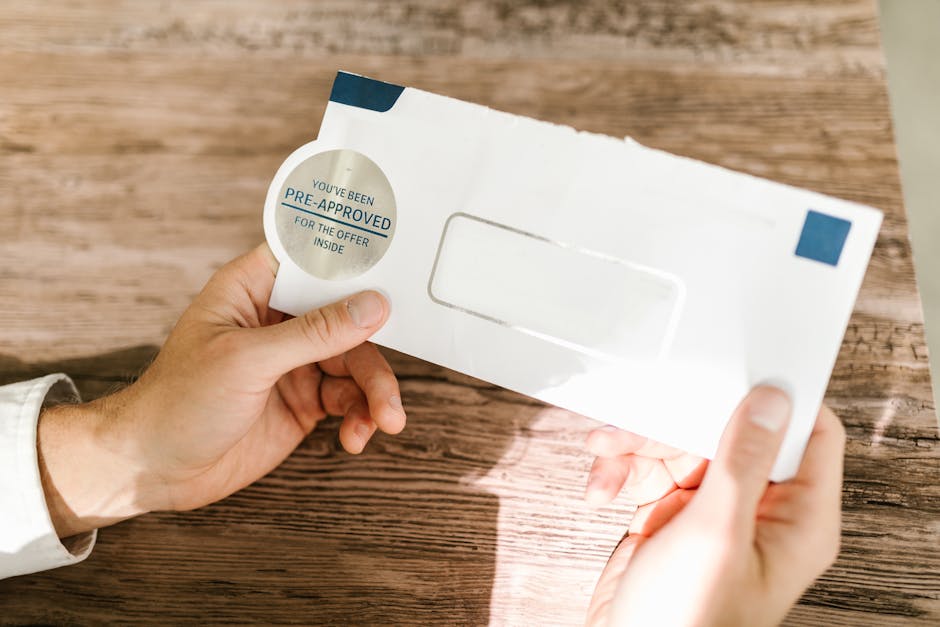
The outer envelope or visible surface must grab attention. Use teaser copy, unusual sizes, colour or textures to differentiate your mailer from bills and generic correspondence. Handwritten-style fonts for the recipient’s name and address increase the perception of personal correspondence, improving open rates significantly.
Inside, lead with your strongest benefit or offer. The headline visible upon opening should immediately communicate value to the recipient. Do not bury your offer in dense body copy. Make it prominent, clear and compelling. Use subheadings, bullet points and short paragraphs to create scannable content that readers can absorb quickly.
Include testimonials, statistics or trust signals that support your claims. Social proof is as effective in print as it is online. Customer quotes, performance data, awards and certifications build credibility and reduce resistance to your call to action.
Your call to action must be unmistakable and easy to follow. Include a QR code linking to a dedicated landing page, a unique phone number, a promotional code for online redemption or a reply card for offline response. Multiple response channels accommodate different preferences. Professional branding services ensure your direct mail design maintains visual consistency with all other brand touchpoints.
Personalisation and Targeting Strategies
Personalisation transforms direct mail from generic junk mail into relevant, welcomed communication. Modern variable data printing technology allows you to customise every element of a mailer for each recipient.
Name personalisation is the baseline. Addressing recipients by name on the envelope and within the letter content is essential. Beyond names, personalise content based on past purchase behaviour, location, demographics or expressed interests. A home improvement company could reference the recipient’s specific neighbourhood or property type. A retailer could highlight products related to previous purchases.
Segmentation divides your mailing list into groups receiving different versions of your mailer. Create segments based on customer lifecycle stage, product interest, spending level or engagement history. New prospects receive introductory offers. Loyal customers get exclusive previews. Lapsed customers receive re-engagement incentives. Each segment receives messaging tailored to their relationship with your brand.
Trigger-based mailings sent in response to specific actions or events achieve the highest response rates. Welcome kits for new customers, birthday offers, anniversary acknowledgements and post-purchase follow-ups arrive at moments of relevance, making them feel personal rather than promotional. Combining triggered direct mail with social media marketing retargeting creates a coordinated multi-channel response to customer behaviour.
Geographic targeting is particularly effective in Singapore’s compact market. Target specific postal districts, housing types or neighbourhood profiles to reach audiences with shared characteristics and needs. A restaurant can mail residents within a five-kilometre radius. A tuition centre can target families in nearby estates.
Singapore Postal Regulations and Costs
Understanding Singapore’s postal system and regulations ensures your direct mail campaign runs smoothly and cost-effectively. Singapore Post is the primary postal service provider, offering various mail services suited to marketing communications.
Standard postage for domestic mail starts from SGD 0.30 to SGD 0.50 per piece depending on size and weight. Bulk mail services offer significant discounts for large mailings, typically requiring a minimum of 500 to 1,000 pieces. AdMail, Singapore Post’s advertising mail service, provides reduced rates for bulk promotional mailings with presorting requirements.
Size and weight restrictions apply to different mail categories. Standard letters must meet minimum and maximum dimensions, and weight limits vary by service type. Oversized or overweight items incur higher postage. Design your mailers within standard postal dimensions to avoid premium charges.
The Do Not Call Registry and Personal Data Protection Act govern direct marketing communications in Singapore. While the DNC Registry primarily covers phone calls and text messages, the PDPA requires consent for collecting and using personal data including mailing addresses. Ensure your mailing list complies with PDPA requirements by maintaining proper consent records and honouring opt-out requests promptly.
Addressing standards must be followed for efficient delivery. Singapore Post requires specific address formatting including block numbers, street names, unit numbers and postal codes. Accurate addressing reduces undeliverable mail and ensures your budget is not wasted on returned items. Our article on flyer distribution in Singapore covers additional physical distribution considerations.
Measuring Direct Mail Campaign Performance
Direct mail measurement requires built-in tracking mechanisms that attribute responses to specific mailings. Without tracking, you cannot optimise future campaigns or calculate return on investment.
Response rate is the primary metric. Calculate it by dividing the number of responses by the total number of mailers sent. Track responses through unique promotional codes, dedicated phone numbers, specific landing page URLs and QR code scans. Each mailer should include at least one trackable response mechanism.
Cost per acquisition measures the total campaign cost divided by the number of new customers or conversions generated. Include all costs: design, printing, data, postage and fulfilment. Compare your CPA to other channels to evaluate direct mail’s relative efficiency within your marketing mix.
Revenue per mailer calculates the total revenue generated divided by the number of mailers sent. This metric reveals the direct financial contribution of your campaign and helps determine break-even points and profitability thresholds.
A/B testing improves performance over time. Test different elements across split mailings: headlines, offers, formats, personalisation levels and calls to action. Change one variable at a time to identify which factors most influence response. Apply winning elements to future campaigns for continuous improvement.
Integrate direct mail tracking with your digital analytics. When mailers drive traffic to landing pages, track the complete customer journey from first visit through conversion. This integration provides a full picture of direct mail’s contribution to your sales pipeline. Combining direct mail with SEO services and Google Ads ensures you capture and convert the interest generated across all channels.
Frequently Asked Questions
How much does a direct mail campaign cost in Singapore?
Total costs typically range from SGD 0.80 to SGD 3.00 per piece including design, printing, data and postage. A campaign of 5,000 postcards might cost SGD 4,000 to SGD 8,000 in total. Costs decrease per piece with higher volumes due to printing and postage discounts.
What response rate should I expect from direct mail?
Well-targeted direct mail campaigns in Singapore typically achieve response rates of 1 to 5 percent. Highly personalised mailings to existing customers can exceed 5 percent. Response rates depend heavily on list quality, offer strength, creative execution and timing.
Is direct mail marketing still legal in Singapore?
Yes, direct mail marketing is legal in Singapore. However, you must comply with the Personal Data Protection Act when collecting and using personal data including mailing addresses. Obtain proper consent before adding individuals to your mailing list and honour opt-out requests promptly.
How do I build a mailing list for direct mail?
Start with your existing customer database. Supplement with addresses collected through website forms, events and in-store registrations. Purchased lists from reputable data providers offer additional reach. Always ensure proper consent and PDPA compliance for all addresses on your list.
What is the best direct mail format for small businesses?
Postcards offer the best value for small businesses due to low production and postage costs, no envelope requirement and immediate visibility. They are effective for promotions, event announcements and seasonal offers. As budgets grow, test letters and self-mailers for more detailed messaging.
How do I prevent my direct mail from being thrown away?
Personalise the mailer with the recipient’s name. Use quality materials and professional design. Lead with a compelling offer or benefit on the outer surface. Time your mailing to arrive when it is most relevant. Target recipients who have a genuine need for your product or service.
Can I combine direct mail with digital marketing?
Absolutely. Direct mail and digital marketing complement each other effectively. Use QR codes to drive mail recipients online. Retarget website visitors from direct mail campaigns with display advertisements. Coordinate messaging across mail, email, social media and search for a unified customer experience.
How long does it take to execute a direct mail campaign?
Allow three to six weeks from planning to delivery. This includes one to two weeks for design and approvals, one week for printing, and one to two weeks for postage and delivery. Rush timelines are possible but may incur premium charges from printers and postal services.


