
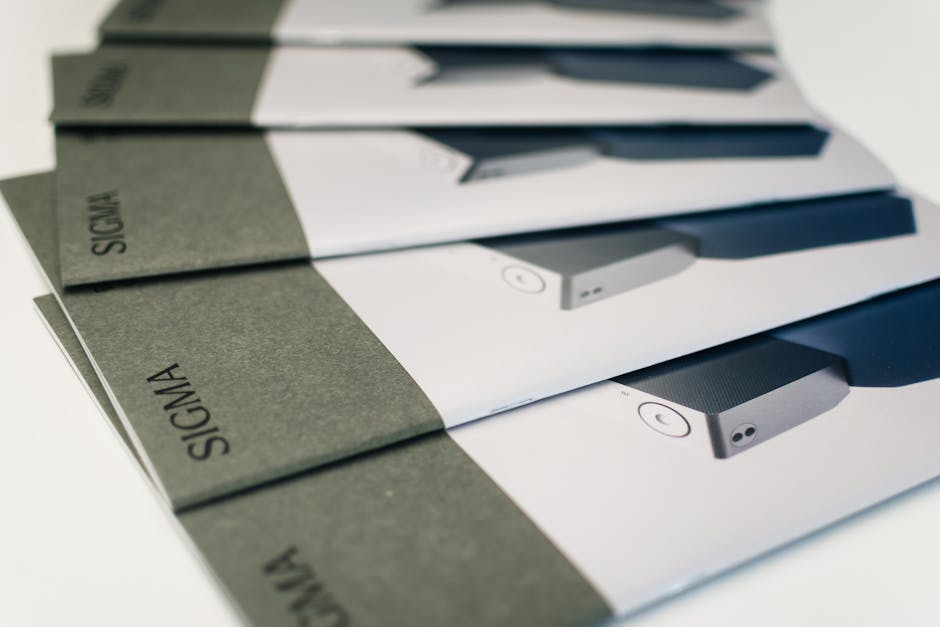
Brochure Design for Marketing: Create Print Collateral That Drives Action
Table of Contents
- The Role of Brochures in Modern Marketing
- Types of Marketing Brochures and When to Use Them
- Layout, Structure and Visual Hierarchy
- Copywriting That Persuades and Converts
- Print Specifications and Production Quality
- Digital Brochures and PDF Marketing
- Distribution Strategies for Maximum Reach
- Frequently Asked Questions
The Role of Brochures in Modern Marketing
Brochure design marketing remains a cornerstone of professional business communication, providing a tangible representation of your brand, products and services that digital formats cannot fully replace. A well-designed brochure serves as a portable salesperson, communicating your value proposition to prospects long after a meeting, event or store visit has ended.
Brochures bridge the gap between a brief introduction and a full sales presentation. They provide enough detail to inform and persuade without overwhelming the reader. At trade shows, conferences, sales meetings, property showrooms and retail environments, brochures give prospects something physical to take away, review and share with decision-makers who were not present during the initial interaction.
In Singapore’s competitive business environment, the quality of your printed collateral reflects directly on your brand’s professionalism and credibility. A mediocre brochure signals a mediocre business. A polished, well-crafted brochure communicates attention to detail, investment in quality and confidence in your offering. When aligned with your digital marketing strategy, brochures reinforce messaging that prospects encounter across all channels.
Types of Marketing Brochures and When to Use Them
Different brochure formats serve different marketing situations. Selecting the right format depends on the amount of content you need to present, the context in which the brochure will be distributed and your budget.
Bi-fold brochures create four panels from a single sheet folded in half. This format works well for straightforward product or service overviews, event programmes and company introductions. The front panel serves as the cover, two inside panels present your content, and the back panel includes contact information and calls to action.
Tri-fold brochures are the most common format, creating six panels from a single sheet folded into thirds. The standard DL size (99mm x 210mm when folded) fits neatly into letterboxes and standard envelopes. Tri-folds accommodate more content than bi-folds while remaining compact and cost-effective. They are ideal for service overviews, menus, facility guides and promotional pieces.
Gate-fold brochures open from the centre outward, revealing the interior panels dramatically. This format creates a reveal moment that works well for premium brands, luxury products and high-impact presentations. The gate-fold format communicates exclusivity and sophistication.
Multi-page booklet brochures extend beyond single-sheet formats into saddle-stitched or perfect-bound booklets. These accommodate detailed product catalogues, comprehensive service guides and corporate profiles. For extensive product information, our article on catalogue marketing provides specific guidance on multi-page printed materials.
Z-fold and accordion-fold brochures create a continuous panel sequence that can be read panel by panel or unfolded entirely for a panoramic view. These formats suit step-by-step processes, timelines, maps and sequential narratives.
Layout, Structure and Visual Hierarchy
Effective brochure layout guides the reader through your content in a logical sequence, from initial attention through interest and desire to action. Visual hierarchy ensures that the most important elements receive the most attention.
The cover panel is your brochure’s first impression. It must capture attention, communicate what the brochure is about and motivate the reader to open it. Use a compelling headline, a strong visual and your brand identity on the cover. Avoid cluttering the cover with too much information. Its sole job is to get the brochure opened.
Inside panels should follow a logical content flow. Start with the problem or need your audience faces, present your solution, provide evidence and credibility, and close with a clear call to action. This structure mirrors the persuasion sequence that moves readers from awareness to consideration to action.
White space is essential for readability and visual appeal. Resist the urge to fill every square centimetre with content. Generous margins, spacing between sections and breathing room around images and headlines make your brochure more inviting and easier to read. Cramped layouts overwhelm readers and reduce engagement.
Typography should be limited to two or three font families maximum. Use a display font for headlines, a clean sans-serif or serif for body copy, and optionally a third font for captions or callouts. Ensure body text is at least 9 to 10 points for readability. Line spacing of 120 to 140 percent of the font size improves reading comfort. Professional branding services establish typography standards that maintain consistency across all your marketing materials.
Copywriting That Persuades and Converts
Brochure copy must be concise, benefit-focused and action-oriented. Unlike website content where readers can click through pages, brochure readers engage with a fixed amount of content. Every word must earn its place.
Lead with benefits, not features. Instead of listing product specifications, explain how those features solve the reader’s problems or improve their situation. “Reduce your electricity bills by 30 percent” is more compelling than “High-efficiency inverter technology.” Benefits connect your offering to the reader’s needs and motivations.
Use headlines and subheadings liberally. Readers scan brochures before deciding to read in depth. Your headlines should communicate the key messages even if the body copy is never read. Structure your brochure so that a scan of the headlines alone tells a complete, persuasive story.
Include social proof throughout your brochure. Customer testimonials, case study summaries, client logos, awards and performance statistics build credibility and reduce scepticism. Position social proof near your key claims and close to your call to action for maximum impact on the reader’s decision.
Your call to action must be prominent, specific and easy to follow. Tell the reader exactly what to do next and make it simple. Include multiple response channels: a phone number, website URL, QR code, email address or physical location. Ensure that one primary CTA stands out above the others, guiding the reader toward your preferred response channel. Strong brochure copywriting aligns with your broader content marketing strategy for consistent messaging.
Print Specifications and Production Quality
Production quality distinguishes professional brochures from amateur ones. Understanding print specifications ensures your design translates perfectly from screen to paper.
Resolution must be at least 300 DPI for all images and graphics. Lower resolution results in pixelated, blurry imagery that undermines your professional image. Source high-quality photography from professional shoots or premium stock libraries. Never use images downloaded from websites, as these are typically 72 DPI and unsuitable for print.
Colour mode must be CMYK for all print materials. Designs created in RGB colour mode will shift colour when converted to CMYK for printing. Work in CMYK from the start to ensure colour accuracy. For brand colours, specify Pantone values for exact colour matching across different print runs and materials.
Paper stock significantly affects the brochure’s look and feel. Standard options include 128gsm art paper for cost-effective brochures, 157gsm for a more substantial feel, and 200gsm to 300gsm card stock for premium pieces. Coated papers (gloss or matte) provide better colour reproduction and image sharpness. Uncoated papers offer a natural, tactile feel preferred by some luxury and eco-conscious brands.
Finishing options add value and distinction. Lamination (gloss or matte) protects the brochure and enhances durability. Spot UV coating highlights specific elements with a glossy sheen against a matte background. Embossing and debossing add tactile dimension to logos and headlines. Foil stamping in gold, silver or custom colours communicates luxury. These finishes increase cost but significantly elevate the perceived value of your brochure.
Bleed, crop marks and safe zones must be correctly set in your design files. Standard bleed is 3mm on all sides. Keep all essential content at least 5mm from the trim edge. Ensure fold lines are precisely positioned to maintain alignment across panels. Request a printed proof before the full run to verify colours, registration and fold accuracy.
Digital Brochures and PDF Marketing
Digital brochures extend the reach and lifespan of your printed content by making it accessible online, via email and through social media channels. A well-optimised digital brochure complements your print version and reaches audiences beyond physical distribution.
PDF brochures are the most common digital format. Optimise your PDF for screen viewing with smaller file sizes, embedded fonts and clickable hyperlinks. A PDF brochure shared via email, downloaded from your website or linked from social media provides the same content as your print version without production and distribution costs.
Interactive digital brochures go beyond static PDFs. Platforms like Flipbook, Issuu and similar tools convert your brochure into an interactive page-turning experience. These platforms track reader engagement, including time spent on each page, click-through rates and sharing behaviour, providing analytics unavailable with physical brochures.
Mobile optimisation is essential for digital brochures. Ensure text is readable on smartphone screens without excessive zooming. Consider creating a mobile-optimised version with adjusted layout and larger text if your primary audience reads on mobile devices. Link your digital brochure to your website for seamless user experience, supported by your SEO strategy to capture search traffic.
Distribution Strategies for Maximum Reach
Even the best-designed brochure fails if it does not reach the right audience. Strategic distribution ensures your brochures end up in the hands of qualified prospects who can act on your message.
Sales team distribution equips your representatives with brochures for meetings, presentations and networking events. Ensure your team has current brochures at all times and train them on how to use the brochure as a conversation tool rather than simply handing it over.
Point-of-sale and reception area placement puts brochures where customers and visitors naturally encounter them. Display stands in your office, showroom, clinic or store encourage self-service browsing. Partner with complementary businesses to place your brochures in their locations.
Trade shows, conferences and events provide concentrated access to qualified prospects. Prepare sufficient quantities for expected attendance and consider event-specific inserts or attachments that provide contextual relevance. Collect contact details from brochure recipients for follow-up communication.
Direct mail distribution sends brochures to targeted mailing lists. For detailed guidance on this approach, see our article on direct mail marketing in Singapore. Combine brochure mailings with a follow-up email and social media marketing retargeting for a multi-touchpoint campaign.
Frequently Asked Questions
How much does brochure design cost in Singapore?
Professional brochure design in Singapore ranges from SGD 500 to SGD 3,000 depending on complexity, number of pages and designer experience. Printing costs for a standard tri-fold brochure start from SGD 150 to SGD 400 for 1,000 copies on standard art paper, with prices decreasing per unit for larger quantities.
What is the best brochure size for marketing?
The A4 tri-fold (folding to DL size, 99mm x 210mm) is the most versatile and widely used format. It provides six panels of content, fits standard envelopes and letterboxes, and is cost-effective to produce. A4 bi-fold works well for simpler messages or premium presentations.
Should I use gloss or matte paper for my brochure?
Gloss paper enhances colour vibrancy and image sharpness, making it ideal for photo-heavy brochures. Matte paper provides a sophisticated, professional feel with reduced glare, making it easier to read and better for text-heavy content. Matte lamination on gloss paper offers both durability and a premium tactile experience.
How many brochures should I print?
Base your print quantity on projected distribution over three to six months. Per-unit costs decrease significantly with volume, so printing 2,000 to 5,000 copies is often more cost-effective than multiple smaller runs. Avoid overprinting by considering potential content changes and updated offers.
Can I design a brochure myself using templates?
Templates from platforms like Canva and Adobe Express provide starting points, but custom professional design delivers significantly better results. Templates risk looking generic and may not meet print production specifications. For important marketing collateral, invest in professional design through experienced design services.
What information should a marketing brochure include?
Essential elements include a compelling headline, clear description of your products or services, key benefits, social proof such as testimonials or case studies, a strong call to action, and complete contact information including website, phone, email and address. Include a QR code linking to your website or a specific landing page.
How long does it take to produce a marketing brochure?
Allow two to four weeks for the complete process: one to two weeks for design and content development, three to five days for revisions and approval, and five to seven business days for printing. Rush production is available from most printers at a premium cost.
Should I create a digital version of my printed brochure?
Yes. A digital version extends your brochure’s reach without additional printing costs. Create an optimised PDF for email distribution and website download. Consider interactive flipbook versions for enhanced engagement and tracking. Digital brochures also support your Google Ads campaigns as downloadable resources on landing pages.


