
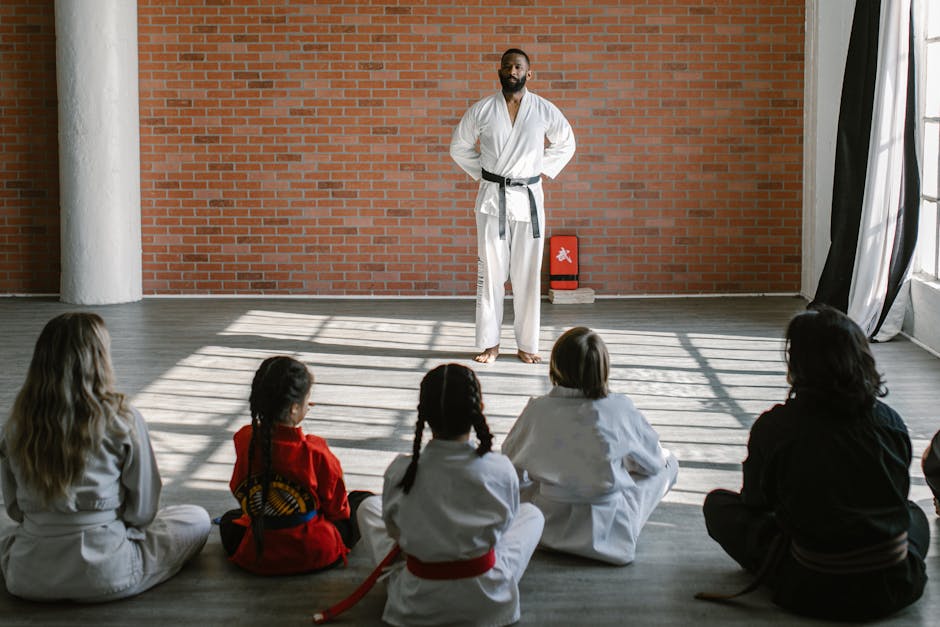
Martial Arts School Marketing in Singapore: A Complete Strategy Guide
Singapore’s martial arts scene is remarkably diverse. From taekwondo and karate dojos in heartland HDB neighbourhoods to Brazilian jiu-jitsu academies in industrial estates and Muay Thai gyms in the CBD, thousands of schools compete for students across every age group and skill level. The martial arts industry in Singapore benefits from strong cultural appreciation for discipline and fitness, government support through ActiveSG programmes, and a growing awareness of martial arts as a vehicle for children’s character development. But competition is fierce, and the schools that grow sustainably are those that market strategically.
The unique challenge of martial arts marketing is the breadth of the audience. A single school may need to attract children as young as four for introductory classes, teenagers for competitive training, working adults for fitness and stress relief, and seniors for health-focused programmes. Each audience has different motivations, different decision-makers (parents vs self), and different objections that marketing must address. A parent considering taekwondo for their six-year-old cares about discipline, safety and qualified instructors. An adult considering Brazilian jiu-jitsu cares about class atmosphere, schedule flexibility and injury prevention.
This guide covers every aspect of digital marketing for martial arts schools in Singapore, from Google Ads and social media content strategies to community event marketing and the often-overlooked power of belt progression content. Whether you run a traditional martial arts school, a modern combat sports gym, or a multi-discipline academy, these strategies will help you attract more students, improve retention and build a brand that stands out in a crowded market.
Free Trial Promotions That Convert
The free trial class is the cornerstone of martial arts school marketing. Martial arts is physical, communal and emotionally engaging—qualities that cannot be communicated through a website alone. A prospective student or parent needs to step onto the mat, feel the energy of the class, interact with the instructor and experience the training firsthand. Your trial promotion must make this first step as easy and risk-free as possible.
Structure your trial offer to remove every barrier to attendance. Offer a genuinely free trial (not a “discounted first month” disguised as a trial), provide loaner equipment (uniforms, gloves, pads) so new students do not need to purchase anything upfront, and allow walk-ins as well as pre-booked trials. Promote your free trial prominently across every channel: your website homepage, Google Ads, social media profiles, and physical signage outside your school. The call-to-action should be specific and action-oriented: “Try a Free Taekwondo Class This Saturday” outperforms “Contact Us for More Information.”
The trial class experience itself is your most important marketing event. Assign a senior student or staff member to greet and guide the new visitor. Brief the instructor to give the trial student appropriate attention without singling them out uncomfortably. After the class, the instructor or school manager should have a five-minute conversation with the student (or parent) covering: what they enjoyed, what they hope to achieve, and the recommended programme. Follow up within 24 hours via WhatsApp with a warm message and enrolment details. Offer an enrolment incentive—a waived registration fee or a free uniform—for sign-ups within one week of the trial to create urgency.
Google Ads for Martial Arts Schools
Google Ads is the most direct path to reaching people actively searching for martial arts classes in Singapore. When someone types “taekwondo classes for kids near me” or “Brazilian jiu-jitsu gym Singapore,” they have already decided they want to train—your job is simply to appear at the top of their search results and give them a reason to choose your school.
Organise your campaigns by martial art discipline and audience segment. A taekwondo school might have campaigns for: “taekwondo for kids” (targeting parents), “taekwondo for adults” (targeting self-enrollers), “taekwondo near [location]” (targeting by geography), and “taekwondo competition training” (targeting advanced students). Each campaign should have tightly themed ad groups with specific keywords, relevant ad copy and dedicated landing pages. A parent searching “karate classes for kids Jurong” should land on a page specifically about your children’s karate programme at your Jurong location.
Use location targeting to focus your budget on a realistic catchment area—typically a 5–10 kilometre radius around your school. Martial arts is a highly local service; students will not commute across Singapore for weekly classes. Include call extensions and location extensions to make it easy for prospects to phone or find directions directly from the ad. Bid aggressively on high-intent keywords like “free trial [martial art] Singapore” and “[martial art] school near me,” as these searchers are closest to taking action. Track cost per trial booking (not just cost per click) to measure true campaign effectiveness.
Instagram and TikTok Training Content
Martial arts is inherently visual and dynamic, making Instagram and TikTok ideal platforms for building brand awareness and attracting new students. Explosive kicks, flowing grappling sequences, board-breaking demonstrations and the camaraderie of group training all translate into compelling short-form video content. The schools that master social media marketing build audiences that generate a steady pipeline of trial enquiries without heavy advertising spend.
Content categories that perform consistently for martial arts schools include: technique demonstrations (a coach breaking down a spinning back kick in slow motion), training montages set to trending audio tracks, student spotlight features celebrating achievements, class atmosphere videos showing the energy and community of a busy session, and educational content explaining the benefits of martial arts training. Mix polished content with raw, authentic footage—an unedited clip of a student landing their first head kick in sparring can outperform a professionally produced promotional video.
TikTok in particular rewards consistency and creativity. Post daily if possible, using trending sounds, formats and challenges adapted to your martial arts context. “POV: Your first day at jiu-jitsu,” “Things your taekwondo coach says,” and “One-year transformation” formats generate strong engagement. Engage with comments, duet other martial arts creators, and respond to frequently asked questions through video replies. The algorithm will surface your content to martial arts enthusiasts and fitness-interested users in Singapore, building organic awareness that compounds over time. Track which content types generate the most profile visits and direct messages, and double down on those formats.
Community Events as Marketing
Community events extend your school’s visibility beyond digital channels and create personal connections with potential students. In Singapore’s neighbourhood-centric culture, being a visible, contributing member of your local community builds trust and recognition that paid advertising alone cannot achieve. Events also generate content for your digital channels, creating a virtuous cycle between offline and online marketing.
Effective community events for martial arts schools include: free self-defence workshops at community centres or corporate offices, demonstrations at neighbourhood festivals and school carnivals, kids’ holiday camps during June and December, introductory workshops at ActiveSG sport centres, and charity events that raise funds while showcasing your school’s values. Each event should include a mechanism for capturing attendee contact details—a sign-up form for a free trial class, a lucky draw requiring contact information, or a QR code linking to your trial booking page.
Partner with complementary local businesses for cross-promotion: fitness apparel shops, health food cafes, physiotherapy clinics and children’s enrichment centres. A joint event with a local children’s enrichment centre—for example, a “Martial Arts Taster Day” hosted at their premises—gives you access to their parent audience while providing them with an engaging activity for their community. Document every event with photos and videos for your content marketing library, and follow up with all attendees via email within 48 hours.
Children vs Adult Marketing Strategies
Marketing martial arts to children and adults requires fundamentally different approaches because the decision-maker, motivations and objections are entirely different. For children’s classes, you are marketing to parents—who prioritise safety, discipline, character development, fitness and fun. For adult classes, you are marketing to the students themselves—who prioritise fitness, stress relief, self-defence skills, social connection and personal challenge.
Children’s marketing should emphasise: qualified and certified instructors (parents want to know their child is safe), the developmental benefits of martial arts (focus, confidence, respect, discipline), age-appropriate training methods (no full-contact sparring for young children), structured progression through belt or grading systems, and the fun, social aspects of training. Use imagery of happy, engaged children in clean, well-lit training environments. Target parents through Facebook Ads, Google Ads with parent-focused keywords (“martial arts for kids,” “taekwondo classes children”), and partnerships with primary schools and parent communities.
Adult marketing should emphasise: the physical and mental health benefits of training, the welcoming atmosphere for all fitness levels (many adults are intimidated by the perception of martial arts as aggressive), flexible class schedules that accommodate working professionals, the quality of coaching and training methodology, and the community aspect. Use powerful imagery and video of adults training—dripping with sweat, focused, and visibly challenged. Target adults through Instagram, TikTok, Google Ads with adult-focused keywords (“martial arts fitness Singapore,” “BJJ classes adults”), and corporate wellness partnerships. The tone should be motivational and inclusive rather than aggressive or elite.
Belt Progression and Achievement Content
Belt gradings, promotions and achievement milestones are among the most shareable and emotionally resonant content a martial arts school can produce. The moment a child receives their new belt—the pride on their face, the parents filming in the background, the applause from classmates—is marketing gold. This content simultaneously celebrates existing students (boosting retention) and inspires prospective students (driving acquisition).
Create a consistent content format for belt promotions. After every grading, photograph each student with their new belt, create a congratulatory social media post tagging the student’s parent (with consent), and compile a grading highlight reel for Instagram Reels and TikTok. Use a branded template for these posts so they become instantly recognisable in your followers’ feeds. Over time, this creates a visual narrative of progression that communicates the structured, achievement-oriented nature of your programme.
Extend this content beyond belt gradings. Document and celebrate: competition results (medals, trophies, personal bests), attendance milestones (100-class club, one-year anniversary), technique achievements (first unassisted head kick, first successful submission), and instructor certifications. Create an “achievements wall” on your website showcasing your school’s collective accomplishments. This constant stream of achievement content serves a dual purpose: it makes existing students feel valued and recognised (improving retention), and it shows prospective students that your school produces real, measurable progress (improving conversion).
Retention Marketing and Reducing Drop-Offs
Acquiring a new martial arts student costs five to ten times more than retaining an existing one. Yet many schools focus their marketing budget almost entirely on acquisition, neglecting the retention strategies that protect their investment. Student drop-off is most common at three predictable points: after the first month (the novelty wears off), at the three-to-six-month mark (progress feels slow), and after achieving a mid-level belt (the next promotion feels too far away). Targeted marketing interventions at each stage can significantly reduce attrition.
During the first month, focus on integration. Send a welcome email series that sets expectations, introduces the school community, and provides practical tips (what to bring to class, how to tie the belt, basic terminology). Assign new students a “training buddy”—a senior student who checks in before and after class. After the first month, send a progress summary highlighting what the student has learned. At the three-to-six-month mark, reinforce motivation by scheduling a progress review with the instructor, setting specific goals for the next grading, and inviting the student to participate in an event or demonstration.
Use email and WhatsApp marketing to maintain engagement between classes. Share training tips, motivational content, class schedule updates and event invitations. Monitor attendance patterns—if a student’s attendance drops, trigger an automated check-in message: “Hi [Name], we noticed you have not been to class in two weeks. Everything okay? We would love to see you back on the mat.” This simple intervention recovers a significant percentage of students who would otherwise quietly stop attending. Track your monthly retention rate and aim for 90% or above—every percentage point improvement compounds into substantial revenue growth over a year.
Frequently Asked Questions
How much should a martial arts school spend on marketing?
Allocate 8–12% of your monthly revenue to marketing. For a school generating S$15,000 per month, this means S$1,200–S$1,800. Prioritise Google Ads (40% of budget) for immediate lead generation, social media content and advertising (35%) for awareness and community building, and retention marketing including email and events (25%). During growth phases or when launching a new location, temporarily increase to 15–20% of revenue.
Which social media platform is best for martial arts schools?
Instagram and TikTok are the top platforms for martial arts content due to their visual nature. TikTok offers the strongest organic reach for dynamic training content. Instagram provides more stable community building and direct messaging functionality. Facebook remains important for reaching parents of young students and for event promotion. Use all three platforms with content adapted to each format, but focus your primary effort on the platform where your target audience is most active.
How do I attract more female students to my martial arts school?
Feature women prominently in your marketing imagery and videos—both as students and instructors. Offer women-only introductory workshops to reduce the intimidation factor. Create content that addresses women’s specific motivations: self-defence skills, fitness, confidence and stress relief. Partner with women’s fitness communities and corporate wellness programmes. Ensure your facility is welcoming—clean changing rooms, adequate privacy, and a culture of respect. Testimonials from existing female students are the most persuasive tool for attracting more women.
Should I offer corporate martial arts programmes?
Corporate programmes are an excellent revenue diversification and lead generation strategy. Offer team-building workshops, lunchtime fitness classes at office buildings, and corporate wellness martial arts programmes. These sessions introduce working professionals to martial arts in a low-pressure environment, and a percentage will convert to regular students at your school. Market corporate programmes through LinkedIn, direct outreach to HR departments, and partnerships with co-working spaces and business associations.
How important are competition results for marketing?
Competition results are valuable social proof but should not dominate your marketing. Most prospective students—particularly parents of young children—are more interested in personal development and fitness than in competitive achievement. Celebrate competition results as one element of your marketing content, alongside student progress stories, belt promotions and community events. For schools that specialise in competitive training, competition results become a primary marketing asset for attracting serious athletes.
What makes a good martial arts school website?
A high-converting martial arts school website needs: a clear and prominent free trial call-to-action on every page, separate programme pages for children and adults, an up-to-date class schedule, instructor profiles with credentials, a gallery of training photos and videos, student testimonials, pricing information (or at minimum an indication of pricing), location details with a map, and mobile-optimised design. Load speed is critical—if your website takes more than three seconds to load on mobile, you will lose a significant percentage of visitors before they see your content.



 English
  Chinese
  Malay
Malay  Korean