
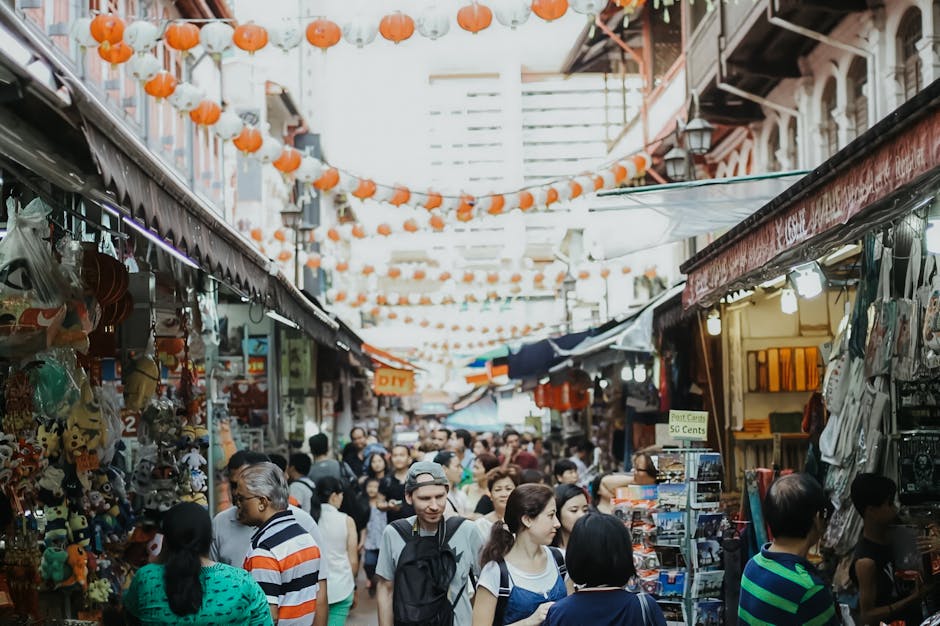
Marketing for Chinatown Businesses: Heritage District Strategies
Singapore’s Chinatown is a unique fusion of living heritage and modern commerce, where traditional Chinese medicine shops stand alongside trendy cafes, and century-old temples share streets with boutique hotels. Stretching across Pagoda Street, Temple Street, Smith Street, and the surrounding lanes, this district attracts over 10 million visitors annually — a mix of international tourists, domestic day-trippers, food enthusiasts, and heritage seekers drawn to one of Singapore’s most culturally significant neighbourhoods.
The marketing challenge for Chinatown businesses is navigating a customer base that is as diverse as the district itself. Chinese tourists from the mainland seek familiar cultural touchpoints and WeChat-friendly payment options. Western tourists look for authentic cultural experiences and photogenic street food. Local Singaporeans visit for hawker food at Chinatown Complex, traditional goods during festive periods, and the area’s growing cafe and bar scene along Keong Saik Road and Duxton Hill. Each segment discovers, evaluates, and chooses businesses through different channels and criteria.
This guide covers the digital marketing strategies that work specifically for Chinatown businesses in 2026. From Google Business Profile optimisation and heritage-focused content marketing to tourist outreach and cultural event campaigns, every tactic is designed for the unique dynamics of this heritage district.
Chinatown’s Customer Segments and Spending Patterns
Understanding who visits Chinatown and why they come is fundamental to effective marketing. The district serves several distinct segments with different motivations and spending behaviours.
International tourists are the largest revenue driver for many Chinatown businesses. Chinese tourists visit for cultural connection and familiar cuisine. European, American, and Australian tourists seek authentic cultural experiences, street food, and souvenir shopping. Southeast Asian tourists — particularly from Indonesia, Malaysia, and Thailand — visit during festive periods. All tourist segments rely heavily on Google Maps, TripAdvisor, and social media for discovery.
Local food enthusiasts visit Chinatown primarily for the hawker food at Chinatown Complex Market, the restaurants along Smith Street (Chinatown Food Street), and the growing number of modern dining concepts on Keong Saik Road and Club Street. This segment discovers businesses through food blogs, Instagram, Google Maps reviews, and word-of-mouth recommendations. They are repeat visitors who return regularly to favourite stalls and restaurants.
Heritage shoppers visit during Chinese New Year, Mid-Autumn Festival, and other cultural occasions to purchase traditional goods — decorations, clothing, dried goods, tea, and ceremonial items. This seasonal segment is predictable and valuable, with spending concentrated in the four to six weeks before each major festival. Marketing to this group requires early preparation and culturally resonant messaging.
Evening and nightlife visitors frequent the bars, restaurants, and entertainment venues on Keong Saik Road, Duxton Hill, and Ann Siang Hill. This younger, more affluent segment overlaps with the CBD after-work crowd and responds to Instagram marketing, influencer recommendations, and Google Ads targeting evening dining and drinks searches.
Google Business Profile: Your Most Important Marketing Asset
For Chinatown businesses, a well-optimised Google Business Profile is worth more than any other single marketing investment. Tourists navigating the district search Google Maps constantly, and your profile determines whether they find you.
Complete every section of your profile. Add your exact address including the specific street (Pagoda Street, Temple Street, etc.), operating hours for every day of the week including public holidays, your phone number, website URL, and a comprehensive business description. For hawker stalls, include the stall number and floor level within the complex. For shops, mention the nearest cross-street or landmark.
Upload professional-quality photos — and update them regularly. Your photos are the first impression for potential customers browsing Google Maps. Upload at least 15 images covering your storefront, interior, best-selling products or dishes, and the surrounding street scene. Update your photos quarterly and add festive decorations during Chinese New Year and Mid-Autumn Festival. Businesses with more than 10 photos receive 35 per cent more clicks than those with fewer.
Post weekly updates through Google Business Profile. Share daily specials, new menu items, seasonal products, or upcoming events. These posts appear directly in Google Maps and Search results, providing fresh content that signals an active business. During festive periods, post about your Chinese New Year specials, festival opening hours, and holiday-themed products.
Manage your review reputation proactively. Respond to every review within 48 hours — thank positive reviewers and address negative feedback constructively. In a tourist-heavy district, a single detailed negative review can disproportionately impact business because visitors have many alternatives within walking distance. Aim for at least 100 reviews with a 4.3+ star rating to stand out in the crowded Chinatown Google Maps results.
Heritage Marketing: Telling Your Business Story
Chinatown’s heritage status is a marketing asset that no amount of advertising budget can replicate. Businesses with genuine heritage stories have a powerful advantage in a market where authenticity drives customer preference.
Document and share your business history. If your business has been operating for decades — or even generations — this history is gold for content marketing. Create a dedicated “Our Story” page on your website featuring old photographs, family history, and the evolution of your products or services. Share these stories on social media, in Google Business Profile posts, and in any media interactions.
Connect your products to cultural traditions. A traditional Chinese medicine shop can create content explaining the heritage and benefits of specific remedies. A tea merchant can share the origins and preparation methods of their teas. A calligraphy shop can demonstrate traditional techniques. This educational content attracts both tourists seeking cultural experiences and search engine traffic for heritage-related queries.
Apply for heritage recognition and certification. The Singapore Heritage Board and the National Heritage Board offer various recognition programmes for businesses with significant cultural heritage. These certifications provide marketing credibility and can qualify your business for inclusion in official heritage trails and tourism marketing materials.
Participate in heritage events and collaborations. The Chinatown Heritage Centre, Buddha Tooth Relic Temple, and various cultural organisations regularly host events, exhibitions, and guided tours. Partnering with these institutions positions your business as an authentic part of Chinatown’s cultural fabric and provides exposure to engaged audiences specifically interested in heritage experiences.
Tourist Marketing for Chinatown Businesses
With Chinatown being one of Singapore’s top tourist attractions, systematic tourist marketing is essential for businesses in the district.
Create multilingual digital content. At minimum, your Google Business Profile and website should offer information in English and Mandarin Chinese. Ideally, extend to Japanese, Korean, Bahasa Indonesia, and Hindi — the languages of Chinatown’s primary tourist segments. Multilingual Google Business Profile descriptions, translated menus, and foreign-language website pages capture tourist searches that English-only competitors miss.
List your business on major travel and review platforms. TripAdvisor is the most influential platform for Chinatown businesses targeting tourists. Ensure your listing includes professional photos, accurate information, and responses to all reviews. Also list on Klook, KKday, Google Travel, and the Visit Singapore platform. For Chinese tourists specifically, maintain a presence on Dianping (Dazhong Dianping), Mafengwo, and Xiaohongshu.
Run Google Ads in tourist source languages. Create search campaigns in Mandarin, Japanese, Korean, and Bahasa Indonesia targeting terms like “Chinatown Singapore restaurant,” “Singapore food tour,” and “Chinatown shopping guide.” Target these campaigns to users in China, Japan, South Korea, and Indonesia who are actively researching Singapore travel.
Accept and promote diverse payment methods. Chinese tourists expect Alipay and WeChat Pay. Japanese tourists look for credit card acceptance. Display accepted payment methods prominently in your storefront, Google Business Profile, and website. This simple step removes a significant friction point for international visitors.
Food Trail Marketing and F&B Strategies
Food is Chinatown’s biggest draw, and F&B businesses have a unique opportunity to leverage the district’s culinary reputation. Chinatown Complex alone houses over 200 food stalls, making it one of the largest hawker centres in Singapore.
Position your stall or restaurant within the Chinatown food narrative. Create content that connects your food to the broader Chinatown culinary heritage. A soya sauce chicken stall can reference the Michelin-starred hawker tradition. A dim sum restaurant can highlight the authenticity of their Cantonese recipes. This narrative positioning differentiates your business from the hundreds of competitors in the area.
Encourage food bloggers and reviewers to feature your business. Singapore’s food blogging community is highly active, and a positive review from a respected food blog or YouTube channel can generate sustained traffic for months. Invite food bloggers for tasting sessions and make the process easy — provide good lighting for photography, share your story, and offer your signature dishes for review.
Participate in official food trails and culinary tours. The Singapore Tourism Board and various private operators organise Chinatown food trails that guide visitors through the district’s best eating spots. Being featured on an official food trail provides ongoing exposure to a curated stream of food-motivated visitors. Apply to be included and ensure your product quality justifies the recommendation.
Use Google Maps for menu visibility. Upload your full menu to your Google Business Profile, including photos of your most popular dishes. Many tourists browse Google Maps for food options and make decisions based on menu photos. A clear, appetising photo of your signature dish with its name and price is one of the most effective marketing assets a Chinatown food business can have.
Cultural Event Campaigns: CNY, Mid-Autumn, and Beyond
Chinatown’s cultural calendar creates predictable marketing opportunities that businesses should plan for well in advance. Chinese New Year and the Mid-Autumn Festival are the two largest events, but several other occasions drive significant traffic.
Chinese New Year is the pinnacle marketing event. The Chinatown Chinese New Year celebrations — including the street light-up, festive bazaar, and countdown event — transform the district and draw enormous crowds. Begin your marketing campaign at least six weeks before CNY. Create festive-themed Google Ads, social media content, and email campaigns promoting Chinese New Year products, set menus, and gift options. Increase your ad spend by 40 to 60 per cent during this period.
Mid-Autumn Festival brings a second major peak. Mooncake sales, lantern displays, and cultural performances draw visitors throughout September or October (depending on the lunar calendar). Food businesses should promote mooncake collections, special menus, and festival dining packages. Retail businesses can feature lanterns, tea sets, and festive gifts.
Hungry Ghost Festival and Qingming Festival drive traffic to traditional goods shops selling joss paper, incense, and ceremonial items. While these occasions are less commercially prominent than CNY, they represent reliable seasonal demand that can be captured with timely Google Ads and social media content.
Create evergreen festive content on your website. Publish guides like “Where to Buy Chinese New Year Decorations in Chinatown” or “Best Mooncakes in Singapore’s Chinatown” on your blog. This content ranks in search engines year after year, generating organic traffic each time the festival approaches. Update the content annually with current pricing and product information to maintain relevance and search ranking.
SEO and Google Ads for Chinatown Visibility
Organic search and paid advertising work together to capture the full spectrum of Chinatown-related searches, from tourists planning trips to locals searching for lunch options.
Target Chinatown-specific long-tail keywords. Instead of competing for broad terms like “Singapore food,” focus on location-specific queries: “best chicken rice Chinatown Singapore,” “traditional Chinese medicine shop Chinatown,” “souvenir shop near Chinatown MRT,” and “Keong Saik Road dinner.” These long-tail keywords have lower competition and higher conversion rates because they indicate specific intent.
Create neighbourhood guide content for SEO. Publish comprehensive guides about visiting Chinatown — covering food, shopping, heritage sites, and practical tips. This content ranks for informational queries and positions your business as a local authority. A tea shop might publish “The Complete Guide to Chinese Tea in Singapore’s Chinatown.” A restaurant could create “A Food Lover’s Walking Tour of Chinatown.”
Run Google Ads with location and language targeting. Set up separate campaigns for different language segments. An English campaign targeting “Chinatown food tour” serves a different audience from a Mandarin campaign targeting the equivalent Chinese search term. Allocate budgets based on the revenue contribution of each tourist segment to your business.
Use Google Ads promotion extensions during festivals. During Chinese New Year and Mid-Autumn Festival, add promotion extensions to your ads highlighting festive specials, extended opening hours, and exclusive products. These extensions increase ad visibility and click-through rates during the periods when competition for Chinatown-related searches is highest.
Social Media and Review Management
Social media and online reviews collectively shape how potential visitors perceive your Chinatown business before they ever walk through the door.
Instagram is the primary visual platform for Chinatown businesses. The district’s colourful shophouses, festive decorations, and photogenic food provide excellent content material. Post consistently — at least three times per week — using location tags for Chinatown, Pagoda Street, Chinatown Complex, and other specific locations. Social media marketing for Chinatown businesses should emphasise the cultural atmosphere and authentic character of the district.
Manage TripAdvisor reviews as a top priority. For tourist-facing Chinatown businesses, TripAdvisor reviews directly influence revenue. Respond to every review professionally, address any complaints constructively, and encourage satisfied customers to leave reviews. A business ranked in TripAdvisor’s top 10 for its category in the Chinatown area receives disproportionate tourist traffic.
Use Facebook for community engagement and event promotion. While Instagram drives discovery, Facebook remains effective for event promotion, community updates, and reaching older demographics who frequent Chinatown for traditional shopping and dining. Create Facebook Events for your Chinese New Year celebrations, Mid-Autumn specials, or any in-store events.
Monitor and respond to reviews across all platforms. Beyond Google and TripAdvisor, check reviews on Burpple, HungryGoWhere, Yelp, and Dianping regularly. Consistent review management across all platforms builds a reputation that withstands the occasional negative experience and positions your business as responsive and customer-focused.
Frequently Asked Questions
What is the most important marketing channel for Chinatown businesses?
Google Business Profile is the single most important marketing channel for most Chinatown businesses. The majority of visitors — both tourists and locals — discover Chinatown businesses through Google Maps. A fully optimised profile with professional photos, current information, regular posts, and strong reviews delivers more walk-in traffic than any other channel.
How can traditional shops in Chinatown attract younger customers?
Create a social media presence that reframes traditional products for modern audiences. A traditional Chinese medicine shop could create TikTok content explaining herbal remedies in an accessible way. A tea merchant could host Instagram Live tea-tasting sessions. Invest in a modern website design that tells your heritage story in a visually compelling way while offering online purchasing options.
When should I start marketing for Chinese New Year?
Begin your Chinese New Year marketing campaign at least six weeks before the festival. Start with social media content and email teasers in early January, launch Google Ads campaigns four weeks before CNY, and increase ad spend progressively as the festival approaches. Peak shopping activity occurs in the two weeks immediately before Chinese New Year.
How do I attract Chinese tourists to my Chinatown business?
Maintain a presence on Chinese platforms including Xiaohongshu, Dianping, and Mafengwo. Accept Alipay and WeChat Pay and promote this prominently. Run Google Ads in Mandarin targeting Singapore travel-related searches. Ensure your Google Business Profile includes Mandarin-language descriptions and responses to Chinese-language reviews. Partner with Chinese tour operators and travel agencies.
Is it worth investing in a website for a small Chinatown hawker stall?
A full website may not be necessary for a hawker stall, but a well-optimised Google Business Profile is essential. Upload menu photos, maintain accurate opening hours, and collect reviews. If budget permits, a simple one-page website with your story, menu, and location information can rank for relevant searches and provides a professional online presence that distinguishes you from competitors.
How can Chinatown food businesses compete with hawker stalls in other parts of Singapore?
Leverage Chinatown’s brand recognition and heritage status. Position your food within the Chinatown narrative — emphasising authenticity, tradition, and the cultural experience of eating in the district. Invest in Google Business Profile optimisation, food blogger outreach, and participation in official food trails. The Chinatown location itself is a marketing asset that businesses in less well-known areas cannot replicate.



 English
  Chinese
  Malay
Malay  Korean