
UX Design Agency Singapore: How Better UX Drives Conversions in 2026
Every interaction a visitor has with your website or app is a UX decision — whether you made it deliberately or by default. When that experience is intuitive, fast, and aligned with user expectations, visitors convert. When it creates friction, confusion, or frustration, they leave. Often permanently.
Singapore businesses are increasingly recognising this reality. The market is saturated, acquisition costs are climbing, and the most efficient lever for growth is not spending more on traffic — it is converting more of the traffic you already have. This is where a UX design agency in Singapore delivers measurable value.
This guide explains what a UX design agency actually does, how UX improvements translate to revenue, what to look for when selecting a partner, and how to evaluate whether your current digital experience is helping or hurting your business.
What a UX Design Agency Actually Delivers
The term “UX design” is often misunderstood. Many business owners equate it with visual design — making things look attractive. While aesthetics matter, UX design is fundamentally about how people interact with your digital product and whether those interactions achieve their goals efficiently.
一个 UX design agency in Singapore typically provides the following services:
User Research
Understanding your users — their goals, behaviours, pain points, and mental models — before designing anything. This involves user interviews, surveys, analytics analysis, heat mapping, session recordings, and competitive benchmarking. Research prevents the costly mistake of designing based on assumptions rather than evidence.
Information Architecture
Structuring and organising your website’s content so users can find what they need intuitively. This includes site maps, navigation structures, content hierarchies, and labelling systems. Poor information architecture is one of the most common reasons Singapore websites fail to convert — users cannot find the page or action they are looking for.
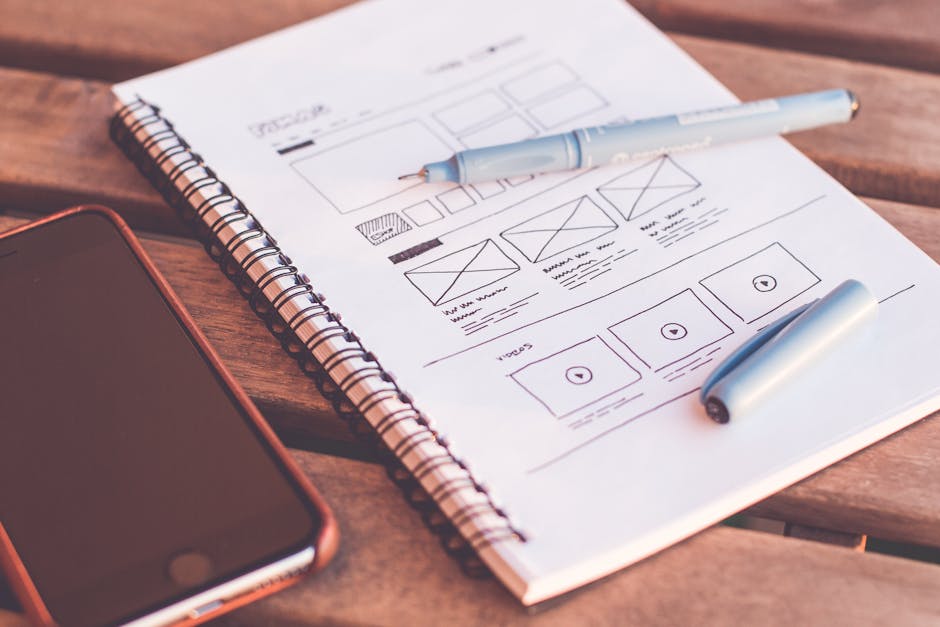
Wireframing and Prototyping
Creating low-fidelity and high-fidelity representations of page layouts, user flows, and interactions before development begins. Wireframes allow you to test and refine the experience without the cost of building in code. Prototypes simulate the actual interaction, enabling user testing before a single line of code is written.
UI Design
The visual design layer — typography, colour, spacing, iconography, and imagery — that brings wireframes to life. Good UI design creates visual hierarchy, guides attention, and reinforces brand identity. Our UI design services work in tandem with UX research to create interfaces that are both beautiful and functional.
Usability Testing
Testing designs with real users to identify friction points before launch. This can range from moderated one-on-one sessions to unmoderated remote testing at scale. Usability testing with as few as five users typically uncovers 80% of critical usability issues.
Our UX design services encompass all of these disciplines, working as an integrated process rather than isolated activities.
How UX Directly Impacts Conversion Rates
The connection between UX and conversion rates is not abstract — it is measurable and often dramatic. Here are the specific UX elements that most directly influence whether visitors become customers.
Page Load Speed
Every additional second of load time reduces conversions. For Singapore users on mobile, a page that loads in one second converts at roughly double the rate of a page that loads in five seconds. UX design addresses load speed through efficient layout design, optimised asset requirements, and eliminating unnecessary page elements.
Navigation Clarity
If users cannot find your product page, service page, or contact form within two to three clicks, they leave. Effective navigation is about reducing cognitive load — users should never have to think about where to go next. This is especially critical for Singapore businesses with multiple service lines or product categories.
Form Design
Forms are often the final conversion barrier. Every unnecessary field reduces completion rates. A well-designed form uses smart defaults, inline validation, progress indicators for multi-step forms, and mobile-friendly input types. Reducing form fields from ten to five typically increases completion rates by 20% to 40%.
Trust Signals and Social Proof
UX design determines how and where trust signals — testimonials, client logos, certifications, security badges — appear in the user journey. Placing them at decision points (near calls to action, on pricing pages, during checkout) is significantly more effective than burying them on a dedicated testimonials page.
Mobile Experience
Over 70% of web traffic in Singapore comes from mobile devices. Yet many websites are still designed desktop-first with mobile as an afterthought. A true mobile-first UX approach means designing for the smallest screen first, ensuring tap targets are appropriately sized, and optimising content for vertical scrolling rather than horizontal scanning.
For businesses looking to systematically improve conversion rates, our CRO services combine UX improvements with data-driven testing to deliver measurable revenue uplift.
Signs Your Website Needs a UX Overhaul
Not every website needs a complete redesign. Sometimes targeted UX improvements on specific pages or flows deliver better results with less disruption. Here are the signals that indicate a more comprehensive UX intervention is needed.
High Traffic but Low Conversions
If your SEO and paid campaigns are driving substantial traffic but conversion rates remain below industry benchmarks (typically 2–5% for lead generation and 1–3% for e-commerce in Singapore), the problem is almost certainly UX-related. The traffic is there; the experience is failing to convert it.
High Bounce Rates on Key Pages
Bounce rates above 60% on landing pages or service pages indicate that visitors are not finding what they expected. This could be a messaging mismatch, poor visual hierarchy, slow loading, or confusing navigation. UX research identifies the specific cause.
Cart Abandonment Rates Above 70%
The average cart abandonment rate in Singapore is approximately 65–70%. If yours is significantly higher, your checkout UX is creating unnecessary friction — unexpected costs, complex forms, limited payment options, or unclear delivery information. Our e-commerce CRO services specialise in diagnosing and resolving checkout friction.
Customer Support Overload
If your customer support team spends significant time answering questions that should be addressed by your website — pricing, processes, service details, contact information — your information architecture and content UX need attention. Every support enquiry that could have been resolved by the website represents a UX failure.
Your Website Is More Than Three Years Old
User expectations evolve rapidly. A website designed in 2022 or 2023 may use interaction patterns, navigation conventions, and mobile experiences that feel dated in 2026. Regular UX audits ensure your digital experience keeps pace with user expectations. Our website redesign checklist provides a comprehensive framework for evaluating whether a redesign is warranted.
The UX Design Process: What to Expect
Understanding the UX design process helps set realistic expectations for timelines, your involvement, and deliverables at each stage.
Phase 1: Discovery and Research (2–4 Weeks)
The agency conducts stakeholder interviews with your team, analyses existing website data (analytics, heat maps, session recordings), performs competitive analysis, and — ideally — conducts user research with your actual customers or target audience.
Deliverables: Research findings report, user personas, user journey maps, and a prioritised list of UX issues and opportunities.
Phase 2: Strategy and Information Architecture (1–2 Weeks)
Based on research findings, the agency defines the content strategy, site structure, and key user flows. This is where decisions are made about navigation, page hierarchy, and how users will move through the site to reach conversion points.
Deliverables: Site map, content inventory, user flow diagrams, and a UX strategy document.
Phase 3: Wireframing (2–3 Weeks)
Low-fidelity wireframes map out the layout, content placement, and interaction design for key pages. These deliberately omit visual design so feedback focuses on structure and usability rather than aesthetics.
Deliverables: Wireframes for all key page templates, annotated with interaction notes and content requirements.
Phase 4: UI Design (3–4 Weeks)
Visual design is applied to approved wireframes. The agency develops a design system — typography, colour palette, component library, spacing rules — that ensures consistency across all pages and future updates.
Deliverables: High-fidelity design mockups, a design system or style guide, and interactive prototypes for key flows.
Phase 5: Testing and Validation (1–2 Weeks)
Designs are tested with real users through moderated or unmoderated usability tests. Findings inform final design refinements before development begins.
Deliverables: Usability test results, recommended refinements, and final design files ready for development handoff.
Total timeline for a comprehensive UX redesign: 10 to 16 weeks from kickoff to development-ready designs. Our web design services integrate this UX process with front-end and back-end development for a seamless build.
How to Choose a UX Design Agency in Singapore
Singapore has no shortage of agencies offering “UX design.” Differentiating between genuine UX expertise and repackaged visual design services requires knowing what to look for.
Evaluate Their Process, Not Just Their Portfolio
A strong portfolio shows design quality, but it does not reveal whether outcomes improved. Ask agencies to walk you through their process for a recent project: What research did they conduct? What problems did they identify? How did they validate solutions? If the answer jumps straight from brief to visual design, they are offering UI design, not UX.
Look for Evidence of Research Capability
Genuine UX agencies have researchers — or at minimum, designers trained in research methods — on their team. Ask about the user research methods they use, how they recruit research participants, and how research findings translate into design decisions.
Ask About Measurement and Results
A UX-focused agency should be able to discuss the conversion rate improvements, task completion rate increases, or customer satisfaction gains their work delivered. If they can only discuss awards won or visual design trends followed, their focus is aesthetics rather than outcomes.
Assess Their Understanding of Your Market
UX is context-dependent. An agency designing for Singapore users should understand local digital behaviours, payment preferences (PayNow, GrabPay, credit card instalment plans), language considerations (English with potential Mandarin, Malay, and Tamil localisation), and regulatory requirements such as PDPA compliance for data collection forms.
Check Their Collaboration Model
UX design requires close collaboration between agency and client. Evaluate how the agency communicates — do they use structured design review sessions, collaborative tools like Figma with client access, and regular check-ins? A good agency treats you as a partner in the process, not a passive recipient of deliverables.
Understand Their Development Handoff
Beautiful designs that developers cannot implement accurately are wasted effort. Ask how the agency packages design files for development — annotated specifications, component libraries, responsive breakpoint definitions, and interaction documentation should all be included.
UX Investment and Expected ROI
UX design is an investment, and like any investment, business owners rightfully want to understand expected returns.
Typical UX Design Costs in Singapore
- UX audit of an existing website: SGD 3,000 to SGD 8,000. Identifies key usability issues and prioritises improvements by potential impact.
- UX redesign for a small website (5–15 pages): SGD 10,000 to SGD 25,000. Covers research, wireframing, UI design, and usability testing.
- UX redesign for a medium website (15–50 pages): SGD 25,000 to SGD 60,000. Includes more extensive research, complex information architecture, and a comprehensive design system.
- UX for e-commerce platforms: SGD 30,000 to SGD 80,000+. Product listing pages, search and filter systems, cart and checkout flows, and account management all require specialised UX attention.
- Ongoing UX retainer: SGD 3,000 to SGD 10,000 per month. Continuous UX improvement through testing, iteration, and performance monitoring.
Calculating UX ROI
The ROI calculation for UX investment is straightforward. If your website generates SGD 100,000 in monthly revenue with a 2% conversion rate, improving that conversion rate to 3% — a realistic outcome of professional UX work — increases monthly revenue by SGD 50,000. Against a one-time UX investment of SGD 30,000, the project pays for itself in under three weeks.
Even for lead generation websites, the maths is compelling. If a UX redesign increases lead form completions by 25% and your average customer is worth SGD 5,000, the additional leads generated each month quickly exceed the project cost.
UX Trends Shaping Singapore Websites in 2026
Several UX trends are particularly relevant for Singapore businesses planning digital improvements this year.
AI-Powered Personalisation
Websites that adapt content, navigation, and offers based on user behaviour and preferences are becoming the expectation rather than the exception. AI-driven personalisation can surface relevant products, adjust messaging based on industry or role, and streamline repeat user experiences.
Conversational Interfaces
AI chatbots and conversational interfaces have matured significantly. When implemented well, they reduce friction for users who prefer asking a question to navigating a website. The key is designing conversational UX that seamlessly hands off to human support when complexity exceeds AI capability — this is particularly important for Singapore’s service-oriented businesses.
Accessibility as Standard Practice
Accessible design — ensuring websites are usable by people with visual, motor, cognitive, and auditory disabilities — is moving from a compliance checkbox to a core UX principle. Accessible websites also tend to perform better on mobile, load faster, and rank higher in search results.
Micro-Interactions and Motion Design
Subtle animations that provide feedback — a button state change on hover, a loading indicator during form submission, a success animation after checkout — improve perceived performance and create a more polished experience. The trend is towards purposeful motion that enhances usability, not decorative animation that slows pages.
Privacy-Conscious UX
With Singapore’s PDPA and growing consumer awareness of data privacy, UX design must balance data collection with transparency. Cookie consent banners, data usage explanations, and easy opt-out mechanisms need to be designed as integral parts of the user experience rather than disruptive overlays.
常见问题
What is the difference between UX design and UI design?
UX (user experience) design focuses on how a product works — the overall flow, structure, and interaction logic that determines whether users can achieve their goals efficiently. UI (user interface) design focuses on how a product looks — the visual elements like typography, colour, icons, and spacing that create the aesthetic layer. Both are essential, but UX addresses functionality and usability first, while UI addresses presentation. A strong digital experience requires both disciplines working together.
How long does a UX redesign project take?
A comprehensive UX redesign — from research through development-ready designs — typically takes 10 to 16 weeks. A UX audit alone takes two to four weeks. Timelines vary based on site complexity, the depth of user research, and how quickly stakeholder feedback is provided during the review process. Rushed UX projects often require costly corrections later, so investing adequate time upfront is critical.
How do I know if my website has UX problems?
The clearest indicators are quantitative: low conversion rates relative to industry benchmarks, high bounce rates on key pages, cart abandonment above 70%, and recurring customer support questions about how to use your website. Qualitative signals include customer complaints about difficulty finding information, low time-on-site metrics, and internal team frustration when explaining your offerings using the website.
Is UX design worth the investment for small businesses in Singapore?
Absolutely. Small businesses often see the highest percentage return from UX improvements because their current websites typically have more severe usability issues. A SGD 5,000 to SGD 10,000 investment in a UX audit and targeted improvements can yield conversion rate increases of 20% to 50% — translating directly to revenue growth without increasing marketing spend.
Should I hire an in-house UX designer or work with an agency?
For most Singapore SMEs, an agency relationship offers better value. A senior UX designer commands a salary of SGD 6,000 to SGD 10,000 per month, and you would still need additional specialists for research, UI design, and front-end development. An agency provides a full team on a project or retainer basis, giving you access to diverse expertise without the overhead of full-time hires. In-house UX makes sense when your product or website requires continuous daily iteration — typically at the scale of a technology company or large e-commerce platform.



 Chinese
  English
  Malay
Malay  Korean