
SEO for Gyms: How Fitness Centres in Singapore Can Rank on Google in 2026
Most gym memberships in Singapore still start with a Google search. Whether someone types “gym near Tanjong Pagar” or “best CrossFit box Singapore,” the fitness centres that appear on the first page capture the majority of new member enquiries. Yet most gyms in Singapore invest heavily in Instagram content and referral programmes while neglecting the search channel that consistently drives the highest-intent traffic.
SEO for gyms is not the same as SEO for e-commerce or professional services. You are competing against aggregator platforms like ClassPass and Fave, directory listings, review sites, and franchise chains with large marketing budgets. The good news is that local SEO gives independent and boutique gyms a realistic path to visibility — if you approach it correctly.
This guide covers everything gym owners and fitness centre marketers need to know about ranking on Google in Singapore’s competitive fitness market. If you need hands-on support, our fitness marketing team works with gyms, studios, and fitness brands across the island.
Why SEO Matters for Gyms
Gyms operate on recurring revenue. A single new member who stays for 12 months is worth far more than the initial signup fee, which means customer acquisition costs can be amortised over a longer period. SEO, with its compounding returns, is a natural fit for this business model.
Consider the search behaviour of someone looking for a gym in Singapore. They might start with a broad search like “gym membership Singapore,” then narrow to “gym near Raffles Place” or “24 hour gym Jurong East.” Each of these queries represents someone actively looking for a place to train. Unlike social media followers who may never visit, organic search visitors have declared intent.
The data supports this. Gyms that rank in the top three positions for “gym near [neighbourhood]” searches consistently report that organic search is their largest source of new membership enquiries — often ahead of word-of-mouth referrals and paid advertising combined.
There are specific reasons why SEO is particularly valuable for gyms:
- High local intent: Gym searches are overwhelmingly local, and Google prioritises nearby businesses in local results
- Recurring revenue model: The lifetime value of a gym member justifies the investment in organic rankings
- Seasonal demand: Search volume spikes in January, after Chinese New Year, and before summer — predictable patterns you can plan for
- Review influence: Google reviews heavily impact gym selection, and they also influence local rankings
- Aggregator competition: Without SEO, your gym’s visibility is controlled by platforms like ClassPass that charge commission
Google 商业档案优化
For gyms, Google Business Profile (GBP) is arguably more important than your website for local search visibility. When someone searches “gym near me,” Google displays the local pack — three business listings with map pins — before any organic website results. Getting into that local pack should be your top SEO priority.
Here is how to optimise your Google Business Profile for maximum visibility:
Complete every field. Name, address, phone number, website, hours, categories, attributes — fill in everything. Google rewards complete profiles with higher visibility. For your primary category, use “Gym” or “Fitness center” (Google uses American spelling). Add secondary categories for specific offerings: “CrossFit box,” “Yoga studio,” “Martial arts school.”
Accurate operating hours. Nothing frustrates potential members more than showing up to a closed gym. Update your hours for public holidays — especially Chinese New Year, Hari Raya, and Christmas when hours typically change. Use the “special hours” feature for one-off changes.
Photos and virtual tours. Upload high-quality photos of your facility monthly. Show the training floor, equipment, group classes in action, changing rooms, and any amenities like saunas or juice bars. Gyms with 20+ photos get significantly more direction requests and website clicks than those with fewer.
Google Posts. Publish weekly posts about upcoming events, new classes, promotions, or fitness tips. Posts appear on your GBP listing and signal to Google that your business is active. Keep them concise — 150-300 words with a clear call to action.
Review management. Reviews are the single biggest factor in local pack rankings for gyms. Actively ask members to leave Google reviews — after a great PT session, when they hit a milestone, or when they refer a friend. Respond to every review, positive or negative, within 48 hours. For a deeper dive into GBP optimisation, see our Google Business Profile guide.
Website Structure and Key Pages
Your gym’s website needs specific pages to rank for the searches that drive membership enquiries. Many gym websites are little more than a homepage, a class timetable, and a contact page. That is not enough.
Here are the essential pages every gym website should have:
Location pages. If you have multiple branches, each location needs its own page with unique content — address, photos, equipment list, trainers at that branch, nearby MRT stations, and parking information. Do not just duplicate content across location pages with the address swapped out.
Class schedule pages. Create individual pages for each class type you offer — HIIT, yoga, spin, boxing, CrossFit, Pilates. Each page should explain what the class involves, who it is suitable for, the schedule, and a booking CTA. These pages can rank for searches like “HIIT classes Singapore” or “yoga classes near Orchard.”
Membership and pricing page. Transparency builds trust. List your membership options, pricing tiers, and what each includes. Gyms that hide pricing lose prospects to competitors who are upfront about costs.
Personal training page. PT is a high-margin service that people actively search for. Create a dedicated page with trainer profiles, specialisations, pricing, and results testimonials.
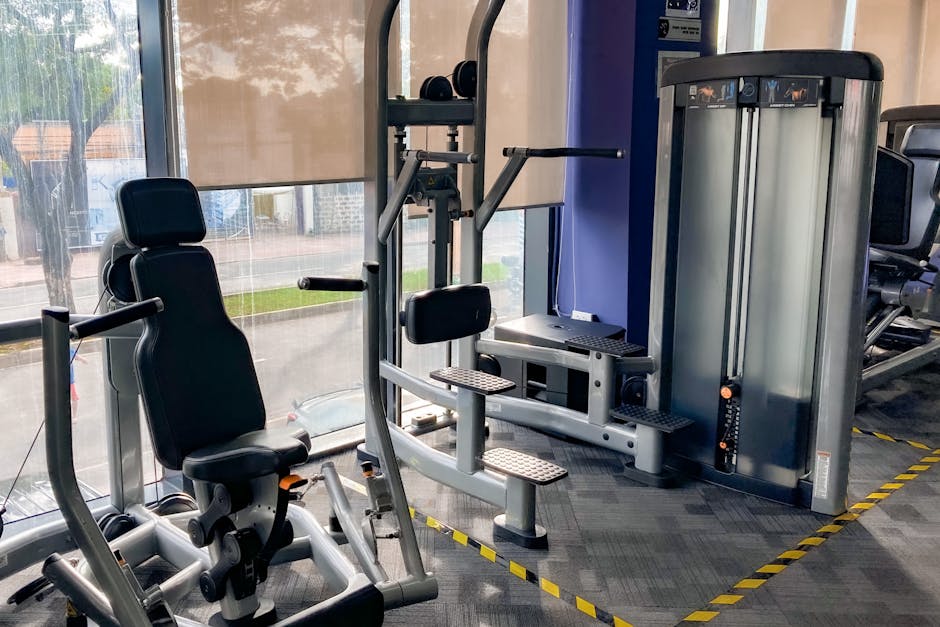
Facilities and equipment page. Serious gym-goers want to know what equipment you have before visiting. List major equipment brands, free weights range, number of squat racks, and any speciality equipment.
About page with team profiles. Trainer qualifications, certifications, and specialisations matter to prospects evaluating your gym. Feature your team prominently.
Our SEO services include full website audits that identify missing pages and structural issues limiting your search visibility.
Local SEO for Multi-Location Gyms
Gym chains and multi-location fitness brands face specific SEO challenges. Each location competes independently in local search, which means you need a distinct local SEO strategy for every branch.
The foundation of multi-location gym SEO is consistent NAP (Name, Address, Phone Number) data across the web. Every directory listing, social media profile, and citation should match your Google Business Profile exactly. Inconsistencies — even minor ones like “Rd” versus “Road” — can confuse Google and weaken your local rankings.
Key tactics for multi-location gym SEO include:
- Individual GBP listings: Each branch gets its own verified Google Business Profile with unique photos, reviews, and posts
- Location-specific landing pages: Unique content for each branch, including neighbourhood-specific information and nearby landmarks
- Local citations: Ensure each branch is listed on Singapore directories — SgYellow, Yelp Singapore, HungryGoWhere (for gyms with F&B), and fitness-specific directories
- Localised content: Blog posts mentioning specific neighbourhoods, local events, or partnerships with nearby businesses
- Branch-specific schema markup: LocalBusiness schema on each location page with correct coordinates, hours, and contact details
For gyms expanding across Singapore, our local SEO services ensure each new location builds search visibility from day one.
Content Strategy for Fitness Centres
Content marketing for gyms should focus on topics that potential members search for during their decision-making process. The goal is not to become a fitness blog — it is to create content that attracts people who are likely to become members.
High-value content topics for gyms include:
Comparison content. “CrossFit vs HIIT: Which is right for you?” or “Boutique gym vs big box gym in Singapore.” These pages capture searches from people actively deciding where to train.
Beginner guides. “Beginner’s guide to strength training” or “What to expect at your first spin class.” These pages attract newcomers to fitness who are prime membership prospects.
Neighbourhood fitness guides. “Best gyms in Tanjong Pagar” or “Where to work out near Bugis MRT.” Yes, you can rank for these even though they seem like comparison searches — and you can feature your gym prominently.
Transformation stories. Member success stories with before-and-after photos, the programme they followed, and how long it took. These build trust and rank for motivational searches.
Class explainers. Detailed articles about specific training methodologies — “What is functional training?” or “Benefits of Pilates reformer.” These pages rank for informational queries and funnel readers toward class bookings.
Publish at least two to three pieces of content per month. Consistency matters more than volume. Each piece should target a specific keyword cluster and include a clear path to a membership enquiry or trial class booking.
Competing with ClassPass and Aggregator Platforms
One of the biggest SEO challenges for Singapore gyms is competing with aggregator platforms like ClassPass, Fave, and Google’s own comparison features. These platforms often outrank individual gyms for competitive keywords because they have stronger domain authority and more content.
You cannot beat ClassPass for “fitness classes Singapore” — their domain authority is too strong. But you can outrank them for specific, local queries where your gym has a natural advantage:
Hyper-local keywords. “Gym Tanjong Pagar MRT” or “CrossFit classes Tiong Bahru.” Aggregators rarely optimise for micro-neighbourhoods, giving local gyms an opening.
Branded searches. Build brand awareness through social media and word of mouth so people search for your gym by name. These are searches no aggregator can take from you.
Niche specialisations. “Olympic weightlifting gym Singapore” or “prenatal yoga classes Singapore.” The more specific your niche, the less competition from aggregators.
Content depth. Aggregators publish thin listing pages. Your gym can create detailed content about training programmes, facility features, and trainer expertise that provides genuinely useful information.
The strategic question is whether to list on aggregator platforms at all. ClassPass can drive discovery, but it trains members to be price-sensitive and platform-loyal rather than gym-loyal. If you use aggregators, treat them as a top-of-funnel channel and focus on converting trial visitors into direct members.
For gyms that want to complement SEO with paid advertising, our guide to Google Ads for fitness businesses covers campaign structures specific to the fitness industry.
Technical SEO Considerations
Gym websites often have technical issues that limit their search performance. Here are the most common problems and how to fix them:
Mobile performance. Over 75% of gym-related searches happen on mobile devices. Your website must load fast and work flawlessly on phones. Test your site with Google’s PageSpeed Insights and aim for a performance score above 80. Common issues include uncompressed images, render-blocking scripts, and booking widgets that do not work on mobile.
Schema markup. Implement LocalBusiness schema (or the more specific HealthClub subtype) with your gym’s name, address, phone number, opening hours, price range, and geo-coordinates. Add Event schema for special workshops or challenges. FAQ schema on your FAQ page can earn featured snippets.
Class timetable indexing. If your class schedule is generated by a third-party booking system (Mindbody, Glofox, or similar), ensure the content is rendered in HTML that Google can crawl. Many booking widgets use JavaScript that search engines cannot read, meaning your class schedule is invisible to Google.
Internal linking. Link between related pages — your HIIT class page should link to your personal training page, your facilities page, and relevant blog posts. Strong internal linking helps Google understand your site structure and passes authority between pages.
Page speed and Core Web Vitals. Large hero images and video backgrounds are common on gym websites. Compress images, use lazy loading, and serve videos from YouTube or Vimeo rather than hosting them directly. Every second of load time costs you potential enquiries.
For a comprehensive audit of your gym’s SEO, our fitness SEO specialists can identify exactly what is holding your rankings back and build a plan to fix it.
常见问题
How long does it take for a gym to rank on Google?
For local pack results (the map listings), a well-optimised Google Business Profile can start appearing within 4-8 weeks for less competitive neighbourhood searches. Organic website rankings for competitive keywords like “gym Singapore” take 6-12 months of consistent effort. Focus on hyper-local keywords first — they are less competitive and more likely to produce fast results.
How important are Google reviews for gym SEO?
Extremely important. Google reviews are one of the top three ranking factors for local pack results. Gyms with more reviews and higher average ratings consistently outrank competitors with fewer reviews. Aim for at least 50 reviews with a 4.5+ average rating. More importantly, generate reviews consistently — a steady flow of new reviews signals to Google that your business is active and trusted.
Should gyms blog for SEO?
Yes, but strategically. Do not publish generic fitness tips that thousands of other sites already cover better. Focus on content that relates to your specific services, location, and target audience. A post about “5 strength training tips” will not move the needle. A post about “Best gyms near Raffles Place for lunchtime workouts” or “CrossFit vs F45: Which is better for weight loss?” targets searches from people actively looking for a gym.
Can a small independent gym compete with large chains on Google?
Absolutely. Local SEO is the great equaliser. Google’s local algorithm favours proximity, relevance, and prominence — and a small gym can win on all three within its immediate neighbourhood. A well-optimised independent gym in Tiong Bahru will outrank a national chain for “gym Tiong Bahru” if it has better reviews, a more relevant Google Business Profile, and stronger local signals. Chains often neglect location-specific optimisation, creating openings for independents.
How do I stop losing members to ClassPass?
You cannot stop ClassPass from existing, but you can reduce your dependence on it. Build direct search visibility so prospects find you through Google rather than through ClassPass. Create a compelling trial offer on your own website. Focus on member experience and community — things that make people want to be part of your gym specifically, not just any gym that appears on an aggregator. If you do use ClassPass, limit the classes available on the platform and use it as a discovery channel, not your primary acquisition source.
 Chinese
  English
  Malay
Malay  Korean