
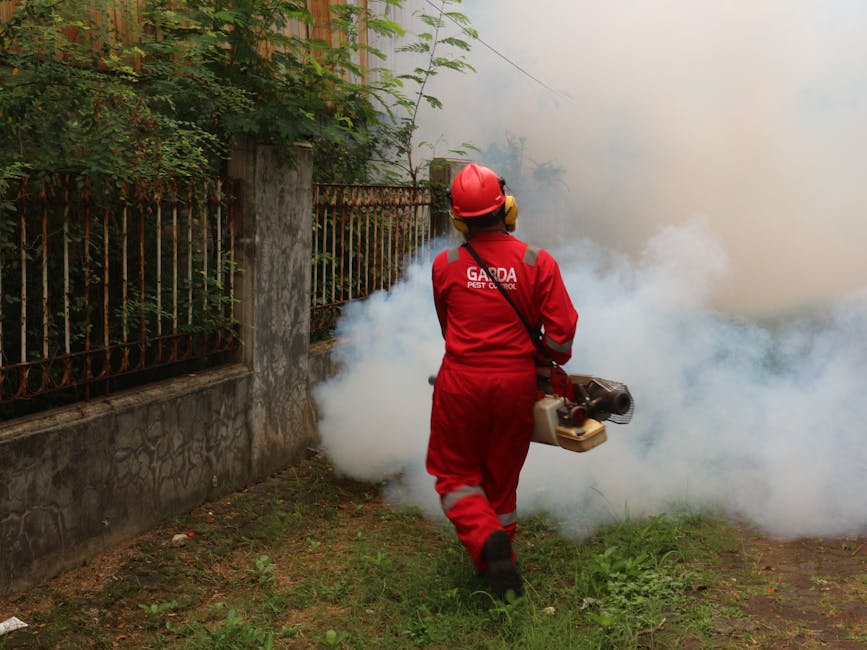
Pest Control Marketing in Singapore: A Complete Strategy Guide for 2026
Singapore’s tropical climate creates ideal breeding conditions for a wide range of pests—from cockroaches and ants that invade HDB kitchens to termites that silently destroy landed property structures, mosquitoes that carry dengue fever and rodents that plague food establishments. The pest control industry in Singapore is a thriving sector, yet individual companies often struggle to differentiate themselves in a market where services appear commoditised and price competition is relentless.
The pest control customer journey in Singapore typically begins with one of two triggers: an emergency discovery (a rat sighting, a termite swarm, a bedbug infestation) or a preventive need (routine treatment for a food establishment, a pre-purchase property inspection). These two distinct entry points demand different marketing approaches—emergency searches require immediate visibility and rapid response, while preventive enquiries benefit from educational content and trust-building over time.
This guide provides a comprehensive marketing framework for pest control companies operating in Singapore. Whether you specialise in residential treatments, commercial pest management or both, you will find actionable strategies covering 谷歌广告 for high-intent keywords, leveraging your NEA licence as a competitive advantage, dominating local search results, creating content that drives organic traffic and managing the reviews that ultimately determine which provider a distressed homeowner calls first.
Google Ads for Emergency and Preventive Pest Control Keywords
Google Ads is the most reliable channel for capturing pest control leads at the moment of highest intent. When a homeowner discovers a cockroach infestation in their Clementi HDB flat or a restaurant owner spots rodent droppings in the kitchen, their first action is a Google search. Being the top result for these emergency queries translates directly into booked appointments and revenue.
Structure your campaigns into two distinct categories: emergency and preventive. Emergency campaigns should target keywords like “pest control emergency Singapore,” “termite treatment urgent,” “bedbug exterminator Singapore,” “rat infestation help” and “cockroach infestation HDB.” These keywords carry extreme urgency—bid aggressively and ensure your ads run 24/7, as pest emergencies do not observe business hours. Preventive campaigns target terms like “pest control service Singapore,” “annual termite inspection,” “mosquito treatment condo” and “pest control contract food establishment.”
Write ad copy that addresses the emotional state of the searcher. Emergency searchers are anxious and need reassurance: “Same-Day Pest Control — NEA Licensed. Guaranteed Results or Free Re-Treatment.” Preventive searchers are more analytical: “Professional Pest Control from $80 — NEA Licensed. Protect Your Home Year-Round.” Include call extensions on all mobile ads—pest control customers overwhelmingly prefer to call rather than fill out web forms, especially during emergencies.
Segment campaigns by pest type for maximum relevance. Create dedicated ad groups for termites, cockroaches, bed bugs, rodents, ants and mosquitoes. Each pest type has different treatment costs, customer demographics and search patterns. Termite searches skew towards landed property owners (higher property value, higher willingness to pay), while cockroach and ant searches come predominantly from HDB residents. Tailor your bidding strategy and ad messaging to reflect these differences in customer lifetime value.
NEA Licensing as a Marketing Advantage
In Singapore, all pest control operators must be licensed by the National Environment Agency (NEA). This regulatory requirement is not merely a compliance checkbox—it is a powerful marketing differentiator that separates professional operators from unlicensed individuals offering cheap, unregulated services through classified platforms.
Display your NEA licence number prominently across every marketing touchpoint: your website header, Google Business Profile description, Google Ads copy, business cards, quotation documents and vehicle signage. Create a dedicated page on your 网站 explaining what NEA licensing entails—the training requirements, approved chemicals, safety protocols and ongoing compliance inspections. This educational approach achieves two objectives: it positions your company as a responsible professional operator and it subtly discourages prospects from considering unlicensed alternatives.
Go beyond basic NEA licensing by highlighting additional certifications and memberships. Membership in the Singapore Pest Management Association (SPMA), ISO quality certifications, HACCP-compliant procedures for food establishment treatments, and certifications from international pest management bodies all serve as trust signals. Each credential reduces the perceived risk of hiring your company and justifies premium pricing over competitors who compete solely on cost.
Use your NEA licence status in content marketing. Write articles explaining “Why You Should Only Hire NEA-Licensed Pest Control in Singapore” and “The Dangers of Using Unlicensed Pest Control Services.” These pieces rank well for informational searches, educate the market and channel enquiries towards licensed providers—specifically, you. Share these articles across social media platforms where pest control discussions frequently arise in Singapore community groups and forums.
Local SEO for Pest Control Companies
Local SEO delivers the most sustainable long-term lead flow for pest control companies. When a homeowner searches “pest control near me” or “termite inspection Bukit Timah,” appearing in the Google Map Pack generates free, high-quality leads from people in your immediate service area.
Optimise your Google Business Profile exhaustively. Your primary category should be “Pest Control Service” with additional categories such as “Exterminator” and “Fumigation Service.” Complete every available field, including service areas (list all HDB towns, planning areas and districts you cover), operating hours, appointment links and service descriptions. Upload at least 25 photos showing your team, equipment, branded vehicles and treatment processes (avoid graphic pest images that could violate Google’s content guidelines).
Reviews are the strongest ranking factor in the local pack for pest control searches. Implement a systematic post-treatment review request process. After successfully resolving a pest issue, send a WhatsApp message thanking the customer and including a direct link to your Google review page. The emotional relief that follows a successful pest treatment makes customers particularly willing to leave positive reviews—capitalise on this moment. Aim for a minimum of 10 new Google reviews per month to maintain ranking momentum.
Your website’s SEO foundation should include dedicated pages for each pest type you treat and each geographic area you serve. Create pages such as “Termite Control in Landed Properties Singapore,” “Cockroach Treatment for HDB Flats” and “Rodent Control Service Jurong.” Each page should address the specific pest behaviour in that context, your treatment approach, expected results and pricing guidance. This granular page structure captures long-tail searches that competitors with generic service pages miss entirely.
Content Marketing: Pest Guides That Generate Leads
Pest control is an industry uniquely suited to 内容营销. Homeowners experiencing pest problems actively search for information—what pest they are dealing with, whether it is dangerous, how to prevent it and when to call a professional. By creating comprehensive pest identification and prevention guides, you capture this informational traffic and convert a significant portion into service bookings.
Build a pest library on your website covering every common pest in Singapore. Each guide should follow a consistent structure: identification (with clear photographs), common habitats in Singapore homes (specific to HDB, condo and landed properties), health risks, DIY prevention tips and indicators that professional treatment is necessary. Priority guides include “Complete Guide to Termites in Singapore: Identification, Prevention and Treatment,” “Bedbug Guide: How Singapore Homes Get Infested and What to Do” and “Dengue Prevention: Mosquito Control for Singapore Homeowners.”
These guides serve multiple marketing objectives simultaneously. They attract organic search traffic from high-volume informational keywords. They demonstrate your expertise and build trust with potential customers. They provide shareable content for social media channels. And they create natural opportunities to present your services as the professional solution when DIY methods are insufficient. Every guide should include a clear call to action—”If you are experiencing a [pest] infestation, contact our NEA-licensed team for a free assessment”—without being aggressively promotional.
Seasonal content aligns with Singapore’s pest activity patterns. Publish dengue prevention guides ahead of peak Aedes mosquito season, termite swarming advisories during the wet season and rodent prevention content before the festive season when food waste increases. Timely, relevant content captures search traffic surges and positions your company as a proactive, knowledgeable industry leader rather than a reactive service provider.
Commercial vs Residential Pest Control Marketing
Commercial and residential pest control customers have fundamentally different needs, decision-making processes and lifetime values. Your marketing strategy must address both segments distinctly, with separate messaging, channels and conversion paths.
Residential pest control marketing centres on urgency, trust and affordability. The typical residential customer is a homeowner or tenant who has discovered a pest problem and wants it resolved quickly and safely. Google Ads, local SEO and review-driven credibility are the primary channels. Messaging should be reassuring, emphasise family and pet safety, and provide clear pricing. The average residential pest control job in Singapore ranges from $80 to $300, with potential for recurring quarterly treatments.
Commercial pest control marketing requires a B2B approach targeting specific industries. Food and beverage establishments require NEA-mandated regular pest management. Healthcare facilities need hospital-grade disinfection and pest control. Warehouses and logistics companies face rodent and stored-product pest challenges. Hotels and serviced apartments must address bed bug risks. Each vertical has distinct regulatory requirements and pain points that your marketing must address specifically.
For commercial client acquisition, invest in LinkedIn marketing, direct outreach to facility managers and targeted Google Ads campaigns for keywords like “commercial pest control Singapore,” “restaurant pest control contract” and “NEA pest control food establishment.” Create industry-specific landing pages and case studies demonstrating your experience in each commercial sector. The lifetime value of a commercial contract—often $1,000 to $5,000 per month over multi-year terms—justifies a significantly higher customer acquisition cost compared to residential leads.
Review Management and Trust Building
Pest control purchases are driven primarily by trust. Homeowners are inviting strangers into their homes to apply chemical treatments near their families, pets and food preparation areas. The decision carries inherent anxiety that only strong social proof can overcome. Your review management strategy must address this anxiety head-on.
Prioritise Google reviews as your primary social proof channel. A pest control company with 150 reviews averaging 4.8 stars communicates reliability and customer satisfaction more effectively than any advertisement. However, do not neglect reviews on secondary platforms—Facebook, Carousell, Yelp Singapore and industry directories. A consistent positive reputation across multiple platforms reinforces trust and captures potential customers regardless of which platform they use to research providers.
Encourage detailed reviews rather than simple star ratings. When requesting a review, suggest specific aspects the customer might mention: “If you have a moment, mentioning the type of treatment and how quickly we resolved the issue would be incredibly helpful for other homeowners facing similar problems.” Detailed reviews that describe specific pest issues, treatment processes and outcomes are far more persuasive to prospective customers than vague positive comments.
Address negative reviews as opportunities. A pest control treatment that did not fully resolve the issue is not a reputation disaster—it is a chance to demonstrate accountability. Respond promptly, offer a free re-treatment, and follow up until the customer is satisfied. Update your response when the issue is resolved: “We are pleased to confirm that after our follow-up treatment, the issue has been fully resolved.” This public record of problem-solving builds more trust than a perfect five-star record that feels suspiciously flawless.
Social Media and Website Optimisation
Social media serves a supporting role in pest control marketing, building awareness and credibility rather than generating direct bookings. The most effective approach combines educational content with community engagement, positioning your company as a knowledgeable, approachable pest management authority.
Facebook remains the most relevant social platform for pest control companies in Singapore. Join and actively participate in HDB community groups, condo resident groups and neighbourhood forums where pest discussions frequently arise. When members post about pest sightings or ask for recommendations, provide helpful advice before mentioning your services. This community-first approach generates genuine referrals and builds organic brand recognition. Share your pest guides, seasonal advisories and practical prevention tips regularly on your business page.
Your website must convert visitors efficiently. Pest control customers often visit your site in a state of mild distress—they need clear, calming reassurance that you can solve their problem. Feature your NEA licence prominently, display your Google review rating above the fold, and make your phone number and WhatsApp button impossible to miss. A comprehensive digital marketing strategy ensures your website works in concert with paid advertising, organic search and social media to create a seamless path from pest discovery to booking confirmation.
Implement live chat or WhatsApp integration for instant communication. Pest control enquiries often involve customers describing their pest problem and asking for guidance before committing to a booking. Quick, knowledgeable responses during this enquiry phase significantly increase conversion rates. Provide your team with scripts for common pest enquiries that demonstrate expertise while guiding the conversation towards a booking.
常见问题
How much should a pest control company in Singapore spend on Google Ads?
A starting budget of $1,500 to $3,000 per month is appropriate for most pest control companies in Singapore. Emergency keywords like “termite treatment” and “bedbug exterminator” have higher costs per click ($5–$12) but deliver high-intent leads. Track your cost per booked appointment and aim for under $30 for residential leads and under $80 for commercial leads, adjusting bids and budgets based on performance data.
Is NEA licensing really a marketing advantage or just a compliance requirement?
NEA licensing is both. While legally required, it is a powerful marketing differentiator when actively promoted. Many homeowners are unaware that pest control requires licensing. By educating them about the risks of unlicensed operators—unapproved chemicals, no accountability, potential health hazards—you position your licensed company as the only responsible choice. Display your licence prominently and create content explaining its significance.
What pest control content generates the most organic search traffic?
Pest identification and prevention guides generate the highest organic traffic. Topics like “How to Get Rid of Cockroaches in Singapore,” “Signs of Termites in Your HDB Flat” and “Bedbug Bites: Identification and Treatment” attract thousands of monthly searches. These guides capture homeowners during the research phase and naturally funnel them towards professional pest control services when DIY solutions prove insufficient.
How do I win commercial pest control contracts?
Commercial contracts require a consultative sales approach. Develop industry-specific marketing materials addressing the regulatory requirements of each sector (NEA requirements for F&B, environmental health standards for healthcare). Create case studies demonstrating successful commercial pest management. Use LinkedIn for outreach to facility managers and business owners. Offer free site assessments to demonstrate your expertise and build relationships before the contract decision.
Should pest control companies invest in SEO or Google Ads first?
Start with Google Ads for immediate lead generation while building your SEO foundation simultaneously. Google Ads delivers leads from day one, whereas SEO typically takes three to six months to produce meaningful organic traffic. Once your website ranks well for key pest control keywords, you can gradually reduce your Google Ads dependency and enjoy lower customer acquisition costs through organic search.
How important are reviews for pest control businesses specifically?
Reviews are arguably more important for pest control than for most other service industries. Customers are allowing strangers to apply chemical treatments in their homes, which creates significant trust anxiety. Strong reviews directly address this anxiety. Companies with 100+ positive Google reviews consistently report higher conversion rates and the ability to charge premium prices compared to competitors with fewer reviews.



 Chinese
  English
  Malay
Malay  Korean