
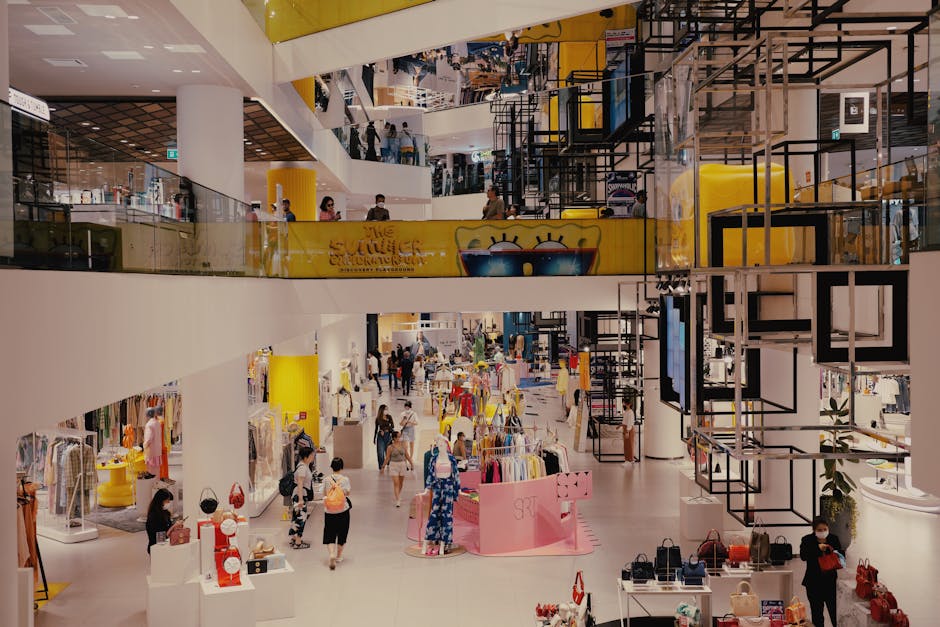
Marketing for Shopping Mall Tenants in Singapore
Operating a retail store or F&B outlet inside a Singapore shopping mall offers built-in advantages — consistent foot traffic, shared marketing efforts, and an established customer base. However, these advantages come with intense competition from dozens of neighbouring tenants all vying for the same shoppers’ attention and wallets. In 2026, successful mall tenants go far beyond simply opening their shutters and waiting for walk-ins. They actively market their businesses both within the mall ecosystem and through digital channels to maximise every visitor opportunity.
Singapore’s mall landscape is one of the most competitive in Asia. With over 200 shopping centres across the island — from mega malls like VivoCity and ION Orchard to heartland malls like Tampines Mall and Jurong Point — tenants face pressure from both physical neighbours and online competitors. Rental costs in prime malls can exceed $30 per square foot monthly, meaning every marketing dollar must work hard to drive sufficient revenue to justify your lease.
This guide provides actionable marketing strategies designed specifically for shopping mall tenants in Singapore. Whether you run a fashion boutique in Orchard Road, a bubble tea outlet in a suburban mall, or a service business in a mixed-use development, these tactics will help you stand out, attract more customers, and build a loyal following that sustains your business through quiet seasons and peak periods alike.
Mall Marketing vs Standalone Retail Marketing
Marketing as a mall tenant differs from marketing a standalone shopfront in several fundamental ways. Understanding these differences helps you allocate your marketing budget and effort more effectively.
Advantages of marketing within a mall:
- Built-in foot traffic from the mall’s own marketing, anchor tenants, and general footfall
- Mall-organised events, seasonal campaigns, and promotions that drive visitors
- Shared infrastructure including directories, wayfinding, and in-mall advertising channels
- Association with the mall’s brand — being in ION Orchard or Jewel Changi Airport carries prestige
- Captive audience of shoppers already in a buying mindset
Challenges unique to mall tenants:
- Direct competition from neighbouring stores offering similar products or services
- Limited control over your storefront — signage, facade, and display windows must comply with mall guidelines
- Dependence on the mall’s overall performance and foot traffic trends
- High rental costs that demand strong sales performance
- Restrictions on independent marketing activities within mall premises
The most successful mall tenants treat the mall’s marketing as a baseline and build their own marketing efforts on top. You cannot rely solely on the mall bringing customers to your door. Your job is to ensure that when shoppers are in the mall, they choose your store over alternatives, and that customers also seek you out specifically through online channels.
Leveraging Mall Events and Promotions
Singapore shopping malls invest heavily in events and promotions — Chinese New Year bazaars, Great Singapore Sale activations, school holiday programmes, and festive decorations that become Instagram landmarks. Smart tenants actively participate in and amplify these events rather than treating them as background noise.
How to maximise mall event opportunities:
- Plan promotions aligned with mall campaigns: When the mall runs a spend-and-redeem promotion, create complementary offers that encourage customers to hit spending thresholds at your store
- Participate in mall loyalty programmes: Most major Singapore malls operate points-based loyalty programmes. Ensure your store is fully integrated and promote the rewards your customers can earn
- Engage with mall event organisers early: Request advance notice of upcoming events and themes so you can prepare relevant merchandising, displays, and promotions
- Create event-specific content: When the mall hosts a major event, create social media content that tags the mall and uses event hashtags to ride the wave of attention
- Bid for event participation: Many malls offer tenants the chance to have a pop-up or display during major events. These high-visibility opportunities are worth the investment
Timing matters enormously. Work with your mall’s marketing team to access the annual events calendar at the start of each year. This allows you to plan inventory, staffing, and marketing campaigns around peak periods. Key dates for Singapore malls include Chinese New Year, Hari Raya, the June and December school holidays, 11.11, Black Friday, and Christmas.
Maximising Foot Traffic Conversion
Having thousands of people walk past your store daily means nothing if they do not stop, enter, and buy. Conversion — turning passers-by into paying customers — is the critical metric for mall tenants.
Storefront optimisation tactics:
- Window displays: Refresh your display at least fortnightly. Use bold visuals, clear pricing, and seasonal themes that stop shoppers mid-stride
- Entrance accessibility: Remove barriers to entry. Open storefronts outperform enclosed ones — if your mall allows it, keep your entrance as wide and inviting as possible
- Sensory marketing: Bakeries and cafes benefit from letting aromas drift into the corridor. Music, lighting, and even temperature differences can draw people in
- Staff positioning: Place friendly, well-trained staff near the entrance during peak hours. A warm greeting can be the nudge that converts a browser into a buyer
- Promotional signage: Clear, compelling offers visible from the corridor — “Buy 1 Get 1 Free,” “New Arrival,” or “Singapore Exclusive” — create urgency and interest
Track your conversion rate by comparing foot traffic data (many malls provide this) with your daily transaction count. If 5,000 people walk past your store and 50 make a purchase, your conversion rate is 1%. Even small improvements — from 1% to 1.5% — represent a 50% increase in daily sales, making conversion optimisation one of the highest-leverage activities you can undertake.
Social Media Marketing for Mall Stores
Social media is arguably the most important marketing channel for mall tenants in 2026. Instagram, TikTok, and Facebook drive discovery, create desire, and bring customers specifically to your store — not just to the mall.
Social media strategies for mall stores:
- Location tagging: Always tag both your store and the mall in every post. This ensures you appear when users explore content tagged at the mall
- Reels and TikTok content: Short-form video showcasing products, store ambience, or behind-the-scenes content performs best. A 15-second video of a barista making latte art or a stylist putting together an outfit can drive significant foot traffic
- User-generated content: Encourage customers to post about their purchases and tag your store. Repost this content to build social proof and community
- Stories for time-sensitive offers: Use Instagram and Facebook Stories for flash sales, limited-time promotions, or “last few pieces” urgency that drives immediate visits
- Influencer collaborations: Partner with micro-influencers who align with your brand for authentic content that reaches their followers
Create an Instagram-worthy moment within your store. Many successful Singapore mall tenants design a specific corner, display, or product presentation that is inherently shareable. When customers photograph and share this moment, they provide free advertising to their followers, many of whom are in similar demographics and likely to visit the same mall.
Google and Search Visibility for Mall Tenants
Many mall shoppers begin their journey online, searching for specific products, comparing options, or checking store locations before visiting. Strong 搜索引擎优化 and search presence ensures your store appears in these pre-visit research moments.
Search optimisation for mall tenants:
- Google Business Profile: Create a listing with your exact mall address, unit number, floor level, and operating hours. Add photos of your storefront, products, and interior
- Mall-specific keywords: Optimise for searches like “shoe shop ION Orchard,” “best cafe Jewel Changi,” or “children’s clothing VivoCity”
- Google Maps visibility: Ensure your pin is correctly placed inside the mall. Many mall stores have incorrectly positioned map pins, causing customers to struggle finding them
- Review management: Actively encourage happy customers to leave Google reviews. Respond to all reviews — positive and negative — professionally and promptly
- Website with store locator: If you operate multiple outlets, your 网站 should have a store locator showing all mall locations with directions and contact details
Do not underestimate the power of “near me” searches. When someone in or near a mall searches “bubble tea near me” or “gift shop near me,” Google uses proximity as a major ranking factor. A well-optimised Google Business Profile with strong reviews and accurate location data positions you to capture these high-intent searches from people who are literally minutes away from your store.
Tenant Collaboration and Cross-Promotion
One of the most underutilised marketing strategies for mall tenants is collaboration with complementary businesses within the same mall. Cross-promotion costs little but can significantly expand your reach to shoppers who may not have discovered your store otherwise.
Cross-promotion ideas for mall tenants:
- Bundle promotions: Partner with a complementary store — a clothing boutique with a jewellery store, or a restaurant with a dessert shop — to offer joint discounts
- Receipt-based promotions: “Show your receipt from [partner store] for 10% off” drives traffic between businesses
- Social media takeovers: Collaborate on Instagram Stories or TikTok content featuring both stores
- Joint loyalty programmes: Create a mini loyalty circuit where customers earn stamps by visiting multiple participating stores
- Shared events: Organise joint workshops, tastings, or demonstrations that attract a combined audience
Approach complementary rather than competing tenants. A children’s enrichment centre might partner with a children’s clothing store, a bookshop, and a family-friendly cafe. These businesses share a target audience — parents with young children — without competing directly. The collaboration benefits all parties and enriches the customer experience.
Digital Advertising Strategies for Mall Businesses
Targeted digital advertising allows mall tenants to reach potential customers before, during, and after their mall visit, creating multiple touchpoints that drive foot traffic and sales.
Pre-visit advertising:
- Run awareness campaigns on social media targeting users who live within a 5-10 kilometre radius of your mall
- Use Google Ads to target searches for products you sell combined with your mall name
- Send email campaigns to your customer list ahead of new arrivals, sales, or events
During-visit advertising:
- Geo-fence the mall to serve ads to shoppers currently on premises — “Visit us on Level 3 for 20% off today only”
- Use the mall’s in-app advertising if available — many major Singapore malls have their own apps with promotional features
- Deploy retargeting pixels on your website to build audiences for future campaigns
Post-visit advertising:
- Retarget website visitors and past customers with new product announcements and promotions
- Use lookalike audiences based on your existing customer data to reach similar profiles
- Send post-purchase follow-ups encouraging reviews, referrals, and repeat visits
Budget allocation should reflect your goals. For new stores building awareness, weight your spending toward pre-visit campaigns. For established stores focused on retention, invest more in post-visit remarketing and email marketing. A typical monthly digital advertising budget for a Singapore mall tenant ranges from $1,000 to $5,000, depending on the store’s size and revenue targets.
Measuring Marketing ROI as a Mall Tenant
Measuring marketing effectiveness is challenging for mall tenants because the link between online marketing and in-store purchases is not always direct. However, several approaches help you track ROI with reasonable accuracy.
Measurement methods for mall tenants:
- Unique promo codes: Assign different codes to different marketing channels — one for Instagram, one for email, one for Google Ads — and track redemptions
- Customer surveys: A simple “How did you hear about us?” question at checkout provides valuable attribution data
- Google Business Profile insights: Track direction requests, website clicks, and call clicks from your listing
- Sales correlation analysis: Compare daily sales with marketing activity to identify patterns — did sales spike on days you posted on Instagram or ran ads?
- Foot traffic vs transaction ratio: Use mall-provided foot traffic data alongside your POS data to calculate conversion rates over time
- Customer lifetime value: Track repeat purchase rates to understand how effectively your marketing builds loyalty, not just one-time visits
Review your marketing performance monthly. Track which channels deliver the best return and be willing to reallocate budget from underperforming channels to those that drive measurable results. The beauty of digital marketing is its flexibility — you can adjust content strategies, ad targeting, and promotional offers in real time based on what the data tells you.
常见问题
How much should a mall tenant spend on marketing?
A common benchmark is 5-10% of monthly revenue allocated to marketing. For a store generating $30,000 in monthly revenue, this means $1,500 to $3,000 on marketing activities. New stores should invest at the higher end to build awareness, while established stores with strong repeat customer rates can invest less. Factor in that some marketing is already covered by your rent through the mall’s shared marketing fund.
Should I market independently from the mall’s marketing efforts?
Yes. The mall’s marketing drives general foot traffic, but it does not promote your specific store. You need your own marketing to convert that foot traffic into your customers, build direct relationships, and create reasons for shoppers to seek out your store specifically. Think of the mall’s marketing as the foundation and your own marketing as the structure you build on top.
How do I compete with online retailers as a mall tenant?
Focus on what online cannot replicate — immediate product access, tactile experiences, personal service, and social or experiential shopping. Create in-store experiences worth visiting for, offer exclusive in-store promotions, and build an omnichannel presence where your social media drives in-store visits and vice versa. Many successful mall tenants also sell online to capture customers beyond their physical reach.
What social media platform works best for mall stores in Singapore?
Instagram and TikTok are currently the most effective platforms for mall retail in Singapore. Instagram excels at showcasing products and building brand aesthetics, while TikTok drives discovery through entertaining short-form video content. Facebook remains important for reaching older demographics and for community group engagement. The best approach uses all three platforms with content tailored to each.
How can I get the mall to feature my store in their marketing?
Build a relationship with the mall’s marketing team. Provide them with high-quality images, interesting stories, and newsworthy updates about your store. Participate actively in mall events and campaigns. Stores that consistently create shareable moments and positive customer experiences are more likely to be featured in the mall’s social media, newsletters, and promotional materials.
Is it worth paying for in-mall advertising like directory ads or digital screens?
In-mall advertising can be effective, particularly digital screens near high-traffic areas like entrances, escalators, and food courts. Evaluate based on cost per impression compared to digital alternatives. Directory listings are essential — ensure your store is accurately listed. Premium placements near your store or in relevant sections (e.g., the food directory for restaurants) generally offer good value as they reach shoppers already in a buying mindset.


 Chinese
  English
  Malay
Malay  Korean