
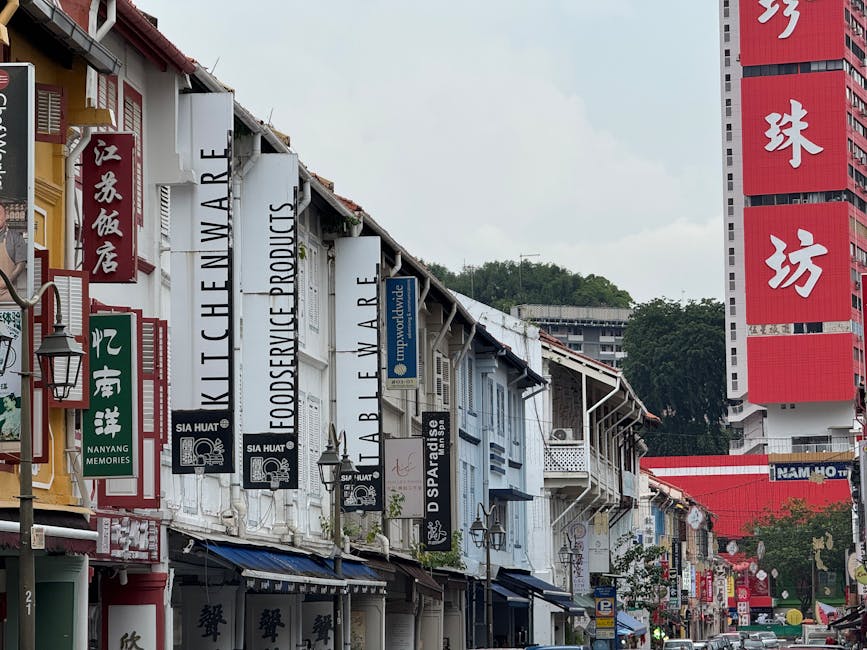
Marketing for HDB Shophouse Businesses in Singapore
HDB shophouses form the commercial backbone of Singapore’s heartland communities. These ground-floor retail units beneath residential blocks serve the daily needs of nearby residents — from kopitiams and hair salons to clinics and provision shops. With approximately 15,000 HDB commercial properties across Singapore’s towns, these businesses enjoy a built-in catchment of residents living literally above and around them. Yet many HDB shophouse owners rely entirely on walk-in traffic, missing opportunities to grow their customer base through targeted marketing.
The dynamics of heartland retail differ significantly from mall-based or city-centre businesses. Your primary customers live within walking distance. Foot traffic follows predictable patterns tied to school hours, work commutes, and weekend routines. Competition comes from the neighbouring row of shops and, increasingly, from online alternatives and delivery services. In 2026, the most successful HDB shophouse businesses combine the warmth of community relationships with smart digital strategies that maximise local visibility.
This guide provides actionable marketing strategies tailored for HDB shophouse businesses in Singapore. Whether you run a traditional provision shop, a modern cafe, a tuition centre, or a home services business, these approaches will help you strengthen your position in the heartland, attract new customers from your neighbourhood, and build a loyal community following that sustains your business for years to come.
Understanding Heartland Retail Dynamics
HDB shophouse businesses operate within a unique commercial ecosystem shaped by Singapore’s public housing infrastructure. Understanding these dynamics is essential for developing effective marketing strategies.
Key characteristics of heartland retail:
- Hyper-local catchment: Your primary market is residents within a 500-metre to one-kilometre radius — the people living in the surrounding HDB blocks who pass your shop daily
- Routine-driven traffic: Foot traffic peaks during morning commutes (7-9am), lunch hours, after-school periods (3-5pm), and evenings (6-9pm). Weekends bring different patterns centred around market runs and leisure
- Demographic concentration: Each HDB estate has a distinct demographic profile. Mature estates like Toa Payoh skew older, while newer developments like Tengah attract young families. Your marketing should reflect these demographics
- Community loyalty: Heartland customers value familiarity and relationships. The auntie who remembers your regular order or the shop owner who gives a small discount to neighbours builds loyalty that no corporate chain can replicate
- Price sensitivity: Heartland shoppers are generally more price-conscious than those in commercial districts. Value-for-money propositions resonate strongly
Your marketing strategy should work with these dynamics rather than against them. Expensive, broad-reach campaigns make little sense when your entire customer base lives within a few blocks. Instead, focus on deep penetration within your immediate community — being known, trusted, and top-of-mind for every resident in your catchment.
Local SEO for HDB Shophouse Businesses
本地搜索引擎优化 is the single most impactful digital marketing activity for HDB shophouse businesses. When residents search for services near them — “dentist near Ang Mo Kio” or “laundry service Bedok” — Google prioritises businesses with strong local SEO signals. Many HDB shophouse businesses have not claimed their Google listings, creating an immediate opportunity for those who do.
Local SEO essentials for HDB shophouse businesses:
- Google Business Profile: Claim and fully complete your profile with accurate address (include block and unit number), phone number, operating hours, and business categories
- Photos: Upload clear photos of your shopfront, interior, products or services, and any signage. Help customers recognise your shop when they walk past
- Service area: If you provide services beyond your shop (home visits, deliveries), define your service area to appear in searches across your coverage zone
- Keywords in description: Include your services and neighbourhood in your business description — “Family dental clinic serving Tampines residents since 2005”
- Reviews: Actively encourage customer reviews. Heartland businesses with strong Google review profiles stand out dramatically against competitors who have none
- Regular updates: Post updates about new products, promotions, or holiday hours through Google Posts to keep your listing fresh and engaging
Beyond Google, list your business in Singapore-specific directories like Yellow Pages Singapore, SgLocate, and Yelp Singapore. Each listing creates a citation that strengthens your local SEO authority. Ensure your business name, address, and phone number are identical across all listings — inconsistencies confuse search engines and reduce your visibility.
Void Deck Visibility and Physical Marketing
HDB void decks — the open ground floors of residential blocks — are unique to Singapore and present marketing opportunities that most businesses overlook. Residents pass through void decks multiple times daily, making them high-visibility touchpoints for local businesses.
Physical marketing tactics for HDB shophouse areas:
- Shopfront signage: Your signboard is your most important marketing asset. Ensure it is clean, well-lit, and clearly communicates what you offer. Bilingual signage (English and the predominant second language of your estate) increases accessibility
- Community noticeboard postings: Many HDB void decks have community noticeboards managed by the town council or Residents’ Committee. Seek permission to post flyers or promotional notices
- A-frame sidewalk signs: Place promotional signs near your shop entrance highlighting daily specials, promotions, or new services. Ensure compliance with town council regulations
- Void deck event participation: Community events held at void decks — festive celebrations, health screenings, community fairs — offer sponsorship and participation opportunities
- Clean and inviting exterior: Keep your shopfront area tidy. A cluttered, dirty exterior deters customers, while a clean, welcoming facade invites them in
Physical visibility matters enormously in heartland retail. Many potential customers form impressions of your business based purely on what they see as they walk past. A well-maintained shopfront with clear signage and visible activity signals a thriving, trustworthy business.
Community Targeting and Neighbourhood Engagement
Heartland businesses thrive on community relationships. Active engagement with your neighbourhood creates the kind of goodwill and word-of-mouth marketing that no digital campaign can replicate.
Community engagement strategies:
- Residents’ Committee (RC) involvement: Build relationships with your local RC. Sponsor refreshments for RC events, participate in festive celebrations, and support community initiatives
- School partnerships: If your business serves families, partner with nearby schools. Offer student discounts, sponsor school events, or provide venues for small community activities
- Elderly engagement: In mature estates, building relationships with elderly residents is valuable. Patient, respectful service earns powerful word-of-mouth recommendations within the senior community
- Festive celebrations: Participate in neighbourhood festive activities — put up decorations, offer seasonal promotions, and create a welcoming atmosphere during Chinese New Year, Hari Raya, Deepavali, and Christmas
- Support local causes: Contribute to neighbourhood food drives, community gardens, or local charity initiatives. Genuine community support builds deep goodwill
The key principle is being a visible, contributing member of your community rather than simply a business that occupies space. When residents see you supporting their estate’s events, engaging with neighbours, and contributing to community life, they develop a sense of ownership and loyalty toward your business that is remarkably durable.
Neighbourhood Apps and Online Groups
Every Singapore HDB estate has an active online community — typically through Facebook groups, Telegram channels, and occasionally dedicated neighbourhood apps. These digital communities are where residents share recommendations, seek services, discuss local issues, and discover nearby businesses.
Leveraging neighbourhood online communities:
- Facebook groups: Join groups like “Tampines Residents” or “Punggol Community.” Most estates have multiple active groups with thousands of members. Follow each group’s rules about commercial posts
- Telegram channels: Many newer estates like Punggol, Sengkang, and Tengah have active Telegram groups. These tend to be more immediate and conversational than Facebook groups
- Engage authentically: Do not simply spam promotions. Answer questions, provide helpful information related to your expertise, and become a recognised, trusted voice in the community
- Share relevant updates: New menu items, extended hours, special promotions, and community-specific offers are welcome in most groups when shared respectfully
- Respond to service requests: When residents post looking for services you offer — “Anyone know a good tailor near Block 123?” — respond promptly and professionally
The power of neighbourhood online groups lies in peer recommendations. When a resident asks for a recommendation and multiple neighbours name your business, that carries immense credibility. Build this by delivering consistently excellent service so that when the question arises, your regular customers voluntarily advocate for you.
Social Media for Heartland Businesses
Social media marketing for heartland businesses requires a different approach from brands targeting broader audiences. Your content should feel local, personal, and community-oriented rather than polished and corporate.
Social media strategies for HDB shophouse businesses:
- Facebook page: Still the most effective platform for heartland businesses, especially those serving residents aged 35 and above. Post regularly about daily specials, community involvement, and behind-the-scenes content
- Instagram: Visual businesses like cafes, bakeries, salons, and florists benefit from Instagram’s visual format. Use location tags and neighbourhood hashtags consistently
- WhatsApp Business: Set up a WhatsApp Business account for customer communications. Many heartland customers prefer WhatsApp for enquiries, orders, and appointment bookings
- Content ideas: Feature regular customers (with permission), share neighbourhood happenings, showcase new products, post behind-the-scenes content, and celebrate milestones like your shop’s anniversary
Keep your social media voice warm, personal, and genuine. Heartland customers connect with real people, not brands. Share your daily experiences running the shop — the early morning preparations, the satisfaction of a customer’s compliment, the challenges of rainy-day business. This authenticity builds emotional connections that drive loyalty and word-of-mouth referrals.
Digital Advertising on a Heartland Budget
Effective digital advertising for HDB shophouse businesses does not require large budgets. Because your target audience is geographically concentrated, even small advertising spends can achieve significant reach within your neighbourhood.
Budget-friendly advertising approaches:
- Facebook and Instagram ads: Set a one to two kilometre radius around your shop and target residents by age and interests. A budget of $5 to $10 per day can reach most of your neighbourhood within a week
- 谷歌广告: Target searches for your services combined with your neighbourhood name. Low-competition local keywords like “bicycle repair Bedok” or “tailoring service Yishun” often cost less than $1 per click
- Promoted posts in Facebook groups: Some neighbourhood Facebook groups offer promoted post options for local businesses at affordable rates
- Delivery app advertising: If you are on food delivery platforms, their in-app advertising options can boost your visibility to nearby users
Start with a monthly budget of $150 to $500 and test different approaches. Run a Facebook ad for two weeks, then try content-driven Google Ads for two weeks, and compare results. The beauty of digital advertising at this scale is that you can experiment affordably and quickly identify what resonates with your neighbourhood audience.
Track results by asking new customers how they found you. A simple tally of “Google,” “Facebook,” “neighbour recommendation,” or “walked past” gives you practical attribution data without complex analytics tools.
Building Long-Term Customer Loyalty
In heartland retail, customer retention is more valuable than customer acquisition. A loyal regular who visits weekly generates far more lifetime value than a one-time visitor attracted by a promotion. Building loyalty requires consistent quality, genuine relationships, and smart retention strategies.
Loyalty-building strategies for HDB shophouse businesses:
- Loyalty programmes: Simple stamp cards work well for heartland businesses — “Buy 10, get 1 free.” Digital alternatives like Flex Rewards or a WhatsApp-based tracking system can modernise the approach
- Personal recognition: Remember regulars’ names, preferences, and usual orders. This personal touch is a competitive advantage that chains and online businesses cannot match
- Exclusive perks for neighbours: Offer small discounts or extras for residents of nearby blocks. “Show your address for 5% off” creates a sense of belonging and privilege
- Consistent quality: Nothing destroys loyalty faster than inconsistency. Ensure your products and services meet the same standard every single day
- Community-specific promotions: Offer promotions tied to community events — National Day specials, back-to-school promotions, or estate anniversary celebrations
- Email or WhatsApp updates: Build a broadcast list of regular customers and send occasional updates about new products, special promotions, or holiday hours
The ultimate goal is to become an essential part of your neighbourhood’s daily routine. When residents think of your product or service category, your shop should be the automatic first choice — not because of clever marketing, but because of consistently excellent experiences and genuine community relationships built over time.
常见问题
How is marketing for an HDB shophouse different from marketing a mall store?
HDB shophouse marketing is hyper-local, targeting residents within a very small radius. Mall stores benefit from the mall’s broader marketing efforts and diverse visitor base, while HDB shops must generate their own visibility. Heartland marketing relies more heavily on community relationships, word-of-mouth, and neighbourhood digital groups, whereas mall marketing leans on foot traffic conversion and broader social media reach.
What is the most cost-effective marketing for an HDB shophouse business?
Google Business Profile optimisation is the most cost-effective starting point — it is free and directly impacts local search visibility. Beyond that, engaging authentically in neighbourhood Facebook and Telegram groups, encouraging customer reviews, and maintaining a clean, inviting shopfront all cost nothing but deliver meaningful results. For paid marketing, tightly geo-targeted Facebook ads offer excellent value at small budgets.
How do I attract younger customers to my heartland shop?
Establish a presence on Instagram and TikTok with visually appealing content. Offer cashless payment options including PayNow, GrabPay, and other e-wallets. Participate in delivery apps if applicable. Create shareable moments or products that younger customers want to photograph and post. Consider refreshing your shopfront design to feel more contemporary while maintaining your heartland character.
Should I be worried about online competition for my HDB shophouse business?
Online competition affects some categories more than others. Provision shops face competition from online grocery platforms, while service businesses like salons, clinics, and repair shops are largely insulated because they require physical presence. Focus on your unique advantages — immediacy, personal relationships, no delivery wait times, and the ability to see and touch products before buying. Complement your physical presence with an online one to capture customers researching before visiting.
How important are Google reviews for heartland businesses?
Extremely important. When a new resident moves into your estate and searches for nearby services, Google reviews are often the deciding factor. A business with 50 positive reviews and a 4.5-star rating will attract far more new customers than one with no reviews. Encourage every satisfied customer to leave a review — even a simple star rating helps. Over time, strong reviews become one of your most valuable marketing assets.
Can I advertise on void deck noticeboards and common areas?
Advertising in HDB common areas is regulated by town councils. Generally, you need permission from the relevant town council or Residents’ Committee to post notices on community boards. Some town councils offer formal advertising options within their estates. Check with your local town council office for specific guidelines and application procedures. Unauthorised posters may be removed and could result in fines.



 Chinese
  English
  Malay
Malay  Korean