
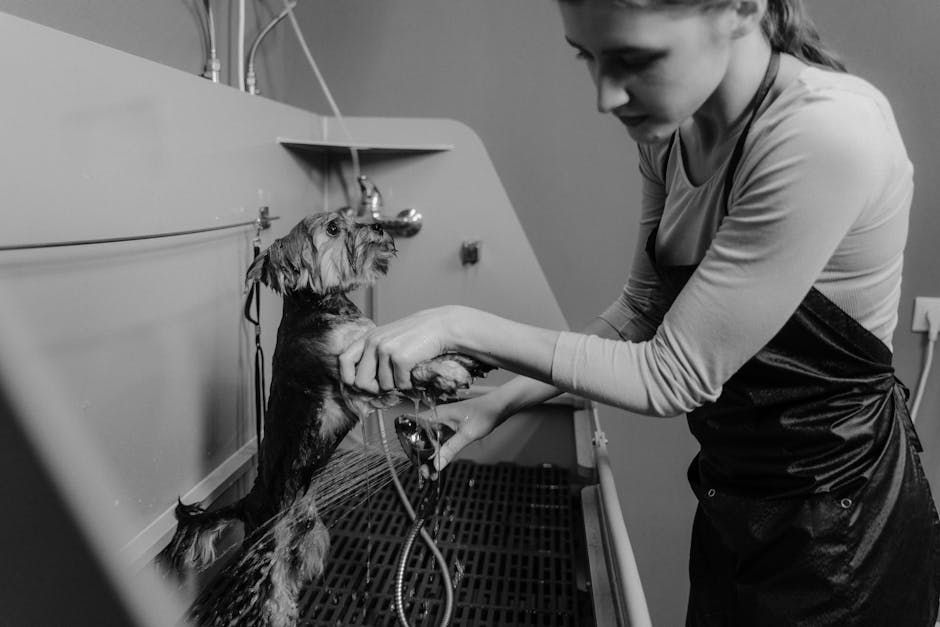
Marketing for Pet Grooming Businesses in Singapore: Build a Loyal Client Base
Why Marketing Matters for Pet Groomers
Singapore is home to a growing population of pet owners who treat their animals as family members. According to industry estimates, over 40% of Singaporean households own at least one pet, and spending on pet services — including grooming — has increased steadily year on year. This growth attracts new entrants to the market, which means competition for clients is intensifying.
For pet grooming businesses, marketing is not about flashy campaigns or viral content. It is about being visible when a pet owner searches for grooming services, building trust through consistent quality, and creating systems that encourage repeat bookings. Most groomers rely heavily on word-of-mouth, which is powerful but unpredictable. A structured pet grooming marketing strategy gives you control over your client acquisition and retention.
The typical pet grooming client books appointments every four to eight weeks. This recurring revenue model means that every new client you acquire has significant lifetime value. Investing in marketing to acquire a client who returns ten times a year makes commercial sense, even if the initial acquisition cost seems high. The challenge is finding the right channels and messages to reach pet owners in your area.
Whether you operate from an HDB shophouse, a shopping mall unit, or a mobile grooming van, the marketing principles remain the same. Visibility, trust, convenience, and retention — these are the four pillars that every grooming business should build upon. A well-rounded digital marketing strategy ties all of these together.
Google Maps and Local Search
When a pet owner searches for “pet grooming near me” or “dog grooming Tampines,” Google Maps results dominate the page. If your business does not appear in these results, you are invisible to a large segment of potential clients. Local search optimisation is arguably the single most impactful marketing activity for a pet grooming business.
Start with your Google Business Profile. This is the listing that appears in Google Maps and the local pack on search results pages. Ensure the following details are accurate and complete:
- 企业名称 — use your actual registered business name, not keyword-stuffed variations
- 地址 — exact unit number and building name for easy navigation
- 电话号码 — a number that is answered during business hours
- Opening hours — including public holiday schedules
- 服务 — list every grooming service you offer with prices if possible
- Photos — high-quality images of your salon, equipment, and freshly groomed pets
Reviews are the most influential factor in local search rankings and client decision-making. Actively ask satisfied clients to leave Google reviews. A simple approach: after a grooming session, send a WhatsApp message thanking the client and including a direct link to your Google review page. Aim for at least 50 reviews with a 4.5-star average or higher.
Respond to every review — positive and negative. Thank clients who leave positive reviews and address negative reviews professionally. How you respond to complaints tells potential clients more about your business than the complaint itself. Investing in 本地搜索引擎优化服务 can further strengthen your presence in map and local search results.
Citations — mentions of your business name, address, and phone number on other websites — also influence local rankings. Ensure your business is listed on Singapore-specific directories such as SgPetMart, Petbacker, and general directories like Yellow Pages Singapore. Consistency across all listings is important; discrepancies confuse search engines and can hurt your rankings.
Instagram and Visual Content
Pet grooming is inherently visual. Before-and-after photos, cute freshly groomed pets, and behind-the-scenes content all perform well on visual platforms. Instagram is the primary social media channel for most pet grooming businesses, and for good reason — it is where pet owners spend time and where grooming content thrives.
A 强 Instagram marketing strategy for pet groomers should include:
- Before-and-after posts — these are your most powerful content format. Show the transformation from a matted or overgrown coat to a clean, styled finish. Always get the pet owner’s permission before posting.
- Reels and short videos — time-lapse grooming videos consistently generate high engagement. A 30-second clip of a Pomeranian getting a teddy bear cut can reach thousands of views.
- Stories for daily engagement — share your daily bookings (with permission), showcase new products, or run polls about grooming styles. Stories keep you top of mind.
- Client testimonials — share screenshots of positive messages (with permission) or create quote graphics from happy clients.
- Educational content — tips on at-home brushing, how often different breeds need grooming, signs of skin issues to watch for. This positions you as an expert, not just a service provider.
Hashtag strategy matters on Instagram. Use a mix of broad hashtags (#petgroomingsingapore, #doggrooming) and location-specific ones (#pasirrisgroomer, #bukittimahpets). Create a branded hashtag for your salon and encourage clients to use it when they post photos of their freshly groomed pets.
Posting frequency should be at least three to four times per week for feed posts, with daily Stories. Consistency matters more than perfection. A slightly imperfect but authentic photo of a happy groomed dog outperforms a heavily edited studio shot. Pet owners want to see that you genuinely care about animals. Broader social media marketing support can help you maintain this cadence without burning out.
TikTok is increasingly relevant for pet grooming content. The platform’s algorithm favours engaging short-form video, and grooming transformations perform exceptionally well. If you have the capacity to create short videos, a presence on TikTok can extend your reach significantly beyond Instagram.
Online Booking and Convenience
Modern pet owners expect the convenience of online booking. If your appointment process involves calling during business hours or sending a WhatsApp message and waiting for a reply, you are creating friction that costs you bookings. Many potential clients will simply move on to a competitor who offers instant online booking.
Online booking systems for pet grooming should include:
- Service selection — allow clients to choose the specific grooming package, add-ons (nail trimming, ear cleaning, teeth brushing), and specify their pet’s breed and size
- Real-time availability — show available time slots so clients can book without back-and-forth
- Automated confirmations and reminders — send booking confirmation via email and SMS, with a reminder 24 hours before the appointment
- Pet profiles — let clients save their pet’s details, preferences, and any special requirements
- Rebooking prompts — after an appointment, automatically suggest the next booking based on the recommended grooming frequency for the pet’s breed
Several booking platforms cater to pet service businesses, including PetExec, Gingr, and general platforms like Calendly or SimplyBook.me. Choose one that integrates with your workflow and, ideally, with your payment system so clients can pay a deposit or the full amount at the time of booking.
Your Google Business Profile also supports direct booking if you integrate a compatible booking system. This means clients can book directly from Google Maps or search results, reducing the steps between “I need a groomer” and “I have an appointment.” This integration is one of the most effective ways to convert local search visibility into actual bookings.
WhatsApp Business remains an important channel in Singapore. Even with online booking, many clients prefer to message with questions before committing. Set up WhatsApp Business with quick replies for common questions (pricing, availability, location) and a catalogue showing your services and prices.
Loyalty Programmes and Referrals
Acquiring a new client costs significantly more than retaining an existing one. For pet grooming, where repeat visits are the norm, a loyalty programme can dramatically increase client lifetime value and reduce your reliance on constant new client acquisition.
Effective loyalty programme structures for pet groomers include:
- Stamp card — the classic “10th groom free” model. Simple, easy to understand, and effective. Digital stamp cards through apps like Flex Rewards or Stamp Me are more convenient than physical cards.
- Tiered membership — offer monthly or quarterly grooming packages at a discounted rate. For example, a “Paw-fect Plan” that includes one full grooming session per month plus a free nail trim between sessions. This guarantees recurring revenue and higher client retention.
- Birthday rewards — send a birthday greeting for the pet (yes, pet owners celebrate these) with a discount on a birthday grooming package. This is a low-cost gesture that generates goodwill and bookings.
- Multi-pet discounts — households with multiple pets represent your highest-value clients. Offer a percentage discount for grooming two or more pets in the same visit.
Referral programmes turn your existing clients into marketers. Offer a meaningful incentive for both the referrer and the new client — for example, $10 off for each party. Make the referral process simple: a unique referral code or link that clients can share via WhatsApp. Track referrals diligently and ensure rewards are applied promptly, as nothing damages a referral programme faster than forgotten rewards.
Communicate your loyalty and referral programmes through every channel — in-salon signage, email, WhatsApp, Instagram, and your website. Many businesses launch loyalty programmes but fail to promote them consistently, resulting in low adoption. Mention the programme at check-out, include a reminder in post-appointment messages, and feature it regularly on social media. If you want strategic guidance on marketing for pet businesses more broadly, a dedicated agency can help you design and launch these programmes.
Content Marketing and SEO
A blog or resource section on your website serves two purposes: it improves your search engine rankings and it builds trust with potential clients. Pet owners have countless questions about grooming, and providing answers positions your business as the go-to authority in your area.
Blog topics that perform well for pet groomers include:
- “How often should I groom my [breed]?”
- “Signs your dog needs professional grooming”
- “What to expect during your pet’s first grooming appointment”
- “Dealing with matted fur: prevention and treatment”
- “Best grooming styles for Singapore’s hot and humid climate”
- “How to maintain your pet’s coat between grooming appointments”
Each blog post should target a specific keyword and include your location. “How often should I groom a Shih Tzu” is a good keyword, but “Shih Tzu grooming guide — Singapore groomer’s advice” is better for local relevance. Include internal links to your booking page and service descriptions within each post.
Your service pages should be detailed and keyword-rich. Instead of a single “Services” page, create individual pages for dog grooming, cat grooming, specific breed grooming, and add-on services. Each page should describe what the service includes, pricing, duration, and any preparation the pet owner needs to do. These pages serve as landing pages for searches like “cat grooming Singapore” or “Poodle grooming near Jurong.”
Technical SEO basics should not be overlooked. Ensure your website loads quickly on mobile, has proper meta titles and descriptions on every page, uses header tags correctly, and has a clear site structure. A local SEO audit can identify quick wins that improve your visibility in search results.
Paid Advertising for Pet Groomers
While organic search and social media build long-term visibility, paid advertising can deliver immediate results. For pet grooming businesses, two paid channels are most effective: Google Ads and Facebook/Instagram ads.
Google Ads works well for capturing high-intent searches. When someone searches “dog grooming Bishan” or “cat groomer near me,” they are actively looking for a groomer. A well-targeted Google Ads campaign can place your business at the top of these results. Start with a modest budget of $500 to $1,000 per month and focus on location-specific keywords with clear intent.
Facebook and Instagram ads are better for awareness and promotion. Use them to:
- Promote seasonal offers (Chinese New Year grooming packages, for example)
- Retarget website visitors who did not book
- Reach pet owners in specific neighbourhoods using geographic targeting
- Promote your loyalty programme or referral incentive
Visual creative is everything for pet grooming ads on social media. Use your best before-and-after photos and short video clips. Carousel ads showing multiple transformations tend to perform well. Include a clear call to action — “Book Now” with a link to your online booking system.
Track your advertising results carefully. Know your cost per booking for each channel and compare it to the lifetime value of a client. If a client books ten grooming sessions per year at $80 each, their annual value is $800. Spending $30 to $50 to acquire that client is a worthwhile investment.
Integrate your paid advertising with your organic efforts. Use retargeting to reach people who visited your website or engaged with your social media but did not book. These warm audiences convert at much higher rates than cold audiences, making retargeting one of the most cost-effective advertising strategies available to small businesses. A comprehensive digital marketing approach combines these paid and organic channels for maximum impact.
常见问题
What is the most effective marketing channel for a pet grooming business in Singapore?
Google Maps and local search optimisation consistently deliver the highest return for pet groomers. Most clients find groomers by searching “pet grooming near me” or similar location-based queries. Ensuring your Google Business Profile is complete, well-reviewed, and optimised for relevant keywords should be your top priority before investing in other channels.
How much should a pet grooming business spend on marketing?
A reasonable marketing budget for a pet grooming business in Singapore is 5% to 10% of revenue. For a salon generating $10,000 per month, that translates to $500 to $1,000. Allocate the majority to Google Business Profile optimisation, online booking tools, and Instagram content creation. Add paid advertising once your organic foundation is in place.
Should I be on TikTok as a pet groomer?
TikTok is worth considering if you can create short-form video content consistently. Grooming transformation videos perform exceptionally well on the platform, often reaching audiences far beyond your local area. While not every viewer will become a client, TikTok builds brand awareness and can drive local interest when combined with location tags and Singapore-specific hashtags.
How do I get more Google reviews for my grooming business?
Ask every satisfied client directly. The most effective method is sending a WhatsApp message after the appointment with a thank-you note and a direct link to your Google review page. Timing matters — send the message while the client is still admiring their freshly groomed pet. Avoid offering incentives for reviews, as this violates Google’s policies and can result in reviews being removed.
Is it worth offering home or mobile pet grooming services?
Mobile grooming addresses a genuine convenience need, particularly for pet owners with busy schedules, elderly pets, or animals that experience anxiety in unfamiliar environments. From a marketing perspective, mobile grooming allows you to target specific neighbourhoods and can command premium pricing. However, the logistics are more complex and your capacity is limited by travel time between appointments. Test the model with a few regular clients before committing fully.



 Chinese
  English
  Malay
Malay  Korean