
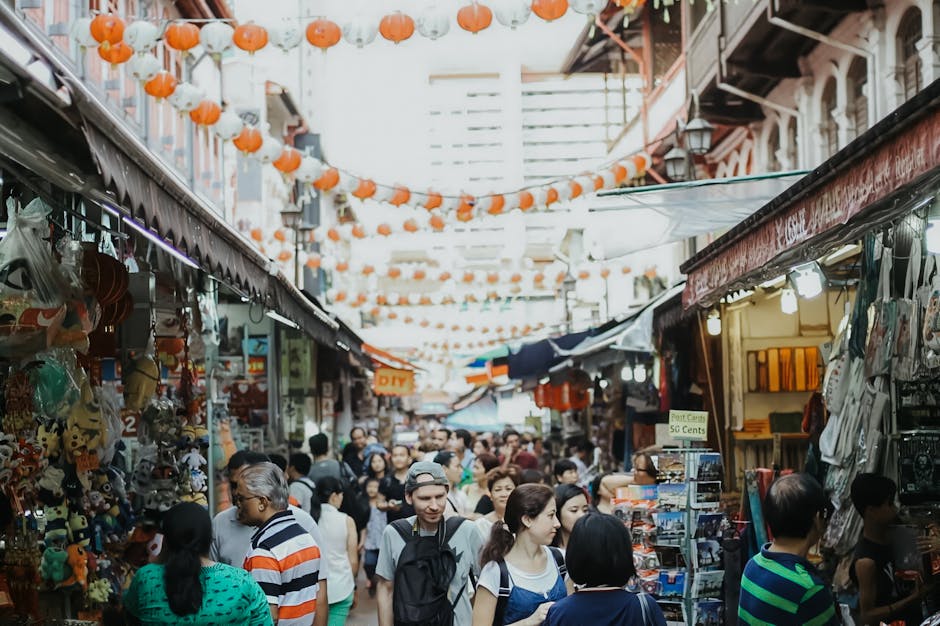
Cultural Marketing in Singapore: Navigate Multicultural Audiences
Singapore’s multicultural identity is not merely a demographic fact—it is the defining feature of the nation’s consumer landscape. With a population comprising roughly 74% Chinese, 13% Malay, 9% Indian and a significant expat community, brands operating in Singapore must navigate one of the world’s most culturally complex markets. Getting cultural marketing right unlocks deep emotional connections with audiences. Getting it wrong can trigger backlash that spreads across social media within hours.
In 2026, cultural marketing in Singapore has evolved far beyond simply translating ads into Mandarin, Malay and Tamil. Today’s consumers expect brands to demonstrate genuine cultural understanding—to know the difference between Deepavali and Diwali in a Singaporean context, to understand why certain colours carry specific connotations during Chinese New Year, and to recognise that the Malay community is not a monolithic group. Surface-level representation without substance is quickly identified and criticised.
This guide provides a practical framework for building culturally intelligent marketing campaigns in Singapore. Whether you are a local SME seeking to broaden your appeal or an international brand entering the market, the strategies below will help you engage multicultural audiences with authenticity and respect. A thoughtful approach to cultural marketing is an essential component of any successful digital marketing strategy in Singapore.
Singapore’s Cultural Marketing Landscape in 2026
Singapore’s multiculturalism is both policy-driven and organic. Decades of government-led integration through housing policies, national education and shared national events have created a uniquely Singaporean culture that sits alongside the distinct ethnic identities. Marketers must understand both layers: the shared Singaporean identity that unites consumers across racial lines, and the specific cultural nuances that differentiate communities.
Language adds another dimension of complexity. While English is the lingua franca of business and education, many Singaporeans are bilingual or trilingual. Chinese Singaporeans may speak Mandarin, Hokkien, Teochew or Cantonese at home. Malay Singaporeans communicate in Bahasa Melayu, and Indian Singaporeans may speak Tamil, Hindi, Punjabi or other languages. Singlish—the colloquial English unique to Singapore—serves as a cultural bridge that signals local authenticity.
Digital behaviour also varies across cultural segments. Chinese Singaporean consumers are heavily influenced by platforms like Xiaohongshu and WeChat, particularly for lifestyle and beauty content. Malay Singaporean audiences engage actively on TikTok and Instagram, with a strong preference for video content. Indian Singaporean consumers show high engagement with YouTube and WhatsApp communities. Effective social media marketing in Singapore requires platform strategies that account for these cultural preferences.
Engaging Chinese Singaporean Audiences
As the largest ethnic group, Chinese Singaporeans represent the dominant consumer segment across most product categories. However, this community is far from homogeneous. Significant differences exist between dialect groups (Hokkien, Teochew, Cantonese, Hakka, Hainanese), between English-educated and Chinese-educated segments, and across generational lines. A grandmother who watches Channel 8 dramas and a grandson who consumes content exclusively in English may live under the same roof but inhabit very different media worlds.
Cultural values that resonate with Chinese Singaporean consumers include family prosperity, educational achievement, pragmatism, auspiciousness and filial piety. Numerology plays a tangible role in marketing—prices ending in 8 (associated with prosperity) perform better than those ending in 4 (associated with death). During festive periods, red and gold colour palettes signal celebration and fortune. Brands that understand these symbolic elements can embed them naturally into campaigns without appearing tokenistic.
For digital campaigns targeting Chinese-educated segments, Mandarin-language 内容营销 on platforms like Xiaohongshu and Chinese-language Facebook pages can deliver strong engagement. Key festive periods include Chinese New Year (the single largest marketing opportunity), Mid-Autumn Festival, Qing Ming and the Hungry Ghost Festival. Each carries specific cultural protocols that marketers should respect—for instance, avoid launching new products during the seventh month (Hungry Ghost Festival) if your target audience is traditionally inclined.
Engaging Malay Singaporean Audiences
The Malay Singaporean community, predominantly Muslim, requires marketers to understand the intersection of ethnic culture and religious practice. Halal certification is not merely a label but a trust signal that extends beyond food to cosmetics, pharmaceuticals and financial products. Brands seeking to engage this community must ensure their halal credentials are genuine and verifiable—no amount of clever marketing can substitute for authentic compliance.
Ramadan and Hari Raya Aidilfitri represent the most significant marketing window for engaging Malay Singaporean consumers. The month-long fasting period creates distinct consumption patterns: pre-dawn meal preparation drives grocery purchases, while the Hari Raya celebration itself fuels spending on clothing, home décor, food and family gatherings. Brands that begin Ramadan campaigns early (at least 4–6 weeks before) and sustain engagement through the festive period tend to see stronger results than those that treat it as a one-off promotion.
Content that resonates with Malay Singaporean audiences often centres on family values, community solidarity, faith and cultural pride. Visual representation matters tremendously—campaigns should feature Malay faces authentically rather than as an afterthought. The Malay language can be used effectively in campaigns, but ensure translations are natural and reviewed by native speakers. Bahasa Melayu in Singapore differs from Malaysian Malay in subtle but noticeable ways, and errors signal a lack of genuine cultural investment.
Engaging Indian Singaporean Audiences
Singapore’s Indian community is remarkably diverse, encompassing Tamil, Malayalam, Telugu, Hindi, Punjabi and other linguistic and cultural sub-groups. While Tamils form the largest Indian sub-group in Singapore, the community’s composition has shifted over the decades with waves of professional migration bringing North Indian, Bengali and other communities to the island. Effective marketing avoids treating “Indian” as a single category.
Deepavali (the Festival of Lights) is the major festive marketing opportunity, but savvy marketers also recognise Pongal, Thaipusam and Navratri as engagement moments. Gold and jewellery purchases spike during auspicious periods, and brands in these categories should align campaigns with the Hindu calendar. For the Sikh community, Vaisakhi represents an important cultural moment that is often overlooked by marketers.
Indian Singaporean consumers tend to be highly research-oriented, with a strong preference for detailed product information, expert opinions and community recommendations. YouTube is a dominant content consumption platform, and Tamil-language content can be particularly effective for reaching older segments. Family and education are powerful motivating themes, and campaigns that celebrate academic achievement, entrepreneurial success and family milestones tend to generate strong emotional resonance.
Engaging Singapore’s Expat Community
Singapore’s expat community—numbering over a million when including permanent residents and Employment Pass holders—represents significant purchasing power, particularly in categories like premium dining, international education, luxury goods, travel and financial services. This community is itself diverse, comprising Western expats, PRC Chinese, Indian nationals, Japanese, Korean and Southeast Asian professionals.
Expat consumers often rely on different discovery channels than local Singaporeans. Expat-focused publications, Facebook groups (such as community groups for specific nationalities), Instagram and Google Search in their native languages all serve as important touchpoints. SEO strategies targeting expat audiences should consider search terms in English and potentially other languages, as well as the specific information needs of people navigating life in a foreign country.
The key challenge in marketing to expats is their transient nature—many stay in Singapore for defined contract periods, creating constant audience turnover. Brands must continuously replenish their expat customer base through always-on acquisition campaigns. At the same time, long-term expats who have settled in Singapore often develop hybrid cultural identities, responding to both international and local marketing cues. Tailoring messaging to the expat’s tenure in Singapore can significantly improve relevance.
Festival Marketing: A Cultural Calendar Approach
Singapore’s multicultural calendar offers brands roughly 15–20 major festive marketing windows per year. Rather than treating each festival as an isolated campaign, leading brands develop an annual cultural marketing calendar that plans creative themes, budget allocation and channel strategies months in advance.
The major festive marketing periods in order of commercial significance include: Chinese New Year (January/February), Hari Raya Aidilfitri (timing varies with Islamic calendar), Deepavali (October/November), Christmas (December), National Day (August), Mid-Autumn Festival (September/October) and Thaipusam (January/February). Each requires different lead times for campaign development—Chinese New Year campaigns, for instance, should be conceptualised by October of the preceding year.
Successful festival marketing goes beyond slapping festive motifs onto existing creative. The most impactful campaigns tell culturally resonant stories that connect the brand’s values with the festival’s deeper meaning. A food delivery app running a Hari Raya campaign might focus on the joy of family gatherings and the effort behind traditional recipes, rather than simply offering a discount code with a ketupat graphic. Authenticity in storytelling matters more than production value. Using 谷歌广告 to target festive search terms with culturally appropriate landing pages can significantly boost conversion during these high-intent periods.
Building Effective Multilingual Campaigns
Multilingual marketing in Singapore is not simply about translation—it is about transcreation. A tagline that works brilliantly in English may fall flat or carry unintended connotations when directly translated into Mandarin, Malay or Tamil. The most effective multilingual campaigns are conceived with cultural adaptation built into the creative process from the start, not bolted on as an afterthought.
For digital campaigns, multilingual execution involves several practical considerations. Website design must accommodate different text lengths (Tamil text, for instance, tends to be significantly longer than English equivalents) and script directions. Social media posts in different languages should feel native to each language rather than obviously translated. Hashtag strategies need to be developed independently for each language, as trending topics and search behaviours differ across linguistic communities.
Singlish occupies a unique position in Singapore’s linguistic landscape. While it is not appropriate for formal corporate communications, its strategic use in social media and casual brand communications can powerfully signal local authenticity. Phrases like “shiok,” “can lah” and “wah, damn power” carry cultural resonance that standard English cannot replicate. However, Singlish use must feel natural—forced Singlish from brands perceived as outsiders can backfire spectacularly.
Avoiding Cultural Missteps
Cultural missteps in Singapore’s marketing landscape can range from minor cringes to full-blown brand crises. The most common errors stem from ignorance rather than malice, but the impact on brand perception is the same. Building cultural intelligence into your marketing process requires both structural safeguards and genuine curiosity.
Common missteps to avoid include: using non-halal ingredients in products marketed to Malay audiences; featuring culturally inappropriate imagery during sensitive periods; conflating different Asian cultures (using Japanese imagery for a Chinese New Year campaign, for instance); tokenistic representation that features diverse faces without diverse perspectives; and making assumptions about language preferences based on ethnicity.
Structural safeguards that prevent cultural errors include establishing a diverse review panel for all culturally themed campaigns, engaging cultural consultants for major festive pushes, conducting pre-launch testing with representative focus groups, and building a cultural style guide specific to the Singapore market. Email marketing campaigns targeting specific cultural segments should be reviewed by team members from those communities before deployment. The cost of prevention is always lower than the cost of a public apology.
常见问题
How do I market to all cultural groups in Singapore without a massive budget?
Focus on shared Singaporean identity for your always-on campaigns, then allocate specific budget to the two or three cultural moments most relevant to your product category. You do not need to be active in every festival—it is better to do two cultural campaigns exceptionally well than to spread thin across all of them with generic creative.
Is it appropriate for a non-Malay brand to run Hari Raya campaigns?
Absolutely, provided the campaign is executed with genuine cultural understanding and respect. Many successful Hari Raya campaigns in Singapore are created by multicultural teams. The key is to involve Malay Singaporean voices in the creative process, ensure halal compliance where applicable, and focus on universal themes like family and togetherness that the festival embodies.
Should I use Singlish in my marketing campaigns?
Singlish can be highly effective for building local rapport, particularly on social media and in casual brand communications. However, it works best when your brand already has local credibility. International brands attempting Singlish without an established local presence often come across as inauthentic. Start with natural, locally-informed English and introduce Singlish elements gradually as your brand voice matures in the market.
How do I handle cultural representation in visual marketing?
Representation should be authentic, proportionate and contextually appropriate. Avoid the “United Nations photo” approach where diversity appears staged. Instead, feature diverse faces in natural, relatable scenarios that reflect how multicultural Singapore actually lives. Ensure that cultural attire, settings and interactions are accurate—small details like wearing a sari correctly or setting a Malay dining scene authentically make a significant difference.
What is the biggest cultural marketing mistake brands make in Singapore?
The single biggest mistake is treating cultural marketing as a seasonal decoration rather than a year-round commitment. Brands that only acknowledge cultural diversity during major festivals but ignore it in their everyday communications are quickly seen as performative. True cultural marketing is reflected in hiring practices, product development, customer service protocols and brand values—not just festive campaign creative.
How do I navigate religious sensitivities in marketing campaigns?
Singapore’s Maintenance of Religious Harmony Act provides a legal framework, but good cultural marketing goes beyond compliance. Avoid using religious symbols purely for aesthetic purposes, never trivialise religious practices for commercial gain, and be especially careful during religiously significant periods. When in doubt, consult community leaders or cultural advisors before proceeding with any campaign that touches on religious themes.

 Chinese
  English
  Malay
Malay  Korean