
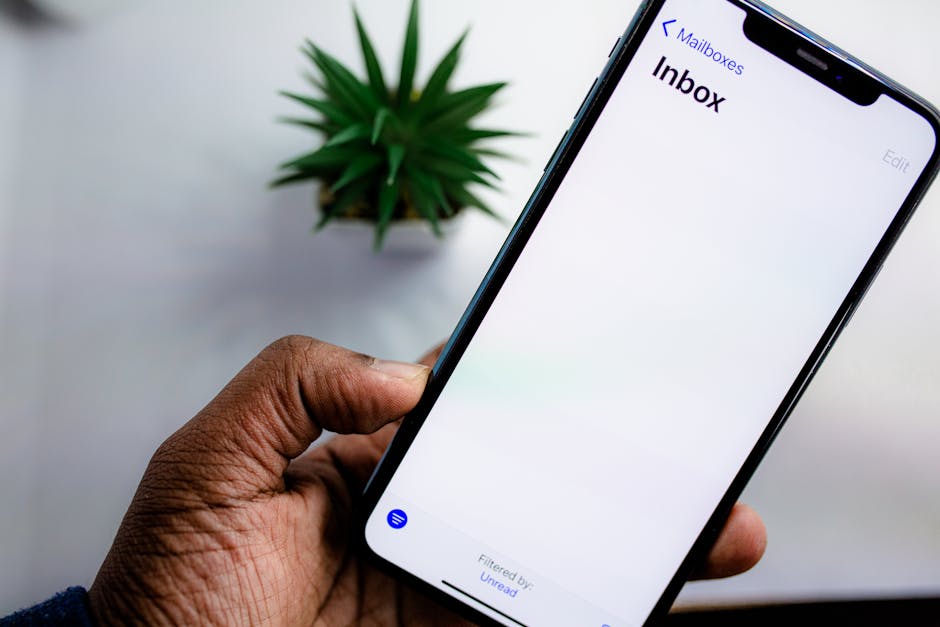
Email Subject Lines Guide: How to Boost Open Rates in 2026
You spent hours crafting the perfect email — compelling copy, a strong call to action, a well-designed layout. None of it matters if nobody opens the message. And what decides whether they open it? The subject line.
According to industry benchmarks, 47% of email recipients decide to open an email based solely on the subject line. In Singapore’s crowded inboxes — where professionals receive upwards of 80 emails per day — getting that subject line right is not a nice-to-have. It is a business necessity.
This guide breaks down the science and craft of writing email subject lines that actually get opened. No vague advice. Just proven formulas, testing methods, and Singapore-specific insights you can put to work immediately.
Why Subject Lines Matter More Than You Think
The subject line is the gatekeeper of your entire 电子邮件营销 strategy. If people do not open your emails, your conversion rate is zero — regardless of how good the content inside is.
Here is what the data tells us about subject lines in 2026:
- Open rates in Singapore average between 18% and 25% across industries. Top performers hit 35% or more — and subject lines are the biggest differentiator.
- 69% of recipients report emails as spam based on the subject line alone. One poorly worded line can damage your sender reputation permanently.
- Mobile opens account for 62% of all email opens in Singapore, meaning your subject line needs to work in roughly 40 characters or fewer.
The subject line also sets expectations. A misleading subject line might get an initial open, but it destroys trust and increases unsubscribes. The goal is not to trick people into opening — it is to accurately promise value and deliver on that promise.
Think of it this way: the subject line is the headline of your email. And just as a headline determines whether someone reads an article, your subject line determines whether your carefully crafted message ever sees the light of day.
The Anatomy of an Effective Subject Line
Effective email subject lines share common characteristics. Understanding these elements gives you a framework to work with rather than relying on guesswork.
Length matters. Subject lines between 6 and 10 words tend to generate the highest open rates. For mobile optimisation, keep them under 50 characters. Anything longer gets truncated on most devices, especially on iPhones and Android default mail apps.
Clarity beats cleverness. Recipients decide in under two seconds whether to open an email. Puns, wordplay, and obscure references may feel creative, but they often confuse rather than compel. Tell people exactly what they will get.
Urgency works — when genuine. Time-sensitive language like “ends tonight” or “last 24 hours” can lift open rates by 20% or more. But false urgency erodes trust fast. Only use it when the deadline is real.
Numbers and specifics outperform vague promises. Compare “Tips for Better Marketing” with “7 Marketing Tactics That Lifted Our Revenue by 34%.” The second is specific, credible, and curiosity-inducing.
The best subject lines typically combine two or three of these elements. A clear benefit, a specific detail, and a reason to open now. That combination is hard to ignore.
Proven Subject Line Formulas That Work
You do not need to reinvent the wheel every time you write a subject line. These formulas have been tested across millions of emails and consistently deliver strong open rates for email campaign management professionals.
The How-To Formula: “How to [achieve desired outcome]”
- How to Double Your Email Open Rates This Quarter
- How to Cut Your CPL by 40% with One Change
The Number List Formula: “[Number] [things] to [achieve benefit]”
- 5 Subject Line Tricks Our Best Clients Use
- 9 Landing Page Fixes That Boost Conversions
The Question Formula: Ask something the recipient genuinely wants answered.
- Are Your Emails Landing in Spam?
- What Is Your Biggest Marketing Bottleneck?
The Curiosity Gap Formula: Hint at valuable information without giving it all away.
- The One Metric Most Marketers Ignore
- Why Your Competitors’ Emails Get Opened More
The Social Proof Formula: Leverage credibility through results or authority.
- How [Company Name] Increased Revenue by 60%
- What 500 Singapore Marketers Told Us About Email
The Direct Benefit Formula: State the value proposition plainly.
- Your Free Email Audit Report Is Ready
- Save 3 Hours a Week on Email Marketing
The key with any formula is authenticity. The subject line must accurately reflect the email content. Clickbait subject lines generate opens but destroy engagement metrics downstream.
Personalisation Tactics Beyond First Names
Adding “[First Name]” to a subject line was groundbreaking in 2010. In 2026, it is table stakes. Recipients expect more, and the data shows that advanced personalisation outperforms basic name insertion by a significant margin.
Behavioural personalisation is the most effective approach. Referencing a specific action the recipient took — a page they visited, a product they viewed, a webinar they attended — creates relevance that generic subject lines cannot match.
- “Still thinking about [product name]?” — for cart abandoners
- “Following up on your [service] enquiry” — for lead nurture sequences
- “New resources on [topic they downloaded]” — for content-engaged leads
Segment-based personalisation tailors subject lines to specific audience groups. A B2B SaaS company in Singapore might use different subject lines for SME owners versus enterprise procurement managers, even when promoting the same product.
Location-based personalisation is particularly effective in Singapore. Referencing specific areas, local events, or regional business contexts makes your email feel less like a mass broadcast and more like a targeted message.
Purchase history personalisation leverages what you already know about the customer. Existing customers respond well to subject lines that reference their past purchases and suggest logical next steps.
The underlying principle is simple: the more relevant the subject line feels to the individual recipient, the more likely they are to open it. Invest in your data and segmentation, and your subject lines will naturally improve. A solid email marketing strategy in Singapore starts with clean, well-segmented data.
A/B Testing Subject Lines the Right Way
Intuition is unreliable when it comes to subject lines. What you think will work and what actually works are often two different things. A/B testing removes the guesswork — but only if you do it properly.
Test one variable at a time. If you change the length, the tone, and the personalisation all at once, you have no idea which change drove the result. Isolate a single element per test.
Variables worth testing include:
- Length: Short (under 30 characters) versus medium (30-50 characters) versus long (50+ characters)
- Tone: Formal versus conversational versus urgent
- Personalisation: With name versus without, behavioural versus generic
- Emojis: With versus without (results vary dramatically by industry)
- Numbers: With specific figures versus without
- Question versus statement: Interrogative versus declarative format
Sample size matters. Testing with 50 recipients per variant tells you nothing statistically meaningful. For reliable results, aim for at least 1,000 recipients per variant. If your list is smaller, use 20% of your list as a test group and send the winning variant to the remaining 80%.
Measure the right metric. Open rate is the primary metric for subject line testing. But also check click-through rate and unsubscribe rate. A subject line that generates high opens but low clicks may be misleading your audience — a sign of promise-delivery mismatch.
Document and build a playbook. After running 10-20 tests, you will start seeing patterns specific to your audience. Document what works, build a subject line playbook, and iterate from there. This is how the best EDM marketing teams in Singapore consistently outperform.
Test timing alongside subject lines. The same subject line can produce different open rates depending on send time. Tuesdays and Thursdays between 9am and 11am tend to perform well for B2B audiences in Singapore, but test this for your specific list.
Singapore-Specific Tips for Higher Open Rates
Singapore’s market has unique characteristics that affect email performance. Understanding these nuances can give you an edge over competitors using generic, globally-sourced email tactics.
Multilingual considerations. While English is the business lingua franca, incorporating Singlish or bilingual elements in appropriate contexts can increase engagement — particularly for B2C brands targeting heartlanders. A subject line like “GSS deals you confirm must see” can outperform formal English for certain segments.
Local events and holidays drive opens. Subject lines referencing Chinese New Year, Hari Raya, National Day, or the Great Singapore Sale see significantly higher open rates during those periods. Plan your editorial calendar around these dates and front-load the occasion in your subject line.
PDPA compliance affects trust. Singapore recipients are increasingly aware of data protection. Subject lines that feel overly personal or reference data the recipient did not knowingly share can trigger suspicion rather than engagement. Be transparent about how you obtained their information.
Mobile-first is non-negotiable. Singapore has one of the highest smartphone penetration rates globally. Over 60% of email opens in Singapore happen on mobile. This means your subject line must be compelling in 35-40 characters — the visible limit on most mobile email clients.
B2B audiences in Singapore are pragmatic. Flashy, hype-driven subject lines tend to underperform with Singaporean business decision-makers. They respond better to clear, benefit-oriented, no-nonsense subject lines. “Reduce Your Marketing Spend by 25%” will typically outperform “You Will Not Believe These Marketing Results” in the Singapore B2B context.
Preview text is the unsung hero. Many Singapore email clients — particularly Gmail, which dominates the market — display preview text alongside the subject line. Treat preview text as an extension of your subject line, not an afterthought. Use it to complement and expand on the promise made in the subject.
Common Mistakes That Kill Open Rates
Knowing what not to do is just as important as knowing what works. These mistakes are common across Singapore businesses and are often the biggest drag on email performance.
Using ALL CAPS or excessive punctuation. “HUGE SALE!!!! DON’T MISS OUT!!!!” does not convey excitement — it conveys desperation. It also triggers spam filters. Use sentence case and limit exclamation marks to one at most.
Being too vague. “Newsletter #47” or “Monthly Update” gives the recipient zero reason to open. Every subject line should communicate a specific benefit or piece of value.
Overusing spam trigger words. Words like “free,” “guaranteed,” “act now,” and “limited time” are not automatic spam triggers on their own, but used in combination, they can push your email into the spam folder. Modern spam filters use AI-based analysis, but keyword density still plays a role.
Inconsistent sender name and subject line tone. If your sender name is a formal company name but your subject line reads like a casual text message, the disconnect creates confusion. Maintain consistency across sender name, subject line, and email content.
Neglecting to test. Sending every email with a single subject line — no A/B testing, no analysis — is leaving performance gains on the table. Even small improvements in open rate compound over time into significant revenue differences.
Writing the subject line last. Many marketers treat the subject line as an afterthought, writing it just before hitting send. Strong copywriting starts with the headline. Write your subject line first, then build the email content to deliver on the promise.
Ignoring mobile preview. Always preview your subject line on a mobile device before sending. What looks great on a desktop email client may be cut off or awkward on a smartphone screen.
Tools and Resources for Better Subject Lines
Several tools can help you write, test, and optimise subject lines more efficiently.
Subject line graders like CoSchedule’s Headline Analyser and Omnisend’s Subject Line Tester score your subject lines based on length, word choice, sentiment, and other factors. They are not perfect, but they provide a useful starting point.
AI-powered subject line generators have improved significantly. Tools like Phrasee and Jasper can generate subject line variants based on your email content and audience data. Use them for inspiration, but always apply human judgement and brand voice guidelines.
Email analytics platforms — Mailchimp, HubSpot, ActiveCampaign, and others — provide built-in A/B testing and open rate tracking. If your current platform does not support automated A/B testing, it may be time to upgrade.
Swipe files are underrated. Subscribe to competitors and brands you admire, save their best subject lines, and analyse what makes them effective. Over time, you will build an invaluable reference library.
Internal benchmarking is the most valuable resource of all. Your own historical data — which subject lines performed best with your specific audience — is more predictive than any external benchmark or tool. Review your past campaigns quarterly and extract patterns.
The best approach combines tools with human expertise. Use technology to generate options and test efficiently, but rely on your understanding of your audience to make final decisions.
常见问题
What is the ideal length for an email subject line?
Aim for 6 to 10 words or under 50 characters. For mobile-first audiences — which is most of Singapore — keep it under 40 characters to avoid truncation. Shorter subject lines tend to perform better in B2B contexts, while slightly longer ones can work for B2C where more detail helps the recipient decide.
Should I use emojis in email subject lines?
It depends on your audience and brand. For B2C brands targeting younger demographics, emojis can increase open rates by 10-15%. For B2B and professional services, emojis often reduce open rates and can appear unprofessional. Test with your specific audience before committing to emoji use, and never use more than one emoji per subject line.
How often should I A/B test my subject lines?
Ideally, every campaign. At a minimum, test weekly sends or your most important campaigns. Each test gives you data that improves future performance. After 20-30 tests, you will have a clear picture of what resonates with your audience. Document results in a shared playbook so the entire team benefits.
Do personalised subject lines really perform better?
Yes, but the degree depends on the type of personalisation. Basic first-name personalisation lifts open rates by 5-10%. Behavioural personalisation — referencing specific actions, interests, or purchase history — can lift open rates by 20-30%. The key is relevance. A personalised subject line that references something irrelevant to the recipient can actually hurt performance.
What are the biggest subject line mistakes for Singapore businesses?
The most common mistakes are being too generic (e.g., “Monthly Newsletter”), ignoring mobile truncation, failing to test, and using overly aggressive sales language that triggers spam filters. Singapore audiences, particularly in B2B, respond best to clear, benefit-driven subject lines that respect their time. Avoid hype, be specific about the value inside, and always test before scaling.


 Chinese
  English
  Malay
Malay  Korean