
bahasa
Preschool and Childcare Marketing in Singapore: The Complete Guide
Choosing a preschool or childcare centre is one of the most emotionally charged decisions Singapore parents make. It is often the first time they entrust their child’s care and early education to someone outside the family, and the weight of that decision drives extensive research, multiple centre visits and months of deliberation. For preschool operators, this means marketing is not about quick conversions—it is about building trust over an extended consideration period while navigating a regulatory landscape governed by the Early Childhood Development Agency (ECDA).
Singapore’s preschool sector has undergone significant transformation in recent years. Government investment in early childhood education has expanded, anchor operators have scaled rapidly, and parent expectations have risen dramatically. In 2026, parents expect modern facilities, qualified educators, transparent curricula, and digital communication tools as baseline standards. Standing out in this environment requires marketing that goes beyond glossy brochures to demonstrate genuine educational quality and care.
This guide covers the full spectrum of digital marketing strategies for preschools and childcare centres in Singapore, from regulatory-compliant advertising and Iklan Google campaigns to local SEO, open house event marketing and the art of building waitlists that keep your centre at capacity year-round. Whether you operate a single-centre independent preschool or a multi-branch childcare chain, these strategies are designed to help you reach, engage and enrol more families.
Marketing Within ECDA Regulations
All preschool and childcare centre marketing in Singapore must comply with ECDA regulations and the Early Childhood Development Centres Act. This means your advertising cannot make unsubstantiated claims about educational outcomes, must accurately represent your facilities and programmes, and must not use children’s images without explicit parental consent. Understanding these boundaries is essential before launching any marketing campaign.
Key compliance requirements include: displaying your ECDA licence number in marketing materials, accurately representing your teacher-to-child ratios, not misleading parents about the qualifications of your educators, and ensuring that any claims about curriculum frameworks (such as NEL or SPARK) are factually accurate. If you operate a government-supported centre (such as an anchor operator partner), additional guidelines may apply to how you communicate subsidies and fee structures.
Compliance need not constrain your marketing creativity. Focus on what you can showcase: your learning environment through facility photos and virtual tours, your educators’ genuine qualifications and passion through profile features, your curriculum philosophy through detailed programme descriptions, and the experiences your students enjoy through activity photos and videos (always with parental consent). Transparent, honest marketing actually builds stronger trust than exaggerated claims, particularly with the discerning Singapore parent audience. Work with a digital marketing agency familiar with education sector regulations to ensure every campaign element meets ECDA standards.
Waitlist Building Strategies
The most successful preschools in Singapore operate at full capacity with robust waitlists. A healthy waitlist—typically six to twelve months of pipeline—provides enrolment security, enables selective intake, and signals to prospective parents that your centre is in high demand. Building this waitlist requires a long-term marketing approach that begins engaging parents well before they need a childcare placement.
Start by capturing leads from expectant and new parents. Partner with maternity hospitals, paediatric clinics and baby product retailers to distribute branded materials. Create content targeted at new parents—guides on early childhood development milestones, articles on choosing a preschool, and checklists for childcare centre visits. Gate premium content (such as a comprehensive “Choosing a Preschool in Singapore” guide) behind an email form to build your prospect database. Parents who download this content twelve months before they need a placement can be nurtured through email sequences until they are ready to visit.
Your waitlist registration process should be simple and accessible online. Allow parents to register interest directly on your website with minimal required fields—child’s name, date of birth, preferred start date and contact details. Send automated confirmation emails with an overview of next steps, and follow up personally within one week to schedule a centre tour. Track your waitlist pipeline in a CRM or spreadsheet, segmenting by expected start date, so you can manage capacity planning and target follow-up communications effectively. A well-managed waitlist is not just a marketing tool—it is an operational asset that smooths enrolment transitions throughout the year.
Open House Event Marketing
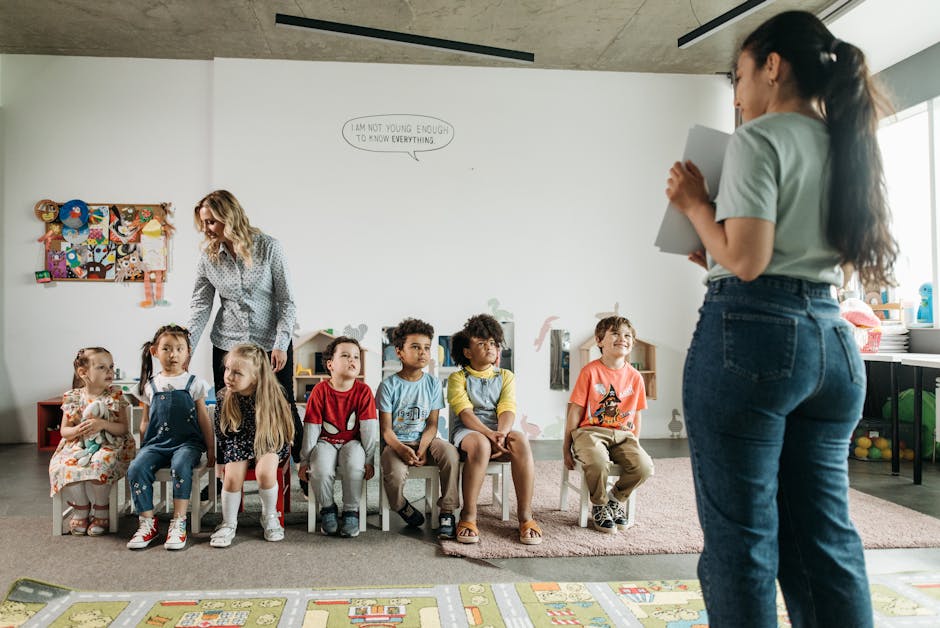
Open house events are the highest-converting marketing activity for preschools. They allow parents to experience your environment, meet your educators, observe learning in action and envision their child in your setting. The goal is not to hard-sell during the open house but to create an emotional connection that makes your centre the obvious choice. Marketing the event itself requires a multi-channel approach to ensure strong attendance.
Promote your open house through a combination of channels: Iklan Google targeting parents searching for preschools in your area, Facebook and Instagram ads targeting parents of children aged 0–3 within a five-kilometre radius, email invitations to your waitlist and enquiry database, WhatsApp broadcasts to existing parent communities, and physical banners at your centre location. Start promoting four weeks before the event and send reminder communications at two weeks, one week and one day before.
During the open house, create a structured experience that covers: a welcome presentation on your educational philosophy and curriculum, a guided tour of classrooms and outdoor areas, an interactive activity where visiting children can participate in a mini-lesson, a meet-and-greet with lead educators, and a Q&A session. Collect contact details from every attending family and follow up within 48 hours with a personalised thank-you message, a summary of key programme information, and an invitation to schedule a private tour if they would like to visit again. Offering an enrolment incentive exclusive to open house attendees (such as a waived registration fee) creates urgency without being pushy.
Parent Testimonials and Trust Signals
Trust is the defining currency in preschool marketing. Parents are entrusting the care and early education of their youngest children to your centre, and no amount of professional photography or polished copywriting can substitute for genuine endorsements from other parents. Collecting and presenting parent testimonials systematically is one of the most impactful investments a preschool can make in its marketing.
Request testimonials at strategic moments: after a child’s first successful settling-in period, at the end of each academic year, and upon graduation. Ask specific questions to elicit detailed responses: “What was your biggest concern before enrolling, and how has the centre addressed it?” “How has your child developed since joining?” “What do you appreciate most about the educators?” Specific, story-driven testimonials are far more persuasive than generic praise. “My daughter was extremely shy and refused to speak to adults outside our family. After three months at [Centre Name], she performed a song in front of 50 people at the concert” tells a powerful story that generic five-star ratings cannot match.
Display testimonials prominently across every marketing touchpoint: your laman web homepage and programme pages, Google Business Profile, social media channels, open house presentation materials, and printed brochures. Video testimonials are particularly powerful—a 60-second video of a parent sharing their genuine experience creates an emotional connection that text alone cannot achieve. Ensure you have written consent for all testimonials and that parents have approved the final version before publication.
Google Ads for Preschools
Google Ads delivers immediate visibility for preschools competing in high-demand neighbourhoods. When a parent searches “childcare centre near Punggol” or “preschool with Mandarin immersion Singapore,” your centre needs to appear at the top of results. The consideration period for preschool selection is long—typically three to six months—so your Google Ads strategy must account for multiple touchpoints rather than expecting immediate conversion from a single click.
Build campaigns around three keyword categories. First, location-based searches: “preschool Bishan,” “childcare centre Woodlands,” “kindergarten near Tiong Bahru MRT.” These capture parents searching by proximity, which is the primary selection criterion for most families. Second, programme-based searches: “bilingual preschool Singapore,” “Montessori childcare,” “outdoor learning preschool.” These target parents with specific educational preferences. Third, need-based searches: “infant care centre Singapore,” “full-day childcare,” “preschool with extended hours.” These target parents whose search is driven by practical requirements.
Use lead-form extensions and call extensions to capture enquiries directly from the search results page. Many parents prefer to call rather than fill in a form, particularly for high-consideration decisions like childcare. Track phone calls as conversions to accurately measure your Google Ads ROI. Set your campaigns to run during hours when parents are most likely to research—weekday evenings (7 pm to 10 pm) and weekend mornings typically deliver the highest conversion rates. Budget S$1,500–S$3,000 per month per centre for competitive coverage of your target area’s preschool keywords.
Local SEO for Childcare Centres
Local SEO is a long-term investment that delivers compounding returns for preschools. When parents search for childcare options in their neighbourhood, appearing in Google’s local pack (the map results showing three businesses) provides free, highly qualified traffic to your website. Unlike Google Ads, which stops delivering the moment you pause spending, strong local SEO continues generating enquiries month after month.
Your Google Business Profile is the foundation of local SEO. Ensure every field is completed: business name (matching your ECDA registration exactly), address, phone number, website, operating hours, and business category (select “Preschool” as your primary category and “Child Care Agency” as a secondary). Upload high-quality photos of your centre monthly—Google rewards profiles that demonstrate active management with higher visibility. Post weekly updates about activities, events and programme highlights using Google Posts.
On your website, create dedicated pages for each centre location (if you operate multiple branches) and each core programme. Optimise these pages for location-specific keywords: “infant care Sengkang,” “nursery programme Clementi,” “kindergarten 2 Tampines.” Include your centre’s full address, a Google Maps embed, nearby landmarks and transport options, and unique content about the specific centre’s environment and team. Build local citations by listing your centre in Singapore-specific directories including SgPreschool, Little Day Out and MindChamps’ preschool comparison resources. Consistent NAP (name, address, phone) data across all listings reinforces your local search authority.
Optimising the School Tour Experience
The school tour is your most powerful conversion event. A parent who visits your centre in person is exponentially more likely to enrol than one who only interacts with your marketing materials online. Optimising the tour experience—from booking to follow-up—is therefore one of the highest-leverage marketing activities for any preschool.
Make tour booking frictionless. Offer an online booking calendar on your website where parents can select their preferred date and time. Confirm bookings immediately via email and WhatsApp, and send a reminder the day before with directions and parking information. Prepare a welcome pack for visiting families that includes a programme overview, fee schedule, educator profiles and a small branded gift for the child (a colouring book or sticker set creates a positive association).
During the tour, focus on the elements that matter most to parents: safety and hygiene standards, educator warmth and qualifications, age-appropriate learning activities, outdoor play spaces, meal quality and nutritional standards, and the settling-in process for new children. Allow parents to observe a class in session (with appropriate protocols) rather than only viewing empty rooms. End the tour with a sit-down conversation where you address specific questions and concerns. Follow up within 24 hours with a personalised emel summarising what was discussed, answering any outstanding questions, and outlining the enrolment process. Include a time-sensitive offer—such as priority waitlist placement or a waived deposit—to encourage prompt decision-making.
Soalan Lazim
How early do parents start searching for preschools in Singapore?
Most parents begin researching preschool options 6–12 months before their desired start date, with some planning as early as during pregnancy for popular centres. For infant care (2–18 months), parents often register interest during the second trimester. This extended consideration period means your marketing must engage parents early and nurture the relationship over months through email, content and community building.
Can I advertise government subsidies in my marketing?
Yes, but you must do so accurately. You can inform parents about the availability of subsidies such as the Basic Subsidy and Additional Subsidy, but you must not misrepresent the subsidy amounts or eligibility criteria. Direct parents to the ECDA website for the most current subsidy information. Clearly distinguish between your gross fees and the net fees after subsidies, and note that subsidy amounts vary based on household income and other factors.
How do I compete with large anchor operators on marketing?
Independent preschools cannot match anchor operators on advertising budgets, but they can compete on authenticity, personalisation and community. Emphasise your unique selling points: smaller class sizes, a distinctive educational philosophy, deeper parent-educator relationships, and the ability to customise programmes to individual children’s needs. Use social media to showcase your centre’s personality in ways that large chains cannot replicate. Focus your paid advertising on a tight geographic radius to maximise relevance and minimise wasted spend.
Should I use virtual tours in my marketing?
Virtual tours are a valuable complement to physical tours, particularly for parents who are relocating to Singapore or are in the initial research phase. Create a 360-degree virtual tour of your centre using Google Street View or a dedicated virtual tour platform, and embed it on your website. However, virtual tours should augment rather than replace physical visits—encourage parents who view the virtual tour to book an in-person tour where they can experience the environment, meet educators and observe classes firsthand.
What social media platforms work best for preschool marketing?
Facebook and Instagram are the primary platforms for reaching parents of preschool-aged children in Singapore. Facebook is particularly effective for community building (through Facebook Groups), event promotion (open houses) and detailed programme information. Instagram excels at visual storytelling—sharing photos and videos of learning activities, celebrations and daily life at your centre. Allocate 60% of your social media effort to Instagram and 40% to Facebook for optimal reach and engagement.
How many Google reviews does my preschool need?
Aim for a minimum of 30 Google reviews with a rating of 4.5 or above to be competitive in local search results. Top-performing preschools in Singapore typically have 50–100+ reviews. Quality matters as much as quantity—detailed reviews mentioning specific educators, programmes or experiences are more persuasive to prospective parents than brief one-line ratings. Implement a systematic review request process, asking parents at natural positive moments such as after concerts, graduations or positive parent-teacher meetings.



 Malay
Malay  English
  Chinese
  Korean