
Brand Positioning Guide: How to Stand Out in Singapore’s Competitive Market
Singapore is one of the most competitive business environments in Asia-Pacific. With over 400,000 active enterprises operating on an island smaller than New York City, the challenge of differentiation is acute. Whether you are a local SME, a regional player, or a multinational with a Singapore headquarters, the question is the same: why should customers choose you over every other option available to them?
Brand positioning answers that question. It defines the unique space your brand occupies in the minds of your target audience — not just what you sell, but what you stand for, who you serve, and why you are the best choice for a specific set of needs.
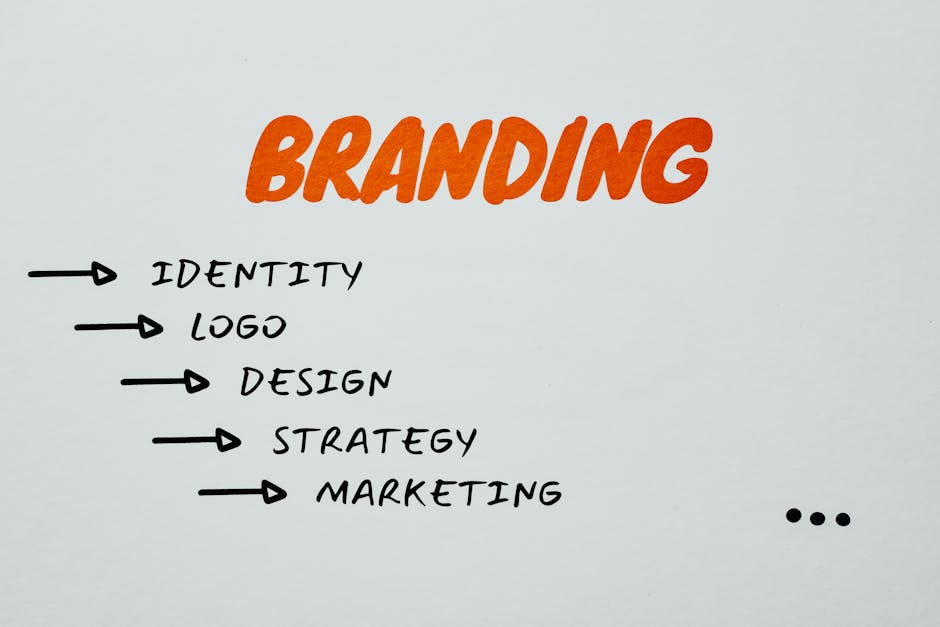
Yet many Singapore businesses confuse brand positioning with branding. They invest in logos, colour palettes, and taglines without first doing the strategic work of defining their position. The result is brands that look polished but say nothing distinctive. This guide walks you through a rigorous brand positioning process, from competitive analysis to messaging implementation, with frameworks and examples relevant to the Singapore market.
What Is Brand Positioning and Why It Matters
Brand positioning is the strategic process of defining how your brand is perceived relative to competitors in the minds of your target audience. It is not your logo, your visual identity, or your advertising. Those are expressions of your positioning — not the positioning itself.
A strong brand position accomplishes three things:
- Clarity: Your audience immediately understands what you do and who you serve
- Differentiation: Your audience recognises what makes you different from alternatives
- Relevance: Your audience sees why your difference matters to their specific needs
Without clear positioning, you compete on price by default. When customers cannot distinguish between options, they choose the cheapest one. Positioning allows you to compete on value instead — and value commands premium pricing.
Consider two accounting firms in Singapore. Both offer audit, tax, and advisory services. Both have qualified professionals. But one positions itself as “the accounting firm for Singapore tech startups navigating Series A to IPO,” while the other simply says “professional accounting services.” The first firm has a clear position that attracts a specific, high-value audience. The second is invisible in a sea of generalists.
Effective brand positioning also makes every subsequent marketing decision easier. It guides your creative design, your content strategy, your channel selection, and your sales messaging. It is the strategic foundation on which everything else is built.
Brand Positioning Frameworks
Several proven frameworks can structure your positioning work. Choose the one that best fits your business context, or combine elements from multiple frameworks.
The Positioning Statement
The classic positioning statement follows this template: For [target audience] who [need/want], [brand name] is the [category] that [key benefit] because [reason to believe].
Example: For Singapore SMEs who need to grow their online presence, [Brand] is the digital marketing agency that delivers measurable ROI because we combine deep local market knowledge with data-driven methodology.
This format forces discipline. Every word must earn its place. The positioning statement is an internal strategic document — it is not meant for public-facing use as-is, but it guides all external communications.
The Brand Key Framework
Developed by Unilever, the Brand Key is a more comprehensive framework that captures eight dimensions of positioning:
- Competitive environment: Who are you competing against?
- Target audience: Who are you trying to reach?
- Consumer insight: What unmet need or tension exists?
- Manfaat: What functional and emotional benefits do you deliver?
- Values and personality: What does your brand stand for?
- Reasons to believe: What evidence supports your claims?
- Discriminator: What is the single most compelling reason to choose you?
- Brand essence: The core idea captured in two to three words
This framework is particularly useful for established brands seeking to sharpen or evolve their positioning.
Category of One
Rather than positioning within an existing category, some brands create an entirely new category where they are the default leader. This approach — sometimes called “category design” — is powerful but demanding. It requires educating the market about a new way of thinking, not just a new product.
In Singapore, companies like Grab (ride-hailing and super-app), Carousell (mobile-first marketplace), and Ninjavan (e-commerce logistics) effectively created or redefined categories in the local context.
Competitive Differentiation Strategies
Differentiation is the heart of positioning. You need to identify what makes you genuinely different — and ensure that difference is meaningful to your audience.
Types of Differentiation
There are several legitimate bases for differentiation:
- Product or service superiority: You deliver objectively better outcomes. This is the strongest form of differentiation but the hardest to sustain.
- Specialisation: You focus on a specific industry, audience segment, or problem. Specialists are perceived as more expert and more trustworthy than generalists.
- Process or methodology: You have a unique approach to delivering your service. Proprietary frameworks, methodologies, or technologies create differentiation that competitors cannot easily copy.
- Customer experience: You deliver the same service as competitors but with a significantly better experience — faster response times, more transparent communication, easier onboarding.
- Price or value model: You offer a different pricing structure (e.g., performance-based, subscription, or outcome-based pricing) that aligns better with customer interests.
- Heritage or track record: You have a proven history of results. Case studies, client lists, and longevity in the market build credibility.
The Differentiation Test
Not every difference is a differentiator. A true differentiator must pass three tests:
- Is it true? Can you substantiate the claim with evidence?
- Is it relevant? Does your audience care about this difference?
- Is it unique? Can competitors make the same claim equally credibly?
If your differentiator fails any of these tests, keep looking. “We provide excellent customer service” fails the uniqueness test — every company says this. “We guarantee a 2-hour response time during business hours, backed by a service-level agreement” is specific, verifiable, and harder for competitors to match.
Building Your Messaging Hierarchy
Once your positioning is defined, you need to translate it into a messaging hierarchy — a structured set of messages that communicates your position consistently across all channels.
Level 1: Brand Promise
This is the single most important thing you want your audience to know. It should be one sentence that captures your core value proposition. Everything else in your messaging supports this statement.
Level 2: Pillar Messages
These are three to four supporting messages that substantiate your brand promise. Each pillar addresses a specific dimension of your value proposition. For a branding services firm, pillars might include strategic depth, creative execution, and measurable outcomes.
Level 3: Proof Points
Each pillar message requires evidence. Proof points include case studies, statistics, client testimonials, certifications, awards, methodology descriptions, and specific examples. These are the details that make your messaging credible rather than aspirational.
Level 4: Audience-Specific Messages
Your core positioning remains consistent, but the emphasis and language should adapt to different audience segments. A CFO cares about ROI and cost efficiency. A CMO cares about brand impact and market share. A CEO cares about competitive advantage and growth. Tailor your messaging to speak to each stakeholder’s priorities.
Your messaging hierarchy should be documented in a messaging guide that your entire team — marketing, sales, customer service, and leadership — can reference. Consistency is what builds brand recognition over time.
Positioning Considerations for Singapore
Singapore’s market has unique characteristics that influence how brands should approach positioning.
Multicultural Audience
Singapore’s population comprises Chinese, Malay, Indian, and Eurasian communities, each with distinct cultural values and communication preferences. While English is the common business language, cultural nuances affect how messaging is received. Positioning that resonates with one segment may not land with another. Test your messaging across cultural groups before committing.
High Expectations and Low Tolerance for Mediocrity
Singaporean consumers and business buyers are well-informed, price-conscious, and demanding. They research thoroughly before making decisions and have little patience for vague or exaggerated claims. Your positioning must be substantive. Back every claim with evidence. Avoid superlatives unless you can prove them.
Trust and Credibility Signals
In Singapore’s market, trust signals carry significant weight. Government certifications, industry association memberships, case studies with named clients, and media coverage all strengthen your positioning. For B2B companies, references from well-known local enterprises or government agencies are particularly powerful.
Regional Ambitions
Many Singapore businesses serve or aspire to serve Southeast Asian markets. Your positioning should accommodate regional expansion without diluting local relevance. Positioning as “Singapore-headquartered with regional capabilities” can appeal to both local and regional audiences.
Consider how your positioning extends to your product marketing efforts, especially if you are launching products across multiple ASEAN markets with different competitive dynamics.
Implementing Your Brand Position
A positioning strategy is only as good as its implementation. Here is how to bring your positioning to life across your organisation and marketing channels.
Internal Alignment
Before communicating your positioning externally, ensure your team understands and embraces it. Run workshops to explain the positioning, the research behind it, and how it should influence daily decisions. Every employee who interacts with customers should be able to articulate your brand’s position in their own words.
Website and Digital Presence
Your website is often the first place prospects encounter your brand. Ensure your homepage hero section communicates your positioning clearly within the first five seconds. Your branding should be consistent across every page, from service descriptions to about pages to blog content.
Pemasaran Kandungan
Your pemasaran kandungan should reinforce your positioning by demonstrating the expertise and perspective that make you different. If you position as the specialist in a particular industry, your content should reflect deep industry knowledge. If you position on methodology, your content should showcase your unique approach with detailed explanations and case studies.
Pembelasan Jualan
Equip your sales team with positioning-aligned materials: pitch decks, proposal templates, battle cards (competitive comparison sheets), and objection-handling guides. Sales conversations should consistently reinforce the same positioning communicated through marketing channels.
Visual Identity Alignment
If your visual identity does not support your positioning, consider a refresh. A brand positioning itself as innovative and forward-thinking should not have a dated, corporate-looking website. Visual elements — colours, typography, imagery style, and layout — should all reinforce the emotional dimension of your positioning.
Measuring Positioning Effectiveness
How do you know if your positioning is working? Track these metrics:
- Brand awareness: Are more people in your target audience aware of your brand? Measure through surveys, branded search volume, and social media mentions.
- Brand recall: When prompted with your category, do people mention your brand? Unaided recall is the gold standard.
- Perception alignment: Do people describe your brand using the attributes you intend? Customer surveys and social listening can reveal this.
- Consideration rates: Are you being included in more shortlists and RFP processes?
- Win rates: When you compete for business, are you winning more often?
- Price premium: Can you charge more than competitors without losing business?
- Customer quality: Are you attracting more of the right customers — those who value what you offer and stay longer?
Positioning is a long-term investment. Do not expect overnight results. It typically takes six to twelve months of consistent implementation before positioning shifts become measurable in market perception.
Common Positioning Mistakes
These are the most frequent positioning errors we see among Singapore businesses:
- Trying to be everything to everyone: The most common mistake. A position that appeals to everyone appeals to no one. Effective positioning requires making choices about who you serve and what you stand for — which means choosing who you do not serve.
- Copying competitors: If your positioning sounds like your competitors, you do not have a position. Differentiation requires finding a genuinely unique angle, not mimicking market leaders.
- Positioning on features rather than value: Customers do not buy features; they buy outcomes. Position on the value you deliver, not the specifications of how you deliver it.
- Changing positioning too frequently: Positioning takes time to take hold. Brands that change their positioning every year never build strong associations. Commit to a position for at least two to three years.
- Neglecting internal alignment: A positioning strategy that lives only in a strategy document is worthless. If your team does not understand and embody the positioning, customers will not perceive it either.
- Confusing positioning with taglines: A tagline is a creative expression of your positioning, not the positioning itself. Start with the strategy; the tagline comes later.
Soalan Lazim
How long does a brand positioning project take?
A thorough brand positioning project typically takes six to ten weeks, including competitive research, customer interviews, internal workshops, strategy development, and messaging documentation. Rushing the process leads to superficial positioning that does not hold up under market pressure. For Singapore SMEs, a focused engagement with an experienced branding agency can compress this to four to six weeks without sacrificing quality.
How much does brand positioning cost in Singapore?
Brand positioning projects in Singapore typically range from SGD 8,000 to SGD 50,000 depending on scope, complexity, and the agency or consultancy involved. For SMEs, a focused positioning workshop and strategy document might cost SGD 8,000–15,000. Enterprise-level projects with extensive research, multiple stakeholder interviews, and comprehensive brand architecture can reach SGD 30,000–50,000 or more.
Should a startup invest in brand positioning?
Yes, but proportionately. Startups do not need a six-figure branding project. They need clarity on who they serve, what problem they solve, and why they are the best option. A lean positioning exercise — even a structured half-day workshop — can provide the strategic clarity that prevents wasted marketing spend and confused messaging in the critical early stages.
How do I know if my current positioning is weak?
Signs of weak positioning include: prospects consistently asking “what makes you different?”, competing primarily on price, attracting the wrong type of customers, high proposal win rates but low margins, and your team struggling to articulate a consistent message about what you do and why it matters. If any of these sound familiar, your positioning needs work.
Can I reposition an established brand without losing existing customers?
Yes, but it requires careful management. Repositioning does not mean abandoning your existing customers — it means clarifying or evolving how you are perceived. Communicate the evolution transparently. Show existing customers how the new positioning benefits them. Phase the transition gradually rather than making abrupt changes. The goal is to attract new customers while reinforcing value for existing ones.
 Malay
Malay  English
  Chinese
  Korean