

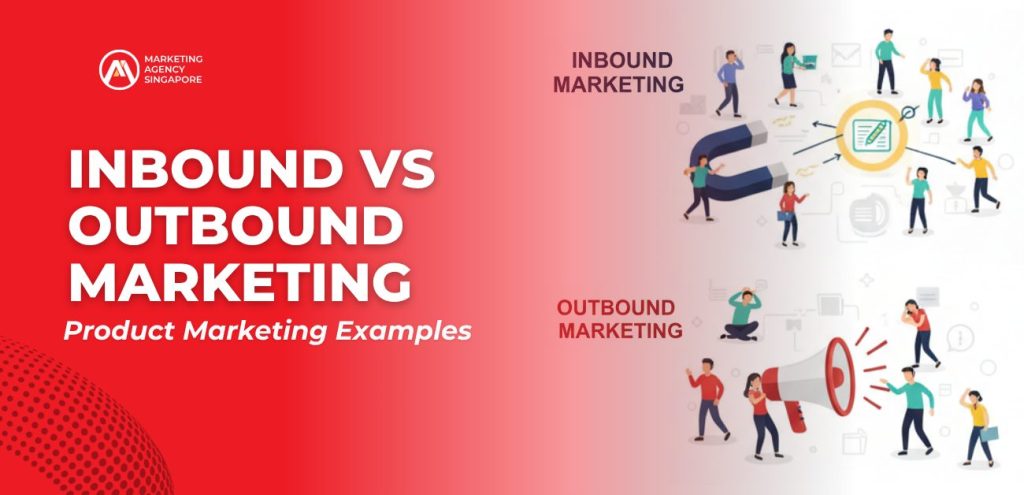
Inbound and outbound marketing represent two fundamentally different philosophies of attracting and engaging customers.
- Inbound Marketing draws audiences in through valuable, relevant content and experiences. It’s about earning attention organically – via SEO, blogs, videos, or social media – by addressing user intent and building trust over time.
- Outbound Marketing, by contrast, pushes messages out to potential customers – through ads, cold emails, direct mail, or telemarketing – often interrupting their activity to create awareness or prompt a response.
In short:
Inbound = Magnet.
Outbound = Megaphone.
The article aims to dive into the nuances of Inbound vs Outbound marketing, as well as provide relevant examples and contextual relevance of each respective field of marketing.
Jadual Kandungan:
- What is Inbound Marketing
- What is Outbound Marketing
- What is Inbound vs Outbound Marketing
- Inbound Vs Outbound Marketing Examples
- Choosing an Inbound or Outbound Marketing Agency
- Kata Akhir
What is Inbound Marketing
Inbound marketing is a customer-centric strategy that focuses on attracting people to your brand through valuable content and helpful experiences, instead of pushing ads at them.
The idea is simple:
- Create useful content your target audience is already searching for.
- Optimize it so they can find it easily online (via SEO, social, etc.).
- Engage them with insights or solutions that solve their problems.
- Convert them into leads and later customers by nurturing the relationship.
Core Components
- Content Creation – Blog posts, guides, videos, podcasts, webinars.
- SEO (Search Engine Optimization) – Making sure your content ranks when people search.
- Social Media – Sharing and interacting where your audience spends time.
- Lead Conversion Tools – Calls-to-action, landing pages, lead magnets, forms.
- Email Nurturing – Following up with leads in a helpful, relevant way.
- Analytics – Measuring what content works and improving over time.
What is Outbound Marketing

Outbound marketing is a proactive marketing strategy in which a company initiates contact with potential customers by pushing messages outward, rather than waiting for customers to find the company.
In other words: rather than attracting prospects by being found (as in inbound), outbound goes out to find them.
Examples include:
- Cold calls or cold emails.
- TV, radio, print ads, billboards.
- Display ads, paid search, direct mail.
How Outbound Marketing Works
To utilise outbound marketing effectively, you go through certain steps:
- Define target audience (ICP/B2B or B2C)
Identify which group you want to reach (demographics, job roles, behaviours).
- Select channels and messages
Choose the right medium (display ads, email, direct mail) and craft a message tailored to the audience. - Launch campaign (“push” message)
Due to the fact that you’re initiating outreach, timing and frequency matter. You might interrupt – not necessarily when the prospect is actively looking. - Measure, iterate, optimise
Track metrics like reach, impressions, conversion, cost per lead. Use tracking codes, landing pages, CRM integration.
Strengths & Weaknesses (Trade-offs) of Outbound Marketing
Strengths:
- Can generate quick awareness and reach a large audience fast (especially for time-sensitive offers).
- More control over the message, channel and timing compared to content that must wait to be discovered.
- Works well in situations where prospects are not actively searching (i.e., you must bring the message to them).
Weaknesses:
- Often higher cost per lead or conversion (because you’re reaching many who may not be ready) .
- Risk of being intrusive or ignored (cold calls, unsolicited emails) which can damage brand perception.
- ROI can be harder to sustain long-term unless well-targeted and well-executed.
When Outbound Marketing Makes Sense
Outbound Marketing can be particularly useful in the following situations:
- Product launch or new market entry: You need to create visibility quickly rather than wait for organic discovery.
- High-value B2B sales: When you target a small number of high-value accounts, outbound (e.g., targeted emails, phone outreach) can speed prospects into your funnel.
- Short campaign windows: Seasonal offers, limited-time deals, or when you have to hit numbers quickly.
- Complementing inbound: Use outbound to bring people into your inbound ecosystem (e.g., ad directs to content hub) and then nurture them.
What is Inbound vs Outbound Marketing
Inbound marketing and outbound marketing are two core approaches to reaching and converting customers – each with distinct philosophies and tactics. The following table breaks down the key differences between inbound and outbound marketing.
| Category | Inbound Marketing | Outbound Marketing |
| Core Approach | Pull – attract customers naturally through valuable content | Push – reach out directly to customers through paid or promotional channels |
| Goal | Build trust, credibility, and long-term engagement | Generate immediate awareness and quick conversions |
| Customer Interaction | Two-way, permission-based (customers initiate contact) | One-way, interruption-based (brand initiates contact) |
| Timeline for Results | Long-term and compounding (6–12 months) | Short-term and immediate (days to weeks) |
| Cost Efficiency | Lower over time – content continues to generate leads organically | Higher – requires ongoing ad spend or sales outreach |
| Audience Intent | High – prospects are actively searching for solutions | Low to moderate – prospects may not be looking yet |
| Lead Quality | Typically higher, as leads are self-qualified | Can vary; often larger volume but less qualified |
| Content Focus | Educational, value-driven (blogs, guides, videos, webinars) | Promotional, attention-grabbing (ads, direct mail, cold calls) |
| Examples of Tactics | SEO, content marketing, email nurturing, social media, webinars | Paid ads, cold calls, PR, events, trade shows, direct mail |
| Measurement Metrics | Organic traffic, engagement, lead quality, ROI over time | Reach, impressions, click-through rates (CTR), cost per lead |
| Technology Stack | Marketing automation, CRM, SEO tools, analytics platforms | Ad platforms, outbound email tools, sales CRM |
| Relationship Building | Nurtures long-term relationships through trust | Focuses on immediate awareness and conversions |
| Best For | Brands seeking sustainable growth and thought leadership | Companies launching new products or entering new markets |
| Challenges | Slow initial ROI; content creation takes time | Higher cost per lead; can be seen as intrusive |
| Customer Experience | Empowering and educational | Interruptive but can be attention-grabbing |
| Examples | HubSpot blogs, Moz SEO guides, YouTube tutorials | LinkedIn Ads, TV commercials, cold outreach emails |
Inbound Vs Outbound Marketing Examples

Marketing today is no longer about who shouts the loudest, it’s about who connects the smartest. While inbound marketing earns attention by creating valuable content, outbound marketing demands it through direct outreach and advertising. Both can drive results, but they work differently.
The following are real-world examples that illustrate how each approach operates, and when to use them.
Inbound Marketing Examples
Inbound focuses on drawing customers in through relevance, education, and trust.
1. Content Marketing & SEO
Example: HubSpot’s blog on ‘Lead Generation Strategies’ ranks high on Google and educates marketers before offering HubSpot’s CRM as a solution.
Why it works: It helps prospects first, establishing expertise before selling.
2. Lead Magnets & Resources

Example: Salesforce’s ‘State of Marketing Report’ offers free insights in exchange for an email.
Why it works: It provides value while capturing qualified leads.
3. Video Tutorials & Webinars

Example: Ahrefs’ YouTube tutorials on SEO attract professionals seeking education – then subtly encourage product trials.
Why it works: Visual learning builds trust and engagement.
4. Email Nurture Campaigns

Example: A B2B agency sends a three-part email series – “How to Optimize Your Funnel,” “Case Study: 3x Lead Growth,” “Book a Free Audit.”
Why it works: Each touchpoint educates the audience before asking for action.
5. Case Studies & Customer Stories

Example: A SaaS company publishes ‘How Company X Increased Conversions by 40%.’
Why it works: Proof builds credibility and drives decision-making.
Outbound Marketing Examples
Outbound relies on proactive outreach to capture attention – often when the audience isn’t actively searching.
1. Cold Email or Cold Calling

Example: A B2B sales team emails prospects from a curated list with a product demo offer.
Why it works: Direct communication targets specific accounts but can feel intrusive if untailored.
2. Paid Advertising (Google or LinkedIn Ads)
Example: A fintech company runs LinkedIn ads promoting its ‘Free Consultation for CFOs.’
Why it works: Great for reaching high-value decision-makers quickly – but costs scale with competition.
3. Trade Shows and Conferences

Example: A manufacturing firm exhibits at an industry expo to showcase its new technology.
Why it works: Face-to-face interaction creates strong brand recall.
4. Direct Mail or Print Ads

Example: A luxury property brand mails invitation cards for an exclusive event to CEOs.
Why it works: Tangible touchpoints stand out in digital-saturated markets.
5. TV, Radio, or Billboard Advertising

Example: A logistics company runs airport billboards to stay top-of-mind for corporate travellers.
Why it works: High visibility, though difficult to measure direct ROI.
Inbound vs Outbound Marketing (In a Nutshell)
| Aspect | Inbound Marketing | Outbound Marketing |
| Approach | Pull (attract naturally) | Push (reach out directly) |
| Goal | Educate and build trust | Generate awareness quickly |
| Cost Efficiency | Low over time (compounds) | High, pay-per-reach |
| Audience Intent | High (self-motivated) | Low to moderate |
| Examples | Blogs, SEO, Webinars, Email nurturing | Ads, Cold calls, Trade shows, Billboards |
| Best For | Long-term brand building | Short-term lead generation |
The most effective B2B strategies integrate the two:
- Use inbound to educate and nurture (blogs, SEO, automation).
- Use outbound to amplify reach and accelerate conversion (LinkedIn ads, webinars, retargeting).
For example:
A B2B agency publishes a ‘Guide to Inbound Lead Generation’ (inbound) → promotes it via LinkedIn ads targeting CMOs (outbound) → captures leads → nurtures via email automation (inbound).
That’s how you blend the magnet with the megaphone.
Inbound marketing builds relationships; outbound marketing builds reach.
When used together strategically, they create momentum – pulling your ideal clients closer while keeping your brand top of mind.
Choosing an Inbound or Outbound Marketing Agency

In today’s hyper-competitive digital landscape, businesses don’t just need marketing, they need the right kind of marketing. The question is: should you partner with an inbound marketing agency that helps customers find you organically, or an outbound marketing agency that actively pushes your brand to your target audience?
Both approaches work, but for different reasons, budgets, and goals. Understanding the difference will help you choose a partner that aligns with your growth strategy.
Understanding the Difference
What an Inbound Marketing Agency Does

Inbound marketing focuses on attracting leads through value, trust, and engagement. It builds long-term relationships through helpful content, SEO, and automation rather than cold outreach.
Typical Services:
- SEO and content marketing
- Blog and thought leadership creation
- Marketing automation and email nurturing
- Social media engagement and community building
- Conversion funnel optimization
Best For:
Businesses that want sustainable organic growth, stronger brand authority, and higher-quality leads over time.
Example:
A B2B software firm partners with an inbound agency to create thought leadership blogs, run webinars, and build SEO authority. Within six months, inbound leads grow by 60% – and cost per lead drops significantly.
What an Outbound Marketing Agency Does

Outbound marketing agencies are built for speed. They push your brand directly to potential buyers through advertising, outreach, and promotional campaigns.
Typical Services:
- Paid media (Google Ads, Meta, LinkedIn, programmatic)
- Cold email or outbound sales campaigns
- Event marketing and trade shows
- PR and influencer outreach
- Account-based marketing (ABM)
Best For:
Brands that need rapid awareness, lead volume, or market penetration — especially during new product launches or competitive pushes.
Example:
A fintech startup works with an outbound agency to run LinkedIn ads targeting CFOs and follow up with personalized email sequences. The campaign quickly fills the top of the funnel with high-intent prospects.
Inbound vs Outbound Marketing Agency: The Key Comparison
| Category | Inbound Marketing Agency | Outbound Marketing Agency |
| Goal | Build long-term visibility and trust | Generate immediate awareness and leads |
| Approach | Pull (educate and attract) | Push (reach out and persuade) |
| Timeline | 6–12 months to maturity | Instant impact but short-lived |
| Metrics | Organic traffic, MQLs, lead quality | Impressions, CTR, lead volume |
| Ideal For | Complex B2B sales, SaaS, professional services | Product launches, retail, event-driven campaigns |
How to Choose the Right Inbound or Outbound Agency
1. Clarify Your Business Goals
Before comparing agencies, define what success looks like:
- Are you looking for brand visibility or lead generation?
- Do you need short-term wins or long-term compounding growth?
- Is your market broad (mass appeal) or niche (B2B decision-makers)?
2. Evaluate Expertise and Track Record

Look for proven experience in your industry. A good inbound or outbound agency should show measurable results, not just flashy designs.
Ask for:
- Case studies and metrics (traffic growth, cost per lead, ROI).
- References or testimonials from similar clients.
- Their approach to analytics, attribution, and reporting.
3. Assess Their Tools and Tech Stack

Modern agencies rely on data and automation.
- Inbound agencies typically use HubSpot, ActiveCampaign, Ahrefs, or GA4.
- Outbound agencies lean on LinkedIn Ads, Salesforce, or Apollo.io for targeting and outreach.
Ensure they can integrate with your CRM and provide transparent dashboards.
4. Understand Their Creative and Strategic Process

Ask how they plan campaigns:
- Do they start with buyer personas and content strategy (inbound)?
- Or do they emphasize paid media planning and outreach scripts (outbound)?
You want a partner that not only executes but thinks strategically.
5. Look for a Collaborative Fit

Culture matters.The right agency should feel like an extension of your team – open, data-driven, and adaptable.
When to Choose Inbound vs Outbound
| Scenario | Recommended Approach |
| You want to build organic traffic and authority | Inbound |
| You’re launching a new product or entering a new market | Outbound |
| You have a long, consultative B2B sales cycle | Inbound |
| You need quick lead generation or event sign-ups | Outbound |
| You want to balance both trust and reach | Hybrid (Inbound + Outbound) |
The Hybrid Advantage: Best of Both Worlds
Today’s most successful businesses combine both strategies.
- Use Inbound Marketing to attract and nurture high-quality leads through SEO, content, and email automation.
- Use Outbound Marketing to amplify reach with targeted ads, ABM, and retargeting campaigns.
The result? A full-funnel growth system that captures attention, builds trust, and accelerates conversion.
Example:
A healthcare SaaS company publishes thought leadership articles (inbound) while running targeted LinkedIn ad campaigns (outbound). The inbound builds authority; the outbound drives engagement. Together, they create predictable growth.
Kata Akhir

Whether you choose an inbound or outbound marketing agency depends on your brand’s stage, audience, and growth goals.
- Inbound is your foundation for long-term trust and discoverability.
- Outbound is your accelerator for fast visibility and lead generation.
Pada Agensi Pemasaran Singapura, we work with esteemed vendors and technology partners to deliver holistic, data-driven marketing ecosystems that integrate both inbound and outbound strategies giving your brand the reach it deserves and the credibility it needs. Hubungi kami or menjadualkan e-mesyuarat today to explore a tailored inbound–outbound strategy designed around your business objectives.


 Malay
Malay  English
  Chinese
  Korean