

In today’s attention-scarce marketplace, your prospects don’t want to be sold to – they want to be educated, empowered, and inspired. That’s where inbound marketing comes in.
For B2B companies, inbound isn’t just a marketing tactic; it’s a full-funnel growth system. Instead of chasing leads through cold calls and ads, you attract high-intent buyers by publishing valuable insights, thought leadership, and resources that address their real business problems.
Inbound marketing turns your website into a sales rep that never sleeps, your content into a magnet for qualified leads, and your analytics into a roadmap for continuous improvement. The result? Stronger trust, shorter sales cycles, and measurable ROI that compounds over time.
This article dives into the nuances of Inbound Marketing, as well as provide relevant examples on how to do inbound marketing, alongside the services included and provided by a typical B2B inbound Marketing Agency.

Jadual Kandungan: (Click the pointers to toggle)
- What is Inbound Marketing
- What does an Inbound Marketing Strategy Look Like
- Inbound Marketing Examples
- Inbound Marketing Services provided by a typical Agency
- Choosing a B2B Inbound Marketing Agency
- Kata Akhir
What is Inbound Marketing
Inbound marketing is a strategy in which a business attracts, engages, and delights potential customers by creating helpful, relevant content and experiences – rather than pushing out interruptive advertising.
In simpler terms: you build something (content, value), they come. It shifts the dynamic from “we show you” to “we help you find what you need.”
Key components:
Attract: draw the right visitors via content, SEO, social.
Engage: convert interest into leads, interact meaningfully.
Delight: maintain and enhance relationships so customers become promoters.
Mengapa ia penting: Because modern buyers often research first, they come to your website or content with questions. Inbound positions you to be present when they need you.

Core mechanics of Inbound Marketing
Content creation: blogs, videos, whitepapers, webinars – all tailored to what your target audience needs or is searching for.
SEO & discovery: you optimise for search so when people look for answers, your content appears.
Conversion and nurturing: visitors turn into leads via CTAs, forms, email nurturing, CRM integration.
Customer-centric flows: beyond acquisition, inbound includes retention, advocacy, and the concept of delighting customers so they refer others.
Strategic benefits and trade-offs of Inbound Marketing

Benefits:
Builds authority and trust: When you provide value, you become a go-to resource.
Long-term ROI: Content continues to work for you over time (evergreen).
Aligns with customer behaviour: Modern buyers self-educate; inbound meets them there.
Challenges:
Time and resource intensive: You need to maintain content pipelines, optimise, iterate.
Requires patience: Unlike a big ad spend that may yield fast results, inbound builds over time.
Needs coordination: Content + SEO + UX + analytics must all work in harmony.
Audience & Funnel Alignment of Inbound Marketing

Critical to inbound is understanding your buyer personas and where they are in the journey. That means mapping content to Awareness → Consideration → Decision stages, then ensuring you optimise for each.
Additionally, you must treat customers after the acquisition – they’re part of the flywheel, not just a funnel end point.
Metrics to look out for in Inbound Marketing

Given your analytics background:
- Organic traffic and keyword rankings
- Time on page / engagement rates (via GA4, Clarity)
- Lead conversion rates (via forms, CTAs)
- Lead-to-customer ratio and Customer lifetime value (LTV)
- Referral/advocacy signals (shares, mentions, repeat business)
Tactics & channels for inbound Marketing
- Blog articles aligned to key queries
- Video tutorials or webinars for deeper engagement
- Long-form content (e-books, whitepapers) as lead magnets
- Social media amplification and community engagement
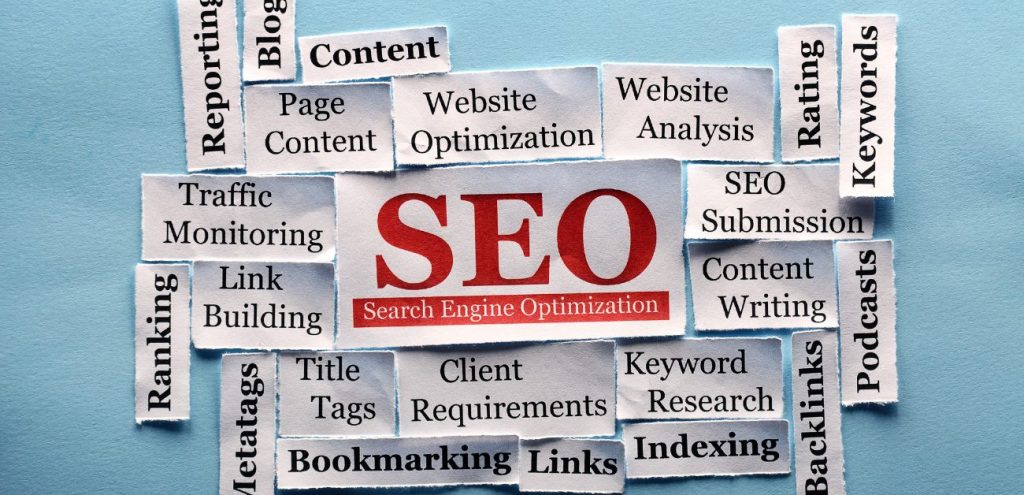
- SEO: on-page (content), off-page (links), technical (site performance)
- Email nurturing sequences tailored by behaviour
- Retargeting + content promotion as hybrid (though strictly inbound doesn’t rely solely on paid)
Global Impact of Inbound Marketing

Inbound marketing has grown significantly in global importance because:
- Digital adoption: More users search, review, and compare online before buying.
- Content saturation: Brands that invest in high-quality content win attention.
- Cost pressures: Especially for SMEs, inbound offers more sustainable ROI than heavy paid-media reliance.
- Penyetempatan: In markets like Singapore, Korea (Naver), Southeast Asia, inbound must adapt to local search behaviours (e.g., Naver, NAVER Search Advisor) and multilingual content – the type of training you’re building.
Regional considerations:
In APAC, mobile-first, social-heavy markets require inbound content tailored to formats (short-form video, messaging apps).
B2B globally: inbound works especially well for longer-sales-cycle industries (software, healthcare) – fits your healthcare documentation solution scenario.
Market dynamics:
- Brands are shifting budgets from traditional outbound (TV, print) to content, influencer, SEO.
- However, inbound doesn’t totally replace outbound – rather, the two co-exist. A hybrid strategy often wins.
- Competitive differentiation: As more brands adopt inbound, standing out requires deeper expertise, niche content, data-driven personalisation.
What does an Inbound Marketing Strategy Look Like
An inbound marketing strategy is a structured framework that guides how a business attracts, engages, and converts its ideal customers through valuable, non-interruptive experiences.
It’s not just “doing content marketing.” It’s a coordinated system – anchored in buyer psychology, supported by analytics, and powered by consistent storytelling-that turns strangers into loyal clients.
1. Define Buyer Personas and Customer Journeys

Every effective inbound strategy starts with understanding who you’re talking to and what they care about.
- Buyer Personas: Detailed profiles of your target decision-makers – roles, pain points, motivations, goals.
- Customer Journey Mapping: Identifying what questions they ask and what information they need at each stage (Awareness → Consideration → Decision).
Example (for a SaaS company):
- Awareness: “How can we reduce manual reporting time?”
- Consideration: “Best automated analytics tools.”
- Decision: “Compare [Your SaaS] vs Competitor X.”
This mapping ensures every piece of content meets your audience exactly where they are.
2. Set SMART Goals and KPIs

Without measurable goals, inbound marketing becomes guesswork.
Set specific, measurable, achievable, relevant, and time-bound (SMART) targets, such as:
- Increase organic website traffic by 40% in six months.
- Generate 100 MQLs (marketing-qualified leads) per quarter.
- Improve conversion rate from lead to customer by 15%.
Each goal should tie directly to business outcomes – pipeline growth, deal velocity, customer retention.
3. Build a Content Engine

Content is the core of inbound. But it must be strategic, not random.
A high-performing content engine includes:
- Core Pillars – Foundational topics aligned with your value proposition (e.g., “B2B Lead Generation,” “Marketing Automation,” “SEO Strategy”).
- Cluster Content – Supporting articles, case studies, or videos linked to each pillar (for SEO authority).
- Formats – Blog posts, guides, webinars, infographics, whitepapers, and video snippets repurposed across channels.
- Editorial Calendar – A consistent publishing rhythm to build trust and predictability.
Think of it as your digital library – every piece designed to educate and nurture prospects.
4. Optimize for Search and Discovery (SEO)

Even the best content fails if no one finds it.
An inbound strategy integrates SEO at every level:
- Keyword research based on intent (not just volume).
- On-page optimization (metadata, structure, internal linking).
- Off-page authority building (backlinks, PR mentions).
- SEO teknikal (speed, mobile-first, schema markup).
This ensures your brand ranks where your audience searches – and stays there.
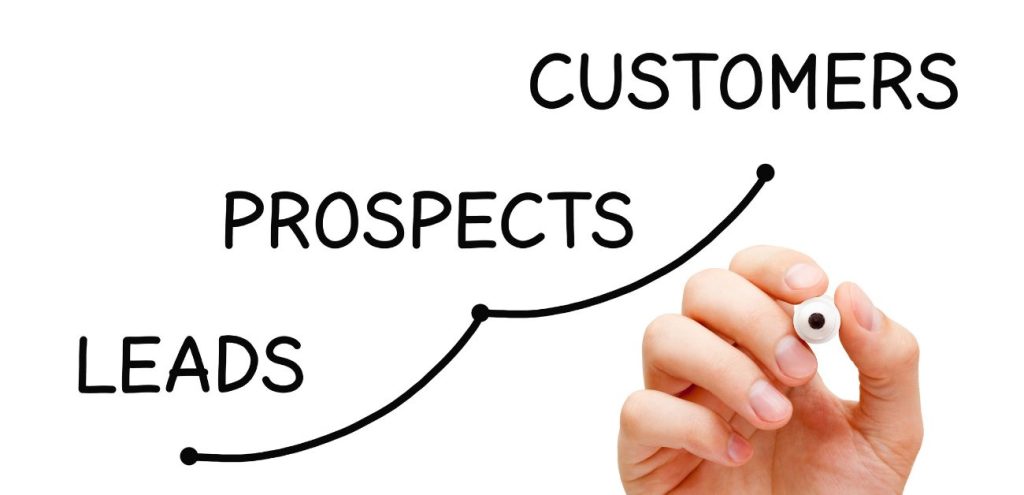
5. Convert Visitors into Leads
Once visitors arrive, inbound turns attention into action:
- CTAs (Calls-to-Action): Clear, persuasive next steps (“Download the guide,” “Book a free audit”).
- Landing Pages: Purpose-built to convert with minimal friction.
- Lead Magnets: Valuable gated content like reports, checklists, or templates.
- Forms and Chatbots: Smart tools that capture info without killing UX.
Your goal: turn anonymous traffic into identifiable, qualified leads who want to hear from you.
6. Nurture Leads with Automation

Inbound doesn’t stop at lead generation-it’s about relationship building.
Use marketing automation (HubSpot, ActiveCampaign, etc.) to:
- Segment leads by persona and funnel stage.
- Deliver personalized emails and offers based on behaviour.
- Score leads for sales-readiness (MQL → SQL).
- Align nurturing workflows with CRM data for seamless handoff.
Automation allows you to scale empathy-delivering the right message at the right time, automatically.
7. Delight and Retain Customers

Inbound extends beyond acquisition. The goal is to turn customers into advocates.
- Share advanced resources and insider insights.
- Collect feedback and testimonials.
- Run loyalty campaigns or referral programs.
- Showcase client success stories in your content pipeline.
Delighted customers become your most credible promoters-the ultimate inbound flywheel.
8. Measure, Learn, Refine

Inbound is iterative. Use analytics to track performance and improve over time.
Monitor:
- Traffic sources (organic, social, referral)
- Conversion rates (landing pages, CTAs)
- Engagement (time on page, bounce rate, scroll depth)
- Lead quality and ROI per channel
This data tells you which messages resonate, what drives conversions, and where to double down.
A complete inbound marketing strategy looks like this:
Attract → Engage → Convert → Delight → Retain.
Each stage is connected. Each touchpoint is intentional.
It’s a system designed to build relationships – not just generate clicks.
Inbound Marketing Examples
Inbound marketing is all about earning attention, not buying it. Instead of shouting louder, you create something so useful, educational, or inspiring that your audience seeks you out.
The following are real-world examples that show how inbound works across different channels and industries – from SaaS and healthcare to B2B service brands.
1. Blog Content That Solves Real Problems
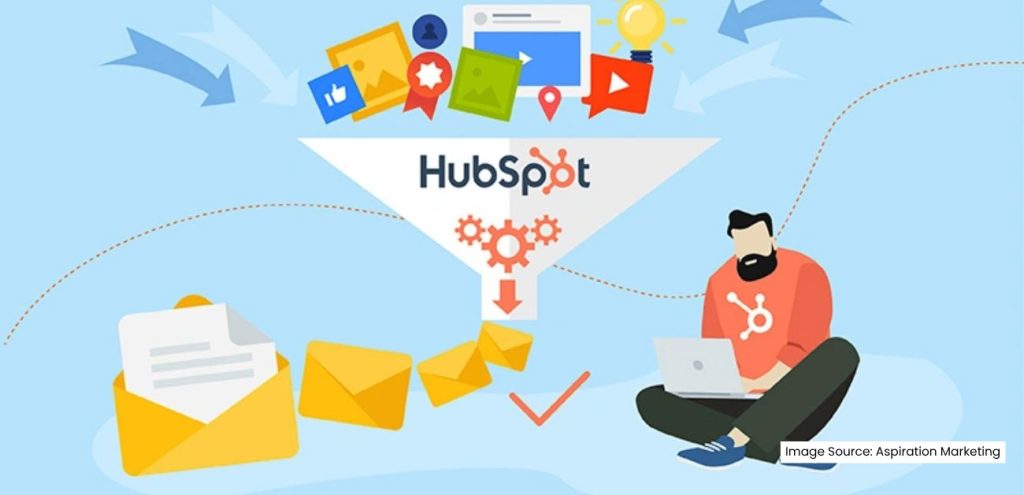
Example: HubSpot’s Marketing Blog
HubSpot practically built the inbound playbook. Their blog teaches marketers how to generate leads, build funnels, and use CRM software – and in the process, subtly demonstrates why their own tools matter.
Why it works:
- Delivers genuine value with no hard sell.
- Optimized for search (hundreds of keywords rank in the top 10).
- Builds trust and brand authority, converting readers into trial users.
2. Gated Lead Magnets & Resource Libraries
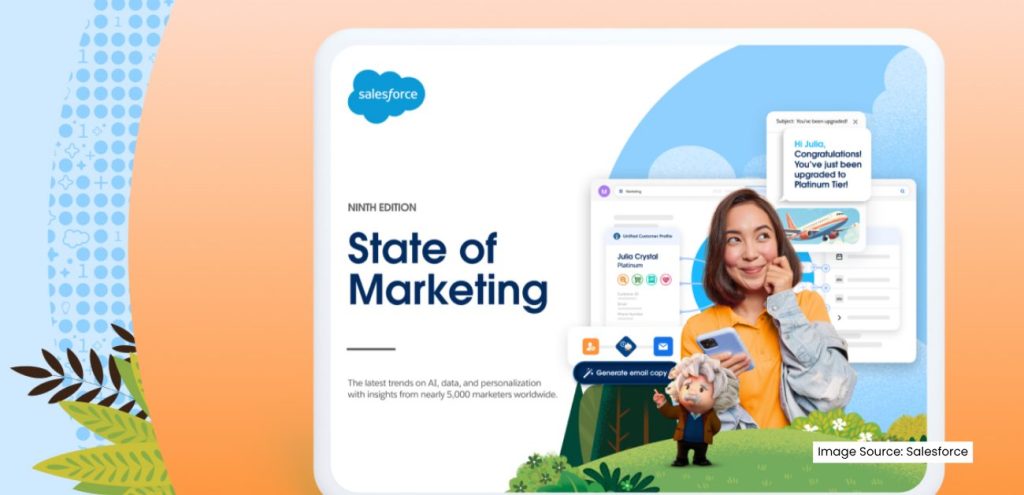
Example: Salesforce’s State of Marketing Report
Each year, Salesforce releases an extensive industry report filled with data and insights. Readers must provide contact details to access it, which grows Salesforce’s email list of high-intent prospects.
Why it works:
- Offers exclusive, data-rich insights.
- Positions Salesforce as a thought leader.
- Drives organic backlinks and press mentions.
3. Educational Video & Webinar Series
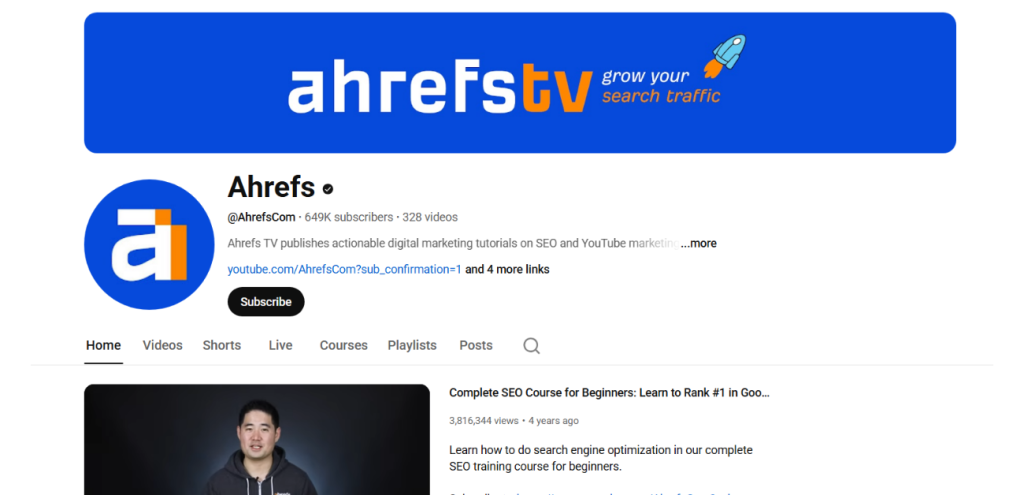
Example: Ahrefs’ YouTube Channel
Ahrefs creates tutorial videos explaining SEO concepts – from “Keyword Research for Beginners” to “How to Rank on Google in 2025.” Each video drives viewers to try their software.
Why it works:
- Establishes authority visually and personally.
- Builds trust through teaching, not selling.
- Generates consistent organic traffic via YouTube search.
4. Email Nurturing Workflows That Educate
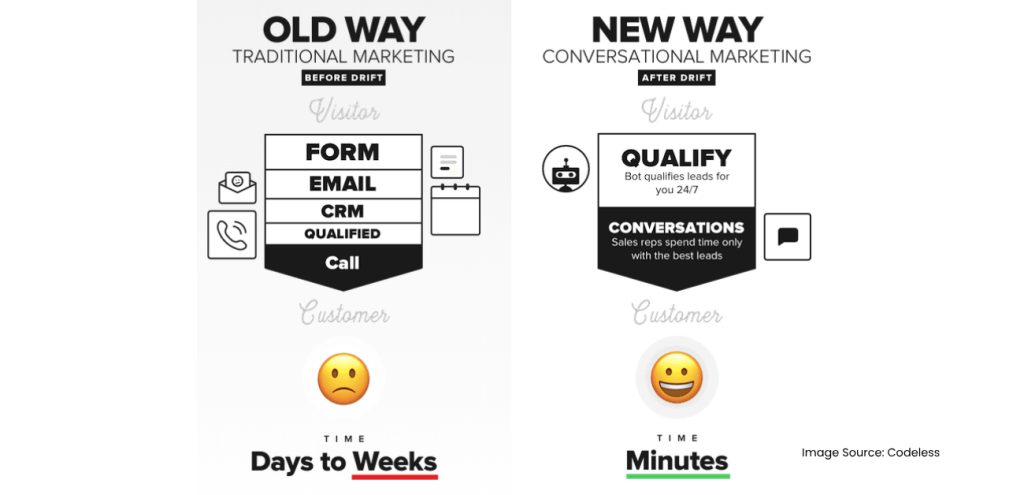
Example: Drift’s Conversational Marketing Series
After downloading an eBook, users enter a personalized email sequence. Instead of spam, Drift sends actionable tips on chatbot automation and conversational selling – gently leading readers toward demos.
Why it works:
- Feels like mentorship, not marketing.
- Keeps leads warm until they’re ready to buy.
- Reflects strong alignment between marketing and sales teams.
5. Customer Success Stories & Case Studies

Example: Moz’s Case Study Library
Moz showcases SEO success stories from different industries, demonstrating tangible results. Each story subtly reinforces trust in the product.
Why it works:
- Turns customers into advocates.
- Provides social proof for complex B2B decisions.
- Doubles as sales collateral for the pipeline.
6. Community-Driven Content & Social Engagement
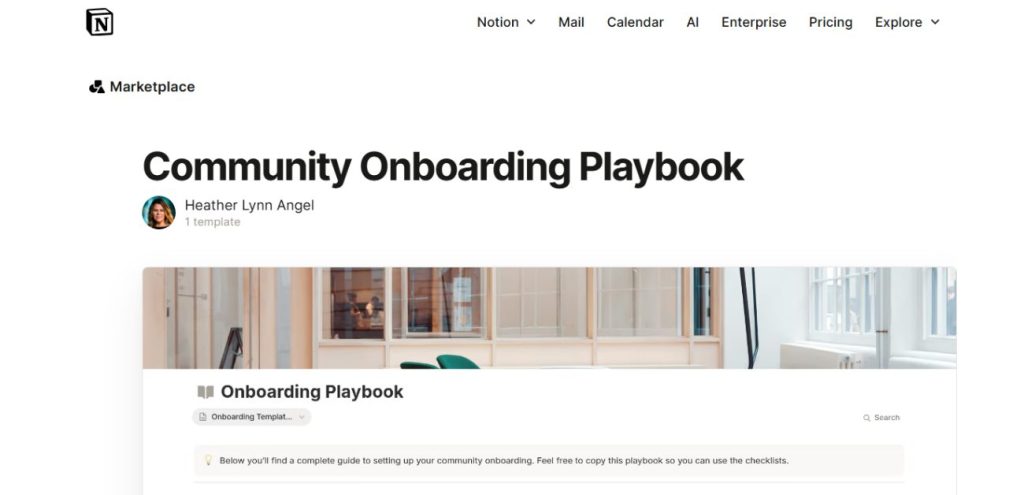
Example: Notion’s Community Playbook
Notion’s content strategy thrives on user-generated content – templates, tutorials, and workflow demos created by real users.
Why it works:
- Encourages active participation.
- Builds a sense of belonging around the brand.
- Generates inbound interest organically through advocates.
7. Podcast or Thought Leadership Series

Example: The Growth Hub Podcast by Advance B2B
The agency interviews CMOs and marketing leaders about their inbound challenges and successes, positioning itself as a peer-level authority rather than a vendor.
Why it works:
- Builds authentic connections with ideal clients.
- Offers evergreen content with SEO and PR benefits.
- Reinforces brand authority in the B2B marketing space.
Inbound marketing works because it’s mutually beneficial: your audience learns, and your brand earns trust.
The most effective inbound examples share three traits:
- Relevance: Content addresses real buyer pain points.
- Consistency: New value delivered regularly across channels.
- Authenticity: No gimmicks-just genuine expertise.
Inbound isn’t a single campaign. It’s an ecosystem – one that keeps delivering leads, authority, and trust long after the ads stop running.
Inbound Marketing Services Provided by a typical Agency
Inbound marketing isn’t a single service — it’s an ecosystem of interconnected activities that attract, convert, nurture, and delight leads through value-based engagement.
A strong inbound agency offers these services as part of an integrated growth strategy.
The following is a comprehensive breakdown of services typically included in an Inbound Marketing Agency.
1. Inbound Strategy & Planning

Before any campaigns launch, strategy is the foundation.
- Buyer Persona Development – Identify target audiences, pain points, motivations, and decision stages.
- Customer Journey Mapping – Outline awareness, consideration, and decision touchpoints.
- Content Strategy Roadmap – Define content pillars, keyword clusters, and campaign timelines.
- Goal Setting & KPIs – Establish measurable targets (traffic, leads, conversions, ROI).
Deliverables: Strategic plan, audience personas, content calendar, KPI dashboard.
2. Content Marketing & Creation

Content is the heart of inbound. It drives visibility, trust, and engagement.
- Blog articles, guides, and eBooks
- Whitepapers, case studies, and research reports
- Infographics, explainer videos, webinars, and podcasts
- SEO-optimized website copy and landing pages
Deliverables: Editorial calendar, content production schedule, repurposing framework.
3. Search Engine Optimization (SEO)

SEO ensures your content gets found when potential clients are searching.
- Keyword research & competitor analysis
- On-page SEO (meta tags, headers, content structure)
- SEO teknikal (speed, mobile-friendliness, schema)
- Link building & digital PR outreach
- Local SEO (for region-specific visibility, e.g. ASEAN markets)
Deliverables: SEO audit, keyword map, technical recommendations, backlink strategy.
4. Lead Generation & Conversion Optimization

- Turning visitors into leads through data-driven conversion design.
- Landing page creation & A/B testing
- Call-to-action (CTA) optimization
- Lead magnets (checklists, templates, industry reports)
- Conversion Rate Optimization (CRO) audits
- Analytics-driven UX improvement
Deliverables: Optimized lead funnel, conversion tracking setup, CRO report.
5. Marketing Automation & Lead Nurturing

Once leads enter your system, automation nurtures them into customers.
- Email marketing workflows
- Lead scoring & segmentation
- CRM integration (HubSpot, ActiveCampaign, Salesforce)
- Drip campaigns for education and retention
- Dynamic content personalization
Boleh dihantar: Workflow design, CRM automation setup, email templates, lead nurture paths.
6. Social Media & Community Engagement

Social platforms amplify your inbound reach.
- LinkedIn thought-leadership content for B2B audiences
- Social listening and engagement tracking
- Organic posting and community management
- Paid amplification (optional hybrid with inbound)
- Employer branding and storytelling
Deliverables: Social content plan, engagement metrics, channel performance reports.
7. Analytics, Reporting & Continuous Optimization

Inbound success depends on consistent measurement and iteration.
- KPI dashboards (traffic, leads, conversion rates, ROI)
- Google Analytics 4 (GA4) and CRM data integration
- Attribution modeling & pipeline analysis
- Monthly/quarterly performance reports
- Optimization recommendations based on insights
Deliverables: Executive dashboards, growth reports, and data-backed improvement plans.
8. Sales Enablement (Marketing + Sales Alignment)

Bridging marketing insights with sales execution.
- Shared definitions for MQLs/SQLs
- Sales scripts and outreach templates
- CRM enrichment and feedback loops
- Training on inbound follow-up best practices
- Account-based marketing (ABM) integration
Deliverables: Sales enablement toolkit, lead qualification framework, alignment meetings.
9. Customer Retention & Advocacy
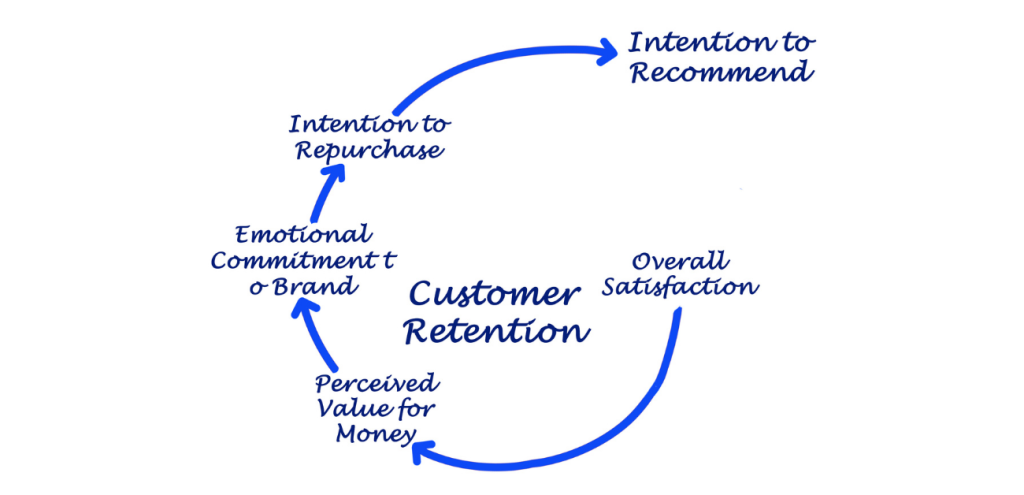
Inbound doesn’t end at conversion – it extends into delighting customers.
- Post-purchase onboarding content
- Customer success stories & testimonial campaigns
- Email retention sequences
- Loyalty programs or referral systems
- Advocacy and community-building initiatives
Deliverables: Customer retention playbook, advocacy content series, referral system setup
| Category | Key Services | Goal |
| Strategy | Persona mapping, content plan, KPI setup | Define direction |
| Content | Blogs, eBooks, videos, case studies | Attract & educate |
| SEO | Keyword research, on-page/off-page optimization | Increase visibility |
| Lead Generation | Landing pages, CTAs, CRO | Convert visitors |
| Automation | CRM, workflows, email sequences | Nurture relationships |
| Social Media | LinkedIn, community, content sharing | Amplify reach |
| Analitis | Dashboards, reports, optimization | Measure performance |
| Sales Enablement | CRM alignment, lead scoring | Close more deals |
| Retention | Onboarding, loyalty programs | Delight customers |
Choosing a B2B Inbound Marketing Agency
Choosing the right B2B inbound marketing agency is not just about ‘who has the lowest price’ or ‘who can crank out content fast.’ It’s about strategic alignment, capability, transparency and partnership. The following is a detailed guide on how to choose a B2B inbound marketing agency, tailored for your analytics-driven, training-and-education, healthcare-accessibility context.
1. Strategic Fit with Your Business Goals

Before you start reviewing agencies, you must be clear about your own objectives. What are you trying to achieve with inbound? For example, you may want to generate qualified clinic-or hospital leads for your healthcare-accessibility documentation solution, or build authority in the multilingual healthcare-tech space. An agency must demonstrate they can translate business objectives into inbound objectives.
2. Relevant Industry & Buyer Persona Experience

In a B2B world – especially one as vertical as healthcare documentation and accessibility, agency experience in your domain (or adjacent domains) matters. They must understand long sales cycles, multiple stakeholders (clinicians, compliance, IT), regulatory constraints, multilingual audiences.
3. Full-Stack Inbound Capabilities (Not Just Content)

Inbound or B2B is not just blog posts. You need an agency that brings together: strategy, content, SEO, website optimisation, lead capture, CRM/automation, analytics, nurturing workflows. There are four core services an inbound marketing agency should be able to provide – traffic generation, lead generation, lead nurturing and analysis.
4. Transparent Metrics and Reporting

You’ll want to work with an agency that is transparent about how they measure success: traffic sources, conversion rates, lead quality, sales-ready leads, pipeline influence. Lack of transparency is a red flag.
5. Agency’s Own Inbound Credibility (They Practice What They Preach)

A simple litmus-test: if an inbound agency cannot demonstrate that its own marketing is effective (strong website, consistent content, good SEO), then what are the odds they’ll do it for you?
If an inbound marketing agency doesn’t have a good inbound marketing set up for itself, it’s not a qualified inbound marketing agency.
6. Culture & Collaboration Fit

You’ll be working closely with this partner. Ask: Are their communication rhythms compatible? Do their values align with yours? The culture, personality, and values of an inbound marketing agency need to be compatible with yours; otherwise, there could be a lot of issues in the future.
7. Flexibility and Scalability

Because your business might evolve (new markets, languages, regulations, tools like AWS Bedrock or transcription workflows), you’ll need an agency that can scale up, pivot, and flex. Choose an agency that adapts to growth and change. Your chosen agency should be able to quickly shift resources to address emerging needs or opportunities.
8. Clear Scope and Realistic Promises

Beware of agencies that promise dramatic overnight results. A mature inbound strategy takes time, especially in B2B. Lots of marketers are great at generating traffic, but struggle to convert that traffic into leads.
Confirm upfront: what are deliverables, what is timeline, what is expected ROI?
Checklist: Questions to Ask When Evaluating an Inbound Marketing Agency

The following are tailored questions you should bring to exploratory meetings:
- What is your discovery/on-boarding process? How do you learn about our business, buyers, markets (e.g., immigrant-caregiver segment, low-literacy users, multilingual settings)?
- Can you show us case studies in our domain or a comparable environment (e.g., healthcare, multilingual content, complex sales cycles)? What were the results?
- Which KPIs do you track and report on, and how frequently? Will we have a dashboard? Will lead-to-revenue be visible?
- What does your content engine look like? What formats (blogs, webinars, video, whitepapers)? What SEO practices? How do you handle multilingual or region-specific content (APAC / Singapore / Korea)?
- What marketing technologies do you use or integrate with? (e.g., CRM, marketing automation, GA4, Clarity, HubSpot)
- How does lead capture, nurturing, sales alignment (MQL → SQL) work with you? How do you handle hand-offs to sales?
- What will be our minimum investment, and what deliverables can we expect in the first 3/6/12 months?
- How do you handle changes in scope or pivoting strategy?
- What internal resources will we be working with? Will we talk to the strategist, content writer, SEO specialist, analytics lead – or just a general account manager?
- How do you price? Are there bundle services, retainer models, performance models?
- What are your communication rhythms (meetings, reporting, escalation)?
- What are some red-flags we should watch out for?
Kata Akhir

Inbound marketing isn’t just a strategy – it’s how modern businesses build trust, authority, and long-term growth. By creating value before you sell, you attract the right clients, nurture meaningful relationships, and transform your digital presence into a sustainable revenue engine.
Pada Marketing Agency Singapore, we don’t believe in cookie-cutter campaigns. We believe in partnership. Our team works hand-in-hand with esteemed vendors, technology providers, and creative specialists to deliver an integrated inbound ecosystem – from SEO and automation to analytics and storytelling – designed to elevate your brand’s visibility and performance.
If you’re ready to attract high-quality leads, shorten your sales cycle, and strengthen your brand credibility, let’s build your inbound engine together. Hubungi kami atau menjadualkan e-mesyuarat hari ini!


 Malay
Malay  English
  Chinese
  Korean