
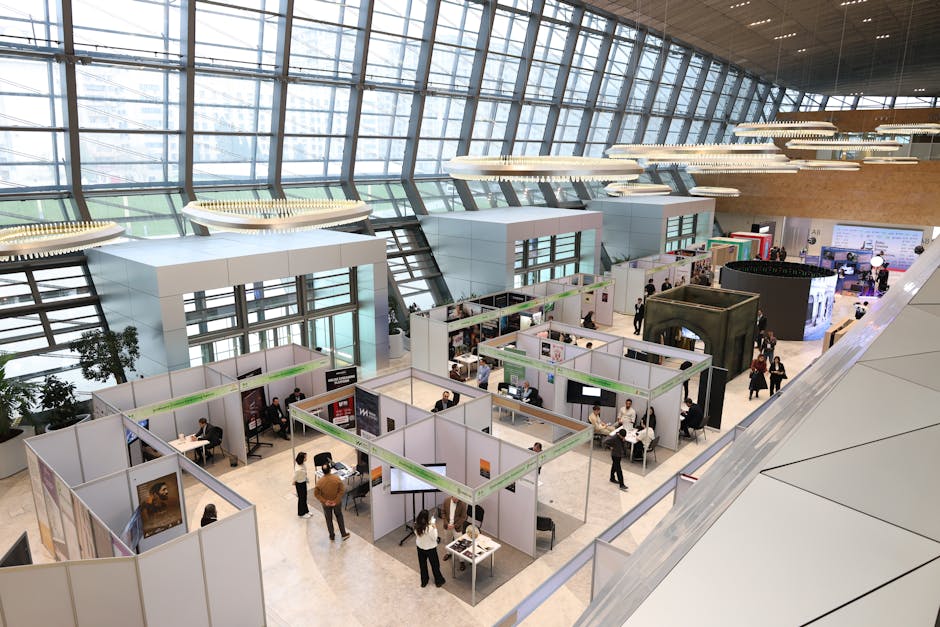
Tradeshow Marketing in Singapore: A Complete Guide to Maximising Your Exhibition ROI
Why Tradeshows Still Matter
Tradeshows remain one of the most effective channels for B2B lead generation, brand building, and market intelligence. Despite the rise of digital marketing, face-to-face interactions at exhibitions create trust and relationships that online channels simply cannot replicate.
Singapore is one of Asia’s premier exhibition hubs. Venues like Marina Bay Sands Expo, Suntec Singapore Convention and Exhibition Centre, and Singapore EXPO host hundreds of tradeshows annually, attracting international buyers and decision-makers from across the region.
However, tradeshow participation is expensive. Booth rental, design, staffing, travel, and promotional materials can easily cost $20,000 to $100,000 or more. Without a proper tradeshow marketing strategy, this investment risks being wasted on brand exposure with no measurable return. The companies that extract the most value treat participation as a marketing campaign, not merely an event.
Working with an 이벤트 마케팅 대행사 can help you plan and execute your tradeshow strategy professionally. From pre-show campaigns to post-show lead nurturing, professional support ensures no opportunity falls through the cracks.
Pre-Show Marketing Strategy
The most common mistake exhibitors make is treating the tradeshow as the starting point of their marketing. In reality, your campaign should begin six to eight weeks before the event. Pre-show marketing determines how many qualified visitors come to your booth and how many meetings you secure in advance.
Identify your target attendees. Most tradeshows publish an attendee list or at least an exhibitor list. Use these lists, combined with your own customer and prospect databases, to identify the specific companies and individuals you want to meet. Prioritise by potential deal size and likelihood of engagement.
Pre-show outreach tactics:
- Personalised email invitations: Send targeted emails to prospects inviting them to visit your booth. Include a specific reason to stop by — a product demo, exclusive offer, or meeting with a specialist. Generic “Visit us at Booth 42” emails get ignored.
- LinkedIn outreach: Connect with target attendees on LinkedIn. Share content about the tradeshow, what you will be showcasing, and offer to schedule meetings during the event.
- Social media promotion: Use the event hashtag in your posts. Share behind-the-scenes preparation content, speaker announcements, or product teasers. Tag the event organisers for additional visibility.
- Appointment setting: Proactively schedule 15 to 20-minute meetings with priority prospects during the show. Having a structured calendar ensures your team’s time is spent with qualified leads, not random passers-by.
- Press and media outreach: If you have a newsworthy announcement, coordinate with trade publications covering the event. Arrange interviews, submit press releases, and invite journalists to your booth for exclusive previews.
Leverage email marketing to build anticipation. A three-email sequence works well: an initial invitation four weeks out, a reminder with specific highlights two weeks out, and a final “last chance to book a meeting” email the week before.
Create a dedicated landing page for the tradeshow. This page should include your booth number, what you will be showcasing, a meeting booking form, and a compelling reason to visit. Use this page as the destination for all your pre-show promotions. It centralises information and captures lead data before the event even begins.
Booth Design and Experience
Your booth is your stage. In a hall with hundreds of exhibitors competing for attention, your booth design and visitor experience determine whether people stop or walk past.
Visual impact from a distance. Attendees decide whether to approach a booth from several metres away. Your branding, signage, and overall design must communicate what you do and why it matters within seconds. Use clear, large-format messaging — not your company name in giant letters, but a benefit statement that resonates with your target audience. “Reduce Manufacturing Downtime by 40%” is more compelling than “XYZ Solutions Pte Ltd.”
Open and inviting layout. Open-sided designs with clear sightlines into the booth work better than enclosed spaces. Position interactive elements where they are visible from the aisle to draw people in.
Interactive experiences drive engagement:
- Live product demonstrations: Schedule demos every 30 to 60 minutes and announce them with signage. People are drawn to movement and activity.
- Hands-on trials: Let visitors touch, use, or experience your product. Physical interaction creates memory and emotional connection.
- Technology integration: Interactive touchscreens, augmented reality displays, or VR experiences can differentiate your booth. Use technology to enhance understanding, not just for novelty.
Staff your booth strategically. Select team members who are knowledgeable, personable, and comfortable initiating conversations. Brief them on key talking points, target accounts, and lead qualification criteria. Rotate staff to maintain energy throughout the day.
Avoid over-investing in giveaways. Branded pens and tote bags attract freebie collectors, not buyers. If you offer giveaways, tie them to engagement — visitors must watch a demo or complete a survey to receive a quality item.
Lead Capture and Qualification
Every tradeshow interaction is a potential lead. Without a systematic capture process, valuable contacts are lost to forgotten business cards, illegible handwritten notes, and vague recollections of conversations.
Digital lead capture is essential. Use a lead capture app or the event’s official badge scanning system to collect visitor information electronically. Badge scanning is fastest, but supplement it with a brief qualification form to capture context about each interaction.
Qualification at point of capture separates hot leads from tyre-kickers. Train your booth staff to assess each visitor against a simple framework:
- Budget: Do they have budget allocated for your type of solution?
- Authority: Are they a decision-maker or influencer?
- Need: Do they have a specific problem your product or service solves?
- Timeline: When are they looking to make a decision?
Categorise leads as hot, warm, or cold based on these criteria. Hot leads should be flagged for immediate follow-up. Warm leads enter a nurturing sequence. Cold leads (students, competitors, freebie collectors) can be deprioritised.
Capture context, not just contact details. Record what each visitor was interested in, any specific pain points they mentioned, products they asked about, and any commitments made (such as “I’ll send you a proposal” or “Let’s schedule a follow-up call”). This context is invaluable for personalised follow-up and dramatically increases conversion rates.
Effective lead generation at tradeshows requires discipline. Build lead capture into the natural flow of every interaction — scan the badge at the beginning and add notes immediately after the visitor leaves.
Digital Marketing During the Show
Your digital marketing should amplify your physical presence during the tradeshow. Smart use of digital channels extends your reach beyond the exhibition hall and creates multiple touchpoints with attendees.
Social media activity during the event:
- Post real-time updates from your booth — photos of demonstrations, crowds, and team activity
- Use the official event hashtag consistently to appear in event-related feeds
- Share key takeaways from presentations and panel discussions you attend
- Go live on LinkedIn or Instagram to showcase your booth and products
- Engage with other exhibitors’ and attendees’ posts to increase visibility
Targeted digital advertising during the show:
- Geo-targeted ads: Run display and social media ads targeting the venue’s geographic area during event hours.
- Retargeting: Retarget pre-show landing page visitors with ads reminding them to visit your booth.
- LinkedIn Sponsored Content: Target attendees by company, job title, or interest.
Coordinate your digital and physical efforts. If your booth is running a competition, promote it digitally. If you are hosting a presentation at 2 PM, announce it on social media at noon. The goal is to create a surround-sound effect where attendees encounter your brand through multiple channels.
Post-Show Follow-Up Strategy
This is where most exhibitors fail. Research consistently shows that 70 to 80 per cent of tradeshow leads never receive follow-up. This is an extraordinary waste of the time, money, and effort invested in the event. Your post-show follow-up strategy should be planned before the event, not improvised afterwards.
Follow-up timing is critical:
- Hot leads: Contact within 24 to 48 hours of the show ending. A phone call or personalised email referencing your specific conversation demonstrates professionalism and keeps momentum alive.
- Warm leads: Reach out within one week with a personalised email. Include relevant content based on the interests they expressed at your booth.
- Cold leads: Add to a drip email campaign that nurtures them over the following weeks with educational content.
Personalisation is non-negotiable. Generic “Thanks for visiting our booth” emails perform poorly. Reference the specific conversation you had, the product they were interested in, or the pain point they described.
사용 email marketing automation to manage follow-up at scale. Set up segmented email sequences based on lead quality and interest area. Hot leads should receive a direct, personal email from the salesperson they spoke with. Warm leads can enter an automated nurture sequence that delivers value over time.
Post-show content assets extend the life of your investment. Compile presentation slides into downloadable guides, write blog posts summarising industry trends, create video recaps, and publish case studies featuring problems discussed at the show.
For B2B companies in Singapore, tradeshows often initiate sales cycles that take months to close. Your follow-up strategy should extend well beyond a single email. Build a nurture programme that keeps your brand visible and adds value until the prospect is ready to buy.
Measuring Tradeshow ROI
Calculating tradeshow ROI requires tracking both costs and outcomes comprehensively. Too many companies assess tradeshow success based on subjective impressions — “We had lots of visitors” or “The booth looked great.” These are not metrics.
Track all costs:
- Booth space rental
- Booth design, construction, and logistics
- Staff costs (time, travel, accommodation)
- Marketing and promotional materials
- Giveaways and hospitality
- Pre-show and post-show marketing campaigns
- Technology and lead capture tools
Track all outcomes:
- Total leads captured
- Leads by qualification category (hot, warm, cold)
- Meetings scheduled
- Proposals sent as a result of the show
- Deals closed (tracked over 6 to 12 months post-show)
- Revenue generated from tradeshow leads
- Media coverage and social media impressions
The core ROI formula: (Revenue from tradeshow leads minus total tradeshow cost) divided by total tradeshow cost, multiplied by 100. This gives you a percentage return. A positive ROI means the show generated more revenue than it cost.
Be patient with ROI calculation. B2B sales cycles can extend six to twelve months beyond the event. Track tradeshow leads in your CRM with clear source attribution. Interim metrics like cost per lead, meetings booked, and pipeline value provide early indicators while you wait for deals to close.
Singapore’s Exhibition Landscape
Singapore’s position as a global business hub makes it an ideal location for tradeshows and exhibitions. Understanding the local landscape helps you choose the right events and plan effectively.
Major exhibition venues:
- Marina Bay Sands Expo and Convention Centre: Premium venue for high-profile international events. Best for companies targeting enterprise clients and international buyers.
- Suntec Singapore Convention and Exhibition Centre: Central location, versatile spaces, hosts a wide range of industry events.
- Singapore EXPO: Largest purpose-built exhibition centre. Hosts everything from consumer shows to major B2B exhibitions.
Key industries with strong tradeshow presence in Singapore:
- Technology and telecommunications (CommunicAsia, ConnecTechAsia)
- Food and beverage (Food&HotelAsia)
- Healthcare and medical technology (Medical Fair Asia)
- Maritime and offshore (Sea Asia)
- Manufacturing and engineering (Industrial Transformation Asia-Pacific)
- Finance and fintech (Singapore FinTech Festival)
Singapore’s government actively supports the MICE industry through the Singapore Tourism Board and Enterprise Singapore. Grants may be available for Singapore-based companies exhibiting at approved events. Consider the broader event marketing landscape when planning your tradeshow calendar to ensure consistent messaging and efficient resource allocation.
자주 묻는 질문
How far in advance should I start planning for a tradeshow?
Begin planning at least three to four months before the event. This allows time for booth design and fabrication (which alone can take six to eight weeks), pre-show marketing campaigns, staff training, and material preparation. For major international exhibitions, six months of planning is advisable. Early booking often secures better booth locations and lower rental rates. Your pre-show marketing campaign should launch six to eight weeks before the event to build awareness and schedule meetings.
What is a reasonable budget for a tradeshow in Singapore?
For a standard 9-square-metre booth at a mid-tier exhibition, expect to spend $15,000 to $30,000 including booth rental, design, staffing, and marketing. Larger booths at premium events can cost $50,000 to $150,000 or more. A useful rule of thumb is to budget three to five times the booth rental cost for total participation expenses. The booth space itself is typically only 25 to 35 per cent of your total investment — the rest goes to design, logistics, marketing, staffing, and follow-up.
How many leads should I expect from a tradeshow?
Lead volume varies enormously by event size, industry, and your booth’s appeal. For a standard 9-square-metre booth at a well-attended B2B show, capturing 50 to 150 leads over two to three days is typical. Of these, perhaps 10 to 20 per cent will be genuinely qualified opportunities. Larger booths with strong pre-show marketing and interactive experiences can capture significantly more. Focus on lead quality rather than quantity — 20 qualified leads are more valuable than 200 business cards from casual browsers.
Should I attend the same tradeshow every year?
Consistency builds recognition and trust, but only if the show delivers results. Attend a show at least two to three times before making a final judgement, as the first year is often a learning experience. Track your ROI meticulously each year. If a show consistently delivers positive ROI, keep attending and consider upgrading your booth. If ROI is negative after two to three years despite optimising your approach, reallocate that budget to better-performing events or alternative marketing channels.
How do I stand out at a tradeshow with a small budget?
Creativity beats budget at tradeshows. Focus on pre-show marketing to drive targeted visitors to your booth rather than relying on foot traffic. Invest in one standout interactive element rather than spreading your budget thin. Train your booth staff exceptionally well — confident, knowledgeable people who initiate conversations are more effective than an expensive booth with passive staff. Offer genuinely valuable content (industry reports, exclusive data) rather than generic giveaways. Finally, excel at follow-up: the company that follows up fastest and most personally wins the deal, regardless of booth size.
 Korean
  English
  Chinese
  Malay
Malay