
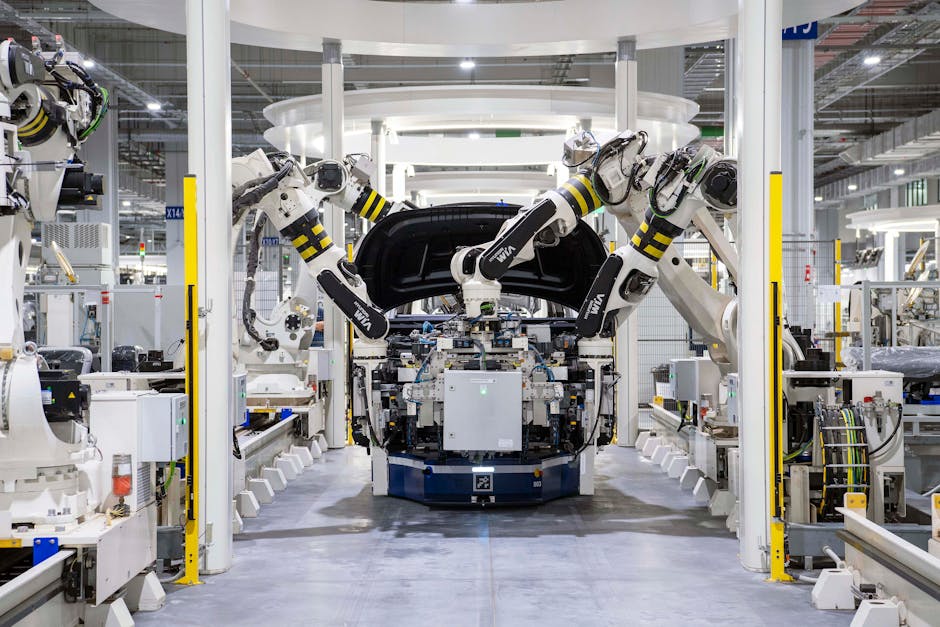
Government Grants for Manufacturing Businesses in Singapore (2026 Guide)
Singapore’s manufacturing sector contributes roughly 20 per cent of the nation’s GDP, yet many manufacturers still operate with legacy systems, manual processes, and limited digital marketing capabilities. The Singapore government recognises this gap and offers a robust portfolio of grants specifically designed to help manufacturers modernise operations, adopt Industry 4.0 technologies, and build digital marketing capabilities that generate consistent leads.
From the Productivity Solutions Grant (PSG) covering pre-approved manufacturing software to the Enterprise Development Grant (EDG) funding large-scale Industry 4.0 transformations, the available support is substantial — but navigating which grants apply to your specific manufacturing sub-sector can be overwhelming. Many manufacturers leave significant funding on the table simply because they are unaware of what they qualify for.
This guide breaks down every major government grant available to Singapore manufacturers in 2026, with eligibility criteria, funding levels, and practical advice on combining grants with digital marketing services to accelerate business growth beyond the factory floor.
Overview of Grants Available to Manufacturers
Singapore manufacturers have access to one of the most comprehensive grant ecosystems in Southeast Asia. The government’s push towards advanced manufacturing under the Manufacturing 2030 vision means funding is particularly generous for companies willing to embrace digital transformation, automation, and sustainable production methods.
The primary grants available to manufacturing businesses fall into several categories: technology adoption grants like PSG that subsidise specific software and hardware solutions; capability development grants like EDG that fund broader transformation projects; sector-specific grants administered through agencies like the Economic Development Board (EDB) and JTC Corporation; and workforce development grants through SkillsFuture that subsidise employee upskilling.
Here is a summary of the key grants available to manufacturers in 2026:
| Grant | Funding Level | 최상의 대상 | Key Requirements |
|---|---|---|---|
| Productivity Solutions Grant (PSG) | Up to 50% of qualifying costs | Pre-approved IT solutions, equipment | SMEs with ≤200 employees or ≤$100M turnover |
| Enterprise Development Grant (EDG) | Up to 50% of qualifying costs | Industry 4.0, large-scale transformation | Registered and operating in Singapore |
| SkillsFuture Enterprise Credit (SFEC) | $10,000 one-off credit | Workforce training and upskilling | Employed ≥3 local employees, contributed SDL |
| Market Readiness Assistance (MRA) | Up to 50% of qualifying costs, capped at $100,000 | Overseas market expansion | SMEs exploring international markets |
| Energy Efficiency Fund (E2F) | Up to 50% of qualifying costs | Energy-efficient equipment and systems | Facilities in Singapore, energy audit required |
Understanding which grants align with your manufacturing sub-sector — whether precision engineering, electronics, food manufacturing, or biomedical — is the first step towards maximising your funding potential.
Productivity Solutions Grant (PSG) for Manufacturing
The PSG remains the most accessible grant for Singapore manufacturers seeking to adopt digital solutions. With support of up to 50 per cent of qualifying costs, the PSG covers a curated list of pre-approved solutions spanning enterprise resource planning (ERP), customer relationship management (CRM), inventory management, and production scheduling software.
For manufacturers specifically, the PSG pre-approved solutions list includes manufacturing execution systems (MES) that track production in real time, quality management systems (QMS) that automate inspection workflows, and supply chain management platforms that optimise procurement and logistics. These solutions directly address the operational inefficiencies that plague many Singapore manufacturers still relying on spreadsheets and manual tracking.
The application process for PSG is straightforward. Manufacturers select a pre-approved solution from the Business Grants Portal (BGP), obtain a quotation from the approved vendor, and submit their application online. Approval typically takes four to six weeks, and the grant is disbursed upon project completion and submission of proof of payment.
A frequently overlooked PSG category for manufacturers is digital marketing solutions. Pre-approved packages covering SEO services, search engine marketing, and e-commerce platforms are available, enabling manufacturers to build their online lead generation capabilities with government co-funding. This is particularly valuable for B2B manufacturers looking to reduce reliance on trade shows and referrals.
Enterprise Development Grant (EDG) for Industry 4.0
While PSG covers individual solutions, the EDG is designed for larger, more transformative projects. For manufacturers pursuing Industry 4.0 initiatives — integrating IoT sensors, AI-driven quality control, predictive maintenance systems, or digital twin technology — the EDG provides up to 50 per cent support for qualifying project costs including consultancy, software, and equipment.
EDG projects for manufacturers typically fall under three pillars: core capabilities (business strategy, financial management, human capital), innovation and productivity (process redesign, automation, technology adoption), and market access (branding, marketing, overseas expansion). Manufacturing firms can apply under any pillar, though the innovation and productivity category sees the highest volume of manufacturing applications.
The EDG application process is more involved than PSG. Manufacturers must submit a detailed project proposal through the BGP, including project objectives, expected outcomes, a detailed budget, and measurable KPIs. Applications are assessed by Enterprise Singapore (EnterpriseSG) based on the project’s potential impact on the company’s growth and competitiveness.
Successful EDG applications from manufacturers often include a digital marketing component. For instance, a precision engineering firm implementing a new ERP system might bundle a comprehensive website redesign and SEO programme to ensure the operational improvements translate into increased customer acquisition. EnterpriseSG views this holistic approach favourably because it demonstrates a clear path from operational improvement to revenue growth.
Automation and Robotics Grants for Manufacturers
Automation is a strategic priority for Singapore’s manufacturing sector, driven by labour constraints and the need to remain competitive against lower-cost regional alternatives. Several grant programmes specifically target automation and robotics adoption in manufacturing environments.
The Automation Support Package (ASP), administered by EnterpriseSG, helps manufacturing SMEs identify and implement automation solutions. The package includes a diagnostic phase where automation consultants assess your production line and recommend specific solutions, followed by an implementation phase where grant funding covers a portion of the equipment and integration costs.
For manufacturers in the food, precision engineering, and electronics sub-sectors, JTC Corporation offers additional support through its Industry Connect programme, which provides access to test-bedding facilities where manufacturers can trial automation solutions before committing to full-scale deployment. This reduces the risk of investing in equipment that may not suit your specific production requirements.
Collaborative robots (cobots) have become particularly popular among Singapore manufacturers, and several cobot solutions are PSG pre-approved. These robots work alongside human operators for tasks such as pick-and-place, machine tending, and packaging — offering a lower-cost, faster-to-deploy alternative to traditional industrial robots. The grant support makes cobots financially accessible even for smaller manufacturers with annual revenues under $10 million.
Beyond the factory floor, manufacturers should consider how automation extends to their marketing and sales processes. Marketing automation platforms that nurture leads through email marketing sequences, score prospects based on engagement, and route qualified leads to sales teams are equally eligible for PSG support under the digital marketing category.
Digital Marketing Grants for Manufacturing Firms
Manufacturing businesses in Singapore have historically underinvested in digital marketing, relying instead on trade shows, industry directories, and personal networks for lead generation. Government grants are actively encouraging manufacturers to change this approach by subsidising digital marketing adoption.
Under the PSG, manufacturers can claim support for pre-approved digital marketing packages that typically include website development, search engine optimisation, Google Ads management, and social media marketing. These packages are designed as turnkey solutions — the vendor handles everything from strategy to execution, making it easy for manufacturers without in-house marketing expertise to get started.
The EDG also supports digital marketing projects, but at a larger scale. A manufacturer looking to rebrand entirely, develop a comprehensive content marketing strategy targeting specific industries, or launch a multi-market digital campaign can apply for EDG funding. The key requirement is demonstrating that the marketing investment supports a broader business transformation objective.
For manufacturers exporting to international markets, the Market Readiness Assistance (MRA) grant covers marketing activities related to overseas expansion, including overseas digital advertising, localised website development, and participation in virtual trade shows. The MRA provides up to 50 per cent support capped at $100,000 per new market per year — a significant subsidy for manufacturers testing new export markets through digital channels.
| Marketing Activity | Applicable Grant | Typical Support Level |
|---|---|---|
| Website development and SEO | PSG | Up to 50% |
| Google Ads and SEM | PSG | Up to 50% |
| Comprehensive rebranding | EDG | Up to 50% |
| Content marketing strategy | EDG | Up to 50% |
| Overseas digital advertising | MRA | Up to 50%, capped at $100,000 |
| Marketing automation tools | PSG | Up to 50% |
Eligibility Criteria and Application Process
Eligibility requirements differ across grants, but most share common baseline criteria. Here is a consolidated eligibility checklist for manufacturing businesses:
| Criterion | PSG | EDG | MRA |
|---|---|---|---|
| Business registration | Registered and operating in Singapore | Registered and operating in Singapore | Registered and operating in Singapore |
| Company size | ≤200 employees or ≤$100M annual turnover | No size restriction | ≤200 employees or ≤$100M annual turnover |
| Local shareholding | ≥30% local shareholding | ≥30% local shareholding | ≥30% local shareholding |
| Project requirements | Must select pre-approved solution | Detailed project proposal required | Overseas market focus |
| Prior grant usage | Cannot have ongoing PSG for same solution category | No duplication with other grants for same scope | No duplication per market |
The application process follows a standard flow across most grants: register on the Business Grants Portal (BGP) using your CorpPass credentials, select the relevant grant scheme, complete the application form with supporting documents, and submit for assessment. For PSG, ensure you have obtained a quotation from a pre-approved vendor before submitting.
Common reasons for rejection include incomplete documentation, failure to meet the local shareholding requirement, duplication with existing grant-funded projects, and poorly articulated project outcomes. Manufacturing firms can improve their approval odds by clearly quantifying expected productivity gains — for example, stating that a new MES will reduce production downtime by 25 per cent rather than vaguely claiming it will “improve efficiency.”
Processing times vary: PSG applications are typically approved within four to six weeks, while EDG applications can take eight to twelve weeks depending on project complexity. Begin your application well in advance of your intended project start date, as you must not commence the project before receiving the Letter of Offer.
Combining Multiple Grants for Maximum Benefit
Smart manufacturers do not apply for just one grant — they stack multiple grants to fund a comprehensive transformation programme. The key rule is that you cannot use two grants to fund the same project scope, but you can use different grants for different components of a broader initiative.
A practical example: a food manufacturer could use PSG to implement a new ERP system (operational software), EDG to fund a factory automation project with IoT sensors (Industry 4.0 transformation), MRA to launch digital marketing campaigns in Malaysia and Indonesia (overseas expansion), and SFEC to train employees on the new systems (workforce development). Each grant covers a distinct scope, and collectively they can fund hundreds of thousands of dollars in improvements.
The SkillsFuture Enterprise Credit (SFEC) is particularly easy to stack because it covers workforce training — a component that complements virtually any technology adoption project. Use SFEC to train your marketing team on social media marketing platforms or upskill production staff on new automation equipment, while using PSG or EDG for the technology itself.
When planning a multi-grant strategy, create a master project plan that maps each component to a specific grant. This prevents scope overlap and ensures each application tells a coherent story about a different aspect of your transformation. Working with an experienced grant consultant can help navigate the complexities, though many manufacturers successfully manage applications in-house.
How to Market Your Manufacturing Business Digitally
Government grants remove the financial barrier to digital marketing, but manufacturers still need a sound strategy. The manufacturing sector has unique marketing challenges: long sales cycles, niche audiences, technical products, and decision-making committees rather than individual buyers.
Start with a professional website that communicates your capabilities, certifications, and track record. Manufacturing buyers research extensively online before making contact, so your website must serve as a comprehensive digital brochure. Invest in high-quality photography of your facility, equipment, and products — visual proof of capability is critical in manufacturing procurement.
Search engine optimisation is the highest-ROI channel for most manufacturers. Target industry-specific keywords that your buyers are searching — terms like “precision CNC machining Singapore,” “contract food manufacturing,” or “PCB assembly services.” A strong content marketing programme that publishes technical articles, case studies, and capability guides builds both search rankings and buyer confidence.
Google Ads complements SEO for immediate visibility. Manufacturing keywords tend to have lower competition and cost-per-click compared to consumer sectors, making paid search particularly efficient. Target high-intent keywords and direct traffic to dedicated landing pages with clear calls to action — request-a-quote forms, capability downloads, or factory tour bookings.
LinkedIn is the dominant social platform for B2B manufacturing marketing in Singapore. Regular posts showcasing completed projects, new certifications, technology investments, and team milestones keep your company visible to procurement professionals. Sponsored content campaigns on LinkedIn can target specific job titles, industries, and company sizes with precision that no other platform matches for B2B audiences.
자주 묻는 질문
Can manufacturers use PSG for both operational software and digital marketing?
Yes. PSG covers multiple solution categories, and manufacturers can submit separate applications for operational solutions (such as ERP or MES) and digital marketing packages (such as SEO and Google Ads). Each application is assessed independently, so approval of one does not affect the other. Ensure the solutions are from different pre-approved categories to avoid scope overlap.
What is the maximum grant amount a manufacturer can receive under EDG?
There is no fixed cap for EDG — the funding amount depends on the project scope and the assessment outcome. However, projects typically receive up to 50 per cent of qualifying costs. Larger projects with clearly articulated business impact and measurable KPIs tend to receive higher absolute funding. Some manufacturing transformation projects have received several hundred thousand dollars in EDG support.
Are foreign-owned manufacturing companies eligible for Singapore grants?
Most SME-focused grants like PSG and MRA require at least 30 per cent local shareholding. However, EDG is available to companies regardless of shareholding structure, provided they are registered and operating in Singapore. Foreign-owned manufacturers should explore EDG as their primary funding avenue and check with EnterpriseSG for any sector-specific programmes that may have different eligibility criteria.
How long does it take to receive grant disbursement after project completion?
After submitting your claims with proof of project completion and payment documentation through the BGP, disbursement typically takes four to eight weeks. Ensure all invoices, payment receipts, and project deliverables are properly documented. Incomplete claims are the most common reason for disbursement delays. Keep digital copies of everything throughout the project lifecycle.
Can manufacturers use grants to fund overseas marketing campaigns?
Yes, the Market Readiness Assistance (MRA) grant specifically supports overseas marketing activities, including digital advertising campaigns, localised website development, and participation in international trade shows. Manufacturers can claim up to 50 per cent of qualifying costs, capped at $100,000 per new market per year. This is an excellent option for manufacturers looking to expand into regional markets like Malaysia, Indonesia, or Vietnam.
Is it possible to apply for grants after starting a project?
No. For virtually all government grants in Singapore, you must receive the Letter of Offer before commencing the project. Any costs incurred before the Letter of Offer date are not claimable. This is a strict requirement — plan your application timeline carefully and factor in processing times of four to twelve weeks depending on the grant scheme.


 Korean
  English
  Chinese
  Malay
Malay