
Government Grants for Beauty and Wellness Businesses in Singapore (2026 Guide)
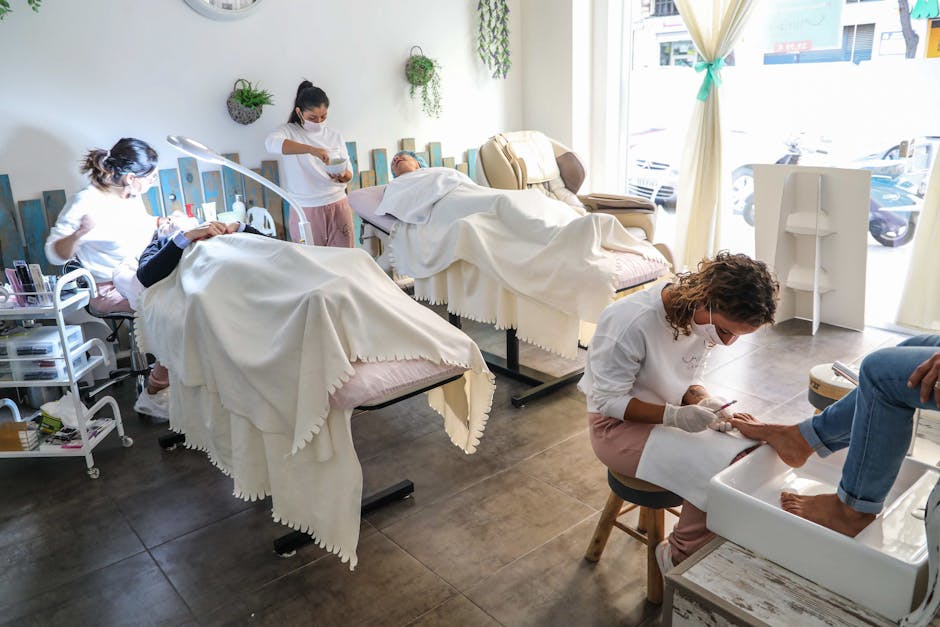
Singapore’s beauty and wellness industry — encompassing hair salons, nail studios, spas, aesthetic clinics, gyms, yoga studios, and wellness centres — is fiercely competitive. With new establishments opening every month and consumers increasingly relying on online reviews and social media to choose their providers, digital transformation is no longer optional for businesses that want to survive and grow.
The good news is that the Singapore government offers substantial grants to help beauty and wellness businesses adopt digital tools, from online booking systems and point-of-sale solutions to comprehensive digital marketing programmes. The Productivity Solutions Grant (PSG) alone can cover up to 50 per cent of qualifying costs for pre-approved solutions, while the Enterprise Development Grant (EDG) funds larger transformation projects for businesses ready to scale.
This guide covers every major government grant available to beauty and wellness businesses in Singapore in 2026, with practical advice on which grants suit different business sizes, how to apply successfully, and how to combine grant-funded technology with digital marketing strategies that drive bookings and revenue.
The Digital Transformation Opportunity for Beauty and Wellness
Consumer expectations in the beauty and wellness sector have shifted dramatically. Today’s clients expect to book appointments online at any hour, receive automated reminders, browse service menus on mobile-optimised websites, read reviews before committing, and pay seamlessly through digital wallets. Businesses that still rely on phone bookings and walk-ins are losing clients to competitors who offer frictionless digital experiences.
Beyond client-facing improvements, digital tools transform backend operations. Inventory management systems reduce product wastage — a significant cost for salons and spas stocking expensive professional-grade products. Staff scheduling software optimises roster allocation based on booking patterns. CRM platforms track client preferences, visit frequency, and spending patterns to enable personalised marketing.
The financial impact of digitalisation is measurable. Beauty and wellness businesses that implement online booking systems typically see a 20 to 35 per cent increase in bookings, driven by 24/7 availability and reduced no-shows through automated reminders. Those that add digital marketing report even larger gains, with some businesses doubling their new client acquisition within the first year.
Government grants make this transformation accessible to businesses of all sizes — from a single-chair hair salon to a multi-outlet spa chain. The key is understanding which grants apply to your specific business and building an application that demonstrates clear ROI.
Productivity Solutions Grant (PSG) for Salons, Spas, and Gyms
The PSG is the primary grant for beauty and wellness businesses seeking to adopt specific digital solutions. With up to 50 per cent support for pre-approved solutions, the PSG covers the most critical technology gaps in the sector.
Pre-approved solution categories relevant to beauty and wellness businesses include:
| Solution Category | What It Covers | Typical Cost (Before Grant) | Cost After PSG |
|---|---|---|---|
| Online booking and scheduling | 24/7 appointment booking, automated reminders, calendar management | $5,000–$15,000 | $2,500–$7,500 |
| Point-of-sale (POS) system | Payment processing, inventory tracking, sales reporting | $3,000–$10,000 | $1,500–$5,000 |
| CRM and loyalty management | Client profiles, visit history, membership management, loyalty programmes | $5,000–$12,000 | $2,500–$6,000 |
| Digital marketing package | Website development, SEO, Google Ads, social media setup | $8,000–$20,000 | $4,000–$10,000 |
| Accounting software | Invoicing, expense tracking, GST reporting | $2,000–$5,000 | $1,000–$2,500 |
| Cybersecurity solutions | Data protection, client information security | $3,000–$8,000 | $1,500–$4,000 |
For gyms and fitness studios, membership management platforms that handle sign-ups, class bookings, attendance tracking, and automated billing are particularly valuable. Several such platforms are PSG pre-approved, enabling gym owners to replace manual sign-in sheets and spreadsheet billing with fully automated systems at half the cost.
Salons and spas benefit most from integrated platforms that combine booking, POS, and CRM into a single system. This integration eliminates the need to manually transfer data between separate tools and gives business owners a unified view of their operations, from appointment utilisation rates to product sales margins.
Enterprise Development Grant (EDG) for Business Expansion
For beauty and wellness businesses ready to scale — opening new outlets, launching new service lines, or expanding into franchise models — the EDG provides up to 50 per cent support for larger transformation projects.
EDG projects for beauty and wellness businesses typically fall into these categories:
Brand development and marketing: A salon chain looking to refresh its brand identity, develop a comprehensive marketing strategy, and launch multi-channel campaigns can fund these activities under EDG. This includes brand consultancy, website redesign, content creation, and digital advertising strategy — all critical for businesses transitioning from a single outlet to a recognisable brand.
Business model innovation: Launching subscription-based service models, developing proprietary product lines, or creating hybrid physical-digital service offerings (such as virtual fitness classes or online skincare consultations) are all eligible for EDG funding under the innovation pillar.
Operational excellence: Implementing standardised operating procedures across multiple outlets, deploying centralised management systems, and redesigning service delivery workflows to improve efficiency and consistency. This is especially relevant for multi-outlet businesses where service quality can vary between locations.
A spa group that used EDG to fund a comprehensive digital transformation — including a centralised booking platform, unified CRM across all outlets, and a multi-channel social media marketing programme — could reasonably expect the project to cost $80,000 to $150,000, with EDG covering up to half. The ROI from increased bookings, improved client retention, and operational efficiency typically repays the remaining investment within twelve to eighteen months.
Booking and POS System Grants
Booking systems and POS solutions are the foundation of digital transformation for beauty and wellness businesses. These systems directly impact revenue by reducing no-shows, enabling upselling, and providing data-driven insights into business performance.
When selecting a PSG pre-approved booking system, prioritise these features:
Online booking widget: Embeddable on your website and social media profiles, allowing clients to book directly from wherever they discover your business. Integration with Google Reserve is particularly valuable — it lets potential clients book directly from your Google Business Profile listing.
Automated reminders: SMS and WhatsApp reminders sent 24 to 48 hours before appointments reduce no-show rates by 30 to 50 per cent. For a salon averaging 20 appointments per day with a 15 per cent no-show rate, this translates to recovering three appointments daily — potentially thousands of dollars in recovered revenue each month.
Staff utilisation tracking: Real-time visibility into each therapist’s or stylist’s schedule enables better walk-in management and identifies underutilised time slots that can be promoted through targeted offers. This data is invaluable for optimising staffing levels and service pricing.
Integrated payments: Accepting multiple payment methods — credit cards, PayNow, GrabPay — through a single POS system improves the checkout experience and reduces cash handling. Many PSG pre-approved POS systems also support package and membership billing, automating what is otherwise a labour-intensive administrative task for wellness businesses.
The combination of a booking system and POS creates a data goldmine. You can identify your most profitable services, busiest time slots, highest-spending clients, and most effective staff members. This data should feed directly into your marketing strategy — use it to create targeted promotions for slow periods and loyalty rewards for your best clients.
Digital Marketing Grants for Beauty Businesses
Beauty and wellness is one of the most digitally driven consumer sectors in Singapore. Clients discover new salons on Instagram, read Google reviews before booking, and follow wellness influencers for recommendations. A strong digital marketing presence is essential, and government grants make it affordable.
Under PSG, beauty businesses can claim support for pre-approved digital marketing packages. These typically bundle several services into a single application:
Website development: A mobile-optimised 웹사이트 with online booking integration, service menu, pricing, gallery of work (essential for salons and aesthetic clinics), client testimonials, and location information. For beauty businesses, the website’s visual design is particularly important — it must reflect the aesthetic quality of your services.
Search engine optimisation: Ranking for local searches like “hair salon near me,” “facial treatment Orchard Road,” or “best massage spa Singapore” drives consistent organic traffic. Professional SEO services help beauty businesses appear in Google’s local pack — the map-based results that dominate mobile search for location-based queries.
Google Ads: Pay-per-click campaigns targeting high-intent keywords deliver immediate bookings. Google 광고 are particularly effective for beauty businesses because the keywords indicate strong purchase intent — someone searching “eyelash extension Singapore” is ready to book, not just browsing.
Social media marketing: Instagram and TikTok are the dominant discovery platforms for beauty and wellness businesses in Singapore. Grant-funded social media packages can include content strategy, professional photography, video production, and paid advertising to build your following and drive bookings.
For businesses with larger ambitions, EDG can fund comprehensive marketing strategies that include influencer partnerships, content creation at scale, and multi-platform advertising campaigns. A wellness centre launching a new premium service line, for example, could use EDG to fund the entire go-to-market strategy including branding, photography, website updates, and a six-month advertising programme.
Eligibility Criteria and How to Apply
Beauty and wellness businesses across all sub-sectors are eligible for government grants, provided they meet the standard criteria. Here is a consolidated eligibility table:
| Criterion | PSG | EDG |
|---|---|---|
| Business registration | Registered and operating in Singapore | Registered and operating in Singapore |
| Local shareholding | ≥30% local equity | ≥30% local equity |
| Company size | ≤200 employees or ≤$100M turnover | No size restriction |
| Business type | All beauty and wellness businesses | All beauty and wellness businesses |
| Prior grants | No duplication for same solution category | No scope overlap with existing grants |
The application process for PSG follows these steps:
Step 1: Log in to the Business Grants Portal (BGP) at businessgrants.gov.sg using your CorpPass credentials. If you do not have CorpPass, register for it first — this typically takes three to five business days.
Step 2: Browse the pre-approved solutions list and select a vendor offering the solution you need. Contact the vendor to obtain a formal quotation.
Step 3: Complete the PSG application on the BGP, attaching the vendor quotation and any required supporting documents (ACRA business profile, financial statements).
Step 4: Wait for the Letter of Offer — typically four to six weeks. Do not sign any contracts or make payments to the vendor before receiving approval.
Step 5: Once approved, proceed with implementation. After completion, submit your claim through the BGP with invoices and proof of payment to receive the grant disbursement.
For EDG, the process is similar but requires a more detailed project proposal. Beauty and wellness business owners who are not confident writing proposals can engage a grant consultant — their fees are typically a percentage of the approved grant amount and are payable only upon successful approval.
Marketing Strategies That Work for Beauty and Wellness
Grant-funded digital marketing is only effective if the strategy is right. Here are the approaches that deliver the strongest results for beauty and wellness businesses in Singapore:
Google Business Profile optimisation: This is the single most impactful free marketing action for any location-based beauty business. Ensure your profile is complete with accurate hours, services, pricing, high-quality photos, and regular posts. Actively request and respond to reviews — businesses with 50-plus reviews and a 4.5-plus rating dominate local search results.
Before-and-after content: For salons, aesthetic clinics, and personal training businesses, visual proof of results is the most persuasive marketing content. Develop a systematic process for capturing before-and-after photos (with client consent) and showcase them across your website, social media, and Google Business Profile.
Targeted promotions for slow periods: Use your booking data to identify underperforming time slots and create targeted promotions. Tuesday afternoon facials at 20 per cent off, early morning gym classes with a free trial, or weekday lunchtime express treatments fill capacity without cannibalising peak-hour revenue.
Email and SMS marketing: Build a client database and use email marketing to drive repeat bookings. Birthday offers, service reminders (such as “It’s been 6 weeks since your last cut”), and new service announcements keep your business top of mind. Automated sequences triggered by booking behaviour deliver personalised communication at scale.
Referral programmes: Word-of-mouth remains powerful in beauty and wellness. Formalise it with a referral programme — offer existing clients a discount or free add-on service for every new client they refer. Track referrals through your CRM to measure effectiveness and reward your best advocates.
Local SEO content: Create pages targeting location-specific searches: “best hair salon Tanjong Pagar,” “spa near Raffles Place,” or “yoga studio Tiong Bahru.” Each page should include your address, embedded Google Map, nearby MRT station, and parking information alongside your service descriptions. This hyperlocal approach captures clients searching for businesses near them.
자주 묻는 질문
Can a home-based beauty business apply for PSG grants?
Yes, provided the business is registered with ACRA and meets the standard PSG eligibility criteria, including at least 30 per cent local shareholding. Home-based businesses registered under the Home-Based Business Scheme are eligible. The grant can fund essential tools like booking software, a professional website, and digital marketing packages that help home-based operators compete with established salons.
Are aesthetic clinics eligible for the same grants as salons?
Aesthetic clinics are eligible for PSG and EDG. However, as they are classified as medical establishments, they may also qualify for additional healthcare-sector grants and must ensure their marketing complies with the Ministry of Health’s advertising regulations. Digital marketing for aesthetic clinics requires careful attention to claims and representations — work with an agency experienced in healthcare marketing compliance.
How much can a small salon expect to save through PSG?
A small salon applying for a PSG-funded booking system ($8,000) and digital marketing package ($12,000) would receive up to 50 per cent support, saving $10,000 on a total investment of $20,000. If the salon also applies for an accounting software solution ($3,000), the total savings increase to $11,500. For a business with monthly revenue of $15,000 to $20,000, these savings are significant and make digital transformation financially viable.
Can gyms and fitness studios use grants for equipment purchases?
PSG primarily covers IT solutions and digital tools rather than physical fitness equipment. However, certain technology-integrated equipment — such as connected fitness machines with tracking capabilities — may qualify depending on the specific pre-approved list. For larger equipment investments, the EDG’s innovation and productivity pillar may provide support if the equipment is part of a broader business transformation project.
Is it possible to use grants for influencer marketing campaigns?
EDG can potentially cover influencer marketing as part of a broader marketing strategy project, as it falls under brand development and market access. PSG pre-approved digital marketing packages typically do not include influencer fees. If influencer marketing is a priority, consider an EDG application that encompasses your entire go-to-market strategy, with influencer partnerships as one component alongside SEO, paid ads, and content creation.
What happens if my grant-funded booking system does not work well?
You are contracting directly with the pre-approved vendor, so any performance issues should be addressed through the vendor’s support and warranty terms. The grant terms require that you use the solution for a minimum period (typically 12 months) after implementation. If the system fundamentally fails to perform, document the issues and contact EnterpriseSG for guidance — you may be permitted to switch vendors, though this requires approval and may affect your grant claim.


 Korean
  English
  Chinese
  Malay
Malay