
ChatGPT for Marketing: Write Copy and Brainstorm Ideas
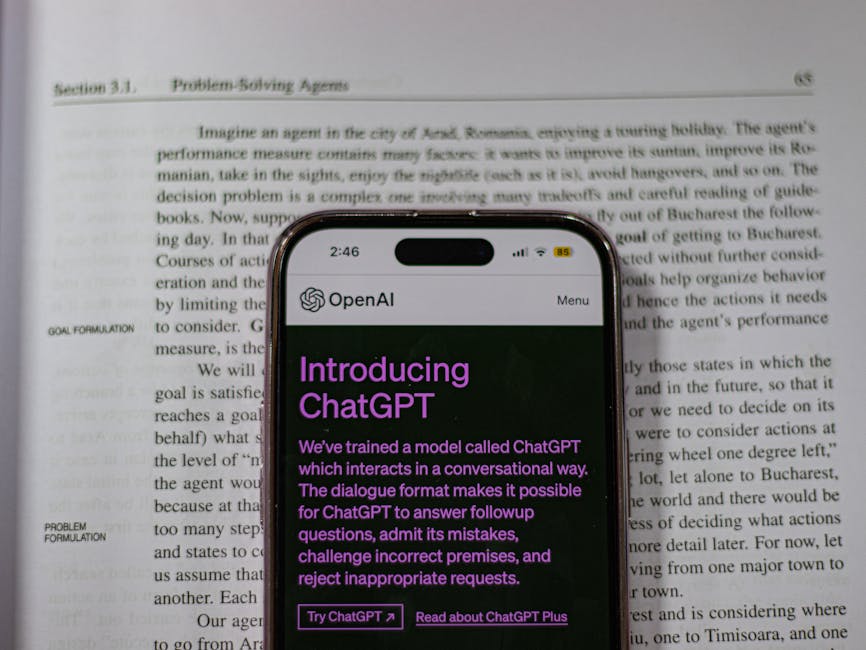
Artificial intelligence has transformed how marketing teams create content, generate ideas, and streamline their daily workflows. ChatGPT, developed by OpenAI, has emerged as one of the most practical AI tools for marketers — capable of drafting ad copy, generating blog outlines, writing social media captions, crafting email subject lines, and brainstorming campaign concepts in seconds. The key to getting excellent results, however, lies in how you prompt it.
Singapore marketers face unique challenges that make ChatGPT particularly valuable. Small teams often handle multiple channels with limited resources, and the pressure to produce fresh, localised content across English, Mandarin, and other languages is constant. In 2026, ChatGPT has become a standard tool in the Singapore digital marketing toolkit — not to replace human creativity, but to accelerate it. When used well, it can reduce content drafting time by 50 to 70 per cent while maintaining quality.
This ChatGPT marketing tutorial teaches you prompt engineering techniques specifically designed for marketing use cases. You will learn how to write prompts that produce usable ad copy, structured blog outlines, platform-specific social posts, compelling email subject lines, and SEO-optimised meta descriptions. We also cover brainstorming techniques and the important limitations every marketer should understand before relying on AI-generated content.
Prompt Engineering Fundamentals for Marketers
The quality of ChatGPT’s output depends almost entirely on the quality of your input. Vague prompts produce generic results. Specific, well-structured prompts produce content that is closer to what a skilled copywriter would create. Understanding prompt engineering is the foundation of using ChatGPT effectively for marketing.
Every strong marketing prompt includes four elements: role, context, task, and constraints. The role tells ChatGPT what expertise to adopt (“You are an experienced digital marketing copywriter specialising in the Singapore market”). The context provides background information (“Our client is a B2B SaaS company targeting SMEs in Southeast Asia”). The task specifies exactly what you need (“Write three Google Ads headlines for their project management software”). The constraints set boundaries (“Each headline must be under 30 characters and include the keyword ‘project management'”).
Here is an example of a weak prompt versus a strong prompt:
Weak: “Write an ad for our software.”
Strong: “You are a performance marketing copywriter. Our client, TaskFlow, sells project management software to Singapore SMEs priced at $29/month. Their key differentiator is a built-in invoicing feature. Write three Google Ads responsive search ad headlines (max 30 characters each) and two descriptions (max 90 characters each) targeting small business owners searching for ‘project management tool Singapore.’ Use a direct, benefit-focused tone.”
The strong prompt produces output that is specific, relevant, and nearly ready for use. Additional techniques that improve output quality include providing examples of the style you want (few-shot prompting), asking ChatGPT to think through its approach before writing (chain-of-thought), specifying the format you want (bullet points, numbered list, table), and iterating on results with follow-up prompts that refine specific aspects.
Writing Ad Copy with ChatGPT
ChatGPT excels at generating multiple ad copy variants quickly, which you can then test and refine. Here are prompt templates for the most common ad formats used by Singapore marketing teams.
Google Ads Responsive Search Ads. Use this prompt framework: “Write 15 Google Ads headlines (max 30 characters each) and 4 descriptions (max 90 characters each) for [product/service]. Target audience: [audience]. Primary keyword: [keyword]. Key benefits: [benefit 1, benefit 2, benefit 3]. Include at least 3 headlines with the keyword, 2 with a call to action, and 2 with a unique selling point. Use Singapore English.” This structure ensures you get enough variety for responsive search ads while maintaining keyword relevance — essential for effective Google Ads campaigns.
Facebook and Instagram Ads. Prompt for primary text, headline, and description separately. “Write 5 Facebook ad primary text variations for [product]. Target audience: [audience]. Campaign objective: [objective]. Tone: [conversational/professional/playful]. Each version should be 2-3 sentences, start with a hook that addresses [pain point], and end with a clear CTA. Include one version with an emoji-based format and one with a question-based opening.”
LinkedIn Sponsored Content. LinkedIn requires a more professional tone. “Write 3 LinkedIn sponsored post copy variations for [B2B product/service]. Target: [job title] at [company type] in Singapore. Objective: drive whitepaper downloads. Tone: authoritative but approachable. Each post should be 100-150 words, open with a data point or industry insight, and close with a CTA to download the whitepaper. Avoid salesy language.”
For all ad copy, always generate multiple variants. Ask for five to ten options, then select and refine the top two or three. ChatGPT is excellent at producing quantity, but your marketing judgement is essential for selecting quality. Never publish AI-generated ad copy without human review and editing.
Generating Blog Outlines and Content Frameworks
One of the highest-value uses of ChatGPT for 콘텐츠 마케팅 is generating structured blog outlines. Rather than staring at a blank page, you can start with a detailed framework and focus your energy on writing and refining.
Use this outline prompt template: “Create a detailed blog post outline for the topic ‘[topic]’. Target keyword: ‘[keyword]’. Target audience: [audience description]. Target length: [word count] words. The outline should include: a compelling H1 title (under 60 characters), an introduction structure (hook, context, and what the reader will learn), 6-8 H2 sections with 2-3 H3 subsections each, key points to cover under each section, a conclusion with a call to action, and 5 FAQ questions with brief answer summaries. The tone should be [professional/conversational/educational]. Include Singapore-specific examples where relevant.”
This prompt produces a comprehensive outline that a writer can use as a starting framework. The outline typically needs refinement — you might reorder sections, add or remove topics, and adjust the angle based on your content strategy — but the initial structure saves 20 to 30 minutes of planning time.
For content series planning, ask ChatGPT to generate interconnected topics. “Suggest 10 blog post topics around the theme of [theme] for a Singapore [industry] audience. Each topic should target a different long-tail keyword and appeal to a different stage of the buyer journey (awareness, consideration, decision). Format as a table with columns for: topic title, target keyword, buyer journey stage, and brief description.”
ChatGPT can also help with content repurposing. Paste an existing blog post and ask it to extract a LinkedIn article summary, five social media captions, an email newsletter snippet, and a list of potential infographic data points. This multiplies the value of every piece of content your team produces.
Crafting Social Media Posts by Platform
Each social media platform has distinct conventions for tone, length, formatting, and hashtag usage. ChatGPT can generate platform-specific content when you provide clear guidelines in your prompts.
LinkedIn posts. “Write a LinkedIn post about [topic] from the perspective of a [role/title] at a Singapore [industry] company. The post should be 150-200 words, use short paragraphs (1-2 sentences each), start with a bold opening line that stops the scroll, include a personal insight or data point, and end with a question to encourage comments. Do not use hashtags in the body — add 3-5 relevant hashtags at the end.”
Instagram captions. “Write an Instagram caption for a [type of post: carousel, reel, story] about [topic]. Brand voice: [description]. The caption should be 80-150 words, start with a hook in the first line (users see only the first line before tapping ‘more’), include a clear CTA (save, share, comment, or link in bio), and end with a block of 20-25 hashtags mixing popular (500K+ posts) and niche (10K-100K posts) tags relevant to [industry] in Singapore.”
TikTok captions and hooks. “Write 5 TikTok video hook scripts for a [industry] brand in Singapore. Each hook should be the first 3 seconds of a video about [topic]. The hook must be attention-grabbing, create curiosity, and make viewers want to keep watching. Also write a short caption (under 100 characters) and suggest 5 trending-style hashtags for each.”
Facebook posts. “Write a Facebook post for a [business type] in Singapore promoting [product/event/offer]. The post should be 50-100 words, conversational in tone, include a direct CTA, and mention any time-sensitive elements. Write two versions: one with emojis and one without.”
For social media marketing, always localise the output. Ask ChatGPT to reference Singapore-specific events (National Day, Great Singapore Sale, hawker culture), locations, or cultural nuances when relevant. Generic social media content performs poorly in a market as specific as Singapore.
Email Subject Lines and Preview Text
Email subject lines are one of the highest-leverage pieces of copy a marketer writes. A great subject line can double open rates compared to a mediocre one, yet writing them is time-consuming because each one is so short. ChatGPT can generate dozens of options in seconds, giving you a rich pool to select from.
Use this prompt for subject line generation: “Generate 20 email subject lines for a [email type: newsletter, promotional, nurture, re-engagement] email from [brand] to [audience]. The email is about [content/offer]. Requirements: 5 subject lines under 40 characters, 5 between 40-60 characters, 5 using curiosity or questions, and 5 using urgency or numbers. Also write a 40-60 character preview text for each subject line that complements (not repeats) the subject. Use Singapore English spelling.”
For A/B testing, ask ChatGPT to generate subject line pairs with specific differences. “Write 5 pairs of email subject lines for A/B testing. Pair 1: personalised versus generic. Pair 2: question versus statement. Pair 3: emoji versus no emoji. Pair 4: benefit-focused versus curiosity-driven. Pair 5: short (under 30 chars) versus long (50-60 chars). Topic: [email topic]. Audience: [target audience].”
Preview text (the snippet that appears after the subject line in most email clients) is often overlooked but significantly impacts open rates. Train ChatGPT to generate preview text by specifying: “The preview text should add new information that complements the subject line, create additional curiosity, and be 40-90 characters. Do not simply repeat or rephrase the subject line.”
For email marketing campaigns, build a prompt library of your best-performing subject line formulas and share them with ChatGPT as examples. This few-shot approach helps the AI match the patterns that resonate with your specific audience.
SEO Meta Titles and Descriptions
Writing SEO meta titles and descriptions is a repetitive task that ChatGPT handles well, provided you give it clear constraints around character counts and keyword placement.
Use this prompt for meta title generation: “Write 5 SEO meta title options for a page about [topic]. Primary keyword: [keyword]. Secondary keyword: [secondary keyword]. Brand name: MarketingAgency.sg. Requirements: each title must be under 60 characters (including the brand name suffix ‘ | MarketingAgency.sg’), include the primary keyword within the first 40 characters, and be compelling enough to earn clicks in search results. Use Singapore English.”
For meta descriptions: “Write 5 meta description options for a page about [topic]. Primary keyword: [keyword]. The page is [brief summary of page content]. Requirements: each description must be 120-155 characters, include the primary keyword naturally, include a clear value proposition or call to action, and avoid starting with the brand name. Use active voice and Singapore English.”
When working on bulk meta data — such as writing meta titles and descriptions for an entire website or a large blog archive — ChatGPT can process multiple pages at once. “Write meta titles and descriptions for the following 10 pages. For each, I will provide the page URL, current title, and primary keyword. Format the output as a table with columns: Page, Meta Title (under 60 chars), Meta Description (120-155 chars).” Then list your pages. This batch approach is significantly faster than writing each one individually and supports efficient SEO optimisation at scale.
Always verify character counts manually or with an SEO tool after ChatGPT generates meta data. The AI sometimes miscounts characters, especially with mixed-case text or special characters. Preview how your titles and descriptions will appear in search results using a SERP preview tool before finalising them.
Brainstorming Campaign Ideas and Creative Concepts
Beyond copywriting, ChatGPT is an excellent brainstorming partner for campaign ideation. It can generate more ideas in five minutes than most teams produce in a one-hour brainstorm, providing raw material that your team can evaluate, refine, and build upon.
For campaign ideation, use this prompt structure: “Brainstorm 10 marketing campaign ideas for [brand/product] targeting [audience] in Singapore. Objective: [awareness/leads/sales]. Budget range: [small/medium/large]. Time period: [duration]. Each idea should include: a campaign name, the core concept in one sentence, primary channels, one unique creative element, and the expected key metric. Include a mix of digital-only campaigns and campaigns with an offline or experiential element.”
For creative concept development, go deeper on a single idea: “Develop the campaign concept ‘[name]’ into a detailed creative brief. Include: campaign objective, target audience persona (demographics, psychographics, media habits), key message, supporting messages, tone and visual direction, channel strategy with rationale, content deliverables list, and success metrics. Context: Singapore market, [industry], Q2 2026.”
ChatGPT is also valuable for competitive analysis brainstorming. “Based on common marketing strategies in the [industry] sector, suggest 5 campaign angles that would differentiate a Singapore-based [business type] from competitors. For each angle, explain why it would resonate with Singapore consumers and how it could be executed across digital channels.”
Use ChatGPT to generate customer personas when starting a new campaign or entering a new market segment. “Create 3 detailed customer personas for a [product/service] in Singapore. Each persona should include: name, age, occupation, income range, goals, pain points, preferred media channels, typical buyer journey, and objections they might have. Make the personas specific to the Singapore market, referencing local habits and preferences.”
Limitations and Best Practices
ChatGPT is a powerful marketing tool, but understanding its limitations is essential to using it responsibly and effectively.
Factual accuracy is not guaranteed. ChatGPT can generate plausible-sounding but incorrect statistics, fake case studies, and inaccurate claims. Never publish AI-generated content without fact-checking every data point, statistic, and specific claim. This is especially critical for regulated industries in Singapore where misleading claims can have legal consequences.
Knowledge has a training cutoff. ChatGPT’s knowledge does not update in real time. It may not be aware of very recent events, product changes, algorithm updates, or market shifts. Always supplement AI-generated content with current research and the latest industry information.
Output can be generic without specific prompting. ChatGPT defaults to safe, middle-of-the-road content unless you push it toward a specific voice, angle, or style. Use detailed prompts with examples of your brand voice to get output that sounds like your brand, not like a generic AI.
Sensitive topics require human judgement. Do not rely on ChatGPT for content involving legal claims, medical advice, financial recommendations, or culturally sensitive topics. Singapore’s multiracial, multicultural context demands nuanced understanding that AI cannot fully replicate. Always have a human reviewer assess content for cultural appropriateness.
Best practices for marketing teams:
- Treat ChatGPT as a first-draft tool, not a final-copy tool — always edit and refine
- Build a library of tested prompts for your most common tasks
- Use ChatGPT for volume tasks (generating many variants) rather than single high-stakes pieces
- Combine AI efficiency with human creativity — use ChatGPT for structure and variety, add your own insights and brand voice
- Keep confidential business information out of prompts unless you are using an enterprise plan with data privacy guarantees
- Disclose AI usage where required by your industry’s advertising standards and guidelines
For teams building a comprehensive marketing workflow, ChatGPT works best when integrated with your broader 웹사이트 and content strategy rather than used in isolation. Pair AI-generated drafts with human editorial oversight to maintain quality and authenticity.
자주 묻는 질문
Is ChatGPT free for marketing use?
ChatGPT offers a free tier that provides access to the base model with usage limits. The Plus plan (approximately USD $20 per month) gives access to more advanced models, higher usage limits, and additional features like image generation. The Team plan (approximately USD $30 per user per month) adds workspace collaboration, higher limits, and data privacy guarantees suitable for business use. Most marketing professionals benefit from at least the Plus plan.
Will Google penalise AI-generated content?
Google’s guidelines focus on content quality, not whether content was written by a human or AI. Google penalises low-quality, unhelpful, or spammy content regardless of how it was produced. AI-generated content that is well-edited, factually accurate, original in its perspective, and genuinely helpful to readers performs well in search rankings. The key is to add human value through editing, fact-checking, expert insights, and original analysis rather than publishing raw AI output.
How do I maintain brand voice when using ChatGPT?
Include brand voice guidelines directly in your prompts. Provide two or three examples of your existing copy and ask ChatGPT to match the tone, vocabulary, and sentence structure. Create a “brand voice prompt” that you prepend to all copy requests — for example, “Write in a professional but warm tone, use short sentences, avoid jargon, and address the reader directly using ‘you.’ Our brand voice is confident, helpful, and straightforward.” Save this as a template for your team.
Can ChatGPT write in Singlish or Singapore English?
ChatGPT can approximate Singlish and Singapore English when prompted, though the results may not always sound fully authentic. For standard Singapore English (British spelling, local vocabulary like “shophouse,” “HDB,” “CBD”), ChatGPT performs well with clear instructions. For Singlish-heavy content, provide multiple examples in your prompt and be prepared to edit for authenticity. AI-generated Singlish can sometimes feel forced, so use it selectively and have a local reviewer check it.
Should I disclose that content was AI-generated?
Disclosure requirements vary by context. For advertising content in Singapore, the Advertising Standards Authority of Singapore (ASAS) guidelines should be followed. For general marketing content like blog posts and social media, disclosure is generally not legally required but is considered an ethical best practice by many organisations. If AI-generated content is substantially edited and enhanced by humans, most marketers treat it similarly to content produced with any other writing tool.
What marketing tasks should I not use ChatGPT for?
Avoid using ChatGPT for tasks requiring real-time data (current trending topics, live competitor pricing), legally sensitive content (terms of service, privacy policies, regulatory filings), highly confidential strategy documents (unless using enterprise plans with data privacy), original research or data analysis (ChatGPT cannot access your actual business data), and crisis communications (where nuance and human empathy are critical). For these tasks, human expertise remains essential.


 Korean
  English
  Chinese
  Malay
Malay