
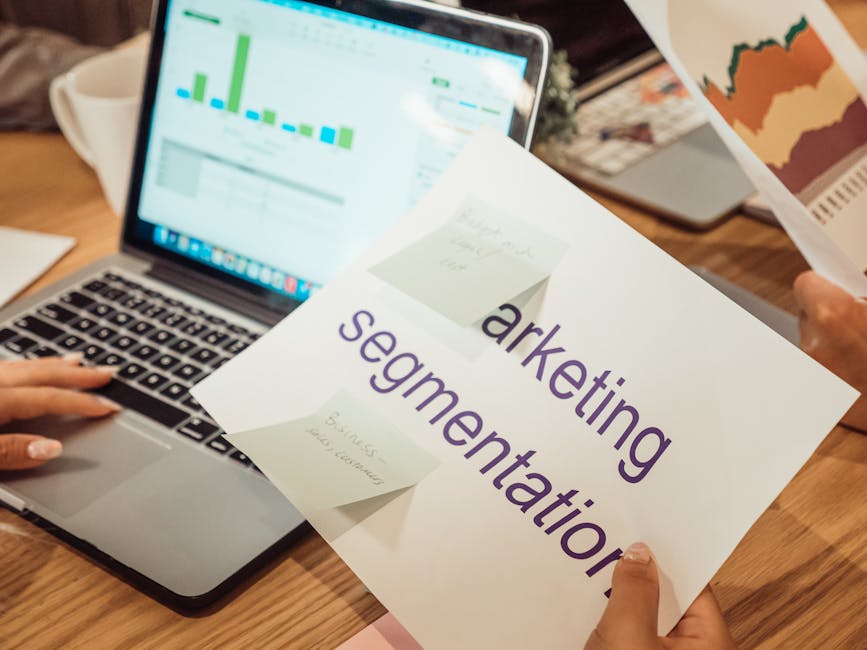
AI Customer Segmentation: A Practical Guide for Singapore Businesses
Traditional customer segmentation in Singapore has relied on broad categories — age, gender, income bracket, location. A fashion retailer might target “women aged 25-34 in Singapore” and call that a segment. A B2B software company might segment by industry and company size. These demographic segments are better than no segmentation at all, but they miss the behavioural nuances that actually drive purchasing decisions. Two customers in the same demographic bracket can have completely different buying motivations, brand preferences and price sensitivities.
AI-powered segmentation changes the game by analysing hundreds of behavioural signals simultaneously — purchase history, browsing patterns, email engagement, app usage, social media interactions and more — to identify natural clusters of customers who genuinely behave in similar ways. These segments are more granular, more accurate and more actionable than anything a human marketer could construct manually. They also update dynamically as customer behaviour changes, rather than remaining static until someone remembers to revise them.
This guide covers the practical applications of AI customer segmentation for digital marketing in Singapore. We will explore how AI enhances traditional RFM analysis, how behavioural clustering works, how to build effective lookalike audiences, how predictive segments can anticipate future behaviour and how GA4’s predictive audiences give every business access to AI-powered segmentation.
RFM Analysis Enhanced with AI
RFM analysis — segmenting customers by Recency (when they last purchased), Frequency (how often they purchase) and Monetary value (how much they spend) — is one of the oldest and most reliable segmentation frameworks. It works because these three dimensions capture the essence of customer value and engagement. AI does not replace RFM; it makes it significantly more powerful.
Traditional RFM analysis requires marketers to manually define score thresholds and segment boundaries. You might decide that customers who purchased within the last 30 days get a recency score of 5, while those who last purchased 90 days ago get a 3. These thresholds are arbitrary and may not reflect the natural patterns in your data. AI eliminates this guesswork.
AI-enhanced RFM works by using clustering algorithms — typically k-means or DBSCAN — to identify the natural groupings in your customer data across all three dimensions simultaneously. Rather than imposing artificial boundaries, the algorithm finds where the real clusters exist. This often reveals segments that manual analysis would miss:
- High-frequency, low-value regulars: Customers who purchase often but spend little per transaction. These might respond well to bundle offers or upselling campaigns.
- Seasonal high-spenders: Customers who purchase infrequently but spend significantly when they do — often around Chinese New Year, Great Singapore Sale or other seasonal events. These customers need different engagement strategies than your everyday buyers.
- Declining loyalists: Previously high-value customers whose recency and frequency scores are dropping. These are prime candidates for retention campaigns before they churn entirely.
- New high-potential customers: Recent first-time buyers whose initial purchase behaviour mirrors the early patterns of your best long-term customers.
For Singapore e-commerce businesses, AI-enhanced RFM segmentation directly informs email marketing strategy. Each segment receives different messaging, offers and communication frequency based on their actual behaviour rather than assumed demographics.
Behavioural Clustering
Behavioural clustering takes segmentation beyond purchase data by analysing the full range of customer interactions with your brand. While RFM focuses on transactions, behavioural clustering considers website browsing patterns, content consumption, email engagement, social media interactions, app usage, customer service contacts and more.
AI clustering algorithms process these multi-dimensional behavioural datasets to identify groups of customers who interact with your brand in similar ways, even if they look different demographically. The algorithm might discover that a 22-year-old university student and a 45-year-old business executive both browse your website in the same pattern, engage with the same types of content and respond to the same types of offers.
Common behavioural clusters that AI typically identifies for Singapore businesses include:
- Research-intensive buyers: Customers who visit many product pages, read reviews, compare options and take longer to purchase. These customers need detailed product information, comparison content and social proof.
- Impulse buyers: Customers who move quickly from discovery to purchase with minimal research. These customers respond to urgency messaging, limited-time offers and streamlined checkout processes.
- Deal seekers: Customers who primarily engage during sales and promotions. Their browsing and purchase patterns spike around discount events and they frequently use promo codes.
- Brand loyalists: Customers who repeatedly purchase from specific categories or brands, engage with brand content on social media and rarely consider competitors.
- Content consumers: Users who engage heavily with your content — blog posts, guides, newsletters — but purchase infrequently. These may need different nurturing strategies to convert.
The practical value of behavioural clustering is that it enables you to tailor not just what you say to each segment, but how and when you say it. Research-intensive buyers need detailed emails with product comparisons. Impulse buyers need concise, visually driven messages with clear calls to action. Deal seekers should receive promotional notifications. Our content marketing services use behavioural insights to create segment-specific content that drives engagement and conversions.
Building Effective Lookalike Audiences
Lookalike audiences are one of the most powerful applications of AI segmentation for customer acquisition. The concept is straightforward: you provide a platform with a “seed audience” of your best customers, and the AI finds new users who share similar characteristics and behaviours. The execution, however, requires careful strategy to deliver strong results.
Both Google Ads and Meta offer lookalike audience capabilities, though they work differently:
Meta Lookalike Audiences: You upload a custom audience (such as your top 1,000 customers by lifetime value) and Meta’s AI identifies users across Facebook and Instagram who share similar traits and behaviours. You can control the audience size from 1 per cent (closest match, smallest audience) to 10 per cent (broader match, larger audience) of the target country’s population. For Singapore, a 1 per cent lookalike typically contains around 40,000 to 50,000 users.
Google Similar Segments: Google’s equivalent uses your first-party data and GA4 audiences to find similar users across Google’s properties. With the shift to AI-driven campaigns like Performance Max, Google increasingly handles audience expansion automatically based on conversion data.
The quality of your lookalike audience depends entirely on the quality of your seed audience. Here are practical tips for Singapore businesses:
- Use value-based seed audiences: Rather than using all your customers as the seed, use your highest-value customers — top 20 per cent by CLV, frequent repeat purchasers or customers with the highest average order value. This tells the algorithm to find more people like your best customers, not just more people like your average customer.
- Segment your seeds by product or service: If you sell multiple product categories, create separate lookalike audiences for each. A customer who buys electronics has different characteristics from one who buys fashion, even within the same store.
- Refresh your seed audiences regularly: Customer profiles change over time. Update your seed audiences quarterly to ensure the AI is matching against current behavioural patterns.
- Test different audience sizes: Start with a 1 per cent lookalike for the closest match, then test broader audiences (2-3 per cent) to find the sweet spot between quality and scale.
- Layer lookalikes with interest targeting: For niche businesses, combining a lookalike audience with relevant interest targeting can improve precision, particularly in Singapore’s relatively small market.
For businesses running Google 광고 and social media campaigns, well-constructed lookalike audiences consistently outperform broad demographic targeting for customer acquisition.
Predictive Segments
Predictive segments represent the next evolution of AI segmentation. Rather than grouping customers based on what they have done (behavioural clustering) or what they look like (demographic segmentation), predictive segments group customers based on what they are likely to do next.
This forward-looking approach enables proactive marketing that anticipates customer needs rather than reacting to past behaviour. Common predictive segments include:
- Likely to purchase: Customers whose current behaviour patterns indicate a high probability of making a purchase within a defined timeframe. These customers can be targeted with conversion-focused messaging and offers.
- Likely to churn: Customers whose engagement patterns are declining in ways that historically predict churn. These customers should receive retention-focused communications.
- Likely to increase spend: Customers whose behaviour suggests they are ready to move to a higher-value product or increase their purchase frequency. These are ideal candidates for upselling and cross-selling campaigns.
- Likely to refer: Customers with high satisfaction scores, strong engagement and social media activity patterns that suggest they are likely to recommend your brand to others. These customers can be targeted with referral programme invitations.
- Likely to respond to a discount: Customers whose historical behaviour shows price sensitivity, allowing you to target discounts only at segments where they will actually influence behaviour rather than eroding margins across your entire customer base.
Building predictive segments requires historical data that includes both the behavioural signals (features) and the outcomes you are trying to predict (labels). For a “likely to purchase” segment, you need historical examples of customers who did and did not purchase after exhibiting various behavioural patterns. The AI learns which patterns predict each outcome and applies those patterns to your current customer base.
The practical advantage for Singapore businesses is significant. Rather than sending the same promotion to your entire database — wasting budget on customers who would have purchased anyway and annoying customers who are not interested — predictive segments allow you to send the right message to the right people at the right time.
GA4 Predictive Audiences
Google Analytics 4 has democratised predictive segmentation by building predictive audiences directly into its free analytics platform. For Singapore businesses that meet the minimum data requirements, GA4’s predictive audiences provide powerful AI segmentation without any additional tools or costs.
GA4 currently offers three predictive metrics:
- Purchase probability: The probability that a user who was active in the last 28 days will make a purchase in the next 7 days.
- Churn probability: The probability that a user who was active in the last 7 days will not be active in the next 7 days.
- Predicted revenue: The predicted revenue from all purchase events in the next 28 days from a user who was active in the last 28 days.
To use these features, your property needs to meet GA4’s eligibility requirements: at least 1,000 returning users who triggered the relevant predictive condition (purchasers or churners) and 1,000 who did not, over a 28-day period. For many Singapore businesses, particularly e-commerce sites with moderate traffic, these thresholds are achievable.
Once enabled, you can create predictive audiences such as:
- Likely 7-day purchasers: Users in the top 10 per cent of purchase probability. Use this audience for remarketing campaigns to maximise conversion rates.
- Likely 7-day churners: Users with a high probability of becoming inactive. Target these users with re-engagement campaigns before they leave.
- Predicted high spenders: Users in the top percentiles of predicted revenue. Prioritise these users for your highest-value marketing efforts.
The most powerful feature is that GA4 predictive audiences can be exported directly to Google Ads as audience segments. This means you can bid more aggressively for users who are likely to purchase and reduce spend on users who are likely to churn — all automated through the connection between GA4 and your Google 광고 account.
Applying AI Segments Across Channels
AI segmentation only delivers value when you act on the segments across your marketing channels. Here is how to apply AI-powered segments to your key marketing activities:
Email marketing: Create distinct email journeys for each behavioural segment. High-value loyalists receive exclusive previews and loyalty rewards. At-risk customers receive re-engagement sequences. New high-potential customers receive onboarding content designed to accelerate their journey to becoming regular buyers. Platforms like Klaviyo and Mailchimp integrate directly with AI segmentation tools to automate this process.
Paid advertising: Use AI segments as audience targeting layers in your Google Ads and Meta campaigns. Upload high-value customer segments as custom audiences for lookalike expansion. Exclude low-probability segments from expensive campaigns to reduce wasted spend. Use predictive purchase segments for remarketing campaigns with higher bids.
Website personalisation: Show different homepage content, product recommendations and calls to action based on which AI segment a visitor belongs to. First-time visitors from a high-value lookalike audience might see a welcome offer, while returning research-intensive buyers see detailed comparison content.
Content marketing: Develop content strategies tailored to each segment’s information needs and engagement preferences. Research-intensive segments need detailed guides and case studies. Impulse-buyer segments need concise, visually driven content. Brand loyalists need exclusive behind-the-scenes content and community-building initiatives.
The key is consistency across channels. A customer should receive a coherent experience whether they are reading your email, seeing your ad on Instagram or browsing your 웹사이트. AI segmentation makes this cross-channel consistency practical by maintaining a unified view of each customer across all touchpoints.
자주 묻는 질문
How is AI segmentation different from traditional segmentation?
Traditional segmentation relies on marketer-defined rules and demographic categories — age, gender, location, income. AI segmentation analyses hundreds of behavioural signals to identify natural customer clusters that human analysis would miss. AI segments are data-driven rather than assumption-driven, they update dynamically as behaviour changes and they can incorporate predictive elements that anticipate future behaviour.
What data do I need for AI customer segmentation?
At minimum, you need transaction data (purchase history, order values, purchase dates) for RFM-based segmentation. For behavioural clustering, you also need website analytics data, email engagement data and ideally CRM data. The more behavioural signals you can feed into the model, the more nuanced and useful your segments will be. Most Singapore SMEs already have this data across their existing platforms — they just need to connect it.
How many segments should I create?
The optimal number depends on your business size and marketing capacity. Most Singapore SMEs operate effectively with four to eight core segments. Creating more segments than you can actually serve with differentiated marketing is counterproductive. Start with three to four high-impact segments, execute well against those, then expand as your capacity grows. AI clustering algorithms will often suggest the statistically optimal number of segments in your data.
Can I use AI segmentation with a small customer base?
AI segmentation becomes more reliable with larger datasets, but useful results are possible with as few as 500 to 1,000 customers. For businesses with fewer than 500 customers, start with manual RFM analysis and basic behavioural segmentation, then transition to AI-powered methods as your customer base grows. GA4’s predictive audiences require at least 1,000 relevant users over a 28-day period.
How often should AI segments be updated?
One of the key advantages of AI segmentation is that segments can update automatically as customer behaviour changes. Most AI segmentation tools recalculate segments daily or weekly. However, you should review your overall segmentation strategy quarterly to ensure the segments remain aligned with your business objectives and marketing capacity. If a segment is no longer actionable, merge or retire it.
Is AI segmentation PDPA compliant in Singapore?
AI segmentation based on first-party data collected with proper consent is fully PDPA compliant. The key requirements are obtaining consent for data collection, informing customers about how their data is used, allowing opt-out and implementing appropriate data security measures. Avoid using third-party data sources that may not have proper consent chains. When in doubt, consult with a PDPA specialist to review your data practices.


 Korean
  English
  Chinese
  Malay
Malay